
Germany taz
Alternative summit to the World Climate Conference: A summit between mourning and confidence
Climate activists from all over the world come together in Antalya. Your alternative summit tells of resistance, encounters and the search for solutions. more...
Deutsch (original) ·Auto-translated to English
Felix laughs a lot when he tells how he came to Antalya. When he reports on encounters with great people, on border officials who showed him respect and more or less waved him through. And even when he talks about cold, rainy nights that he only spent under a tarpaulin.
Felix spent several months traveling to the Turkish port city where the World Climate Conference is currently taking place, also called COP31 because it is the 31st conference of the states parties that have joined the United Nations Framework Convention on Climate Change. Felix covered the route by bike.
It started in the summer from Freiburg to Barcelona, where Spanish climate activists invited him to give a lecture. Then across southern France and northern Italy to Slovenia, “great country, you definitely have to go there,” and finally through Romania, North Macedonia and Bulgaria to Turkey. Felix raves about the Bulgarian Black Sea coast and the Turkish Aegean coast, from which he always walked along the sea to Antalya, shortly before the start of COP31 and especially the alternative civil society summit, which he “thinks is really great”.
Although he took his time, he arrived on time. And he is not the only cyclist in Antalya. A British colleague says he has already cycled to a total of five COPs, and later a French cyclist also arrives at the Alternatives conference center. The Mimar Sinan Center, which the Turkish scene rented for a week, is located a little north of the city center and is ideal for the alternative summit: several conference rooms, a large garden for the dining tent, a lobby for various exhibitions.
The fact that this alternative summit to the official COP on the Expo site in Antalya can take place in Turkey is a small miracle. The starting point was a meeting of a handful of environmental activists, some of whom had attended the previous COP in Brazil.
As notorious optimists, they believed that despite the increasingly repressive Turkish state, a clear signal from civil society should be possible. Their call received a surprising amount of support, dozens of groups wanted to take part, and so from the beginning of the year they systematically worked towards an alternative summit. The rent for the congress center was collected through donations and money was organized to accommodate international guests. Left-wing Turkish trade unions met colleagues from the Global South in the congress center before the summit started, and the content of the program was discussed intensively. Nevertheless, until a few weeks before COP31 it was still unclear whether the state would even allow the alternative summit.
It was supposed to start with a large demonstration in the center of Antalya on November 14th, at half-time of the official climate conference. Anti-government demonstrations have been banned in Turkey for years, practically since the attempted coup in 2016. If they are still attempted, for example on Women's Day on March 8th or May 1st, the police often take harsh action. That's why it was unclear for a long time whether this demo would be approved or not. Ultimately, the Turkish government didn't want to embarrass itself on the international stage and allowed the demonstration.
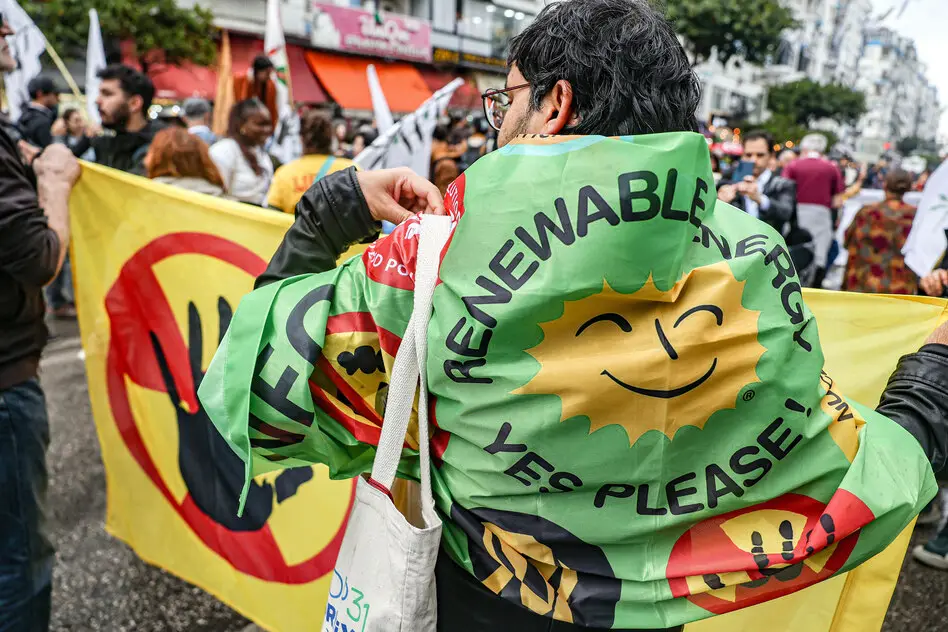
It was a lavish celebration. More than 10,000 people did not miss the rare opportunity to express their opinions. Although opposition politicians and journalists were being arrested and arrested elsewhere in Turkey at the same time, the government in Antalya had to have its say: In addition to demands directed at the negotiators at the official COP, there were also calls for resignation and allegations of corruption against Ankara.
On Saturday evening after the demonstration there were only smiling faces among the organizers. Tugce Oklay said it was the best demo in years, “our months of preparation have already paid off,” she said. The actual alternative summit hadn't even started yet. The program started on Sunday, November 15th.
For visitors who had no specific interest and did not know exactly which event they wanted to attend, the program was overwhelming. There were at least 30 events, some of which ran parallel.
The mourning work began. Five environmental activists who were murdered under unclear circumstances in recent years were remembered. The last person to do so was the photojournalist Hakan Tosun, who worked actively on environmental projects as a photographer and documentary filmmaker for many years and who made enemies not only of the authorities but also of corporations. He was beaten to death on the outskirts of Istanbul in October last year. His sister reported on the shock caused by this murder.
After the pain of the past, it was then about the future. Not only should grievances be complained about, but solutions should also be discussed. A visitor from South Korea demonstrated how difficult it was to orientate oneself in the abundance of offerings. Kyu Youn Choi, a sociologist who came to Antalya to collect material for a book about the specific impact of the climate crisis on women, initially didn't know where to start or who to interview first. “There are so many interesting people here, I'm afraid I'll miss the most important ones,” she complained.
She then ended up on a panel where activists from across the country reported on problems in their region. It was about better water management, avoiding plastic, sensible heating in urban thermal power plants, but also about how to counter the repression that a Kurdish village is exposed to - concrete problems for which concrete solutions are being sought.
In another room, anti-nuclear power initiatives from Turkey, Japan, South Africa and Europe met. Nuclear power is not the answer to the climate crisis, it said, every nuclear power plant only increases the possibility of building new bombs. This is particularly evident in Turkey, as there is enormous potential for renewable energies - and the government is still building nuclear power plants.
In the end, however, the Alternative Climate Summit was above all a huge contact exchange for activists from all over the world, with or without bicycles. They used the meeting to network better.
The emotional climate was already very good. There was a lot of hugging, hugging and kissing at the alternative summit.