
Germany · taz · · 6h
Alternative Nobel Prize: “Developing radical consciousness takes time”
Deutsch (original) · Auto-translated to English
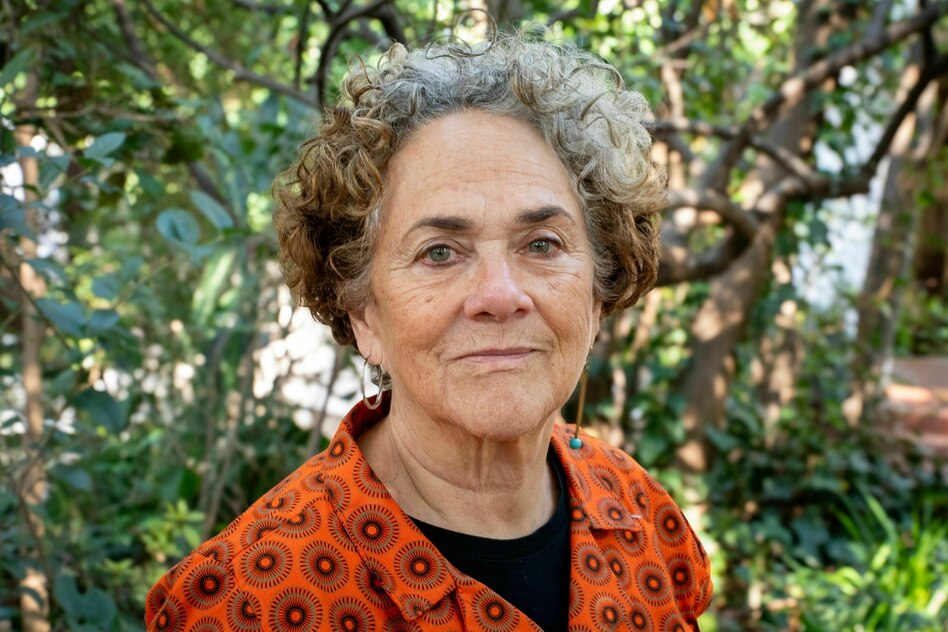
Just as the interview is about to begin, Mercia Andrews has to answer the phone briefly - an emergency. She then explains what happened.
Mercia Andrews: That was one of our women. There was a terrible femicide that we have to deal with on a farm where she works. I told her that I would call her after the interview and we would discuss what to do.
is one of the founders of the Rural Women’s Assembly from southern Africa
taz: What role can your movement play in this?
Mercia Andrews: I just asked a few simple questions. What have the police done so far? Who found the woman? She said they were children and I told her she had to make sure those children got help. I don't do much of our work in South Africa because I have a lot to do as coordinator for the entire region. But gender-specific violence is also one of my other issues as an activist. Because I'm in South Africa and work a lot with farm workers, that's what I'm doing now.
taz: The region you coordinate consists of eleven countries in southern Africa. 178,000 women belong to the Rural Women’s Assembly – and you are still a volunteer coordinator?
Mercia Andrews: Until recently, I was. I'm one of the founding members, and from the beginning we didn't want to officially register as an NGO. We experiment with what we can do differently. Whether we can ensure that our donations are not absorbed by offices, infrastructure and employees. But of course, when people donate money, they expect a certain level of accountability. I worked for a non-profit organization and they handle our accounting. The only person with a full-time job in our movement is the woman for press and communications, she is based in Zambia.
taz: How do you organize your content work?
Mercia Andrews: Among other things, with volunteer response teams on our various issues – such as gender-based violence, access to land, organic farming. All countries are represented with a woman on each team. These groups discuss with me how we advance our strategies. And the movement is also led by a group - three women from each country who meet online monthly and come together in one place four times a year.
taz: Your movement is now receiving the Alternative Nobel Prize. What does this mean for you?
Mercia Andrews: I consider it a great honor that we were chosen for this. The award will give us visibility. I draw a parallel to our work with seeds: We did a study on women who secure our traditional seeds and pass on the knowledge about them. We interviewed 700 women in seven countries and put together a photo exhibition with them. Until then, women had not considered what they were doing to be unusual.
It was normal for them to save seeds and get angry when the government tried to ban them from collecting them. The sudden visibility through our exhibition gave them a different perspective and they felt honored. I see it that way for us. Building a movement that tried to unite our countries was almost a necessity after the end of apartheid.
Mercia Andrews: We had to open up new perspectives to realize: I am part of Africa, I am pan-African. For example, women here experience that Nguni languages are spoken in four or five countries. We communicate in English, French, Portuguese – the colonial languages. But we also communicate in local languages. This was also important to us to show: we, like seeds, need the opportunity to travel. To grow, to thrive, to connect in our common humanity.
taz: What other similarities did you find?
Mercia Andrews: It's the seeds again - the plants and the food connect us. We noticed that some seeds have the same name across the region and that we cook the same dishes with them. Defending food and seed sovereignty is the key to everything, and that unites us.
Mercia Andrews: Defending the commons is another important aspect. In our region it is mainly about land. In Mozambique, for example, it is actually not allowed to be sold. But you can see that many there have bought land from chiefs and are building large resorts along the coast. Or in Zimbabwe: you see Chinese companies coming and buying up land. Our challenge is to fight patriarchy and gain access to our rightful land. To be able to give women independence, but also to defend our regional sovereignty. You can't just come to Africa and mine the minerals or cut down our trees and say goodbye. This is another reason why the commons are an important topic. Added to this are the consequences of the climate crisis. For example, we ask: What kind of early warning systems have our governments implemented? There's nothing there - so we're running a campaign.
taz: You describe your movement as “more loud than radical”. What does that mean?
Mercia Andrews: It's similar to the fact that we don't call ourselves feminist, even though we aspire to be. But with so many members, you can't guarantee that everyone sees themselves as feminists. As with the term “radical”: We know that when we take certain steps, we do so as unequal activists. Developing a radical consciousness takes time. To call ourselves radical would mean that we are all in the same place. We have to learn to be humble about what steps we take to achieve something - and how we take people with us along the way.
taz: How do you see what you have achieved so far?
Mercia Andrews: The fight for women's right to land continues. But we have already achieved a lot. Even in South Africa, where much is still controlled by white commercial agriculture. We fought back and started occupying land and growing vegetables there. In Eswatini we have just won a case where people tried to evict women farmers. We've achieved a lot and I think that's one reason we continue to grow - women see the value of community, the value of learning together, of striving for new ideas. We recently published a cookbook. What's the point of that? one might ask. But it was about our native leafy greens. What grows in the forest that we could harvest? People share the knowledge of their ancestors so that we can learn from it. We haven't always lived out of the supermarket.
Read the full story at the source
Source: taz