
World taz
Album by Skepta: It also deals with class issues
The London rapper Skepta reflects on his aging on his new album “The Fork and Knife” - and lets young people participate creatively in it. more...
Deutsch (original) ·Auto-translated to English
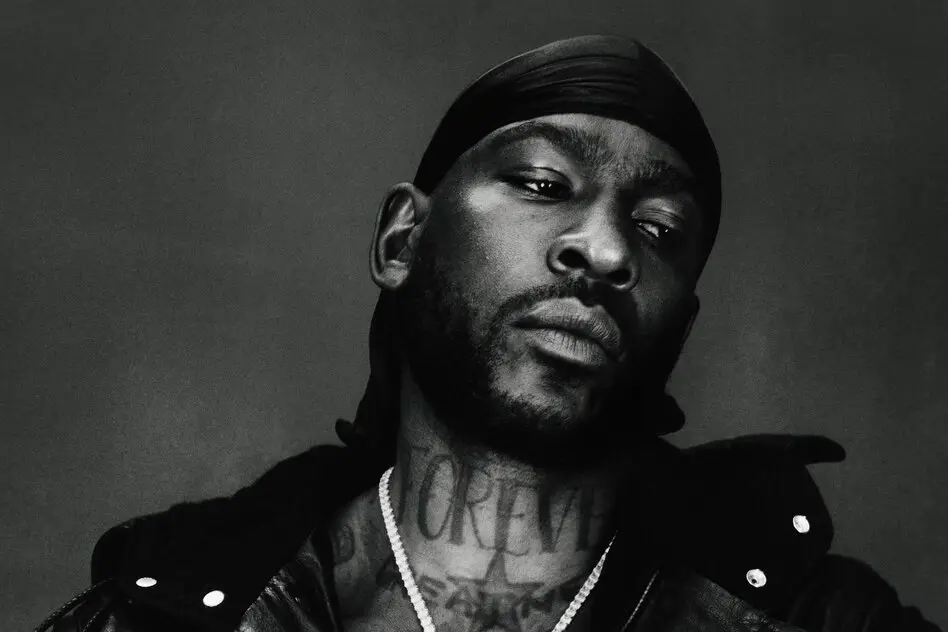
“Oldhead,” “Unc,” and “Grandy.” Aging as a topic in rap carries many, often disrespectful, labels. The biological clock is frustrating for the old guard and empowering for subsequent generations. Who wants to see 50-year-olds spearheading their subculture when they are in the process of rebelling against their parents' generation? And how are you supposed to keep up with the competition for coolness and credibility when your hair is graying and thinning and your energy is less?
“Kill your idols”, you know it. Especially in hip hop, the old heroes are killed one by one or kill themselves, see Kanye West and P. Diddy. Skepta from London, the most important rapper in Britain, one of the innovators of grime, of course knows all this, but he approaches the process fearlessly.
And so his situation looks better. Recognizable by the course of a long career and the new album “The Fork and Knife”, whose title sounds like the name of a pub. Skepta is now 44 and all British rap generations can agree on him.
Skepta: “The Fork and Knife” (Sony Music)
The best thing that could have happened to Skepta in the past was that he sold out to the music industry in the 2010s, wanted to be pop and failed miserably. His album Doin It Again was a cruel and soulless pop-rap conglomerate. Skepta, who was socialized with the music of London pirate radio stations between the dance floor and rap and who, with grime, pioneered a broken music characterized by sub-bass, 2-step and double-accelerated battle lyrics, noticed it himself.
The artist paused, took a breath and released a radical apology in 2014 with “That’s not me”. In it, Skepta buried his pop persona, “Put it all in the bin,” as he put it himself. And so he immediately staged his resurrection.
What's interesting is that Skepta now appears at Fashion Week, wins the Mercury Prize, produces hits, but always acts as if everything was at stake in some London basement club! Underground is part of Skepta's habit. This is not an assertion. In 2024, probably reminded of his own failure in pop, he angrily asked X: “Is the concept of an organic underground scene dead?”
Once again the signs had changed, idols were killed and UK rap was suddenly dominated by a very digitally oriented generation of artists who wildly mix their sounds together. Cloud rap from Sweden, Soundcloud niches, UK bass music, all in one pot and pureed ten times. The fact that young artists like Fakemink and EsDeeKid didn't allow themselves to be given absolution by Skepta, but simply got going, perhaps offended the old man. The fact that the new grime generation around people like Kido raps a little more brutally than he does has aroused competition.
And what does Skepta do? He mixes with a bunch of twenty-somethings on the freestyle format “Victory Lap,” which is well received in Great Britain, and raps along. So he didn't make the mistake of devaluing everything new, but instead started working with the younger generation. Honor saved, underground connected.
Which brings us to Skepta's new album, which took seven years to produce. Probably also because a lot of internal conflicts are played out: credibility vs. family life, competitiveness vs. the will to take it easy. Or to put it another way: What kind of album do I want to make if the entire UK rap scene is listening to me and the parents of my children's friends?
With “The Fork and Knife” he explores the situation in detail. Right from the start, “Secrets of Patriarchy” questions the urge to prove yourself and show toughness. So also patriarchal patterns that he has internalized and reflects on this album. There is fighting here, but neither are women being degraded nor is anyone being stabbed, as has been the case in the imagination of UK rap in recent years, but also in the real gangwars of the British cities.
In the songs on the album, Skepta recounts his story again, telling how he fought through it, about his parents, who migrated from Nigeria to England and wanted the best for him. From the streets of London, where he lost friends to drugs and the police were after him. “The Fork and Knife” deals with class issues and fortunately does not tell a sugar-coated story of upward mobility, as was so often the case in rap.
Skepta knows he was lucky. But he also knows that he is very good at what he does. And that he has the opportunity to pull people along. That’s what this album stands for too. West African musicians like Asake meet Skepta on Afrohouse beats and the young grime guard is united with the older ones on the almost nine-minute “Belly”. It's about the matter. This means rap in combination with bass music, sounds from West Africa and the niches of the Internet. A timeless mix. Age – that doesn’t matter here.