
Politics · taz · 7h
AfD government in Saxony-Anhalt: an absolute horror
Deutsch (original) · Auto-translated to English
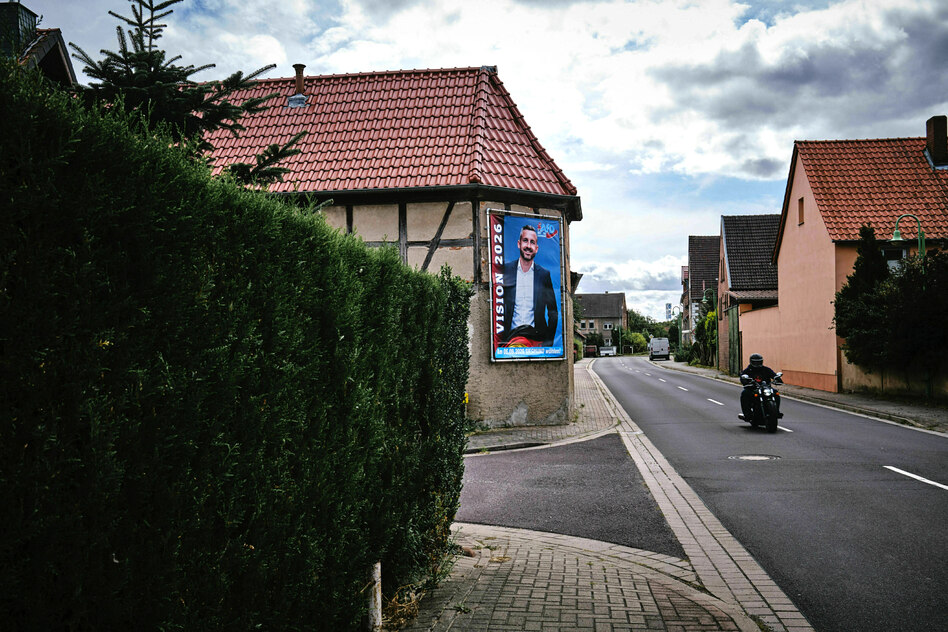
Saxony-Anhalt has voted. The right-wing extremist AfD narrowly missed out on an absolute majority. But it is likely that she will still govern. In the Magdeburg state parliament, Ulrich Siegmund received a simple majority in the third round of voting to become prime minister. A few abstentions would be enough. The BSW wants to abstain from the third round of voting, perhaps individual dissidents from the CDU will suffice.
What would an AfD government mean for...
In the administration, the AfD has grandly announced that it will fill 150 to 200 positions. In fact, there are 19 political officials in Saxony-Anhalt that the AfD government can replace. These are 15 state secretaries from the 9 ministries (plus their office managers and consultants) as well as 4 explicitly political middle-level officials: the head of the Office for the Protection of the Constitution, the head of the press office and the head and deputy in the state administration office, who can of course put considerable pressure on the administration.
It is unclear whether the AfD would allow right-wing extremists to take these positions: the duty of loyalty to the constitution applies. Safety checks are required and federal law applies.
The AfD couldn't just use the chainsaw because many civil servant heads of departments and departments in the ministries in Saxony-Anhalt are not political officials and there are fixed hiring criteria such as professional suitability and loyalty to the constitution.
Lawsuits against dismissals have good prospects. However, time was running out for the AfD: many civil servants will be retiring in the next few years, and these positions can be filled without a hitch.
The important question is how officers behave when faced with potentially illegal instructions. Are they protesting or are they going along? In addition to open contradiction, there are low-threshold resistance strategies such as endless legal reviews or working to the rules.
There was also a threat of significant restructuring in the judiciary: an AfD government could influence hiring and promotion practices and appoint judges who were as close to the party as possible. Gareth Joswig
If the AfD wins in Saxony-Anhalt, the party could further strengthen its reactionary positions when it comes to women's and queer politics. If the right-wing extremist party's plans go, equal opportunities officers should become family representatives in the future and create incentives for the production of children in the sense of “father, mother and child”. The party views other family forms as “rainbow ideology” and “left-wing perversion”.
The AfD accuses non-profit organizations that offer sex education and education in schools of “early sexualization” – their funding basis should be withdrawn. In keeping with its ethnic reproductive policy, the AfD is against the right to abortion and physical self-determination for pregnant women. Pregnancy conflict counseling centers fear cuts and restrictions on their work in the event of an AfD government. Among other things, they offer the advice that unwanted pregnant women need if they want to terminate a pregnancy.
In Saxony-Anhalt, according to the AfD's wishes, those affected will in future have to have an ultrasound examination carried out in addition to advice. Supporting organizations see this as an attempt to exert emotional pressure. And about the universities, the “queer-woken cadre hotbeds,” AfD chairwoman Alice Weidel said last year: “We are closing all gender studies and throwing these professors out!” According to the election program, this is exactly what is supposed to happen in Saxony-Anhalt. Amelie Sittenauer
In an economic system based on the exchange of goods and workers, Saxony-Anhalt would lose money and people with an AfD government. “The country would noticeably lose prosperity,” says Reint Gropp, President of the Leibniz Institute for Economic Research Halle (IWH). Anti-immigrant policies would exacerbate the impending labor shortage, especially in food preparation, catering, civil engineering, logistics and medicine.
Every fifth doctor in Saxony-Anhalt is a foreigner – still. The IWH estimates that the federal state would therefore lose up to 3.2 billion euros in added value by 2031. Other experts also consider the AfD's economic policy to be expensive, amateurish - and full of misjudgments. Compared to the country's enormous problems, it is "puny small, ridiculously naive and doomed to failure," says taz columnist and economic expert Maurice Höfgen.
The party would not have wanted investments from “major global corporations” like Intel, whose billion-dollar plans for a chip factory with 3,000 jobs collapsed last year. At the same time, trade with Russia should be resumed and the sanctions should be ended - as if this were within the power of a state government.
Man-made climate change? Denies the AfD. That's why she wants to withdraw from the Paris climate agreement, which is impossible from Magdeburg. She also wants to found an “Institute for Climate Policy Impacts”. It is intended to “scientifically examine the consequences of the so-called climate rescue policies of the last federal and state governments”.
Accordingly, there would also be a rollback in energy policy: taxes on oil and gas should be reduced, and subsidies for wind and solar should be eliminated. Instead, the AfD wants gas from Russia again and the restart of coal-fired power plants and nuclear reactors, all of which are also federal political terrain. Kai Schöneberg
It should be the first official act: The AfD promises its voters to terminate the broadcasting state contracts. And in fact they could do that with an absolute majority. Public broadcasting is based on these contracts concluded by the federal states. In the case of Saxony-Anhalt, this concerns the MDR, which is also responsible for Saxony and Thuringia. If the AfD terminates the contract on time, Saxony-Anhalt would be eliminated at the end of 2028. A court would have to decide whether such a termination would actually be legal. According to the Basic Law, a comprehensive supply of public broadcasting is required.
The AfD is not only against the MDR, but also against private media. In her election program, for example, she announced that she would withdraw funding from the free “Radio Corax”.
But it's not just individual broadcasters who are at risk, but also the journalists themselves, whose work in the state is already becoming enormously difficult. During the AfD's election campaign, the Ver.di union observed increasing attacks and intimidation attempts on media professionals. 25 incidents have occurred in the last three weeks alone. This anti-press sentiment threatens to increase. Carolina Black
It is unlikely that the AfD will abolish compulsory education in Saxony-Anhalt. For this she would need a two-thirds majority. But in other places it could quickly transform education.
Instead of letting all children learn together, children with disabilities should receive lessons in special schools. Inclusion has failed “across the board”. The AfD has also announced that it will also separate refugee children. On the one hand, this should convey to them “that their stay in Germany is only temporary.” On the other hand, it is important to free German children from the burdens “that arise when teaching together with children from completely foreign cultures”.
In terms of content, the AfD announces a nationalist ideological program for students: “Real education” is aimed at “the development of a stable national identity”. Hoisting the federal flag and singing together should become an integral part of schools. History lessons should focus on the “success story” of the German Empire from 1871 onwards as an “inspiration and role model”. The “Schools Against Racism” program, however, will be discontinued because it goes against “patriotic attitudes”. The AfD wants to completely ban teachers from expressing themselves politically. The same goes for rainbow flags.
The AfD also has a “great interest in good relations with Russia”. She is therefore committed to expanding Russian teaching in Saxony-Anhalt and also wants to “revive” student exchanges with Russia. David Muschenich
Migration policy is largely determined by federal laws, which a state government cannot change as long as it does not openly violate the rule of law. In any case, they cannot implement the “remigration” demanded by the AfD from Magdeburg.
However, states and municipalities sometimes have a lot of discretion when it comes to applying the laws. The AfD can use this to systematically put pressure on refugees, foreigners and people with a migration background. That's exactly what the AfD parliamentary group deputy in Magdeburg, Hans-Thomas Tillschneider, already announced when he said: "We don't want to break the law. But we want to interpret it as strictly as possible."
In practice, the right-wing extremists have already announced that they will use a task force to centralize and accelerate deportations from Saxony-Anhalt and expand appropriate detention places. However, authorities and local police authorities could also be instructed to interpret laws against immigrants as restrictively as possible. The AfD government is likely to stop state programs to recruit skilled workers altogether, even if such people are actually urgently needed in the health system. Frederik Eikmanns
The cutting of state funds for clubs that are active against the right is “something I imagine in the first few days,” said AfD top candidate Ulrich Siegmund recently. “Yes, I’m really looking forward to it.”
It won't happen that quickly, and there is still a valid budget in Saxony-Anhalt. But the AfD has had clubs like “Miteinander” in its sights for years and now wants to at least impose a declaration of patriotism and democracy on them, could revoke their non-profit status – and would have the freedom to do so with an absolute majority.
And it should continue. Projects against racism, for climate protection, memorial sites or advice centers for victims of right-wing violence are also at risk of having their funding withdrawn. There should no longer be state subsidies for the “School without Racism” program, and the office of equal opportunities officer should be abolished. All of this could happen quickly.
The AfD also wants to get rid of the state center for political education, which it sees as a “left-wing indoctrination center”. However, the state parliament recently decided that this should not be abolished. And the independent initiatives are now organizing legal assistance – and calling for donations. Konrad Litschko
The AfD has long had its sights set on the Office for the Protection of the Constitution after it classified the party as right-wing extremist - with an absolute majority, the party could transform the state office. Head Jochen Hollmann could be removed, the annual reports for the protection of the constitution abolished, and the department for right-wing extremism evaporated. And the AfD would have insight into the office's database and would know about informants who had been deployed.
The secret service had been alerted for some time and had considered transferring sensitive data to the Federal Office for the Protection of the Constitution. This would have to happen quickly.
The AfD would now also have insight into the police databases. She also wants to abolish the police commissioner and introduce volunteer citizen guards. Both are legally possible; there are also “security guards” in Saxony.
State Police Director Mario Schwan, on the other hand, cannot be removed so easily; he is not a political official. The police union recently reminded its members once again of their duty to faithfulness to the constitution and of the duty to remonstrate, i.e. the duty of officials to refuse service orders when they violate the law. Konrad Litschko
Read the full story at the source →
Source: taz