
Germany taz
Conclusion of the Viennale film festival: Calmly dare to be even more bulky
The Viennale film festival was marked by upheaval this year. The retrospectives on cinema outsiders stood out from the program. more...
Deutsch (original) ·Auto-translated to English
Since his unexpected cardiac death in the middle of preparations for the Viennale 2017, Hans Hurch's memory has been honored by the operators of a Viennese coffee house with a photo in the large window. The long-time director of the film festival had his favorite restaurant in the Café Engländer, directly opposite his own apartment on Postgasse, from which he also got his daily coffee home. During the film days themselves, “the Englishman” was the unofficial festival center, where, in addition to the impresario and his team, many other guests also enjoyed the days in between and at the end.
This year at the start of the Viennale, the small memorial was removed, and a new notice pointed out that the restaurant was closing at the beginning of October. The background was the sudden death of landlord Christian Wukonigg and the subsequent takeover by the major Viennese restaurateur Mario Plachutta, against whose airs and graces the staff then refused to continue working. In long comment columns on the reports about these developments - for example in the Standard - you can read the great concern of many Viennese about a new gastro-tourist hotspot.
All of this is of interest beyond the gossip factor because of the coincidence with other upheavals in the Danube city, the center of which is currently being brutally converted by investors to meet the needs of global elite tourism. New luxury apartments and high-end kitsch shops are displacing traditional facilities everywhere.
A development that the Viennale also explicitly addresses with its closing film “Vienna Blues: The Loneliest Man in Town” (directed by Tizza Covi and Rainer Frimmel, released in German cinemas November 19th): a semi-documentary elegy about the singer and guitarist Al Cook aka Alois Koch, who, after a fulfilled life as a musician, is evicted from his old apartment in the 3rd district, which has already been besieged by demolition rammers, using all means available to the real estate mafia - and in one The final act of personal autonomy begins the journey to the home of the blues in the Deep South.
The fact that the capitalization of life is neither a Viennese nor a new problem was also shown by many of the astonishingly subversive - and also forward-looking - films at the reunion by the Hollywood outsider Robert Aldrich, who himself always sympathizes with outsider figures, and who was honored in the retrospective jointly responsible for the film museum.
“The prophetically anticipated state of the USA in the 1970s cinema looks like what the country is actually like today,” writes Dominik Graf in his foreword to Christophs Huber’s bilingual Aldrich monograph (“Hollywood Rebel/Rebel in Hollywood”, Mandelbaum-Verlag), which was published parallel to the retro and pleasantly lively written Aldrich monograph.
A nice detail noted by curator Huber was that exactly on the Austrian national holiday a film was shown that resembled the one in Mexico called “Emperor Maximilian I.” gave the tragically failed Austrian archduke, who was executed in 1867, a significant (negative) supporting role: as the client of a colonial gold transport, whose carriage two bulletproof US mercenaries (Gary Cooper and Burt Lancaster) are supposed to defend against anti-monarchist rebels and a scheming society lady. The box office success of the time, “Vera Cruz,” is today a great, not just nostalgic, viewing pleasure, in which Aldrich, as early as 1954, presented much of the atmosphere and production details that later became trademarks of Spaghetti Westerns.
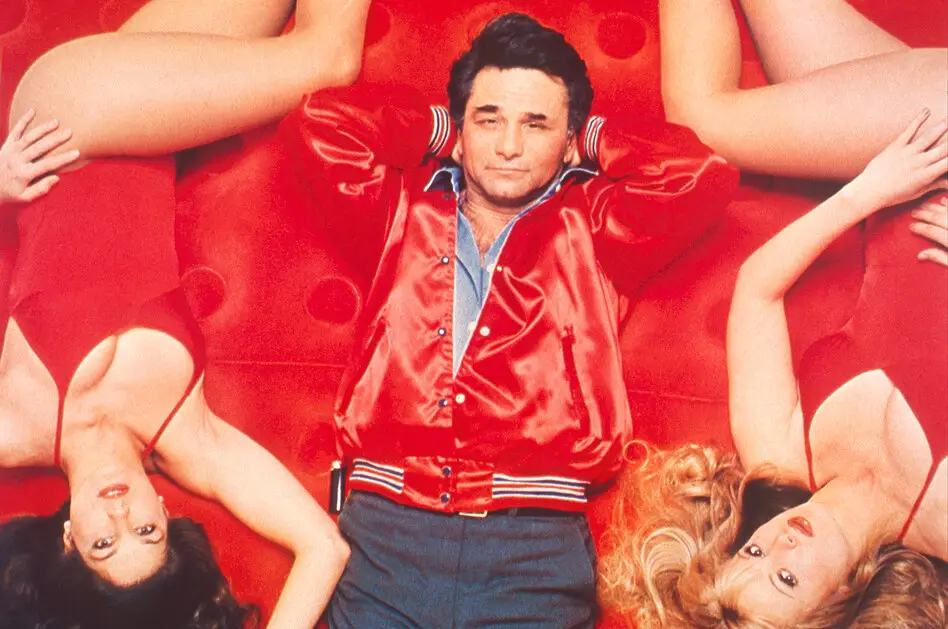
"A purely commercial film. No messages, just a comedy," Aldrich claims in blatant understatement about his last film "All the Marbles" (1981). The road movie, set in the commercial women's wrestling sport, about two young wrestlers fighting for victory, advancement and dignity and their gruff manager (Peter Falk), takes the audience through the motels of gray, smoke-filled industrial landscapes of the ailing Rust Belt alongside wild fight scenes.
And it confronts a superbly cast set of shady business partners and opponents who want to do their own business with naked women's skin and violence. A real rediscovery, even if (or even because?) the film is available in some video stores - under a German rental title (“Kesse Bienen auf der Mat”), which is probably aimed primarily at the classic target audience of the mud wrestling shows themselves.
Upheavals are also visible in the festival itself, although major direct cuts have not yet had an impact. But eight years after festival director Eva Sangiorgi took office, the ongoing smoothing out of the program cannot be overlooked. For example, this year the crowd-pleasing (and the Viennese) follow-ups of festival successes elsewhere or preview screenings of upcoming film releases (the so-called “features”) occupied for the first time on a large scale the limited program slots of the small, fine metro cinema, whose halls were previously entirely reserved for historical special programs.
The seal of quality of originality and resistance, which has given the Viennale great international reputation for many years, necessarily also includes a certain bulkiness in the programming: that even “smaller” film historical delicacies (such as this time the films by the Armenian-Soviet director Artavasd Pelechian, the Yugoslavian experimental filmmaker Vasko Pregelj or Jocelyne Saab) are given a large-scale appearance.
A highlight of these special programs was certainly the comprehensive exhibition of the work of the New York filmmaker Phil Solomon, who died in 2019 at the age of 65 and was a friend of Stan Brakhage, curated by Mark McElhatten under the beautiful title “The Solomonic Correspondences” by Mark McElhatten and expertly presented by Solomon's colleague Eve Heller called “reverse archaeology”.