
Germany taz
65th Anniversary of the Recruitment Agreement: Listen to Them!
Criticism of the culture of remembrance is still necessary in Germany. Because visibility neither dissolves thought patterns nor prevents racism. more...
Deutsch (original) ·Auto-translated to English
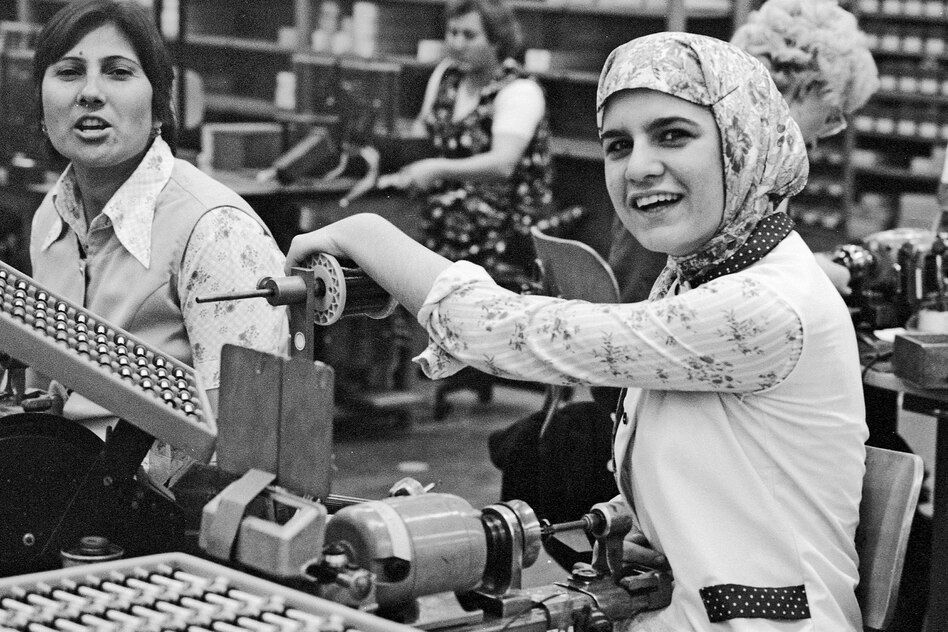
All of this is part of the German post-war narrative. But this recognition has limits: Germany honors what the migrant workers have done for the country, but ignores the stories they brought with them.
The people who came were never just workers. They had their own languages and brought with them political experiences, social conflicts and their own ideas of belonging. In the eyes of many Germans, these differences disappeared behind national designations of origin. What began as an administrative simplification later also shaped the memory of who these people were.
My father was Kurdish. He worked as a steelworker in the Mannesmann factory. He brought his family to Germany so that he could offer his children the opportunities that he himself had been denied. He had only attended school for four years. The reason for this was the educational opportunities there; he would have been intelligent enough for more education. Germans explained to him that there were no differences between Kurds and Turks. At the same time, he was treated with hostility by Turkish colleagues and experienced anti-Kurdish racism.
When I was a little girl in the park with my mother, she kept getting into situations that I didn't understand at the time. Other mothers ask her why she spoke Kurdish to her children. She explained herself in Turkish, embarrassed and angry. She had to justify speaking Kurdish to her children. But I didn't understand that until many years later. The anti-Kurdish racism that my father experienced at work continued for my mother in everyday life, in the park.
My father had Turkish nationality, but his identity was Kurdish. This distinction was not a minor matter.
The history of the Turkish nation-state is one of expulsion and denial of Kurdish independence, the suppression of Kurdish language and culture, the violent suppression of uprisings, the mass murders in Dersim, Bingöl, Diyarbakır - the list is long. It is also the story of dispossession, cultural appropriation and assimilation. The political conflicts that people fled or brought with them did not end when they crossed national borders.
This meant that Kurdish history was not simply subsequently incorporated into a broad, ready-made German memory. The people who made them visible defined this image themselves.
was born in Duisburg in 1983 and grew up in a working-class family. She is a theater director and author and studied drama directing at the Folkwang University of the Arts. In 2017 she received a prize for her production “Charlotte Salomon – Life or Theater?” the Götz Friedrich Prize.
The history of labor migration is neither just a German success story nor exclusively a story of racism and exclusion. It also includes political disputes and social self-assertion. The people who came to Germany were not just part of an economic development. They brought with them their own stories, conflicts and ideas about what society should be like. These experiences should not be pushed out of the discourse.
On the 65th anniversary of the recruitment agreement, more is needed from Germany. It is not enough to simply recognize the achievements of guest workers. The country must come to terms with why people have been reduced to their origins for so long, while their diverse stories have been ignored.
A culture of remembrance that only recognizes work performance unintentionally adopts perspectives from the time in which recruitment was once organized: people are only perceived as workers in their function in the country in which they work.