
Germany taz
50 years of women’s shelters in Germany: “Listen, we want to open a women’s shelter”
Tomi Tomek worked in Germany's first women's shelter, which was built exactly 50 years ago. She talks to the taz about security, solidarity and courage. more...
Deutsch (original) ·Auto-translated to English
taz: Ms. Tomek, you were there when the first women's shelter in Germany was founded in Berlin in 1976. What kind of time was that?
Tomi Tomek: Male violence against women was very present, but it was not discussed openly. “She just provoked it,” it was quickly said. I had previously worked as a social worker in a home for the homeless in Berlin-Kreuzberg. There was often a lot of chaos in the families, there was a lot of screaming. When the women came to me with their children, they were bruised and crying. But we were rarely able to talk in peace, as the violent man was always nearby.
taz: How did you become part of the initiative that founded the women's shelter?
Tomek: The well-known feminist Ursula Scheu called me. I was only 25 at the time and thought she was really great. She said, “Listen, we want to open a women’s shelter and we need someone else who can handle the children.” These children were often abused themselves or saw their mother being abused - so they wanted someone like me who came from the practice. I found that incredibly exciting. Then I quit my job and went there.
is a social worker and animal rights activist. In the 1970s she worked in Berlin in Germany's first women's shelter. The 74-year-old now lives in Switzerland and runs a rescue center for aggressive cats there.
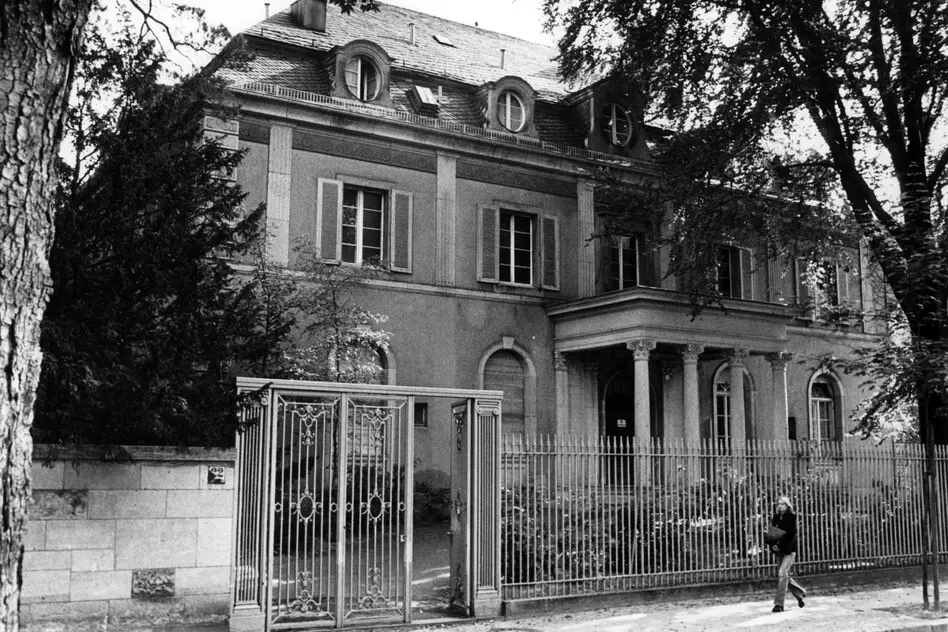
Tomek: The women's shelter was designed as a model project; the city made an old villa in Grunewald available to us. Where high society actually lives. It was quiet, our neighbors were artists or actors. I think even Romy Schneider lived nearby. When you came in, it was like being in an American film: a huge entrance hall, a staircase on the right and left, a large kitchen in the basement. Before the opening on November 1, 1976, we still had to renovate, get beds, all that. But then in October women were already at the door.
Tomek: Yes. If I remember correctly, the first person to come to us was the wife of a politician. “This is the proof,” we said at the time. Male violence is everywhere. At the time, many people thought that this mostly happened on the streets, in bars or with people who had no job, no money or difficult lifestyles. But the politician also beat his wife - just in places where you couldn't see it - until she eventually stood in front of us.
taz: The women's shelter was self-managed. How did they organize themselves?
Tomek: The house mother, Christa Winterfeld, was there. She was a great woman, very direct and very strong, she managed the whole house and was extremely good with the women. Ursula Scheu, Roswitha Burgard and Ruth Nehren looked after the women, while Sylvia Krug, Karin Kaltenberg and I were responsible for the children and young people. Ilona Böttcher did the secretariat and the lawyers Ingrid Lohstöter and Alexandra Goy provided legal advice. We tried to all be the same. That means there was a lot of communication, we discussed a lot, negotiated a lot. It was solidarity.
taz: What did the house mean for the women who came to you?
Tomek: For the women it was security, a protected space. In the women's shelter they were able to talk openly for the first time. Today there are cell phones, Instagram, the Internet to exchange ideas and information - none of that existed. So if a woman was in your room who had exactly the same experience as you and talked about it, that was very significant at the time. There were still arguments, the women came from difficult life situations and from very different backgrounds.
taz: A model for the Berlin project was in London. Erin Pizzey founded the first women's shelter there in 1971. Is it true that you also communicated with her?
Tomek: Oh yeah. In 1977 Sylvia and I went to see Erin in London. From there we brought a lot back to Germany: how we deal with men when they show up in front of the women's shelter, or how we train the police so that they are sensitized to violence against women. In 1979 I spent six months in a women's shelter in Denver, USA. There I learned about “Assertiveness Training” – a role play through which you learn to say “no”. We practiced this here with the children, the women and even the volunteers. I think we all learned that in the women's shelter: to have the courage. to do things.
taz: You're talking about men who showed up. Even today, working in violence relief can be dangerous. How threatening was it back then?
If women are beaten, threatened or controlled - for example by their partner - they can seek protection in a women's shelter. They can live there for free until the next steps are clarified. There is also space for your children.
According to estimates by the Women's Shelter Coordination Association, there are currently around 400 women's shelters in Germany with 7,800 places for women and their children. “Too little,” say experts and associations. According to the “Istanbul Convention to Prevent and Combat Violence against Women and Domestic Violence,” ratified by Germany, there is a lack of around 12,000 places in women's shelters in this country. The federal government passed the Violence Assistance Act in February 2025. From 2032 onwards, there will be a legal right to protection and advice - this will oblige the federal states to offer sufficient protection and advice facilities.
Are you affected by violence or know someone who is? The nationwide helpline “Violence against Women” can be reached around the clock on 116 016. Those affected of all nationalities, with and without disabilities, as well as their relatives, friends and specialists receive anonymous and free advice - by telephone and via online advice.
Tomek: It wasn't safe. The address of the women's shelter wasn't actually public, but at some point there was a photo of the house in the media - I think it was in the Bild newspaper. From then on, men kept showing up in the area, looking for the house and sometimes even trying to get in. Some have threatened. We then called in the police. One time it was very difficult: I went into her apartment with a woman to get her things and the man stood behind the door in the kitchen and put the kitchen knife to my neck. I then attended karate courses.
taz: That sounds stressful. Did you also have external support, allies in politics and society?
Tomek: A sponsoring association was founded for the women's shelter at that time, which also included women from politics. This was extremely important because they were well informed and were able to get something done at the political level. But these allies were also needed in other areas: among doctors, social workers, lawyers, and journalists. We talked to everyone constantly, did public relations everywhere. And the project was scientifically supported, and the report was then presented to the federal government and the Berlin Senate. I'm sure it helped that women's shelters were opened in other big cities - otherwise it would have taken much longer.
taz: You moved to Switzerland in 1980 and now no longer work in violence relief, but in animal protection. If you look back today, 50 years later, what has been achieved?
Tomek: A lot. Violence against women is made public today, which means there are more reactions to it. I also believe that the upbringing is different - boys are not raised to be violent like before and girls are encouraged more. But despite this, male violence is still a huge issue and the current trend of masculinism worries me. In order to prevent violence by men, it must be started much earlier - in kindergartens and schools, with emergency workers, police officers, social workers, in films and books. The women's shelter should be the last option.