
War & Militarism taz
1,708 days of war in Ukraine: Iron Curtain 2.0
There was a lot of border traffic in Volhynia in northern Ukraine. Since 2022, all crossings into Belarus have been closed and personal connections have been cut off. more...
Deutsch (original) ·Auto-translated to English
V olhynia, in northwestern Ukraine, is an area rich in forests and water, especially on the border with Belarus. Shortly before the start of the major Russian attack, I went on a two-day kayak tour on the Pripyat. In recent years, even the most remote areas of Ukraine have changed rapidly, but locals there still moved around in elongated boats, much like the gondoliers in Venice.
Five years later I came back to the region, this time to meet with Ukrainian border officials. I couldn't help thinking about that time - and noticed the changes. The Russian troops who came to Ukraine from Belarus in February 2022 immediately moved on towards Kyiv. Nevertheless, the locals feel the constant threat from their neighbors to the north.
For the people of Ukraine, war has become part of everyday life. Despite the mortal fear of air raids and fighting, life goes on: people go to work, school and university. They love, laugh, get married, have children, go on vacation. They mourn, worry – and hope for peace. ➝ to the column
A concrete wall reinforced with barbed wire now stands on the border, where the two countries were previously separated by only a narrow strip of sand. There are also anti-tank ditches and anti-tank hedgehogs.
The border guards have done a lot to show Belarusians that attempted attacks - a risk that has been warned against in view of Alexander Lukashenko's rearmament program - would not be a walk in the park. Nature also contributes to this: a former tourist magnet and still an important source of income for the local people today. “A third of the border in our region consists of swamps and rivers,” explains Marharyta, a representative of the border guard agency.
the Ukrainian journalist comes from the western Ukrainian city of Lviv. He was a scholarship holder for an Eastern Europe workshop from the taz Panter Foundation.
While locals used to be able to go right to the border to look for mushrooms or collect berries, this has now become impossible. Signs warn of mines.
There has been no cross-border car traffic since February 24, 2022 and the crossings are closed. This has disrupted professional, economic and family connections.
“I don’t even want to see them anymore,” says one of the border guards about his Belarusian colleagues, whom he knew well through many years of working together. They had still tried to talk to the Ukrainians after breaking their promise to prevent an invasion from Belarusian territory.
This article was made possible through the financial support of the Forschungsfonds Ausland e. V. You can support the research fund through a donation or membership.
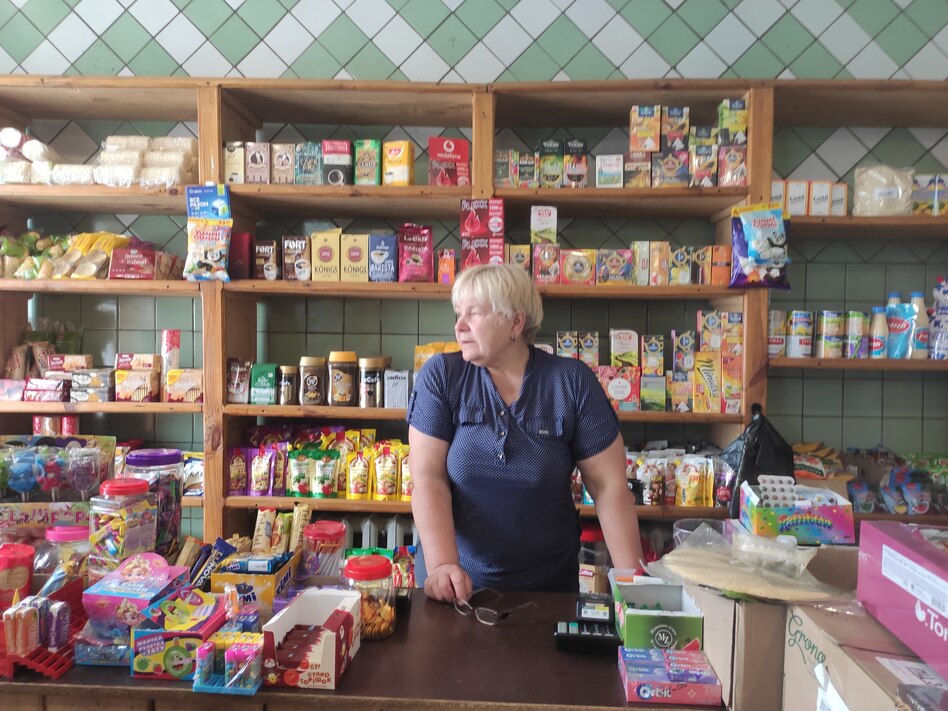
56-year-old Nina points to her cell phone: “This is the only way I can talk to my three sisters who live in Belarus,” says the woman, who works as a saleswoman in a small village shop. Almost all the people in her village with the traditional blue-painted wooden houses have relatives in Belarus. And most of them haven't seen them in years. Because traveling to the neighboring country is too risky and expensive.
“This place used to be full of Belarusians,” says 74-year-old Petro, visibly happy about the opportunity to chat. Before the war, the village was a stopover for Belarusians shopping cheaply in Ukraine. And for the Ukrainians who went to Belarus to work. Today, only small tractors occasionally drive through the town, which the locals use to transport berries from the surrounding forests.
The threat and the news about the consequences of Russian attacks keep everyone on tenterhooks. “As soon as I heard the explosion, I was already sitting in the basement,” says 79-year-old Volodymyr, whose son works in Belarus, about the recent flyover of kamikaze drones nearby.
Nevertheless, he smiles and hopes that the Belarusians will not dare to attack: "There are those among them who are against Ukraine. But most of them are more sensible." And the people from the village believe: "If they do attack, they won't get far. Our boys won't allow that."