
World · taz · · 2h
1,673 days of war in Ukraine: Home for vacation, despite the war
Deutsch (original) · Auto-translated to English
T he summer of 2026 will be particularly hot in Ukraine – and not just because of the temperatures. Often there is not enough time between the air raid alarm and the impact to get into the shelter. Nevertheless, this summer Ukrainians all over Europe packed their bags for a trip to Ukraine.
This is often more expensive than a holiday in Spain or Croatia. But they go to parents, spouses, friends - to the lives that the war did not completely wipe out.
For the people of Ukraine, war has become part of everyday life. Despite the mortal fear of air raids and fighting, life goes on: people go to work, school and university. They love, laugh, get married, have children, go on vacation. They mourn, worry – and hope for peace. ➝ to the column
Maria, Oleksandr and their daughter Alisa left Kyiv on the night of February 23, 2022 for a vacation trip. The next morning their land was in flames. The family sought protection in France. They have now learned French and found permanent jobs.
This summer, Maria traveled to Ukraine again for the first time, from Lyon to Uzhhorod on the Hungarian border, which is one of the safer cities in the country. Her vacation also had a practical reason: health.
was born in Chernihiv in 1978 and grew up in Kryvyi Rih. He later worked as a journalist and commentator in Donetsk and Kyiv. In 2015/16 and 2022 he reported for service in the army, and after demobilization he moved to Berlin with his family. Since then he has been commuting occasionally between Germany and Ukraine.
“Despite the high medical standards in France, visiting a doctor is often difficult,” says Maria. Language barriers regarding technical terms and long waiting times make examinations tiring. In Ukraine you can often get an appointment within a few days.
She spent part of her “vacation” undergoing treatment, the rest in thermal baths and with healing water. Her hotel had its own shelter, but she enjoyed the peace and quiet. Only in the morning did she read about the nightly attacks in other areas.
This article was made possible through the financial support of the Forschungsfonds Ausland e. V. You can support the research fund through a donation or membership.
For Iryna, Diana, Tymur and Yevhen the reason for traveling was different. The family comes from Kharkiv. Iryna lives in Germany with the children; her husband is in the army and is not allowed to leave the country. So only in Ukraine can they be together. From Hamburg the family flew to Chișinău in Moldova and then by bus to Odessa.
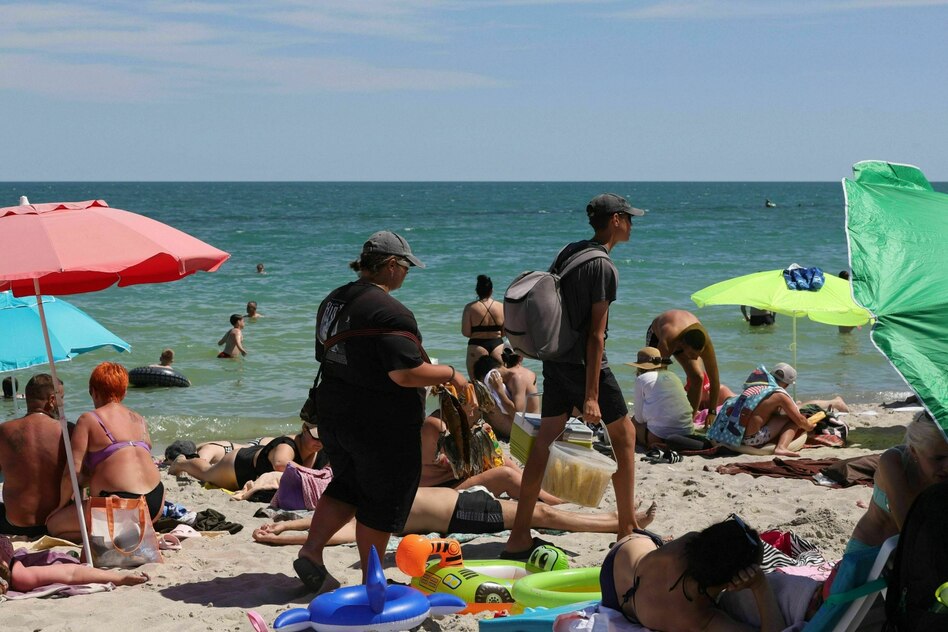
Before the Russian attack, Yuzhne near Odessa was her favorite place by the sea. Today, a beach holiday is hardly possible there. This year the family rented a holiday apartment near Chornomorsk – for 135 euros per day.
Shortly afterwards, a Russian attack damaged the water pipe and reconstruction took 4 days. The homeowner fetched water from a spring. There were attacks almost every night. Iryna's family moved to Odessa. There is war there too, but the city lived its summer: cafes were open, there was hardly any space available on the beaches, and there were shelters next to them. It was still a vacation for Iryna. Because the most important thing was the time with her husband.
Hanna, Denys and their three children spend every vacation with Denys' elderly parents in the steppe to help them. Both are over 80 and will no longer move there. These are not recreational trips for the couple.
The in-laws' vegetable garden feeds the family, but also requires a lot of work. The house needs to be winterized. After the Russians destroyed large warehouses, building materials are more expensive than in Germany. Incomes in Ukraine are significantly lower.
The family of five travels from Cologne by train via Berlin, Przemyśl and Kyiv to Pjatyhatky. But last spring's experience worried Hanna. At that time, their train to Kyiv was 12 hours late because the railway infrastructure was badly damaged. Hanna has warm clothes, seat mats and water with her. In the event of a nighttime attack, train passengers are evacuated to nearby forests. This time her family was lucky.
“We worked in the garden, bathed in the pond and chatted with friends and relatives,” says Hanna.
Your words do not explain why Ukrainians are traveling back. They describe what they are trying to preserve: a normal life outside of war - even if it means sleeping in shelters, stopping during an air raid and waiting hours for morning.
Read the full story at the source
Source: taz