
World Pressenza
Stop ReArm Europe – The EU Peace Coalition Demanding Social Reforms Over Rearmament
Stop ReArm Europe is a peace alliance comprised of more than 800 civil society organisations. They are united in their opposition to the increasing militarisation of the EU and the planned massive exp
English (original) ·Read in Deutsch ⇄
Stop ReArm Europe is a peace alliance comprised of more than 800 civil society organisations. They are united in their opposition to the increasing militarisation of the EU and the planned massive expansion of defence spending.
By Maximilian Stark and Rachael Mellor
Under the motto “Welfare, not Warfare,” this coalition of peace initiatives, trade unions, civil society organisations, and climate action movements is demanding that people become the priority in European politics.
Will billions spent on military buildup actually create more security? Or would investments in education, health, social justice, climate protection, and international cooperation make a greater contribution to security in the long run?
The initiative understands security not only in military terms, but also socially, ecologically, and economically. Rather than becoming more capable of warfare, why not become more capable of peace?
“We do not need more weapons; we do not need to prepare for more wars. What we need is a totally different plan: real, social, ecological and common security for Europe and for the world.” – Stop ReArm Europe.
 Image copyright: Stop Rearm Europe | Campaign Materials
According to the European Defence Agency (EDA), defence spending by EU member states totalled an unprecedented €418 billion in 2025 – an increase of 20% compared to the previous year. The figure is predicted to rise to €454 billion in 2026. This corresponds to approximately 2.4% of the EU’s economic output.
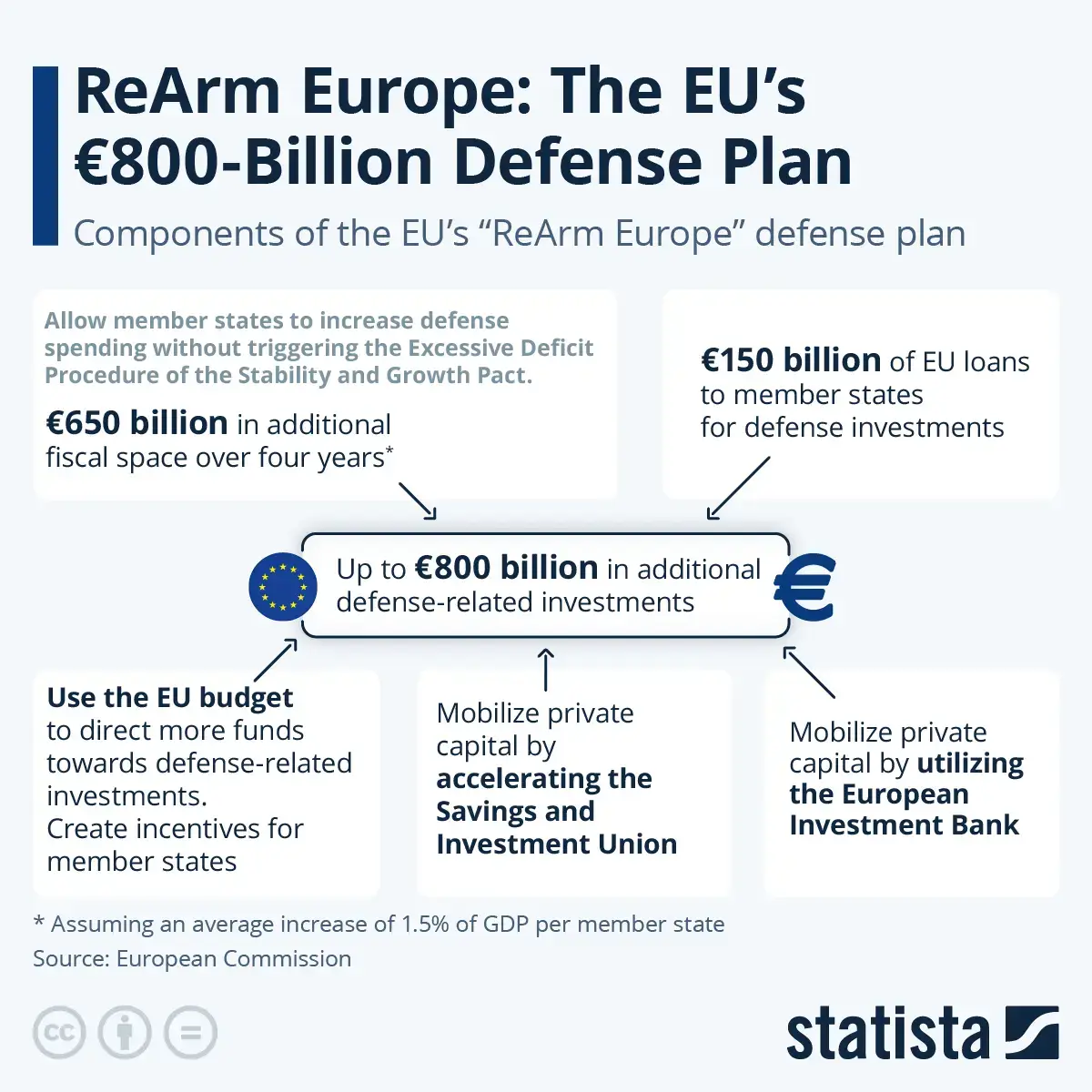
In March 2025, the European Commission presented the “Readiness 2030” initiative, known initially as ReArm Europe. The goal is to mobilise a further €800 billion for defence spending by 2030.
A key component of the plan is a €150 billion lending program available to member states for joint armament projects. Relaxation of EU budget rules will enable the additional €650 billion.
In 2025, NATO member states (23 of 27 of which are EU members) committed to a new spending target of 5% of GDP by 2035.
Stop ReArm Europe have openly criticised this move for pushing social and environmental challenges to the background. Prioritising military spending will lead to stricter austerity measures, growing national debt, and increasing dependence on the arms industry.
Ever-increasing military spending fails to bring greater security; instead, it ignores the root causes of instability and aggravates international tensions.
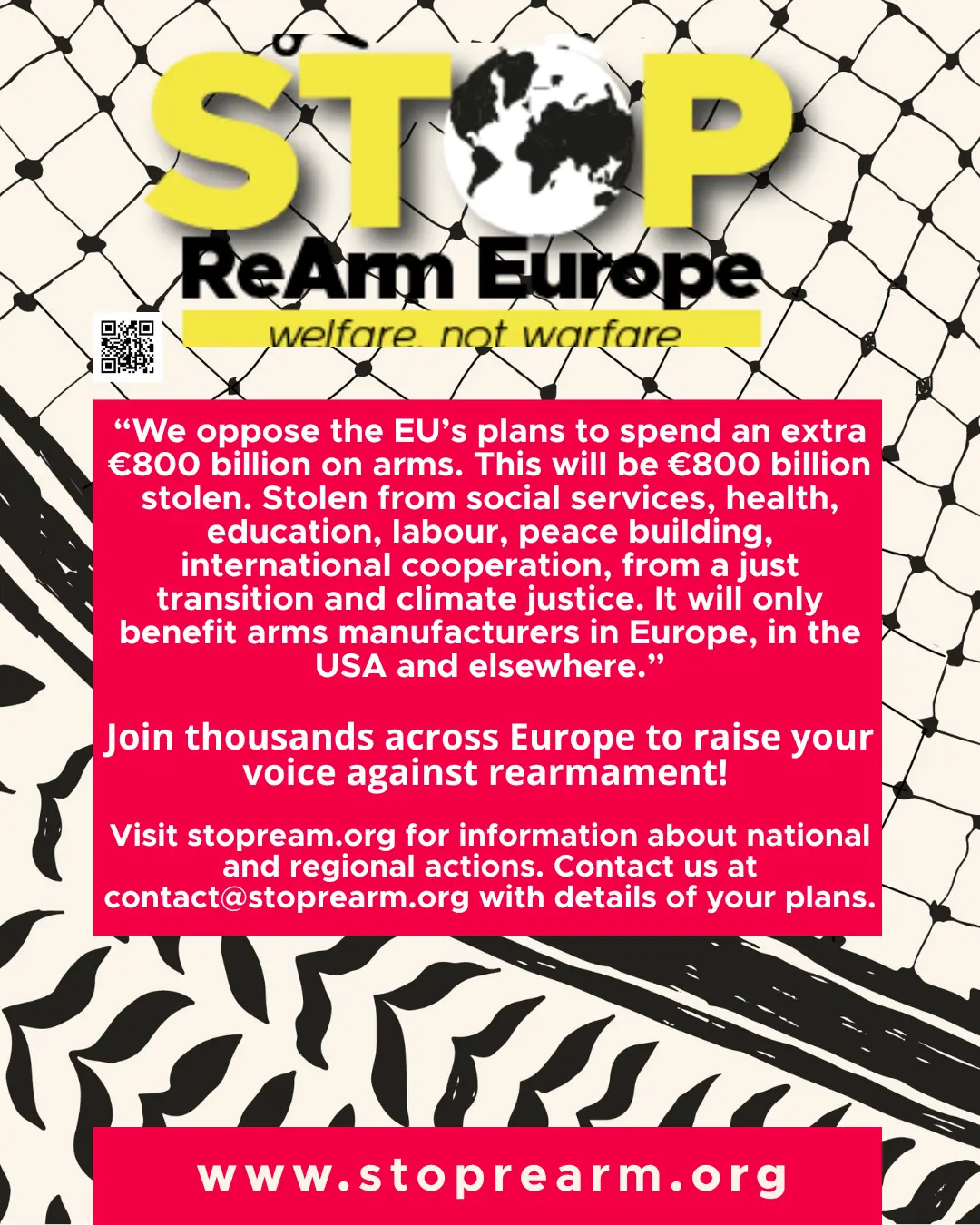 Image copyright: Stop Rearm Europe | Campaign Materials
Militarisation vs Diplomacy & Conflict Resolution
Through demonstrations, protests, petitions, youth strikes, social media campaigns, and Europe-wide networking meetings, the alliance is attempting to bring its demands into the public debate.
On November 20, 2026, countries across Europe, including Austria, Germany, Italy, France, Spain, and Belgium, will mobilise to refuse ‘the future governments are preparing for them’.
The first-ever international youth strike is planned on the same day under the motto ‘Fight For Our Future, Not Their Wars.’ The movement links the demand for disarmament with issues of social justice, climate protection, and the future prospects of young people.
The central message is: Sustainable security is not achieved solely through military strength, but requires social stability, ecological responsibility, and policies that resolve conflicts as peacefully as possible.
The movement also emphasises the link between increasing militarisation and the climate crisis. One of the biggest blind spots of climate change is the impact of emissions from war, the armed forces, weapons production, and the arms trade.
The military is one of the largest consumers of fossil fuels, as tanks, aircraft, ships, submarines, and other vehicles ferociously consume fuel on their warpath.
With a lack of transparency, zero accountability and no legal requirement to monitor and report, estimates put the combined contribution to climate change at 6%. The actual percentage is likely much higher.
Stop ReArm Europe is suggesting an alternative: A security strategy that relies on diplomacy, civilian conflict resolution, common security, international cooperation, and a fair distribution of public resources.
 Flickr | Alan Denney
Who Are The Driving Forces Behind Stop ReArm Europe?
Stop ReArm Europe is not a centrally organised party or a single association with a prominent leader. It is a broad alliance of peace organisations, trade unions, civil society networks, environmental initiatives, and political groups.
In a statement in March 2026, they announced that they are now joined by more than 800 organisations and associations.
International peace and disarmament organisations play a crucial role. Among the initiators and coordinating members are the International Peace Bureau (IPB), the Women’s International League for Peace and Freedom (WILPF), the Campaign for Nuclear Disarmament (CND), the Stop the War Coalition, the European Network Against Arms Trade (ENAAT), and the Centre Delàs for Peace Studies.
The anti-globalisation network Attac is also represented by its national organisations, including Attac Austria, Attac Germany, Attac France, and Attac Italy.
These organisations bring years of experience and expertise in peace work, help raise awareness of the dangers of militarisation, call out the deadly arms trade, and use their large audiences to mobilise protests.
Trade unions and social movements also form an important part of the alliance. They are supported by the Italian trade union federation CGIL, the French trade union federation SUD Santé Sociaux, and numerous other trade union initiatives.
Trade unions argue that rising military spending restricts financial resources available for public services, good working conditions, and social security.
Environmental and climate movements such as Extinction Rebellion, Fridays for Future, and Debt for Climate, which address the connection between armament, resource consumption, and the climate crisis, are also among the supporters. Political networks such as DiEM25 and the European Left are also represented.
Militarisation & Stop ReArm Europe In The UK
No longer a part of the EU, the UK is also actively increasing its own defence spending. They have announced a target rise to 2.5% of GDP by 2027, bringing its total defence and security budget to an estimated £74 billion. They also plan to align with broader NATO targets, including reaching 3.5% of GDP on defence spending by 2035.
Public opinion on this topic is heavily polarised. Fifty-six per cent of Britons say they want the government to spend more on defence. Support has doubled in the last two decades.
Half of Britons believe the UK should prioritise building a close defence relationship with the EU.
Sadly, and most likely due to increased perceived threats, just 17% think defence spending should be reduced.
Despite rising support for increasing defence spending, half of Britons say there are absolutely no circumstances under which they would take up arms for Britain.
Opposition to the government’s stance on rearmament is strong from trade unions, antiwar coalitions, and students. Momentum has also been building following frustration over the government’s autumn budget, lack of funding plans for increased defence spending, the rising cost of living, and poor climate policy.
The UK is included in the pan-European mobilisations, with support from Stop the War Coalition, CNDUK, the National Education Union, People & Planet, Disarm Education, the Palestinian Youth Movement, Forces Watch, and many others.
The main national demonstration will take place on November 20 at 12:00 noon at Parliament Square in London, aligning with broader European anti-rearmament efforts.
Walkouts are being organised at more than 200 schools, colleges, and universities across the country. They have secured official participation from the National Union of Students (NUS), which represents millions of students, the University and College Union (UCU), and Unison, all of which have called for a simultaneous national day of action across UK universities.
Stop ReArm Europe In Germany & Austria
In Germany, events are being supported by the Information Center on Militarization (IMI), regional Attac groups, and other initiatives within the peace movement.
One of the main issues is the 5% GDP commitment. Estimates suggest this could mean annual expenditures of around €200 billion. In 2022, the German government already approved a special fund of €100 billion for the Bundeswehr (German Armed Forces). At that time, the regular defence budget was around €50 billion, a massive increase.
Investments in education, social services, healthcare, and climate protection often fall short of what is needed. German peace organisations have been protesting against increasing militarisation, the reintroduction of conscription, and the transfer of public funds to military sectors.
The German motto for November 20 is “Social Justice Instead of War“, it will coincide with a nationwide school strike against the reintroduction of conscription.
In Austria, the campaign is being organised by Attac Austria and the Stop ReArm Europe Austria alliance. The Austrian mobilisation is against European rearmament plans and their national development plan “Austrian Armed Forces 2032+”.
According to Attac, Austrian military spending has already doubled since 2020, when it stood at around €2.6 billion. In 2026, approximately €4.7 billion has already been earmarked for its defence budget. The government also plans a further increase to 2% of GDP by 2032, which would amount to €12 billion a year.
The proposed relaxation of legal restrictions on arms deliveries to warring parties is also under fire. Stop ReArm Europe Austria has emphasised the importance of Austrian neutrality and is demanding a ban on arms exports to conflict zones as well as military assistance obligations.
 Fibonacci Blue | CC BY 2.0
Stop ReArm Europe, For A Better World
It is a fact that large-scale military investments divert crucial public funds away from social services, healthcare, education, labour protections, peacebuilding, international cooperation, and climate action.
It is also common knowledge that militarisation increases the likelihood of war, creates nuclear tensions, fuels national debt and austerity, causes global inequality, creates endless suffering and destruction, tightens borders, deepens nationalism, and accelerates climate change.
Quite simply, without weapons or armies, war would become a relic of the past.
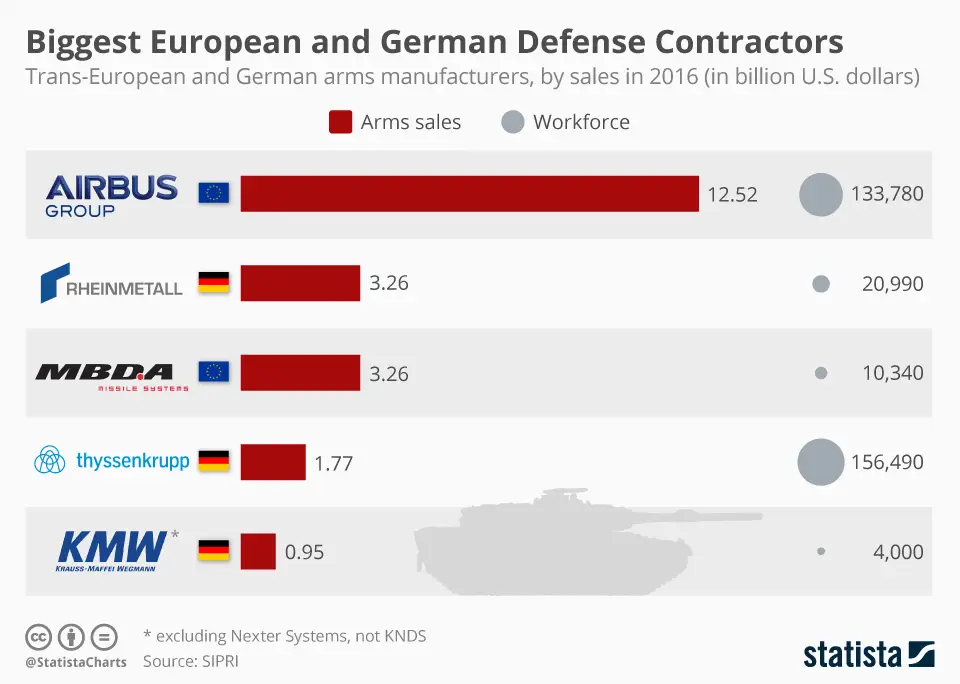
The only beneficiaries of rearmament are the arms manufacturers.
If we truly value safety, we must start prioritising diplomacy, international law, dialogue, the UN Charter, and climate justice.