
World Pressenza
Serbia, a new democracy after the Student List’s victory
Two days before Serbia s new National Assembly holds its constitutive session on 17 November, I have met in Brussels two members of the Student List delegation to the EU enlargement forum hosted by Co
English (original) ·Read in Deutsch ⇄
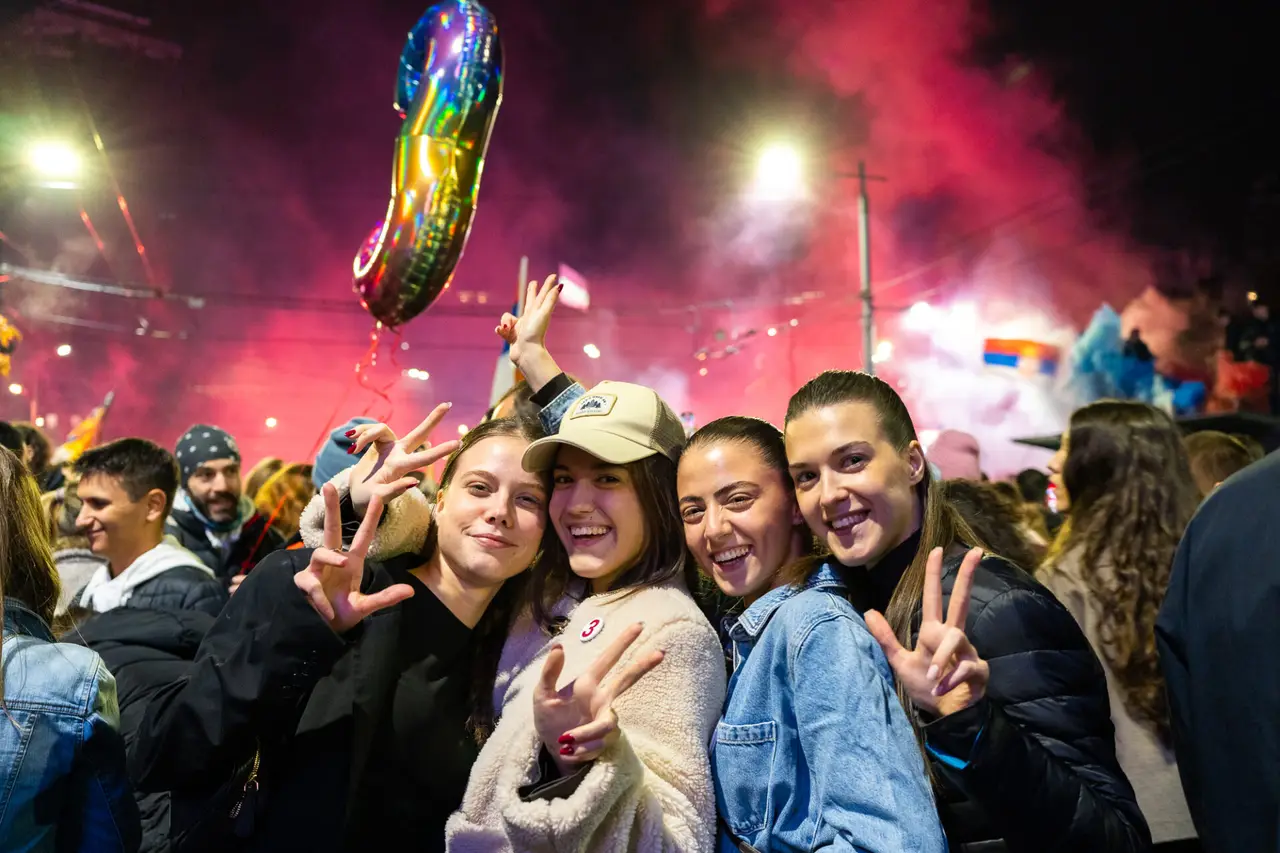
Two days before Serbia’s new National Assembly holds its constitutive session on 17 November, I have met in Brussels two members of the Student List delegation to the EU enlargement forum hosted by Commissioner Marta Kos: Aleksandar Baucal, professor of psychology at the University of Belgrade and a future member of Parliament, and Ana-Marija Radosavljević, a student from the University of Novi Sad.
A government in waiting
The outgoing Serbian Progressive Party (SNS) government accepted the electoral result, but it stays in office with a technical mandate and, as Professor Karović warned on RTS television on October 28th, it still uses the levers of power in sensitive sectors such as energy, the economy and security. In Parliament, the students want the majority to choose the speaker and committee chairs to be elected on merit and competence, a model the SNS and acting president Ana Brnabić strongly oppose.
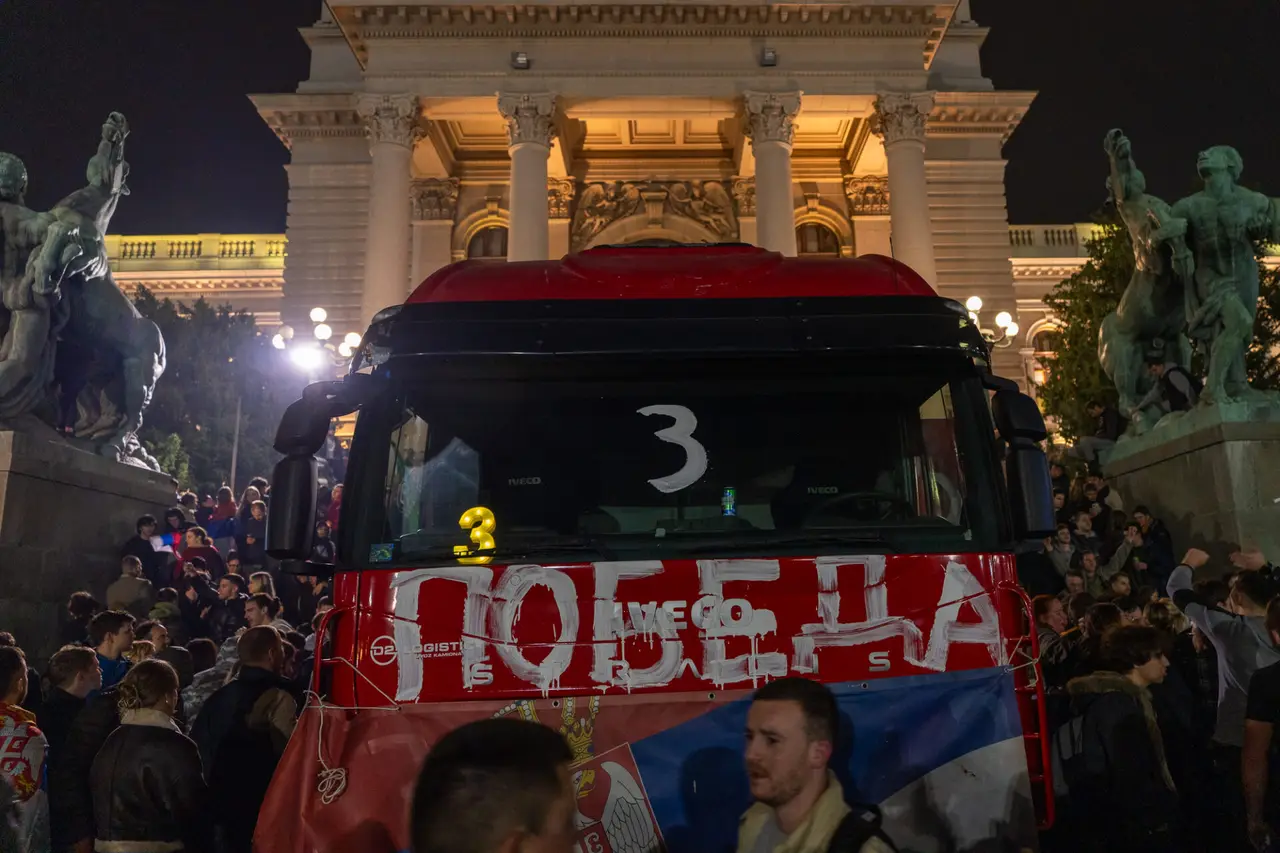
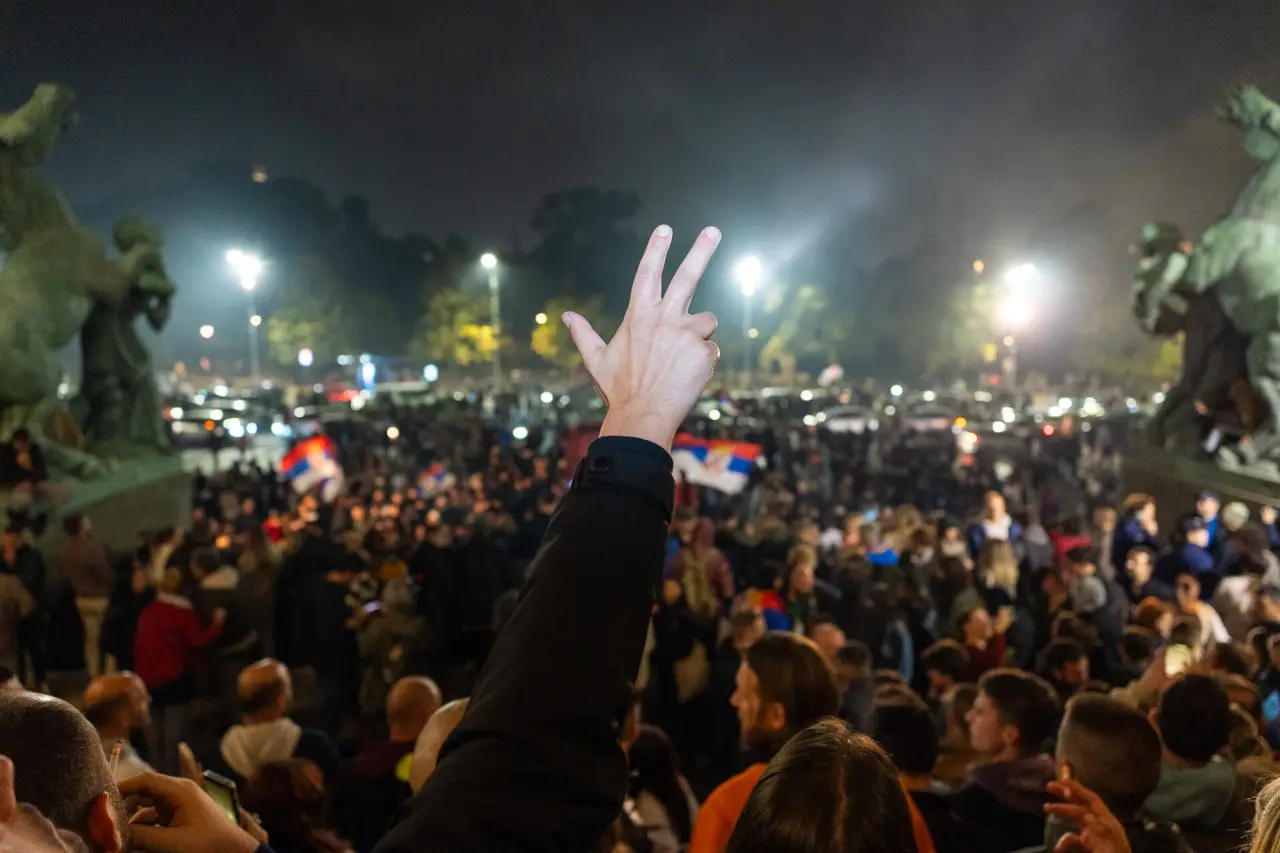
Asked how they will stop the outgoing administration from obstructing the handover, both answered with procedure and law. Baucal called obstructions “just potholes on the road”: the movement will not be drawn into those games, but will focus on “the goal we all set out for together.”
The movement and its list
Radosavljević describes the relationship between the student movement and the Student List as “very positive and full of respect”. Baucal describes it as a reversal of roles: the deputies are now the students, and the students their professors of democracy and the rule of law.
Baucal names three anchors: shared values, a shared programme written by students, candidates and outside experts, and the citizens. “In our discussions we always treat citizens as indivisible. Those who did not vote for us too: we think about how to build a normal State that will be good for them as well.”
On November 3rd all candidates signed a statement of responsibility: no ties to the former ruling parties, no abuse of public office, no switching of parliamentary groups, no votes against the programme; anyone who breaks it is deemed to have resigned. According to Dejan Šoškić, a Student List candidate, the students are shaping the new government “in communication with” the list. Yet he also stated that under the law an elected deputy “becomes the owner of the mandate and decides independently”. Reconciling direct democracy with institutions and a government that must act fast will not be easy.
In this transition, before the Assembly is constituted, the student movement still leads the way and sets the rhythm. That is natural: the students have spent two years experimenting with and perfecting self-organisation, while the Student List’s deputies met each other only a few weeks before the official campaign began. The students’ first test will be to let their deputies work independently in Parliament, without day-to-day supervision.
Outside the students’ plenums stand the “zborovi”, neighbourhood assemblies where every citizen may speak regardless of status or education. They were the backbone of the network of some 80,000 citizens who guarded the vote as controllers, observers and mobile teams. Baucal says they were never formally part of the student movement and the Student List, “but democracy is most resilient when it is spread across the whole of society, not only in Parliament, among political parties or in the media. My personal opinion is that the zborovi are only now going to flourish.” That matters: after October 5th 2000, date of the fall of the authoritarian regime of Slobodan Milošević, most citizens believed the job was done and went home, and within twelve years the Socialists and Vučić’s rebranded Radicals were back in power, plunging the country back into the narratives of the 1990s.
Arrests, purges and the archives
A week after the vote, Marko Kričak, head of the criminal police since late 2025, was arrested with his deputy Boško Sekulović on the order of the prosecution, accused of abuse of office, of manipulating the investigation into a murder in Senjak and of mistreating a man in custody. In August 2025 the student Nikolina Sinđelić accused him of beating her and threatening her with rape in the government building’s garage. Her criminal complaint went unanswered; he denies it and sued her for defamation. The prosecutors and judges acting now were appointed under the old regime. Asked whether this is real justice or an internal SNS settling of scores, Radosavljević did not hesitate: “The first question has a very easy answer: Yes.” In part, she added, “it is definitely inter-party score settling”. The Student List plans “a very deep revision of all systems, including the police and the Security Information Agency (BIA)”, and a prosecutorial police force able to work without political influence.
However, the most imminent risk is the destruction of documents and archives in the BIA, the military security agency (VBA), and the interior ministry. Dismantling the security agencies in their current form and opening their archives is the first condition for transitional justice, which Serbian society has been waiting for since October 5th 2000.
Europe yes, but after a referendum
On the EU, Baucal is unambiguous. “All the principles and standards built into [Serbia’s] accession are fully in line with the student programme.” Chapters 23 and 24 are “the core” of it: a normal State in which citizens can exercise their rights and rely on their institutions. The final word, however, would go to the people: once Serbia meets all the standards, citizens will decide in “a fair and free referendum”, because “this decision concerns many generations to come, so it is fair that it is not the decision of whoever happens to be in power, but of all citizens”.
In informal conversations and earlier public statements, members of the movement have been clear that they do not intend to impose sanctions on Russia: Serbia depends on Russian energy, the two countries share deep cultural and Orthodox Christian ties, and the movement wants to rebuild institutions before turning seriously to foreign policy. But alignment with the EU’s common foreign and security policy, sanctions included, is an accession benchmark, and it is where Brussels’ goodwill towards the new majority will first be tested. Brussels, however, is in no position to lecture: for years it tolerated Vučić for the sake of stability, and EU member States kept buying Russian gas long after the sanctions began.
Kosovo: agree to disagree
On Kosovo, Radosavljević restates the movement’s stance: respect for UN Security Council Resolution 1244 and the Serbian Constitution, and a dialogue that ensures “a decent and dignified life for all people” in Kosovo. Baucal points to two changes of tone. “We will be open negotiators and respect the other side. We agree to disagree on the question of status,” he says. The second change is a focus on the Serb community: its rights, its security, and the protection of cultural heritage and religious sites. “It seems to us that the previous government did not take care of people. They simply sacrificed people and their rights. We will bring them back into the conversation.”
The rest is still unwritten
The names of the speaker, the prime minister and the ministers will be known only at or after the constitutive session on November 17th , and a presidential election is expected in December. This election has already sent Ivica Dačić’s Socialists out of Parliament and into historical oblivion. But as long as the SNS keeps its hold on the levers of power, Serbia will not break free of the legacy of the 1990s. The students have won the vote. Winning the state will take institutions that answer to citizens, and citizens who, this time, do not let go.