
World Pressenza
From the Tent to the World
I remember very clearly that, before the genocide began in Gaza, whenever I saw Syrians and Sudanese people sleeping in tents, my heart would ache deeply. I would stop and look at their photographs, a
English (original) ·Read in Deutsch ⇄
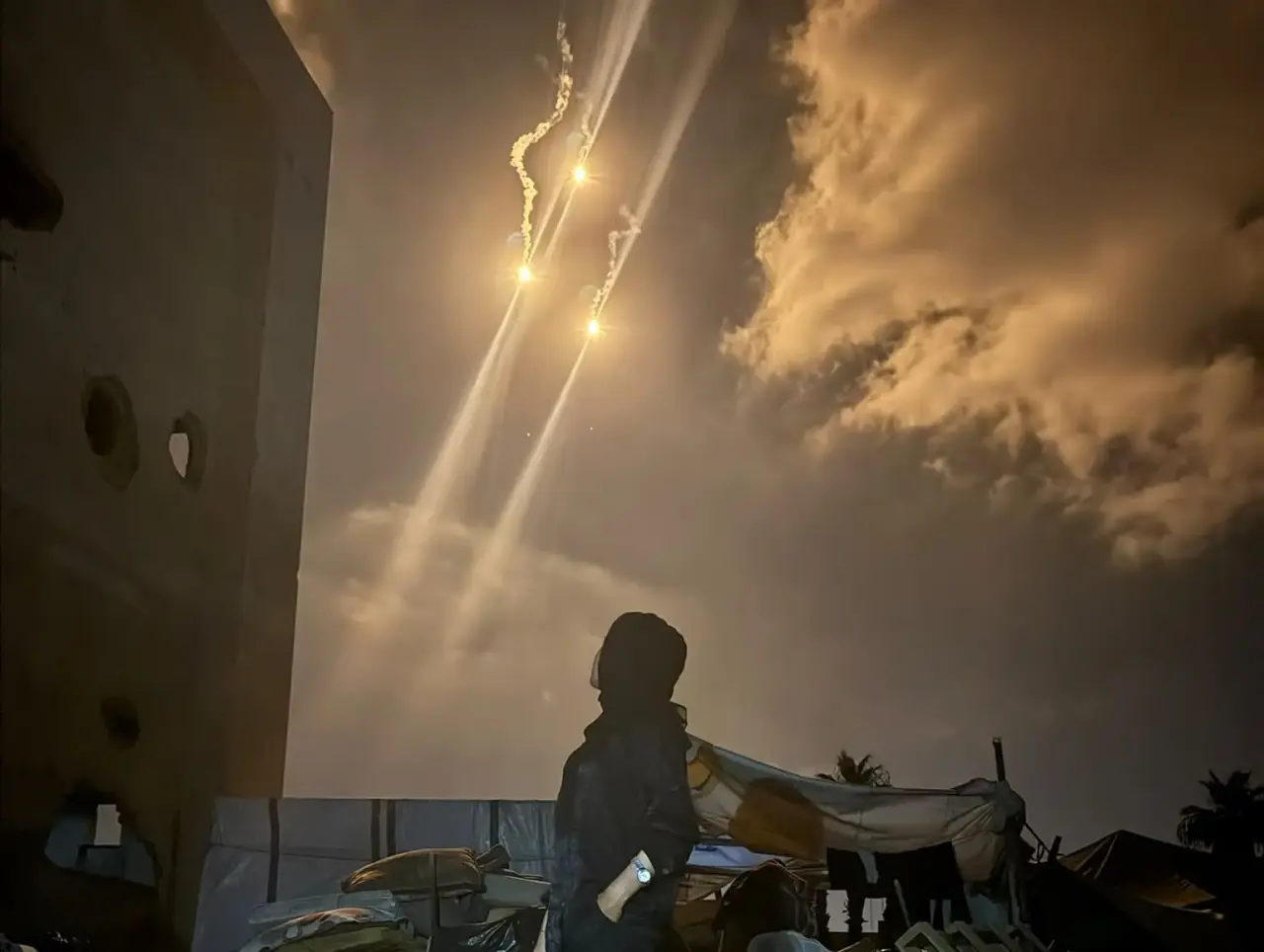
I remember very clearly that, before the genocide began in Gaza, whenever I saw Syrians and Sudanese people sleeping in tents, my heart would ache deeply. I would stop and look at their photographs, always wondering: How do these people live? How can a family wake up every morning under a roof made of fabric? How do children sleep in the cold? How do mothers bear watching their children grow up in a place that does not resemble a home and cannot provide them with even the most basic necessities of life?
I used to imagine that living in a tent meant losing privacy, warmth, comfort, and the small details that make a place feel like home. I wondered how people adapted to such circumstances and how they managed to continue living when everything familiar to them had disappeared. But I never imagined, not even for a moment, that one day I would find myself living the same experience.
I never imagined that a tent would become the address of my life, that I would spend three years living in one, or that waking up to the sound of wind and rain, sleeping on an unsuitable floor, and searching for water, electricity and privacy would become part of my everyday routine. I never imagined that I would move from being someone who watched other people’s suffering and wondered about it to someone who experienced those very same realities.
My first real shock, as a Palestinian from Gaza, was realising that I was no longer watching other people’s suffering from a distance. I had become part of the very picture that once broke my heart. I no longer wondered how they lived, because I had come to know.
I learned what it means to lose your home, to reduce your entire life to a small bag in which you try to save whatever you can. I learned what it means to move from one place to another searching for safety, only to discover that safety no longer exists anywhere. I learned what it means to wake up every morning without knowing whether the day will give you another chance to live, take someone you love away from you, or destroy another place that means something to you.
I also learned that a tent is not simply a place to sleep. It is an entire life imposed upon you without your consent. A life in which you cannot plan for tomorrow, maintain your routine, or even guarantee the simplest things you once considered basic human rights. And when I finally decided to take a break, to give myself a chance to survive, perhaps that was the most difficult decision and the most painful feeling I have ever experienced.
Leaving Gaza was not a simple victory. It was not the moment of happiness that some people might imagine. It was a complicated mixture of fear, confusion, guilt, grief, and the desperate desire to stay alive.
How can someone feel happy about surviving while knowing that their family and loved ones remain in the very place they are trying to escape? How can you leave your parents, your siblings, your friends, your home, your streets, and all the little details that shaped your identity, and then convince yourself that you made the right decision?
I knew I needed to survive. But I also knew that surviving meant leaving a huge part of my life behind.
I left through the Abu Salem crossing, a crossing for which I had to obtain permission from the occupying power simply to leave my own country. I had to pass through checkpoints and restrictions, accepting that I did not even have full control over what I was allowed to take with me. I was not permitted to bring all my belongings. I had to leave many things behind: clothes, personal belongings, and small objects that might mean nothing to someone else but carried pieces of my life.
It felt as though I was being forced to leave my country without even being given the opportunity to collect my memories. It was not simply about leaving material possessions behind. It was the feeling of being uprooted from your own life without having the chance to say goodbye.
I left on a bus carrying fifty passengers. I remember that bus so clearly. I remember the seats, the faces, the silence, and the expressions of people carrying so much behind their eyes. Nobody knew exactly what awaited us on the other side. Perhaps each of us was trying to understand that we were leaving a place that, until recently, had been our entire world.
It felt like my last breath in my homeland. I kept looking outside, trying to preserve every image in my memory. I did not know when I would return, or whether I would ever be able to return at all.
Leaving was a strange experience. You are leaving a place where you have been fighting to survive, yet you do not want to leave it. You want to live, but you do not want your life to be somewhere far away from the people and places you love. Afterwards, I began seeing so many Israeli flags raised across my land. It was an incredibly painful sight. I felt as though I was witnessing, for the first time, the extent of the transformation that had taken place in the place I once called home.
Then I saw something I had never imagined I would experience in my lifetime. I saw Palestine.
I saw other parts of my beloved Palestine, the land I had always read about in books, seen in photographs, and heard about through the names of its cities and mountains, without ever imagining that one day I would see them with my own eyes. I saw the Dead Sea, the Palestinian mountains, the Jordan Valley, and the extraordinary diversity of the landscape. I saw a beauty I had never imagined was so close to me.
It was the first time I had seen these parts of my homeland in this way. The painful irony was that I was not travelling through them as a tourist or as a free citizen moving around her own country. I was passing through as someone who had been forced to leave her home to escape death.
I kept looking through the bus window, afraid of missing even a single view. I wanted to see everything, to remember the shape of the mountains, the light, and every detail of the land. I felt an overwhelming love for this place, but it was a love mixed with a pain I could not explain.
Why do I need permission to see my own country? Why can I study the geography of Palestine, memorise the names of its cities, and read about its history, but I cannot travel through it freely? Why does seeing my own land feel like a dream that requires a permit and official approval?
I kept thinking about the fact that I am Palestinian, that this land is not simply somewhere I visit. It is part of my identity, my family’s history, and my memory. Yet I did not have the freedom to see it in the way people normally experience travelling within their own country. We eventually arrived in Jordan.
I had reached a new land, and I was supposed to feel relieved because I was finally away from the bombing and immediate danger. But the first thing I felt was a deep ache in my heart.
Why must survival happen this way? Why must I leave my own country to enjoy the most basic human rights? Why must I leave the place I love simply to be able to sleep without fear?
For the first time in a very long time, I took a shower in a proper bathroom.
It may seem like a small detail to anyone reading these words, but for me, it was a moment beyond description. I stood under running water, unable to believe that I did not have to search for it, store it, or worry about when it would run out.
For the first time, I was experiencing something I had once considered so ordinary that I never even thought about it.
That night, I slept in a real bed.
I remember how much I had wished, throughout those years in the tent, simply to lean my back against a stone wall. A solid wall, not a piece of fabric moving with the wind, not a temporary shelter that could never make you feel truly safe. I wanted to stretch my body on a bed and close my eyes without thinking about the rain, the cold, or the sounds that might wake me up.
When it finally happened, I could hardly believe that I was living that moment.
How strange it is that the smallest things can become the biggest dreams. A bathroom becomes a luxury. A bed becomes a wish. A stone wall becomes a symbol of safety. Sleeping without fear becomes a privilege you never imagined you would have to search for. But what I remember most happened that evening.
When I went outside and saw the amount of light around me, my eyes could barely adjust. After three years of living in tents and displacement, the world looked different. Colours seemed brighter. I saw flowers, green trees, gardens, roads and buildings. I watched everything with astonishment, as though I were learning how to see the world again.
I never imagined that looking at a green tree or a flower in a garden could awaken so many emotions inside me. At first, I told myself: We survived.
I was somewhere I could take a shower, sleep in a bed, and walk down the street without fearing death at every moment. But I soon discovered that physical survival does not mean a person has recovered from everything they have endured. Every beautiful scene I encountered opened another door to pain. When I saw trees, I remembered the trees in Gaza. When I saw green fields, I remembered my father’s land, the land that had been part of our lives and memories, the land whose details I knew and to which I felt deeply connected.
I remembered how beautiful our country was, how full of trees and green landscapes it had been, and how nature had always been part of our everyday lives. I remembered the places we used to pass without realising how beautiful they were, and the ordinary moments we never knew would one day become memories we would desperately try to recover.
I looked at the beauty of nature around me, but my mind kept returning to Gaza.
Why did I find myself comparing every tree to the trees in my homeland? Why did every green field remind me of my father’s land? Why did seeing something beautiful make me sad because it reminded me of what we had lost?
Perhaps it was because I was not looking for another beautiful place. I was looking for my homeland everywhere.
I wanted to be happy, but my happiness always stopped at one thought: my family was still there. I was here, seeing the light, flowers and trees, while they were there, not knowing what the next day might bring. I was here, sleeping in a bed, while they might still be unable to sleep safely. I was here, able to open a window and look at the world, while I did not know what they could see around them.
It was difficult to understand that life could continue like this: a world full of colours, light and movement existing at the same time as an entire family living in fear, uncertainty and endless waiting. As time passed, I began to understand that I had never truly left Gaza. Crossing a border does not mean leaving an experience behind.
I had left physically, but I was still living with its details. Sometimes I wake up remembering the tent. Sometimes I miss things I once thought I wanted to escape from. I miss the life we had before life itself became a struggle for survival. And perhaps the hardest part is that I do not know when this waiting will end. I do not know when I will see my family again, when I will return to the place that carries my name and memories, or whether the home I once knew will still exist when I return.
I never imagined that one day I would become the person others look at and wonder about: How does she live? How did she survive? How can she begin her life again?
Perhaps this is what has changed most deeply inside me. Before the genocide, I looked at people living in tents and wondered about their lives. Today, I know the answer. But I also know that some experiences cannot be fully explained through words.
No one can truly understand what it means to lose a home until home becomes somewhere they cannot return to. No one can fully understand survival until they discover that surviving sometimes means leaving behind the very people they wanted to survive with. And no one can fully understand exile until they discover that they can find a safe place in the world, but nowhere that can replace their homeland.
I survived death, but I did not survive the loss of the life I once knew.
Even today, whenever I see a green tree, wake up in a brightly lit room, or lean against a solid stone wall, I remember that tent. I remember the girl who used to look at other people’s lives and wonder how they managed to live. And I remember that I became the very person others now wonder about.
But what I wish for most is not to find a more beautiful place or to live a more comfortable life. All I wish is for the day when I can return to my homeland, see my family, walk on my father’s land, and see the trees of Gaza once again. To return to a place where I do not need permission to feel that I belong. Because I was never searching for a new life away from Gaza.
I was simply trying to stay alive until the day I could finally live again.
Ansam Alruhal