
Politics Pressenza
Ruiz Jiménez: “Serbian students have shown that nonviolence is an active, disruptive, and effective political force.”
“… The most difficult challenges facing the new government will be to channel the moral energy of the protests into effective democratic institutions and to select a final slate of candidates capable
English (original) ·Read in Deutsch ⇄
“… The most difficult challenges facing the new government will be to channel the moral energy of the protests into effective democratic institutions and to select a final slate of candidates capable of carrying out the ambitious reforms the people expect. But whatever the outcome of that effort, Serbia has already demonstrated something extraordinarily hopeful: that dignity can become a successful political force even under extremely unfavorable circumstances.”
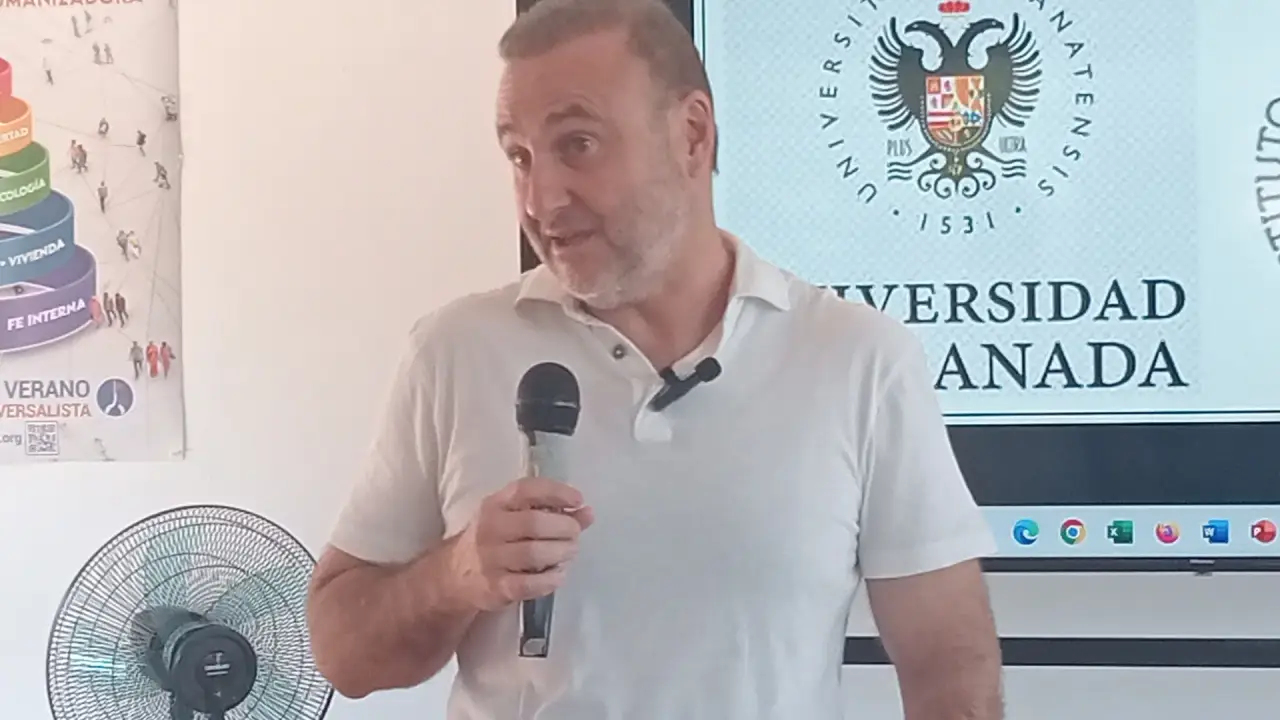
We are familiar with your career as a historian and professor specializing in the Balkans, as well as your work as an activist—if you identify with that term—for peace and nonviolence. We heard you speak at the UVPT2026, where you gave a presentation on the Serbian nonviolent student movement, which had organized itself as the Students’ List and had just won the elections in Serbia.
We’d like to ask you about this today:
Can we say that human agency has prevailed?
The government of Aleksandar Vučić, who has held power uninterruptedly for 14 years at the helm of the Progressive Party (SNS), had gradually co-opted the country’s entire political, institutional, economic, and media landscape, making the existence of a genuine parliamentary opposition impossible while subjecting the population to constant messages celebrating the country’s prosperity and brilliant leadership. In such a context, the growing discontent among broad segments of the population over corruption, a system of quasi-feudal patronage networks, and the privatization and sale of Serbia’s natural resources found no outlet. Anyone would say it was impossible to seize power—that the government was unwilling to yield under any circumstances—unless it was wrested from it by force. However, the student movement, imbued with the human intent you mention, admirable dignity, and non-negotiable nonviolent principles, would ultimately secure a historic absolute majority with record-breaking voter turnout in the elections.
Serbian students have confirmed that nonviolence, far from being something moderate and almost passive, is exactly the opposite: a force that is active, disruptive, and effective in the political sphere.
What aspects of this movement would you highlight?
First, the power of political imagination. Faced with the seemingly impenetrable system and the patronage networks of President Aleksandar Vučić and his party, the SNS, the students refused both to create a conventional party doomed to irrelevance and to allow themselves to be absorbed by the opposition. They maintained their identity as an independent popular social movement and only formally constituted themselves as a political force to run in the elections. Second, its horizontal nature. There was no charismatic leader who could be arrested, discredited, or co-opted. Decisions were made collectively in assemblies, and the electoral slate consisted of 250 well-known and respected individuals from diverse backgrounds and perspectives. Third, the leadership of young people stands out. The movement has challenged the narrative of a depoliticized, individualistic youth—obsessed with social media and reduced to mere consumers of leisure—by leading the rest of society and demonstrating profound political awareness, sharp insight, and an astonishing capacity for organization and resistance. Fourth and finally, the most valuable lesson, I would say, has been the movement’s nonviolent nature. Amid reports of serious street riots in France, Italy, Albania, and Spain that have failed to achieve any results, Serbian students have confirmed that nonviolence—far from being something moderate and almost passive—is exactly the opposite: an active, disruptive, and effective political force. How did they connect with the majority of the population to achieve such mobilization and such a result at the polls?Certainly, the student movement gradually gained unstoppable momentum. It began organizing protest marches that quickly spread throughout the country and took over universities, paralyzing their operations to draw attention to the fact that the false sense of normalcy in a country facing extremely serious underlying problems had to end. Furthermore, the students embarked on a task they considered essential: informing and motivating the rest of the population. Virtually every family has a college or high school student, and their role was to serve as spokespersons. Their educational mission was to help the nation lift its gaze from its own personal problems and become aware that there was an intolerable political reality it needed to confront.
Through their marches—covering hundreds of kilometers from city to city, district to district—they began to receive increasing support from their teachers, parents, fellow citizens, neighbors, and friends. Soon, people from all walks of life began joining their rallies, spontaneously and in large numbers. Then came the massive demonstrations, roadblocks, moments of silence, and symbolic actions. What have been the key moments throughout this process?
It all began with the tragic collapse of the train station canopy in Novi Sad on November 1, 2024, in which 16 people were crushed to death instantly. That tragedy sparked the first student protests, which were attacked by thugs and police, generating widespread outrage. And then something fascinating happened from the perspective of collective action: the movement gained unstoppable momentum. Certainly, there have been some very interesting moments, such as the municipal elections in four Serbian towns in August 2025, in which the SNS won by an absolute majority, giving the impression that the student movement was politically irrelevant. However, this allowed the movement to quietly study the government’s electoral fraud techniques in order to counter them in the future—a strategy that would prove decisive in the general elections. In any case, rather than highlighting milestones or key moments, the success lay in the continuity of tireless activism and its ability to maintain popular support. Protest movements typically follow a life cycle, with strong initial momentum that, if it does not yield immediate results, tends to fade; on the one hand, new circumstances arise that divert public and media attention, and on the other, it is always difficult to devote time over the long term to marches, sit-ins, and similar actions that disrupt the routine and obligations of normal life. Far from losing momentum as the months passed, or from being buried under the silence of the international press and government propaganda—which accused it of being a dangerous terrorist mob manipulated by foreign intelligence agents—the movement maintained an extraordinary vitality for two long years, until it achieved victory at the polls. What lessons would you highlight that could serve as inspiration for those committed to nonviolent change?
The students confronted the government relentlessly while dealing with police repression, squads of thugs, threats, arrests, job losses, and constant media campaigns against them—all the while respecting their opponent and treating them not as a target for physical destruction or a dehumanized enemy, but as an adversary. Furthermore, in the best tradition of nonviolent activism, the movement demonstrated admirable levels of patience, organization, and foresight, avoiding falling for provocations and attempts to stir up unrest by infiltrators and paid troublemakers, and—as we have mentioned—studying in advance the government’s various electoral fraud tactics in order to counter them. To this end, they mobilized more than 30,000 accredited volunteers, who remained at the polling stations to prevent ballot swapping, uncovered batches of ballots marked in favor of Vučić hidden in polling places, and thwarted various tactics by the SNS to influence voting within the polling stations. Do you see parallels with current protests in other European countries or on other continents?
Perhaps the case most similar to Serbia’s is the 2024 Monsoon Revolution in Bangladesh, where student protests against the government evolved into a non-cooperation movement that led to the ouster of Prime Minister Sheikh Hasina and the formation of an interim government led by Nobel Peace Prize laureate Muhammad Yunus. There is also an interesting parallel with the Flamingo Revolution in Albania—a student movement denouncing corruption and speculative real estate projects in protected coastal areas, while demanding improvements in education, which has put Edi Rama’s government in check. At the same time, French students have succeeded in turning their protests against teacher shortages, deteriorating schools, and educational inequalities into a broader movement that has brought together unions, farmers, transport workers, and the “Yellow Vests” in a united stand against the erosion of the French welfare state. In any case, these last two movements have led to waves of street violence and fierce clashes with law enforcement, which have diverted media attention away from their goals—something that the Serbian movement has carefully avoided during its two years of relentless activism. Step by step, over the past two years, they have been gaining ground and credibility… but what challenges lie ahead?
Protesting and governing are very different things. In my view, the most difficult challenges facing the new government will be transforming the moral energy of the protests into effective democratic institutions and selecting a final slate of candidates capable of carrying out the ambitious reforms the population expects. But whatever the outcome of that task, Serbia has already demonstrated something extraordinarily hopeful: that dignity can become a successful political force even under extremely unfavorable circumstances.