
Labour · Pressenza · · 9h
Regional Leaders, Waste Workers, and Cities Urge COP31 Negotiators to Defund Incineration and Finance Community-Led Methane Solutions
English (original) · Read in Deutsch ⇄

Frontline municipalities, worker cooperatives, and civil society prove decentralized organic waste systems are ready for immediate scale as climate finance continues to favor capital-intensive disposal
Jakarta, Indonesia 29, September 2026 — At the conclusion of the Second Regional Congress on Organics and Climate held on September 23-24, city and municipal leaders, civil society organizations, researchers, and waste workers across Asia united to adopt the Jakarta Declaration. The declaration sets out a roadmap calling on national governments and financing institutions to halt funding for incinerators and redirect climate finance into low-cost decentralized organic waste management systems and measures for food loss and waste reduction.
With COP31 approaching and as governments face mounting scrutiny to demonstrate tangible climate mitigation measures, the delegates underscored a staggering funding imbalance: while the world has funneled nearly 4 billion USD into capital-intensive waste incineration projects, capturing 94% of waste-sector methane finance, barely 1% reaches organic waste management and food rescue systems.
Speakers at the Congress organized by GAIA Asia Pacific, together with Dietplastic Indonesia and Aliansi Zero Waste Indonesia, demonstrated that preventing food loss coupled with scaling low-cost, decentralized organic waste diversion is the single fastest climate intervention. Organic matter, primarily discarded food and agricultural matter, makes up 50% to 70% of the total municipal solid waste stream in Asia, rotting under anaerobic conditions in landfills and open dumps, generating climate superpollutants such as methane.
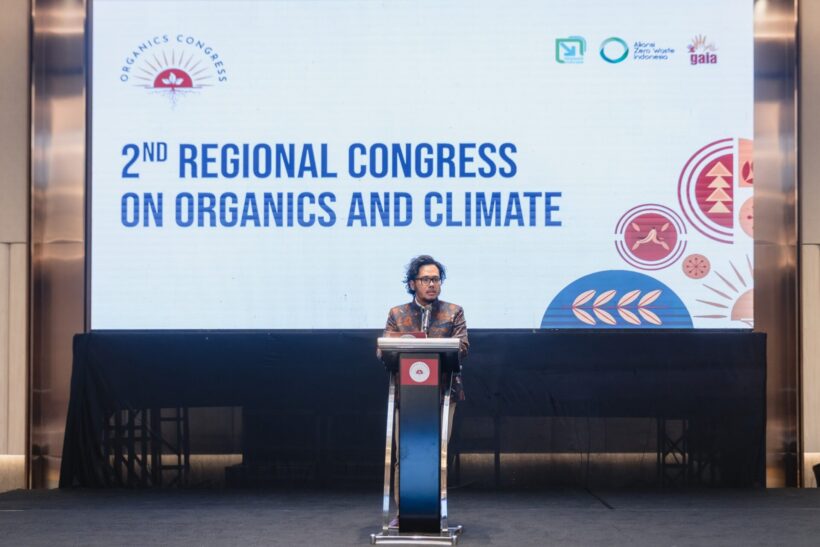
Rahyang Nusantara of Dietplastik Indonesia
For the delegates, the debate over whether community-led solutions work is closed. The urgent challenge now is securing the policy mandates, institutional support, and dedicated public financing to make decentralized organic waste management and food waste prevention a permanent public service.
The human and environmental toll of centralized dumping took center stage as a spate of landfill disasters, from massive fires to landslides, struck the region within months, blanketing cities and towns in toxic fumes and claiming residents’ lives, many of them waste pickers
“The landfill crisis is not telling us to set up more landfills. It is telling us that our disposal-dependent system has reached its absolute breaking point,” said Froilan Grate, Regional Coordinator, GAIA Asia Pacific. “When communities prevent food waste and sort organics at the source, we win twice: we cut methane emissions at the source and eliminate the toxic landfill fires choking our neighborhoods. This is justice-centered, cost-effective climate action.”
Economic data released by the Climate Policy Initiative (CPI) dismantled the myth that high-tech, centralized infrastructure is superior. CPI’s cost-benefit analysis of decentralized systems in Bandung, Indonesia, showed that community initiatives save local governments up to IDR 30 billion (USD 1.7 million) annually in avoided transport and tipping fees.
Bandung is not an exception. Other communities in Asia taking a similar approach are proving that zero-waste systems deliver measurable economic and environmental results:
-
Barangay Potrero in Malabon City, Philippines: The community of 43,000 residents proved that operational costs must prioritize people over machines. With 19% of its total budget allocated to integrating 80 waste workers into its waste management system, it diverts over 100,000 kg of organic waste annually.
-
Hoi An, Vietnam: Tackling commercial food waste driven by tourism, the city secured voluntary reduction commitments from over 50 hotels and restaurants to eliminate single-use plastics and curb kitchen surplus. Edible surplus is addressed upstream, while residual prep discards are channeled to the converted Eco-Hub, where workers process 200 kg of organic material daily per person via composting and bioconversion.
-
Hong Kong: Partnering across wet markets, bakeries, and supermarkets, Greeners Action established daily logistics pipelines to intercept unsold fresh produce and staples at risk of being discarded. The program routes fresh, safe food daily to registered low-income beneficiaries, proving that retail-level surplus redistribution effectively prevents edible food from entering landfills.
-
Pune, India: Solid Waste Collection and Handling (SWaCH) leverages its 4,000 door-to-door waste pickers to enforce daily source segregation across 1 million households. By working directly with 3,000 commercial bulk waste generators to prevent mixed dumping and running in-situ treatment at 270 sites, workers divert 25 tonnes daily of organic waste while eliminating secondary municipal transport entirely.
-
San Fernando City, Pampanga, Philippines: The city paired strict source-separation ordinances with commercial food-waste monitoring for restaurants, markets, and institutions. By enforcing on-site organics management for commercial establishments alongside 35 barangay recovery facilities, the city pushed municipal waste diversion to an unprecedented 89%.
-
Siquijor Island, Philippines: Lacking space for an extensive landfill, the island mandated backyard composting and decentralized collection, preventing 70% of its waste, mostly biodegradable food discards, from going into landfills.
-
Surakarta (Solo), Indonesia: Confronting a city landfill where food waste makes up 60% of daily intake, youth-led network Care Food Solo partnered with hotels, bakeries, caterers, and farmers to intercept edible surplus. In 2025 alone, the initiative rescued and redistributed 46 tonnes of surplus food to vulnerable households and care homes through 12 neighborhood storefronts, routing only non-edible scraps to black soldier fly processing.
-
Tanzania: Starting in Bonyokwa, community-built recovery facilities and door-to-door education proved that zero waste works in East Africa. The model has expanded to seven communities and across four major cities, replacing centralized dumping with local sorting.
These cities and communities do not only illustrate that Zero Waste solutions are key to effective organic waste management, but, more importantly, that the path forward is to scale these proven solutions, while placing the people who make them possible at the heart of policy, program design, and implementation.
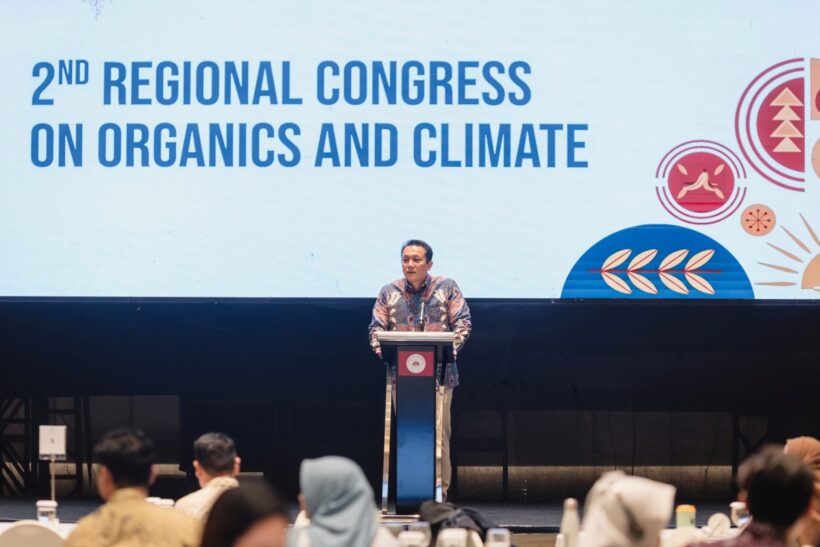
Vice Minister Diaz Faisal Malik Hendropriyono takes the stage for his closing address.
“We cannot continue treating waste management as an exercise in disposal while volumes of food and organic matter rot in landfills,” said Shibu K. Nair, Regional Organics Campaigner for GAIA Asia Pacific. “Infrastructure alone is a hollow investment if we do not fund the people who run it. Waste workers are the backbone of public health and climate infrastructure.”
As the world marks the International Awareness Day for Food Loss and Waste, delegates sent a clear message to COP31 negotiators: The solutions already exist. The task now is to make them the norm.
####Shibu Nair, Regional Organics Campaigner, GAIA Asia Pacific | shibu@no-burn.org | [+91 9846282067]
Dan Abril, Communications Associate, GAIA Asia Pacific | dan@no-burn.org | +639174194426
About GAIA:
GAIA is a network of grassroots groups as well as national and regional alliances representing more than 1000 organizations from 92 countries. With our work, we aim to catalyze a global shift towards environmental justice by strengthening grassroots social movements that advance solutions to waste and pollution. We envision a just, Zero Waste world built on respect for ecological limits and community rights, where people are free from the burden of toxic pollution, and resources are sustainably conserved, not burned or dumped. www.no-burn.org
Read the full story at the source
Source: Pressenza