
World Pressenza
Life-Saving Medicines Out of Reach as High Prices Crush Bangladeshis
Soaring inflation and healthcare expenses render daily survival increasingly difficult By Halim Mohammad (Dhaka Bureau) Unbridled inflation in Bangladesh is pushing the cost of living higher with each
English (original) ·Read in Deutsch ⇄
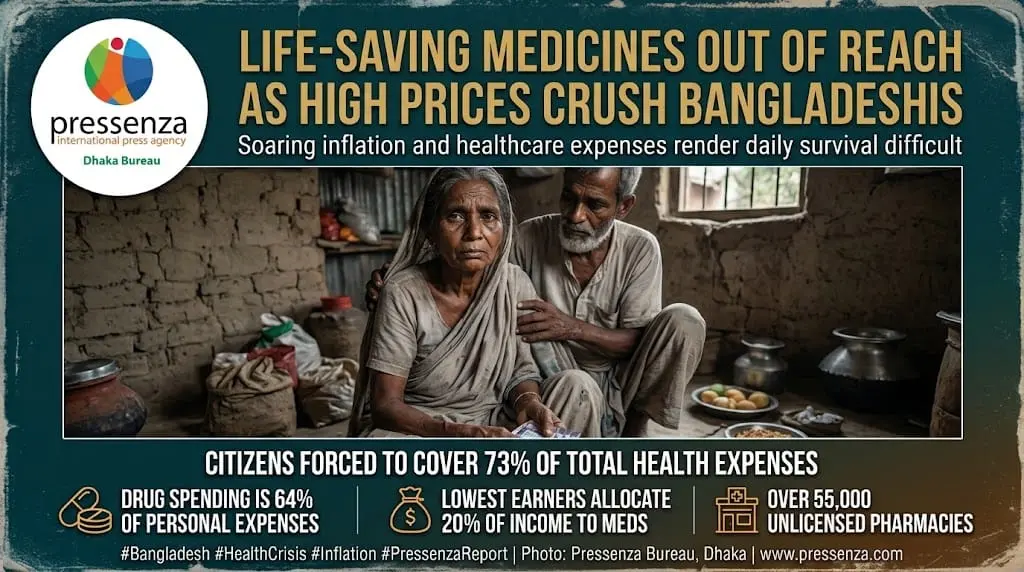
Soaring inflation and healthcare expenses render daily survival increasingly difficult
By Halim Mohammad (Dhaka Bureau) Unbridled inflation in Bangladesh is pushing the cost of living higher with each passing day. While running a household has turned into a formidable challenge, malnutrition and mental distress are triggering a surge in various illnesses. However, as public income fails to keep pace with rising costs, lower-income and middle-class families across the country find themselves utterly bewildered when trying to balance their monthly budgets. On one hand, there is an unrestrained price surge in essential food items; on the other, the skyrocketing cost of life-saving medicines. Common citizens are being crushed between these two pressures. Ensuring three meals a day for the family leaves no room for urgent healthcare needs, while funding critical medical treatments forces severe cuts to essential food budgets. This situation has escalated into a dire humanitarian crisis, particularly for families caring for patients with long-term chronic illnesses. Soaring Prices in the Medicine Market: Ground Reality Visits to pharmacies in areas across the capital- including Shyamoli, Shahbagh, Mirpur, and Dhanmondi- reveal clear evidence of steep price hikes: Diabetes Medication: Comet (Square Pharmaceuticals), a widely used diabetes drug, currently sells at BDT 50 per strip (10 tablets), up from BDT 40 last year. Insulin vials, priced at BDT 390 in regular local pharmacies, are priced as high as BDT 415 at superstore pharmacies. Antibiotics: Cef3 (200 mg) has risen from BDT 35 to BDT 45, while another brand of the same generic formula now sells for BDT 52 per piece. Azithromycin (500 mg), which sold for BDT 30 a year and a half ago, is now BDT 40. Everyday Essentials: A strip of Napa tablets has gone up from BDT 8 to BDT 12, while Napa syrup has reached BDT 35, up from BDT 20. Oral rehydration saline has seen a 20% price increase over the past year, reaching BDT 6 per sachet. Avolac syrup has risen from BDT 100–120 to BDT 200, and antacid/gastric capsules are no longer available for under BDT 7, up from their previous price of BDT 5. Research Findings: Citizens Burdened by Out-of-Pocket Expenses A recent report by Research and Policy Integration for Development (RAPID) paints an alarming picture of healthcare spending in Bangladesh: Out-of-Pocket Health Expenditure: Citizens are forced to cover approximately 73% of the country’s total health expenditure directly out of their own pockets. Drug Spending Share: More than half (about 64%) of these personal healthcare expenses are spent solely on purchasing medicines. Pressure on Low-Income Groups: The lowest-earning 40% of the population must allocate nearly 20% of their total disposable income just to buy life-saving drugs. Lack of Oversight and a Jungle of Unlicensed Pharmacies According to public health experts, while pharmacies have mushroomed across the country, regulatory supervision remains extremely weak. Numerous pharmacies face allegations of selling counterfeit and expired drugs. Government statistics indicate that out of 216,791 licensed pharmacies in Bangladesh, only 161,293 are registered in the administrative online database. The official status of the remaining 55,498 drug stores remains unaccounted for by the Directorate General of Drug Administration (DGDA). Public health expert Prof. Dr. Be-Nazir Ahmed remarked, ‘Nowhere else in the world do you see such an unchecked abundance of medicine shops. There is virtually no monitoring of these stores. Due to manpower shortages and operational limitations at the Drug Administration, corporate accountability has diminished significantly.’ Additionally, due to a lack of awareness, over 70% of antibiotics in rural and semi-urban areas are purchased directly over the counter without a registered physician’s prescription. According to the World Health Organization (WHO), overusing and misusing antibiotics has made one in every six bacterial infections resistant to antibiotic treatments, making routine conditions like typhoid, urinary tract infections, and pneumonia increasingly complex and expensive to treat. Manufacturers’ Argument: Energy Crisis and Impending Price Adjustments The Bangladesh Association of Pharmaceutical Industries (BAPI) points to the prolonged energy crisis as the primary driver behind rising medicine prices. Muhammad Halimuzzaman, Secretary-General of BAPI, explained that severe gas shortages and electricity disruptions have forced manufacturing units to rely on diesel generators. While grid electricity costs around BDT 15 per unit, generator-generated power costs nearly BDT 42 per unit. Unable to offset these heightened production costs, manufacturers have already suspended production for nearly 60% of the country’s 117 essential drugs. Industry leaders warn that if the energy crisis and elevated production costs persist, adjusting medicine prices upward will remain their only viable option. Urgent Call for Action and Humanitarian Relief Food and medical care are fundamental human rights. There is a growing nationwide demand for effective market oversight, a practical resolution to the pharmaceutical industry’s energy challenges, and immediate government intervention to supply essential life-saving medicines at subsidized prices to low-income communities. Halim Mohammad:
Halim Mohammad is a senior journalist with over two decades of experience covering crime and investigative journalism in Bangladesh. He contributes to the Pressenza- Dhaka Bureau.
Originally published byPressenza
Read the original
Want more of this in your Google feed?Add Faultline as a preferred source — it'll show up more often in Top Stories.
Add as preferred source