
World · Pressenza · · 57m
Islamic Movements Must Move From Survival to Contribution
English (original) · Read in Deutsch ⇄
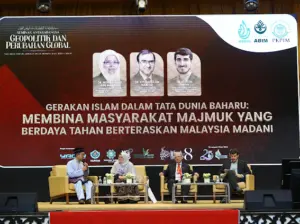
An international conference on “Islamic Movements in the New World Order: Building a Resilient Pluralistic Society Based on Malaysia Madani” was jointly organized by WAHDA, ABIM and PKPIM on September 26, 2026, bringing together the three organizations in a united effort that contributed significantly to the success of the conference.
By Dr. Ghulam Nabi Fai, Chairman World Forum for Peace and Justice
It was truly amazing to witness the organizational discipline, managerial approach, and commitment demonstrated by the leadership of WADAH, ABIM, and now PKPIM as well. What was particularly remarkable was the manner in which these three organizations appear to work in harmony and complement one another. Such unity of purpose and continuity are not always easy to find among NGOs in many parts of the world.
One inspiring aspect of the conference was the strong presence of young people—both young men and young women. Their enthusiasm, discipline, and eagerness to contribute to the objectives of these organizations were encouraging. The participation of such a vibrant younger generation gives confidence that the values of service, solidarity, and responsibility will continue to be carried forward. The presence of such a large number of participants throughout the entire day on September 26 was in itself remarkable.
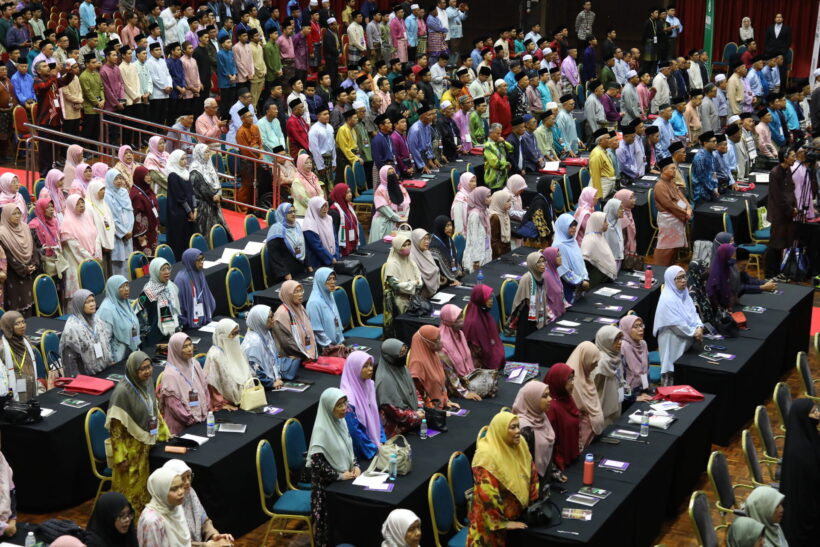
The conference was addressed by Dr. Zulkilfi Hassan, Minister of Religious Affairs, Ambassador Navzat Uyank, Turkish Ambassador to Malysia, Osman Nuri Kabaktepe, Dr. Ahmed Muhammady, Dr. Nor Salimah Abu Mansor, Dr. Muslim Imran, Dato Ahmad Azam Ab Rahman, Ahmed Fahmi Muhammad Samsuddin, PKPIM president. The session was moderated by Adli Zakuan Zairakithnaini & Amirul Firdous Mosni,
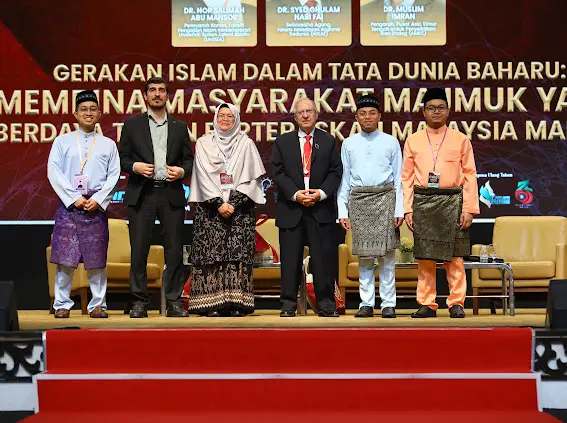
Addressing the conference, Dr. Ghulam Nabi Fai, Chairman, World Forum for Peace & Justice said that the world is entering a new and uncertain era marked by the emergence of a more multipolar international system, increasingly diverse societies, rapid technological change and growing challenges to established assumptions about global governance.
For Islamic movements, he said, these changes should be viewed not only as challenges but also as an opportunity to ask a fundamental question: What can Islamic movements contribute to humanity in the world that is emerging?
Dr. Fai highlighted the vision of Malaysia Madani, championed by Malaysian Prime Minister YAB Dato Seri Anwar Ibrahim, as a framework worthy of serious consideration. He noted that its emphasis on humanity, good governance, inclusivity, consultation, transparency, institutional reform and social harmony offers important lessons for societies seeking to reconcile diversity with national unity.
The values associated with Malaysia Madani—including sustainability, prosperity, innovation, respect, trust and compassion—can provide a basis for cooperation among diverse communities, he said.
“The commitment to Islam need not be placed in opposition to pluralism,” Fai said. “Religious identity and responsible citizenship can coexist. An Islamic movement that understands the universal ethical dimensions of Islam should be able to work constructively with people of every faith and background.”
Learning From History
The conference discussion also placed the contemporary challenges facing Islamic movements in historical perspective.
Fai observed that European colonialism profoundly altered Muslim societies across North Africa, the Middle East, South Asia and Southeast Asia, producing not only political subjugation but also an intellectual and religious crisis.
Muslim scholars subsequently confronted fundamental questions about political decline, intellectual renewal and the relationship between Islamic traditions and the modern world. Among the important intellectual voices was Dr. Muhammad Iqbal, whose call for a fresh orientation of Islamic thought remains relevant, Fai said. Intellectual confidence, he argued, should not become intellectual isolation. “The task is neither to imitate the West nor to reject it blindly,” he said. “The task is to understand, engage and contribute.”
He also referred to the contributions of Professor Khurshid Ahmad, YAB Dato Seri Anwar Ibrahim and Dr. Hassan Turabi, emphasizing their respective calls for dynamism, adaptability, reform and engagement with contemporary challenges.
From Objects of Discourse to Producers of Discourse
A central theme of the conference was the need for Muslims to become producers rather than merely subjects of global intellectual discourse. Islamic movements, Fai argued, should develop institutions capable of addressing major contemporary questions involving artificial intelligence, environmental protection, poverty, inequality, family structures, international conflict, humanitarian law and human rights. “These are not merely religious questions,” he said. “They are questions of public policy, human welfare and the future of civilization.”
He called for greater investment in scholars, academics, jurists, scientists, educators, researchers, entrepreneurs and public intellectuals, as well as universities, think tanks, research institutions, media organizations and philanthropic institutions.The objective should be to move “from reaction to anticipation, from slogans to scholarship, from political defensiveness to intellectual confidence, from isolation to engagement—and ultimately, from survival to contribution.”
The Global Muslim Diaspora
Dr. Fai also highlighted the global Muslim diaspora as an important source of intellectual, professional and institutional capacity. Millions of Muslims now live in societies where they participate in education, science, technology, business, philanthropy, public service and democratic institutions. Many have achieved distinction in medicine, law, engineering, academia, entrepreneurship and international organizations. Islamic movements should engage the diaspora not merely as a source of financial support but as a reservoir of knowledge, experience and professional expertise. “The goal should not merely be Muslim survival in the West,” he said. “It should be Muslim contribution to the West—and to the wider world.”
Faith, Citizenship and Pluralism
Fai stressed that maintaining religious identity and participating fully in pluralistic societies are not mutually exclusive. Muslims should aspire to become outstanding scientists, educators, physicians, entrepreneurs, lawyers, public servants, philanthropists and participants in civic and democratic life. This is not assimilation. Nor is it isolation. It is participation without surrendering identity.
He further emphasized the Islamic intellectual tradition of ijtihad as a resource for renewal, greater unity and constructive engagement with the contemporary world. Dialogue should not be understood as surrender, nor should engagement be viewed as abandonment of faith.
Building Bridges Across Communities
He also called for greater participation in international initiatives designed to promote dialogue among civilizations and communities. Fai referred to the work of the United Nations Alliance of Civilizations (UNAOC), noting the importance of building bridges, overcoming prejudice and resisting polarization at a time when social media can spread both knowledge and hatred across borders within seconds.
Islamophobia must be confronted wherever it occurs, but argued that the response should extend beyond protest to include scholarship, dialogue, public engagement and institution-building. Muslims should be present wherever conversations about Islam, religion, human rights, migration, peace and coexistence are taking place. They should not merely demand to be heard. They should develop the intellectual capacity to lead the conversation.
Human Dignity as a Universal Principle
He emphasized that the future of Islamic movements must also be grounded in a consistent moral commitment. That principles such as opposition to fraud, falsehood, corruption and injustice must apply universally—to governments, institutions and individuals alike. At the heart of this approach is the principle of human dignity. If human dignity is truly universal, then our commitment to it must also be universal. This is perhaps one of the most important contributions Islamic movements can make to the contemporary world: demonstrating that religious conviction can reinforce, rather than undermine, respect for the dignity of every human being.
A Historic Opportunity
Dr. Fai concluded with a call for Islamic movements to recognize the changing global environment as an opportunity for constructive engagement. Malaysia Madani, with its emphasis on sustainability, prosperity, innovation, respect, trust and compassion, can be one framework through which diverse communities can work toward a shared future.
Fai urged Islamic movements to invest in knowledge, cultivate intellectual excellence, engage the global Muslim diaspora, participate constructively in democratic and international institutions, build bridges across religions and cultures, confront Islamophobia through knowledge and engagement, and defend human dignity universally.
Islamic movements should ask themselves a question larger than politics: What does Islam have to offer humanity? The answer cannot be found in slogans alone. It must be demonstrated through scholarship, science, education, justice, compassion, good governance and service to humanity.
Dr. Fai concluded that the future should see Muslims not merely as a community seeking recognition, but as a community making a contribution to humanity. Not merely surviving history—but helping to shape it. Not merely responding to the world—but helping to build a better one.
Read the full story at the source
Source: Pressenza