
World Pressenza
EcoWaste Coalition Lauds FDA’s Continuing Action to Warn the Public on Unauthorized Skin Lightening Products Contaminated with Mercury
Watchdog group pushes Pakistan to cut off the supply chain at its source 4 November 2026, Quezon City. The toxics watchdog group EcoWaste Coalition applauded the country’s Food and Drug Administration
English (original) ·Read in Deutsch ⇄

Watchdog group pushes Pakistan to cut off the supply chain at its source
4 November 2026, Quezon City. The toxics watchdog group EcoWaste Coalition applauded the country’s Food and Drug Administration (FDA) for issuing advisories flagging three more Pakistan-made unauthorized skin lightening products, which may pose mercury exposure risks to users and their families.
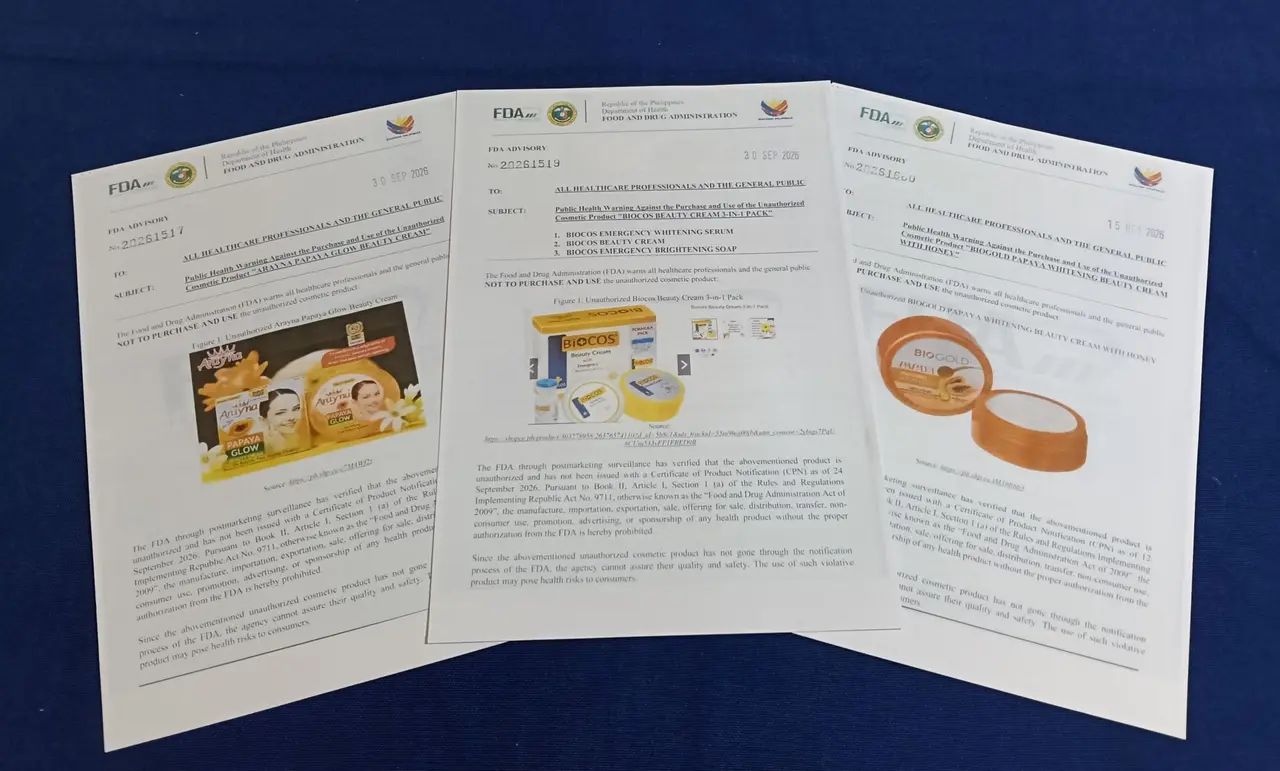
To protect human health, FDA advises the public not to buy and use these unauthorized cosmetics, which have not been assessed for quality and safety, including compliance with banned ingredients such as mercury.
While lauding the FDA for its successive health advisories, the EcoWaste Coalition argued that Pakistan – the manufacturing source of these mercury-laced cosmetics — must cut off the supply chain at its origin. The group emphasized that halting manufacturing is essential to preventing toxic skin-lightening products from entering global trade, a market currently accelerated by the rise of online shopping and social media platforms.
The FDA recently issued Advisory Numbers 2026-1660, 2026-1519, and 2026-1517, warning consumers against purchasing and using unauthorized Biogold Papaya Whitening Beauty Cream with Honey, Biocos Beauty Cream 3-in-1 Pack, and Arayna Papaya Glow Beauty Cream, respectively. All three products are marked “made in Pakistan.”
X-Ray Fluorescence (XRF) screening conducted by the EcoWaste Coalition and duly reported to the FDA found Arayna. Biogold and Biocos facial creams were contaminated with 16,930 ppm, 14,880 ppm, and 13,310 ppm of mercury, respectively.
Mercury, a potent neurotoxin, is banned in cosmetic product formulations. Under the ASEAN Cosmetic Directive, mercury as a heavy metal contaminant in cosmetics cannot exceed the maximum limit of one part per million (ppm). The Minamata Convention on Mercury bans mercury-added cosmetics, such as skin lightening creams and soaps.
For 2026, the FDA already flagged 17 Pakistan-made skin lightening products with no market authorization and with mercury content up to 33,970 ppm, based on EcoWaste Coalition’s XRF screening activities.
All the flagged products lacked certificates of product notification, making their importation, distribution, promotion, advertising, and sale illegal under Republic Act No. 9711, or the FDA Act of 2009, which regulates and prohibits health products without proper FDA authorization.
Unauthorized products have not been duly evaluated for their quality and safety, and using them “may pose health risks to consumers,” the advisories warned. “Potential hazards may come from ingredients that are not allowed to be part of a cosmetic product or from the contamination of heavy metals,” such as arsenic, cadmium, lead, and mercury.
Use of adulterated skin lighteners exposes direct users, as well as their family members, to mercury harm. Children, in particular, may be affected by breathing in mercury vapors from adulterated products or sharing contaminated blankets, pillows, and towels.
According to the World Health Organization (WHO), “adverse health effects of the inorganic mercury contained in skin lightening creams and soaps include: kidney damage, skin rashes, discoloration and scarring, reduction in the skin’s resistance to bacterial and fungal infections, anxiety, depression, psychosis, and peripheral neuropathy.”
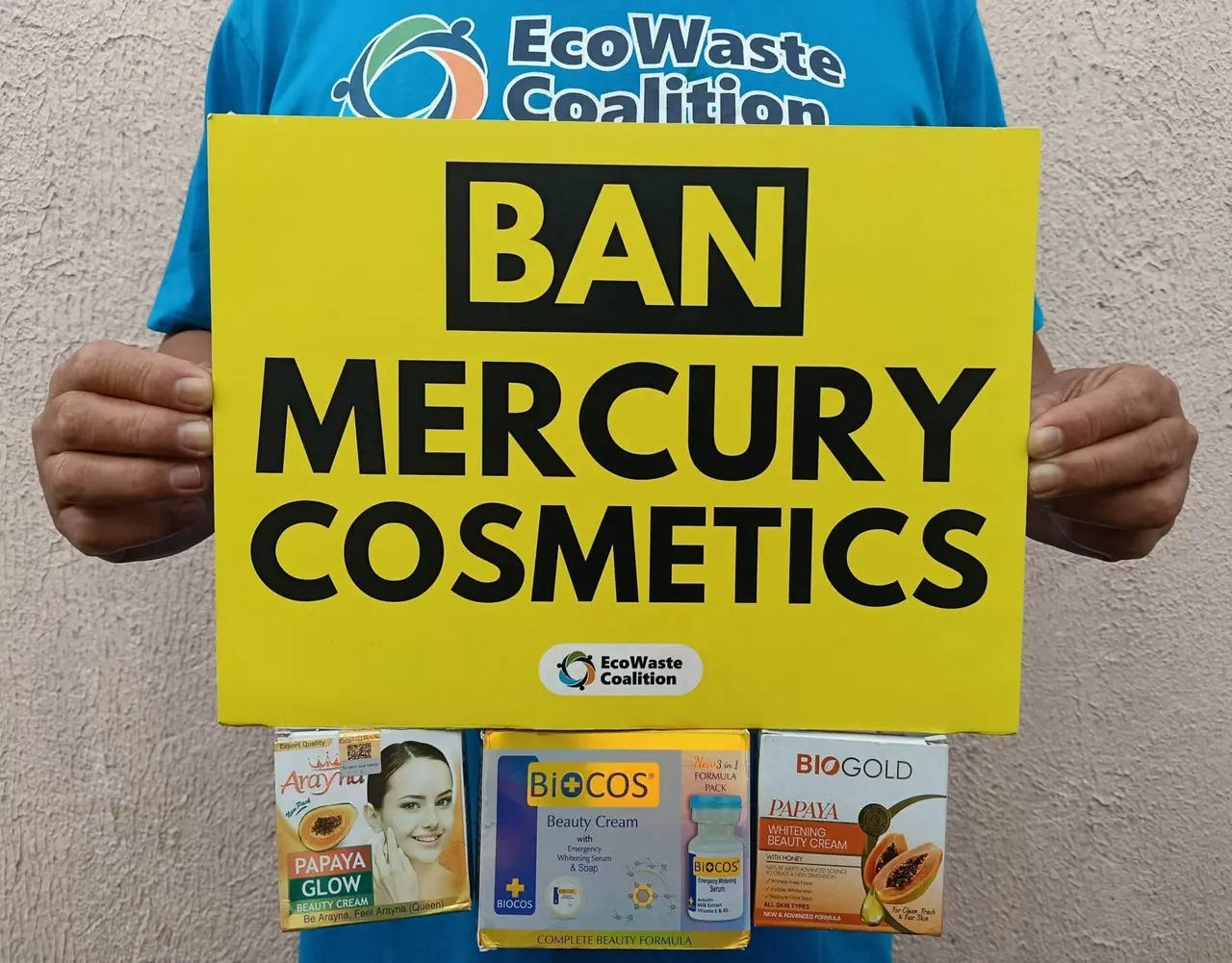
Despite a worldwide ban, toxic mercury-laced skin lighteners remain widely available, pushing watchdog groups like the EcoWaste Coalition to sound the alarm and demand strict compliance.
“Mercury in soaps, creams and other cosmetic products is eventually discharged into wastewater. The mercury enters the environment, where it becomes methylated and can enter the food chain as a highly toxic methylmercury in fish,” the WHO said. “Pregnant women who consume methylmercury can transfer the mercury to their fetuses, which can result in neurodevelopmental deficits in the children.”
The EcoWaste Coalition is urging everyone to love the skin they are in and fight back against colorism. By telling consumers to “reject chemical whiteners entirely,” the group hopes to dismantle the prejudice that favors lighter skin tones and inspire people to celebrate their natural beauty.
###############
Reference:
https://www.fda.gov.ph/fda-advisory-no-2026-1660-public-health-warning-against-the-purchase-and-use-of-the-unauthorized-cosmetic-product-biogold-papaya-whitening-beauty-cream-with-honey/
https://www.fda.gov.ph/fda-advisory-no-2026-1519-public-health-warning-against-the-purchase-and-use-of-the-unauthorized-cosmetic-product-biocos-beauty-cream-3-in-1-pack/
https://www.fda.gov.ph/fda-advisory-no-2026-1517-public-health-warning-against-the-purchase-and-use-of-the-unauthorized-cosmetic-product-arayna-papaya-glow-beauty-cream/https://www.who.int/publications/i/item/WHO-CED-PHE-EPE-19.13
https://minamataconvention.org/en/topics/mercury-cosmetics