
World Pressenza
Burin under lockdown: the stolen harvest season
For four days now, Burin, the small farming village on the outskirts of Nablus that the people of Biella got to know thanks to Doha s za atar, which arrived in Biella last Christmas, has been the targ
English (original) ·Read in Deutsch ⇄
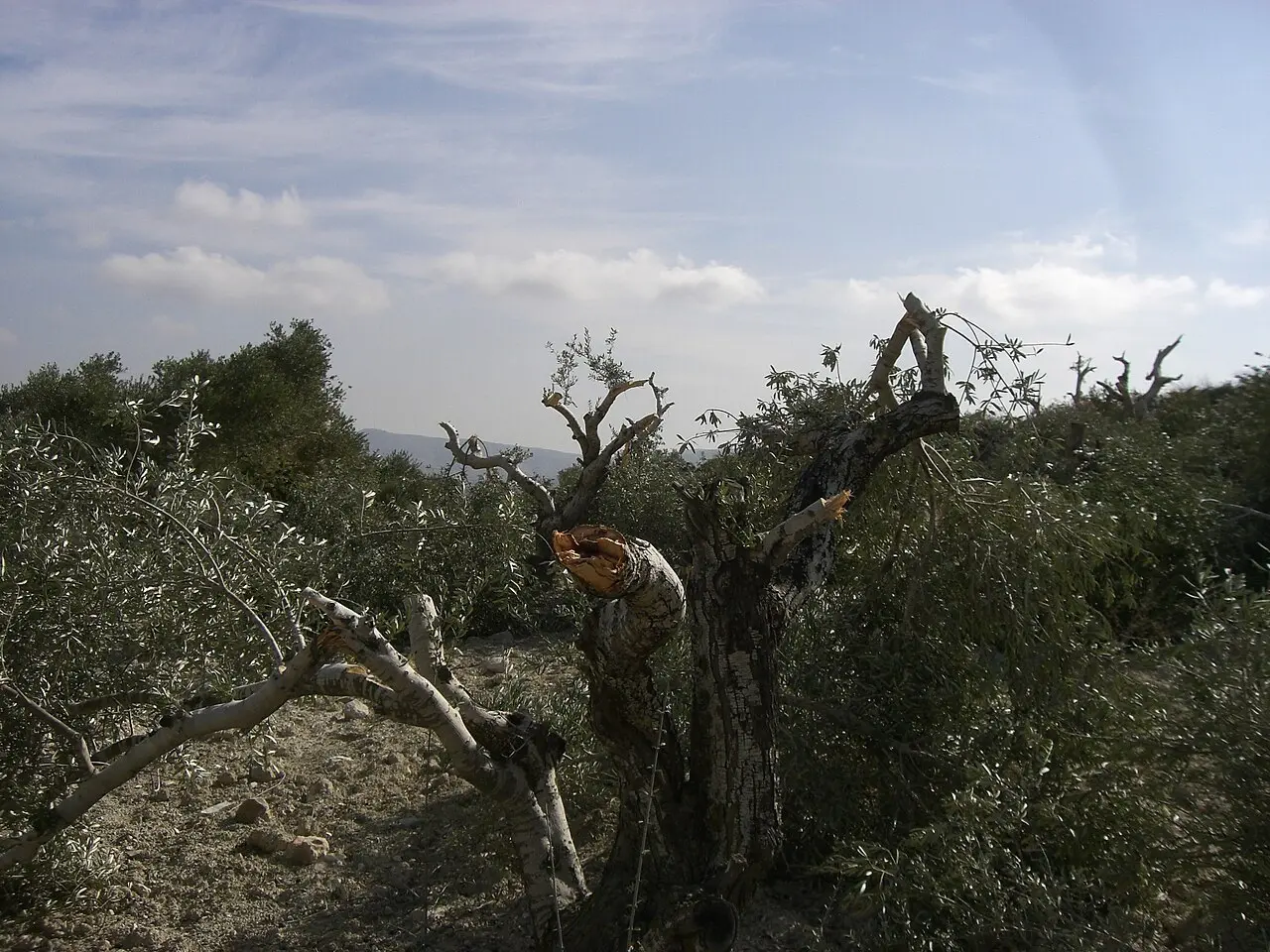
For four days now, Burin, the small farming village on the outskirts of Nablus that the people of Biella got to know thanks to Doha’s za’atar, which arrived in Biella last Christmas, has been the target of a military operation. The pretext, as Muna writes to us, was the confrontation between farmers harvesting olives and settlers who tried to attack them and steal the harvest, something that happens every day and has since the start of the harvest season, and even before. The response is collective punishment.
“Four days ago, a military operation began in the village of Burin, south of Nablus, following a confrontation between farmers harvesting olives and settlers who attempted to attack the farmers and steal the olive harvest. This operation came as a collective punishment for the village: all entrances and exits were sealed off, entry and movement were prohibited, and school attendance in the village was suspended. Three homes were evacuated of their residents, with Israeli flags raised over them, and turned into military barracks for the Israeli army.”
“The army carries out rotating raids on houses, terrorizing the residents, photographing them and their homes, blowing up house doors, and throwing tear gas canisters between the houses. These raids have not stopped, neither day nor night, to the point that residents have begun waiting for their turn and staying awake as a precaution in case the army enters their home at night. Four days have passed, and food is starting to run out in the homes; any resident who steps outside and encounters them is directly targeted with live fire. I must also mention the villages neighboring Burin, which are experiencing these exact same conditions: most notably Madama, whose entrances have been closed for 18 days.”
“The daily attacks by settlers and the incursions into the villages, by day and by night, have been ongoing for years, but the level of danger has now escalated, along with the rising defiance and criminality of the settlers, who are calling for the demolition of homes in the villages and the repetition of what happened in Gaza.”
During the operation, the army also shot at the car of Muna’s father: fortunately, he was not hurt.
Those who have followed our story will remember Doha, a farmer from Burin who came to Biella last year thanks to Cittadellarte, where she told the story of herself and her village: three thousand people living off small livestock, vegetables, fruit, herbs, and olive trees, the most widespread crop of this land. The thyme that becomes za’atar, today planted at the edges of the olive groves closest to the houses, precisely to keep it out of the settlers’ reach; the sesame and sumac ground on the large smooth stone; the olive oil from trees grown on terraces that have shaped these landscapes for centuries, and that are increasingly often burned, uprooted and cut down.
That same determination is put to the test every day: this year, the harvest season has been stolen from the farmers of Burin, and across the West Bank farmers cannot access their olive groves for fear of attacks. The logic is always the same: make life impossible, so that those who have always been there are convinced to leave, in total impunity.
But Burin resists, as Doha, Muna and the women farmers of the nearby villages resist, preparing za’atar with love and sharing it with an international network of people who care for them. And from Biella we will continue to stand by their side: telling their stories, supporting their livelihoods, and working so that the bonds between our territories become concrete solidarity.
Because protecting a woman farmer, all the more in a context of military occupation and settlers who try by every means to drive farmers off their land, in total impunity, means protecting the Earth, and therefore all of us. No one is free until we all are.
Muna e Nazarena
Updated 28 October 2026