
World · Pressenza · · 2h
An Heirloom in Every Slice: Celebrating Tublay’s Kini-ing Tradition
English (original) · Read in Deutsch ⇄
By Faithfulyn C. Colian
Nestled in a small sitio of Barangay Ambassador, Tublay, Benguet, lies Sto. Niño, a place that tells a story of resilience, transformation, and cultural preservation. It is a place very close to my heart because it is where I was born, nurtured, and raised. Growing up, I witnessed how the people of our community worked tirelessly to build life from the land. Sto. Niño was once a mining site during the 1970’s.
When mining operations ceased, the community faced uncertainty. But through determination and hard work, the people transformed the abandoned mining area into productive agricultural land. Today, Sto. Niño stands as a symbol of perseverance, where vegetable and cut flower gardens flourish and traditions continue to survive amidst the changing times.
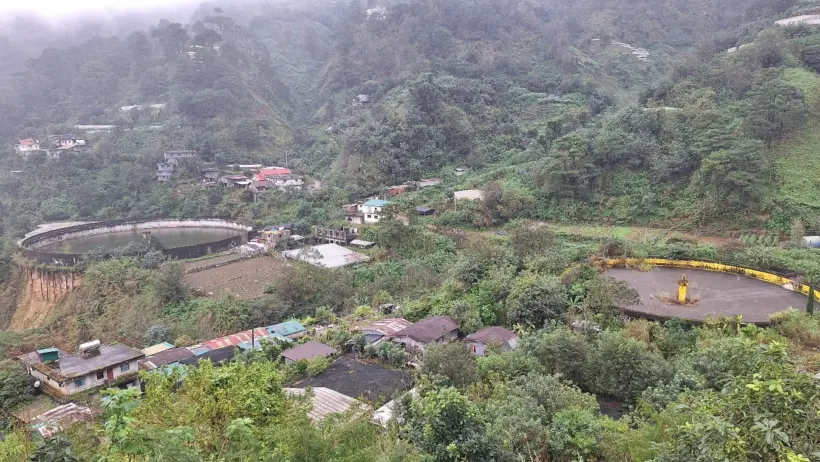
From the smoky hearths that produce Tublay’s cherished kini-ing to the rejuvenated landscapes of Sto. Niño, Ambassador, Tublay, this community stands as a powerful symbol of preservation, proving that both culture and nature can flourish through time.
One such tradition is the making of Kini-ing, an indigenous Igorot smoked meat delicacy that has been part of Cordilleran culture for generations.
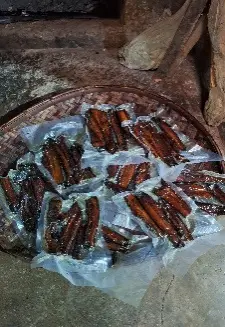
Driven by curiosity and a desire to learn more about this cultural treasure, I recently visited the household of Mrs. Jocelyn Mathis Cestona, one of the few individuals in our community who still practices the traditional method of making kini-ing. As I approached their home, the familiar scent of wood smoke filled the cool mountain air that instantly brought back memories of home, family gatherings, and the stories of elders about how our ancestors preserved food long before modern refrigerators existed.
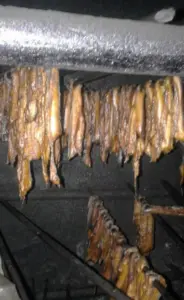
Inside the Mathis- Cestona household, strips of pork hung carefully above a slow-burning fire. The meat had already been seasoned with salt and was undergoing the smoking process that gives kini-ing its distinctive taste and long shelf life. Watching the process unfold felt like stepping back in time. Every movement reflected knowledge passed down from one generation to another, a practice rooted in necessity but sustained through cultural pride.
Mrs. Jocelyn Mathis Cestona explained, “ syat naanus ka ay mangtagtago sin apoy tapno mayat paka-amag na din kini-ing”( making kini-ing requires patience and dedication). It is not something that can be rushed. The meat must be prepared properly, smoked consistently, and monitored carefully to achieve the flavor and quality that define authentic kini-ing. While modern preservation technologies have made food storage easier, she believes that traditional methods still have an important place in today’s society.
What struck me most was realizing that the family’s motivation goes beyond business. Although selling kini-ing helps augment their income, their deeper purpose is preserving an important part of Igorot heritage. For the Mathis- Cestona family, every batch of kini-ing produced is a statement that culture must not be forgotten.
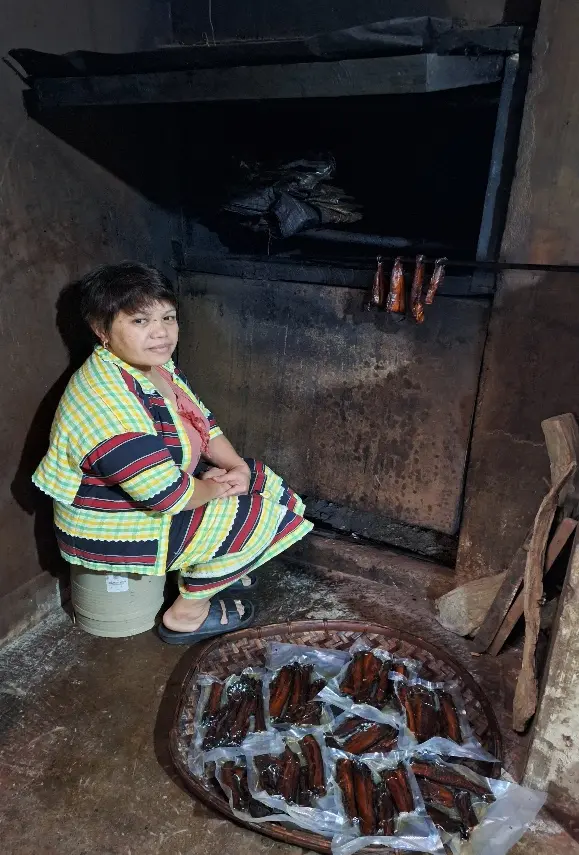
At the household of Mrs. Jocelyn Mathis Cestona, the making of kini-ing is more than a livelihood. It is a family tradition where skills, values, and cultural identity are passed from one generation to the next, ensuring that the legacy of Igorot smoked meat endures. Image used with permission.
In this age of smartphones, social media, and instant access to almost everything, many traditional practices are slowly fading into the background. Younger generations spend more time exploring digital spaces than learning cultural traditions from their elders and any elements of indigenous heritage risk being lost.
This reality is especially evident among generation Alpha. Many children today have never seen how kini-ing is made. Some have never even heard of it. The delicacy that once occupied a central place in Igorot households has become unfamiliar to many young people. Yet an interesting observation emerged during conversations with community members and families: when young people are given the opportunity to taste kini-ing, they almost always enjoy it.
The rich smoky flavor, distinctive texture, and uniqueness of the delicacy appeal even to modern tastes. The problem, therefore, is not that the younger generation dislikes traditional food. They simply have not been exposed to it. They know the flavors of fast-food chains and processed products, but many have not experienced the traditional foods that form part of their cultural identity.
This is why families like the Mathis- Cestonas’ play such an important role in our community. They serve as keepers of cultural knowledge, ensuring that traditions remain visible and accessible to younger generations. Their smokehouse is more than a place where meat is preserved. It is also a place where culture is practiced, shared and passed on.
As I observed the smoking process, I realized that kini-ing represents something much greater than food. It embodies the values that have long defined Igorot communities: resourcefulness, resilience, patience, and respect for ancestral knowledge. Our forebears developed this preservation method out of necessity, using local resources and indigenous wisdom to ensure food security in the mountains. Their innovation became a tradition, and that tradition became part of our identity
Each slice of kini-ing carries a story. It tells of ancestors who relied on their ingenuity to survive. It recalls family meals shared around a table. It reminds us of celebrations, community gatherings, and the collective spirit that binds people together. More importantly, it serves as a tangible link between the past and the present.
For the people of Sto. Niño, preserving traditions like kini-ing is also a way of honoring the journey of the community. Just as our elders transformed a former mining site into fertile agricultural land through hard work and determination, families like the Mathis- Cestonas’ continue to preserve cultural practices that could otherwise disappear. Their efforts demonstrate that resilience is not only about adapting to change but also about holding on to the values and traditions that define who we are.
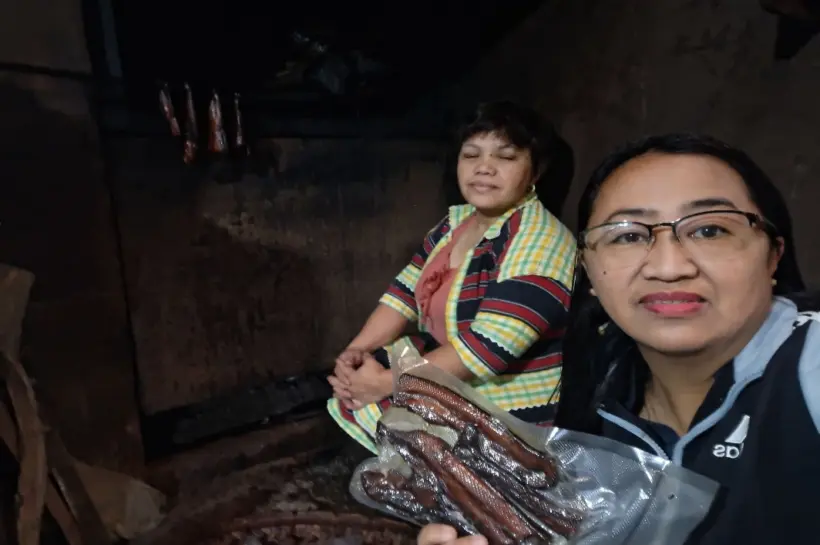
Learning the art of kini-ing firsthand at the Cestona household, where culture and tradition are preserved through every smoke-cured slice.
As I left the Mathis- Cestona household, the smoke rising from their traditional smokehouse lingered in the air. It served as a powerful reminder that culture survives only when people choose to keep it alive. In a rapidly changing world, preserving traditions requires intention, commitment, and pride.
The making of kini-ing may seem like a simple practice, but it represents something profound. It is a celebration of heritage, a preservation of indigenous knowledge, and a tribute to the enduring spirit of the Igorot people. Through the dedication of families like the Mathis- Cestonas’, this treasured tradition continues to thrive, reminding us that our cultural roots remain relevant even in the digital age.
Kini-ing is more than a delicacy. It is an heirloom in every slice, carrying the flavor of history, the wisdom of our ancestors, and the identity of people. By preserving it, we preserve a part of ourselves, a part of our tradition, and a part of what it truly means to be Igorot.
###########
About the Author:
 Faithfulyn C. Colian is an elementary teacher at Sto. Niño Elementary School, Ambassador, Tublay, Benguet. She earned her Master of Arts in Education from Baguio Central University and is currently pursuing a Doctor of Philosophy in Administration and Supervision. She is dedicated to helping her pupils succeed academically and holistically while contributing meaningful insights to the field of education.
Read the full story at the source
Source: Pressenza