
Labour · Perspektive Online · · 3h
VW terminates collective agreements: austerity measures at the expense of the workers
Deutsch (original) · Auto-translated to English
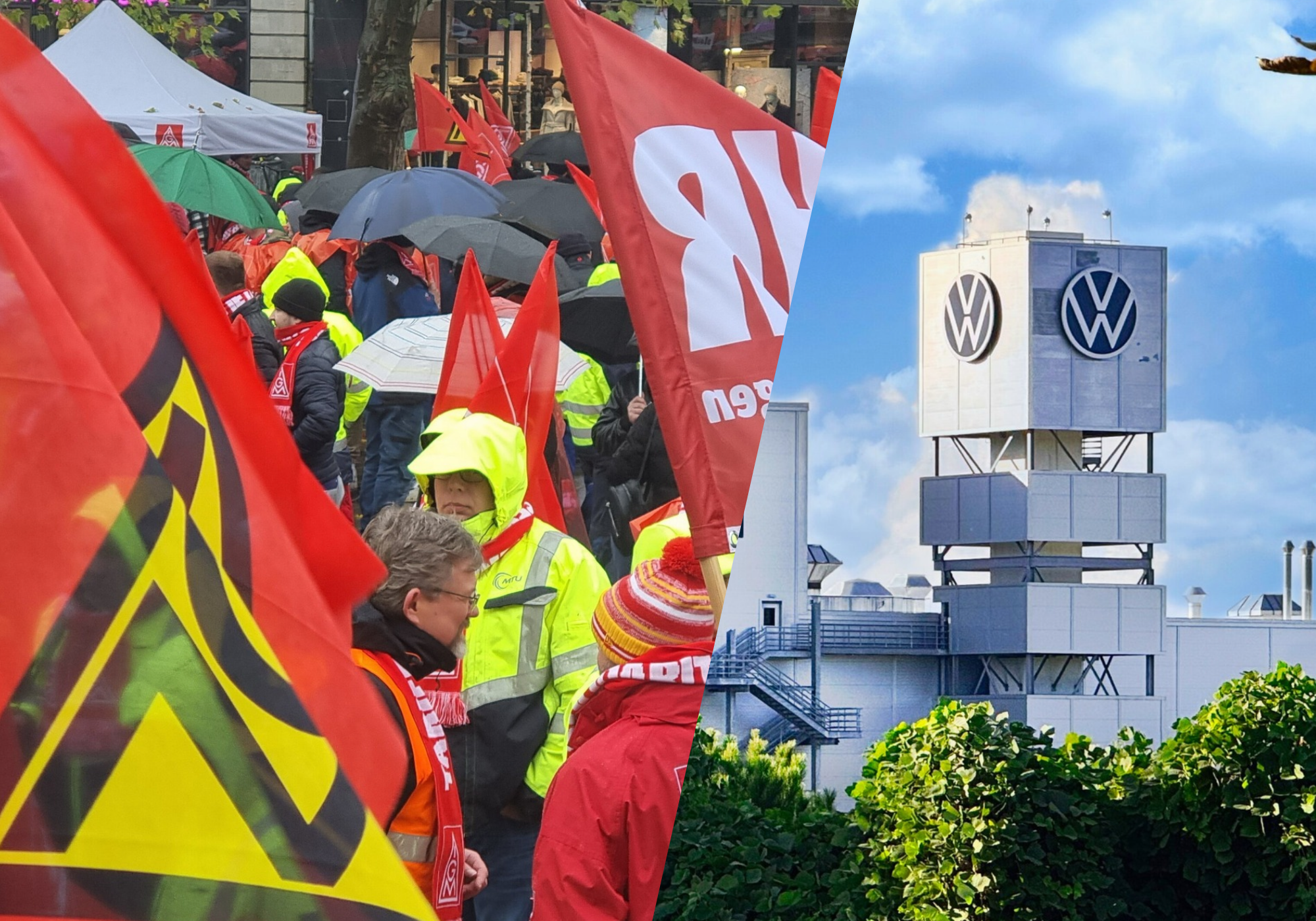
VW is terminating a large part of the current collective agreements next year. The group appears to be aiming for new agreements that will benefit it. Meanwhile, the goal of cutting 100,000 jobs worldwide remains.
Europe's largest car company VW has been in crisis for several years. Business has not been booming for a long time, which is why massive cost-cutting measures are planned. Among other things, 100,000 of roughly 657,000 jobs are to be cut worldwide.
This directive is now having an increasingly noticeable impact on Germany: On Wednesday it was announced that ten out of thirteen collective agreements would be concluded by the end of the yearterminatedbecome. According to IG Metall, these range from important collective agreements to collective training agreements.
The termination of the collective agreements sends a clear signal: everything is on the table. Normally, collective agreements are renegotiated after they expire, so a new version comes out, so to speak. VW now wants a complete restart and is likely to aim to eliminate numerous services. TheIG Metalldescribes the termination as a “frontal attack” and explains that VW is “calling into question collective bargaining allowances, training transfers and protective regulations for older and health-impaired employees.”
Plant closures and collective bargaining terminations: Is the job guarantee wobbly?
In addition, four plants in Germany are to be closed. This is about theLocationsin Hanover, Zwickau and Emden as well as the Audi plant in Neckarsulm. Also as part of the cost-cutting measures, the location should be in...Osnabruckbe closed. Together with the Israeli financial investor Aurelius, the state of Lower Saxony took over the plant in order to produce weapons there with the Israeli defense company Rafael Advanced Defense Systems.
IG Metall celebrates the takeover of the VW factory in Osnabrück by an Israeli arms manufacturer
The factory closures and the termination of collective agreements appear to be in contrast to VW's “job guarantee” until 2030. About two years ago there was already a dispute between the union and management, which resulted in the so-called “Christmas miracle”. However, it was primarily the capital side that benefited from this “miracle”. In return for VW's promise that the workforce would receive a job guarantee until the end of 2030, IG Metall was responsible for the supposedly socially acceptable reduction of 50,000 jobs and moreincisionswith.
To this day, VW maintains that this job guarantee will continue to exist in the future. This states that redundancies for operational reasons will last until the end of 2030excludedbe. The 100,000 jobs are still to be cut. How this fits together remains to be seen.
Strikes are possible from 2027
The negotiator of IG Metall,Thorsten Groeger, spoke of a “bad foul on the workforce” after the collective agreements were terminated. He spoke of the tense economic situation being passed on to the workforce and at the same time profits being privatized.
The union supports this by pointing out that VW will only be around the end of June2.6 billioneuros had distributed dividends to its shareholders. In contrast, those employed under the company pay scale last received a pay increase more than two years ago.
The union announced widespread protests for the coming week. The agreed peace obligation expires in 2026, which is why from January 1ststrikesare legally possible. VW's management is currently dismissing the union's demands for five percent wage increases in the upcoming collective bargaining round as "otherworldly" away.
VW is lagging behind when it comes to electric cars
On the podcast “Morning briefing" from The Pioneer, VW boss Oliver Blume commented on the company's upcoming austerity measures and tried to legitimize the massive job cuts. He speaks of a revision of the resolutions at the end of 2024. The world has changed a lot in these two years, the situation in the car market has become increasingly worse.
China plays a double role here. Imports are falling by 20 percent and at the same time China is flooding the market with over 10 million vehicles this year. Both factors have a negative impact on VW's business. According to Blume, this not only affects VW, but also its competitors, all of whom would feel the pressure from China. In order not to lose the market in China completely, VW is forced to help there with the help of “sales aids”, i.e. discounts for the Chinese market, which also affects profits.
According to Blume, the high fuel prices at the pumps also mean that buyers are increasingly choosing electric cars, which make less profit. With electric cars, margins can be over 50 percent lower than with the sale of cars with combustion engines, which could only be alleviated with the development of cheaper technology. In addition, significantly fewer workers are needed for the production of electric cars than for combustion engines, which also has an impact on job cuts.
German auto industry on the ground
Above all, Blume complains in the interview that state additional costs and energy costs are too high in Germany and calls for better framework conditions for corporations. Blume complained that “labor costs in Germany are about twice as high as in other European countries in which we are active (…) In today's competitive situation, we simply have to question a few issues.”
MoreproblemsFor the group, there are high tariffs in North America, sometimes halting supplies of raw materials or goods required for production and technological advances from the competition. For all of these reasons, the company is dependent on cutting not just 50,000 jobs as recently planned, but 100,000.
But it's not just jobs that are to be cut, Blume is also targeting working hours. In the future there will only be 30 vacation days per year, instead of the current 36 days - without wage compensation. Blume justifies himself that this will not be felt in the wallets of the workers. The fact that the workers still lose out by making their labor available to the company free of charge obviously plays a minor role for Blume.
The postVW terminates collective agreements: austerity measures at the expense of the workersappeared firstperspective.
Read the full story at the source
Source: Perspektive Online