
Germany · Perspektive Online · · 42m
Before the collective bargaining round: Mercedes wants to enforce three hours of unpaid overtime per week
Deutsch (original) · Auto-translated to English
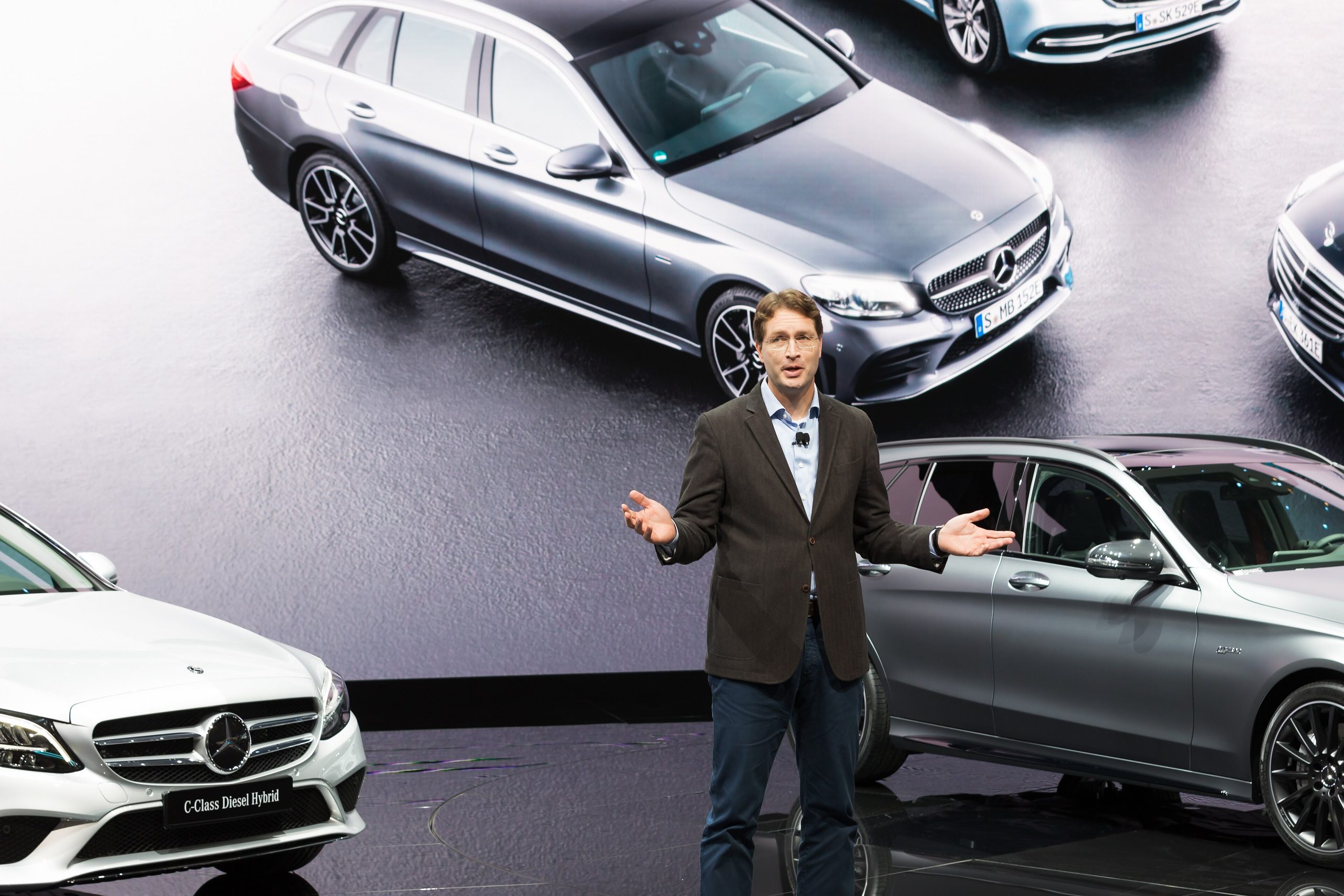
The Mercedes-Benz board of directors has officially proposed a 38-hour week for the German locations in the ongoing collective bargaining negotiations. Three hours more work per week, without a penny more pay. Mercedes is using this demand as a means of exerting pressure in the upcoming collective bargaining negotiations.
“The working hour must be cheaper.” – Mercedes-Benz CEO Ola Källenius announced this in a letter to the workforce at the end of June. Chairman of the Supervisory Board Martin Brudermüller presented theHandelsblatt interviewand openly called for a return to the 40-hour week. The overall picture: More working hours per week, less wages per hour. These plans are also reflected in the ongoing collective bargaining negotiations between Mercedes-Benz and the IG-Metall union.
There are also negotiations about cuts in Christmas and holiday bonuses as well as profit sharing. A special tariff payment of 18.4 percent of a monthly salary, the so-calledTransformation building block, was already withheld in July - the company is now considering eliminating it completely.
Mercedes is thus joining in with the measures taken by its competitors. Special payments have already been cut at Porsche, VW announced the reduction of up to 100,000 jobs and the closure of several plants, and BMW lowered its profit forecast and also announced austerity measures and layoffs. With this wave of almost simultaneous savings programs, long-fought standards in the automotive industry are being dismantled across the board. However, not without resistance from workers in the companies, as protests in recent weeks have shown.
More work with the same pay: Nationwide mass protests at Mercedes-Benz locations
Wage gaps as a means of pressure
Mercedes-Benz uses the wage gap compared to other countries as a means of pressure. This emerges, among other things, from the statements made by the deputy works council chairman Michael Häberle at a rally on Monday in front of the company headquarters in Stuttgart-Untertürkheim. In discussions with the company, there were open threats of further relocation to Eastern Europe, and in extreme cases, the closure of a German factory including engine production.
At various German locations, management shows comparative presentations in which the emphasis is on how much lower the costs are abroad. In Eastern Europe, wage costs are around 75 percent lower, in the USA almost a fifth, with significantly longer annual working hours. Reference is also made to the Hungarian Kecskemét plant. While this year German manufacturing capacity was reduced by a tenth. The capacity there was doubled to 400,000 units.
A spokesman for the group confirmed that the Mercedes production board told employeesClosure of two plantsannounced in Germany, the local costs should not be reduced. This is a German bodywork and a German powertrain factory.
Bodyworks refer to factories in which the cars are assembled. In Germany there is one in Sindelfingen, one in Rastatt in Baden and in Bremen. In powertrain factories, however, components for the cars are manufactured. These are available in Stuttgart-Untertürkheim, Affalterbach near Stuttgart, Berlin, Hamburg, Kamenz (Saxony) and Kölleda and Arnstadt (Thuringia).
The German auto industry is relying on Eastern Europe – will the plan work?
The larger framework: collective bargaining round 2026
Formally, the Mercedes negotiations are taking place separately from the collective bargaining round for the entire metal and electrical industry. However, they fall exactly into their hot phase. On Tuesday, September 22nd, the regional collective bargaining committees of IG Metall decided on their specific demands for the approximately 3.8 million employees in the industry; the peace obligation expires on October 31st. This means warning strikes are possible from November 1st - collective bargaining begins on October 7th.
Theuniondemands at least 5 percent more wages and workers from lower wage groups should be better off. They are also calling for collective bargaining to secure the future and employment in the metal and electrical industries, but what this should look like is still unclear. In so-called “boom companies”, IG-Metall demands a profit share for employees.
The workers are fighting back
In July, immediately after the announcement of thefirst savings plans, around 33,000 employees nationwide took to the streets. 20,000 of them were at a rally in Sindelfingen. Employees at a Sebaldsbrück plant in Bremen also brought production to a standstill for an hour and a half.
In Untertürkheim, a banner with the words “Ready to strike” dominated the rallies, and there is also a Mercedes-Benz factory here. The lettering is no coincidence, but is a conscious reminder of 1995, when the 35-hour week was won after a seven-week strike. The unions are currently demanding, at least in words, that the 35 hours be retained, but this has not yet been reflected in their explicit list of demands.
Theproteststhroughout the auto industry continue. Last Monday, IG Metall called for a day of action. There were internal company meetings, active lunch breaks, star marches and public rallies. According to the IG Metall trade union, around 175,000 people in 280 locations followed the call for protest. According to IG Metall, workers from Volkswagen, VW subsidiaries, suppliers and partner companies took part in development and transport. According to the information, employees from MAN and Bosch were also there in Salzgitter.
Three demonstrations also started in Bremen-Hemelingen. According to IG Metall, the day of action could have had an impact on production at the Mercedes plant or even brought it to a standstill. However, a Mercedes spokeswoman said that this could be compensated for by the high level of flexibility in the factory.
There were also people on the streets in Emden, where the closure of a VW factory is under discussion. Just like in Hanover, where one of the larger rallies took place in the Stöcken district - around 3,500 people took part. Stöcken is one of the VW locations that could close; 10,000 people are currently employed here.
The postBefore the collective bargaining round: Mercedes wants to enforce three hours of unpaid overtime per weekappeared firstperspective.
Read the full story at the source
Source: Perspektive Online