
World Perspektive Online
Portugal, Spain, Italy, Albania, France: protests for a better future
In several European countries, hundreds of thousands of people took to the streets again at the weekend against rising living costs and cuts. A particularly large number of young people are taking part
Deutsch (original) ·Auto-translated to English
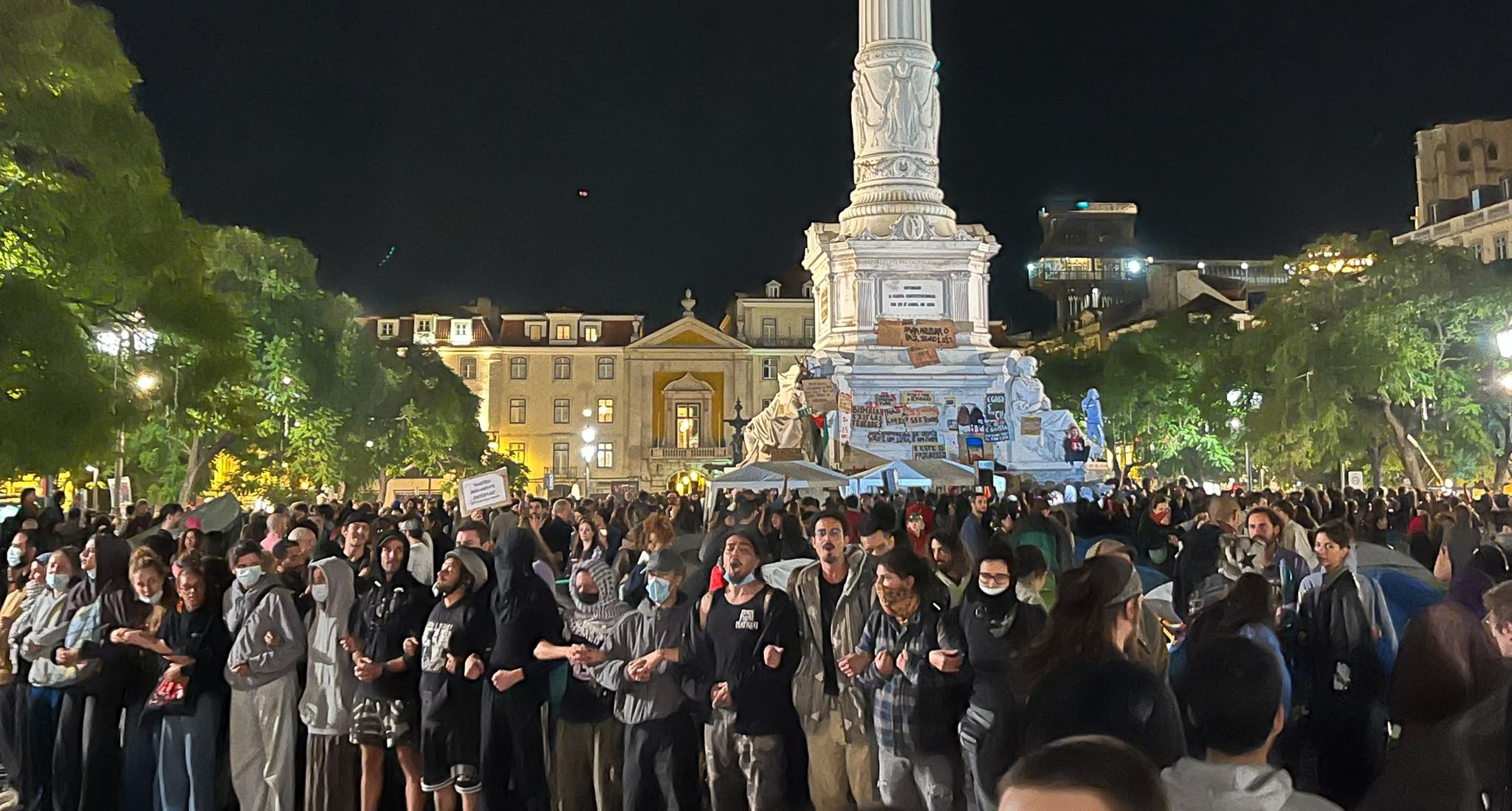
In several European countries, hundreds of thousands of people took to the streets again at the weekend against rising living costs and cuts. A particularly large number of young people are taking part in the protests. Governments sometimes responded with massive repression.
On Sunday morning were in PortugalProtest campscleared by police officers using batons and police dogs. The officers arrested 31 people and removed 171 tents. People reported disproportionate levels of police violence.
Despite several injuries, the activists announced that they would not be intimidated by the repression and would continue to fight. The protest camps in Portugal and the state's reaction are examples of the conflicts that are currently escalating in several European countries.
Housing is becoming more and more expensive
In Portugal and Spain, the rising cost of living is particularly evident in the high rents. In Portugal, rents have doubled in the last ten years. Young people in particular have difficulty finding affordable housing.
In addition, the Portuguese government recently presented draft laws that provide for changes to tenancy law. In the future, evictions will be made easier and price caps for new contracts will be abolished.
For this reason, there have been repeated demonstrations in the country. Protest camps against the prevailing housing shortage were set up in Porto and Lisbon. The camps are intended to draw public attention to the high rents, the poor housing market and the demands of the population. Among other things, a rent cap and higher protection mechanisms for tenants are required.
Also inSpainHousing is a central issue. After an 87-year-old pensioner in Madrid had to leave her apartment because she could no longer pay her rent due to a rent increase, thousands of people took to the country's streets. As a result, protest camps were set up in the country and protests were made for affordable housing.
Europe-wide protests against cuts, high rents and rising prices
Road blockades in southern Italy are producing initial success
While people in Spain and Portugal are resorting to protest camps, truck drivers and farmers in southern Italy are engaging in a different form of resistance. Since the beginning of October, it has been particularly prevalent in Sicily, Apulia and CalabriaRoad blockadesprotested against high diesel prices and rising costs of living. The protests are currently spreading to other regions of the country.
With the help of trucks and tractors, the protesters are paralyzing entire streets and highways. This leads to massive restrictions on the movement of goods and delivery bottlenecks. Supermarkets are lacking fresh food, gas stations are running out of supplies and several food manufacturers have had to interrupt production.
The employees of the shipping and agricultural sectors have made it clear that the country's supply depends on their work. They are trying to use the blockades to put pressure on the government and have already achieved initial success. The government announced additional financial support for the industries on Thursday and Friday.
In response to the promise of support, the first parts of the blockades were scaled back. However, the protesters announced further protests. The government, however, has already announced tougher action against the road blockades.
Cuts, increases in prices and rearmament – all part of the crisis
But it's not just adults on the streets across Europe. In France, students have been taking to the streets for weeks against overcrowded classes, a lack of teachers, dilapidated school buildings and upcoming cuts.
The student protests have sparked a nationwide movement. On Saturday, other groups joined the protests to demonstrate against rising living costs. According to the CGT trade union federation, around 800,000 people took partprotestssplit. Authorities reported around 1,300 arrests. Around 70,000 police officers were on duty at the weekend.
In Italy went onSaturdayIn addition to the protests by delivery drivers, tens of thousands of people took to the streets in various cities. In addition to the high cost of living, the protests in the country were directed against rearmament and support for the genocide carried out by Israel in the Gaza Strip. There were clashes between police and demonstrators in Rome, Bologna and Turin. The police used water cannons and tear gas. The police have temporarily arrested hundreds of people.
InAlbaniaIn turn, the protests are directed, on the one hand, against the corrupt government of Prime Minister Edi Rama and, on the other hand, against the poor study conditions and high tuition fees. The background to the protests is, among other things, a controversial luxury hotel project in a nature reserve that is associated with Ivanka Trump and Jared Kushner. The project is criticized by the population for a lack of transparency.
During the protests in Tirana over the weekend, the police used tear gas, water cannons and rubber bullets against thousands of demonstrators. There were also injuries and arrests here.
States resort to repression instead of real solutions
The protests may have different triggers, but what they have in common is the way governments respond to them. Police operations, arrests and violence have been recorded in all countries.
The evacuation of residential camps in Portugal, the massive repression in France and the police operations in Italy and Albania raise the question of how governments respond to legitimate protest. Instead of addressing central issues such as housing shortages, rising prices and existential fears, states are trying to keep the protest down and delegitimize it by talking about rioters and violent extremists.
But what is clear is that people in Europe no longer want to accept the increasingly poor living conditions.
The postPortugal, Spain, Italy, Albania, France: protests for a better futureappeared firstperspective.