
Germany · Perspektive Online · · 3h
PISA study 2025: Worst results since the survey began
Deutsch (original) · Auto-translated to English
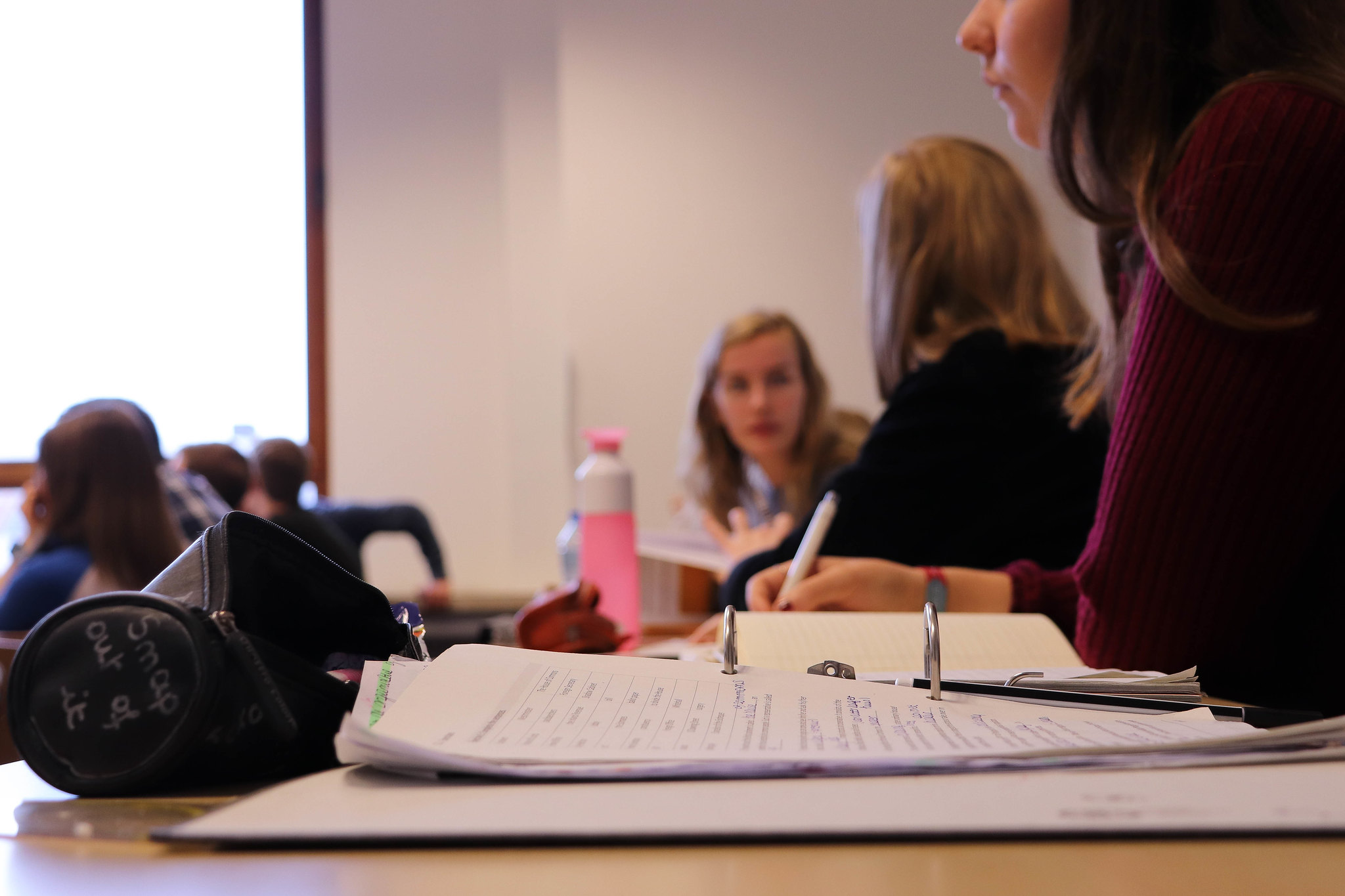
The new PISA study shows the worst results for Germany since the survey began in 2000. Children from poorer families are particularly affected, while richer children do better. At the same time, there is a lack of sufficient money in the budget for education.
The PISA study (Programme for international Student Assessment), which has been conducted since 2000, is intended to show the educational level of 15-year-olds in various countries. The study is carried out every three years jointly by the 38 OECD countries, together with other partner countries. In 2025, 750,000 students in 91 countries took part in it; it has now been published in September 2026.
The study tests different disciplines such as reading, arithmetic and natural sciences in different blocks - plus new areas are constantly being added, such as solving digital problems last year. The focus is on skills rather than learned specialist knowledge. In addition, students, teachers and parents are surveyed. In Germany werethis year6,700 students from 250 schools were randomly tested.
Criticism of the PISA study
There is always criticism of the PISA study and the OECD (Organization for Economic Co-operation and Development), both from a political perspective but also from educational researchers themselves. After all, the OECD is an institution with its own agenda: It emerged in 1961 from the OECC, which was encouraged by the USA to implement the Marshall Plan in Europe after the war. Even then, apart from the USA, Germany and France were the leading member states.
The criticism includes both the selected topics and the focus on skills, for example reading instead of technical questions on learning material from the subjects German and English, as well as the methodology and the international onesComparison rankings. In Germany in particular, the study continues to attract great attention and sparks major debates about the education system.
While in Germany, for example, the study is carried out every three years with a relatively high degree of conscientiousness, there are other countries that respect the methodology less. These are marked in the comparison rankings, this time including Canada, New Zealand and the USA. AlsoChina– in first place this year – which only includes the cities of Beijing, Shanghai, Juangsi and Zhejiang, does not achieve a representative result for the entire country.
Despite all the criticism of international comparisons and the methodology, one can still derive a lot for Germany itself from the continuous studies since 2000.
Germany: Worst results since the survey began
Overall, it can be said that the downward trend of the last ten years is clearly continuing. TheResultsrepresent a low point internationally, but Germany performs particularly poorly. In this country there are once again the worst results since the survey began, with some worrying spikes: around a third of students fail in reading and writing. In the natural sciences it is only a quarter. Approximately a fifth of all students tested did not achieve basic skills in any of the areas.
Students from poor households are hit hardest: In the poorest quarter, around 41 percent do not achieve basic skills in the natural sciences. The richest quarter of German students, on the other hand, continues to do very well and its values are well above the OECD average.
Overall, the students achieved an average of 464 points in mathematics (11 fewer than in 2022), 465 points in reading (15 fewer) and 486 points in science (6 fewer). According to PISA, 20 points correspond to about one year of learning progress - German students are around two to two and a half years behind the level ten years ago. About a third cannot grasp the main message of a simple text if the information is not directly in the text, or fail to calculate a total amount from quantity and price or to interpret a simple table.
The PISA researchers suspect that the decline in leisure reading is affecting skills not only in reading, but also in other areas: According to the OECD, the number of “hurried readers” who only briefly grasp the tasks has risen sharply - and anyone who does not understand a word problem cannot therefore make appropriate calculations.
There are also worrying things about school climateResults: 31 percent report regular bullying, 33 percent think school is a waste of time.
Social inequality in the PISA report
Social inequality played a significant role for the researchers: an entire chapter of 42 pages is dedicated to this topic. The questionnaires also covered several aspects of this - for example, whether intelligence can be changed, to what extent poverty limits students' social participation or how permeable social mobility, i.e. social advancement, is.
Unfortunately, this specific category does not appear in the German results; the question or any answers to it are only marked as “missing”. And the chapter on social inequality and inequality in the field of education has also been massively compressed into an overview table in the German report.
This is particularly exciting because Germany is one of the countries in which, according to the OECD, the gap between rich and poor in education has widened - contrary to the OECD average. On average, this decreases by 13 percentage points because workers are catching up and the rich are lagging behind. In Germany, however, it has increased by four percentage points.
The question of what the class differences in the German education system can be attributed to can probably be answered in very different ways. From the question of how much time parents can devote to the upbringing and education of their children to the different qualities between schools, districts and also federal states. One aspect that is repeatedly criticized about the German education system is the strong and early sorting. The division into secondary school, secondary school, comprehensive school and high school naturally leads to major differences between the schools.
“Up to 50 percent of the differences in performance can be explained by differences between schools,” says Andreas Schleicher, OECD Director of Education and Skills. In contrast, in other countries that perform very well, such as Finland, only around ten percent of the fluctuations can be explained in this way.
However, there are also categories such as boredom at school, in which Germany traditionally does rather well, which could be attributed to the fact that, on average, the students were “sorted” appropriately.
What is missing?
The German state's investment backlog is particularly pronounced in the education sector: Although the “StartChances” is the largest education program in history in the Federal Republic of Germany, it unfortunately only brings two billion euros per year to only 10 percent of the students. However, the deficiencies that PISA alone shows affect a fifth to a third of students, i.e. 20 to 30 percent.
The Start Opportunities program includes investments of around 20 billion euros over the entire term. According to theCredit Union for Reconstruction(KfW), the federally owned development bank in Germany, which, among other things, analyzes and finances municipalities and municipal investments, this only corresponds to about a third of what is actually needed in the school infrastructure alone, i.e. for the buildings and the like. KfW estimates this need at over 68 billion euros.
If you compare German education investments internationally, a similar picture emerges: While Germany is always at the top economically, the ratio to gross domestic product (GDP) shows that if Germany were to follow the OECD average, 13 billion euros would have to be invested every year, i.e. more than six times the StartChances program.
At the same time they are making cutsFederal states:HesseFor example, 300 of 650 social index positions are being cut, i.e. exactly those in the most burdened schools that the Start Chances program is intended to support. Also inSchleswig-Holstein407 positions are to be cut through various measures such as reduced teaching time or fewer options.
There is also a clear setting of priorities in the federal government. While the military budget is growing rapidly - by ten times the StartChances program - there is only a budget of over 1.2 billion for education and care infrastructure in the large special fund.
Budget draft for 2027: record spending for the Bundeswehr, cuts in the social sector
The problems that PISA has been accusing of the German education system for around a decade are unlikely to improve - quite the opposite.
The postPISA study 2025: Worst results since the survey beganappeared firstperspective.
Read the full story at the source →
Source: Perspektive Online