
Politics Perspektive Online
Parliamentary election in Serbia: Student movement defeats Vučić's ruling party
The student-led opposition wins the early parliamentary elections in Serbia. Long-time President Aleksandar Vučić has already admitted the defeat of his SNS party. Celebration in Belgrade
Deutsch (original) ·Auto-translated to English
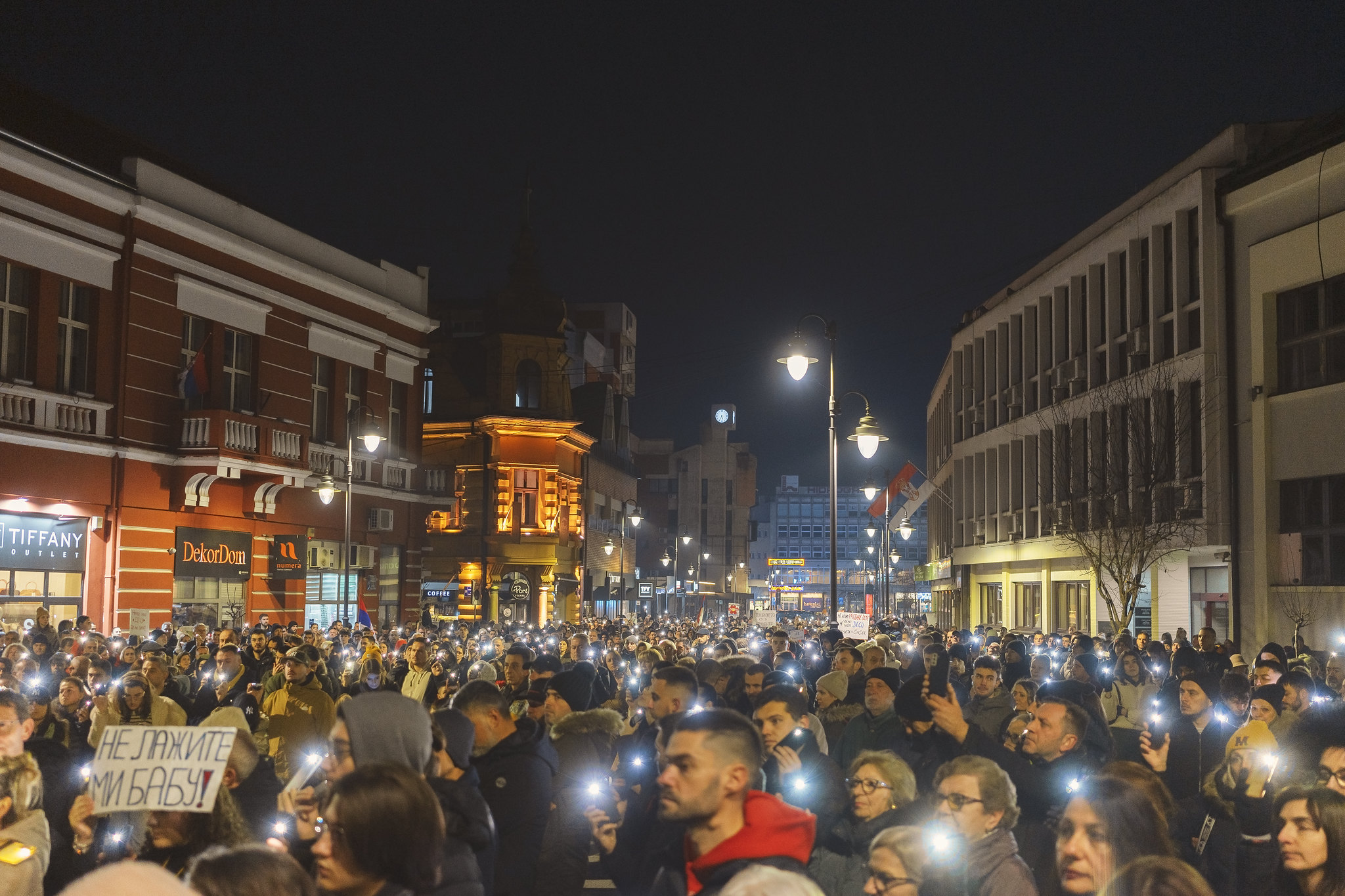
The student-led opposition wins the early parliamentary elections in Serbia. Long-time President Aleksandar Vučić has already admitted the defeat of his SNS party. Thousands of people celebrated the election results in Belgrade.
At the advanced oneGeneral electionLast Sunday, the student-led opposition list clearly defeated the ruling SNS. Vučić declared his defeat on election evening in Belgrade. According to the first results, the student list has 135 to 140 seats, while his political camp is expected to receive 105 mandates. Final results are not yet available.
With at least 126 seats, the student list would have a majority regardless of coalition partners. The preliminary figures indicate a fundamental change in power in Serbia. Vučić had significantly influenced the country's political development for years and wanted to return to the top of the government after his resignation as president. This plan failed for the time being with the election defeat.
Serbia before the parliamentary elections: protest movement challenges Vučić
Record turnout and allegations of election manipulation
The voter turnoutwas significantly above the level of the last parliamentary election in December 2023. According to the independent election observation organization CRTA, 46.4 percent of those eligible to vote had cast their vote by early afternoon. At the same time in the 2023 election it was 32.3 percent. In the end, participation reached a record level of almost 70 percent.
Long queues formed in front of polling stations in Belgrade, Novi Sad and Niš. A large number of voters were also reported from smaller cities and from Serbian voters abroad. The high turnout benefited the student list, whose election campaign focused on mobilizing people who had previously been politically disappointed.
After more than 14 years of SNS rule, many in Belgrade could hardly wait for the polls. “Belgrade will bury the SNS today,” he saidSporting goods retailer Jovanopposite the Frankfurter Rundschau. He described why he and several hundred other people waited in front of the polling station an hour and a half before it opened: “People are simply fed up with the corruption and criminal activities of the SNS.”
Shortly before the election, both parties held their last rallies. The SNS rented the Belgrade Arena for an event with Aleksandar Vučić as the sole speaker. On the other side of the Sava River, however, the student list was moving150,000 peopleon Slavija Square. Various students and candidates spoke there.
However, the election process was overshadowed by allegations of possible manipulation. The monitoring organization CeSID reported more than 120 irregularities at 750 polling stations. This included photographing completed ballot papers, voting outside voting booths and groups that appeared to have been brought to polling stations in an organized manner. It is not yet clear whether and to what extent they influenced the election result.
Serbia: Mass protests against corruption continue despite repression
Cheers in Belgrade – protest movement reaches its goal
After the defeat was announced, there were spontaneous celebrations in Belgrade. Tens of thousands of people cheered in the streets across the country. Young supporters celebrated the results and car parades drove through the capital honking. The reactions show how important the election results are for the protest movement.
The movement emerged from protests against corruption and the country's political leadership. The trigger was the collapse of a train station canopy in Novi Sad in November 2024, in which 16 people died. Hundreds of thousands of people took part in subsequent protests in the capital Belgrade, calling for early elections.
The demonstration was one of the largestprotestsin Serbia since the fall of long-time ruler Slobodan Milošević in 2000. Many of the demonstrators blamed corruption and a lack of political responsibility for the conditions in the country.
The initial protests developed into a nationwide movement that increasingly questioned democratic institutions and the concentration of power under Vučić. The student electoral list concentrated this discontent and developed into a serious political alternative. The election victory represents the greatest success of this movement to date.
Serbian students: “We don’t want puppets of the West or East”
What happens after the election?
With a predicted majority of 135 to 140 seats, the student list could form a government without the currently ruling SNS. It is still unclear whether she will seek additional parliamentary support for this.
The movement is not an ordinary party with a comprehensive common program. According to their own statements, their central goal is initially to restore democratic institutions and the rule of law and to combat corruption. She went into the election campaign with the slogan “Serbia or the Mafia”. A successor to Vučić or the appointment of ministries have not yet been determined. Contrary to the name, instead of students, it was mainly teachers at universities, doctors or artists.
Questions about future foreign policy, the relationship with Russia and the European Union as well as Kosovo have also been deliberately kept open so far in order to enable the broadest possible support.
The formation of a government should therefore show whether the heterogeneous movement will succeed in developing a viable political project from their common protest. A parliamentary majority would be an important prerequisite for this, but not a guarantee for a stable government. Reforming Serbia's 14-year-old centralized SNS control of the government is unlikely to be easy.
A political turning point for Serbia
The election outcome is also important for the European Union and therefore Germany. Serbia is a candidate for EU membership, but in recent years it has only approached European requirements for the rule of law and democratic institutions to a limited extent. Critics accuse Vučić of weakening the independence of media and institutions and securing his party's power.
In addition, Serbia has become an increasingly important location for the German and international automotive industry in recent years. The Serbian government attracted suppliers such as Bosch, Brose and ZF to the country with tax breaks and low wages. On the one hand, they ended Serbia's high unemployment, but they depressed Serbian wages and made the country dependent on foreign monopolies.
Whether a change of government will lead to closer rapprochement with the EU remains an open question. The student movement has so far focused its forces primarily on domestic political demands. Your specific foreign policy orientation must first emerge.
One thing is certain, however: the protest movement has translated its criticism of the government into an election victory. After years of political dominance by the SNS, Serbia is facing a possible fundamental change at the top of the government. What will now be crucial is whether the new majority can implement its promises to fight corruption and strengthen democratic institutions.
The postParliamentary election in Serbia: Student movement defeats Vučić's ruling partyappeared firstperspective.