
Germany · Perspektive Online · · 3h
Palestinian Zaid Abdulnasser on US sanctions list
Deutsch (original) · Auto-translated to English
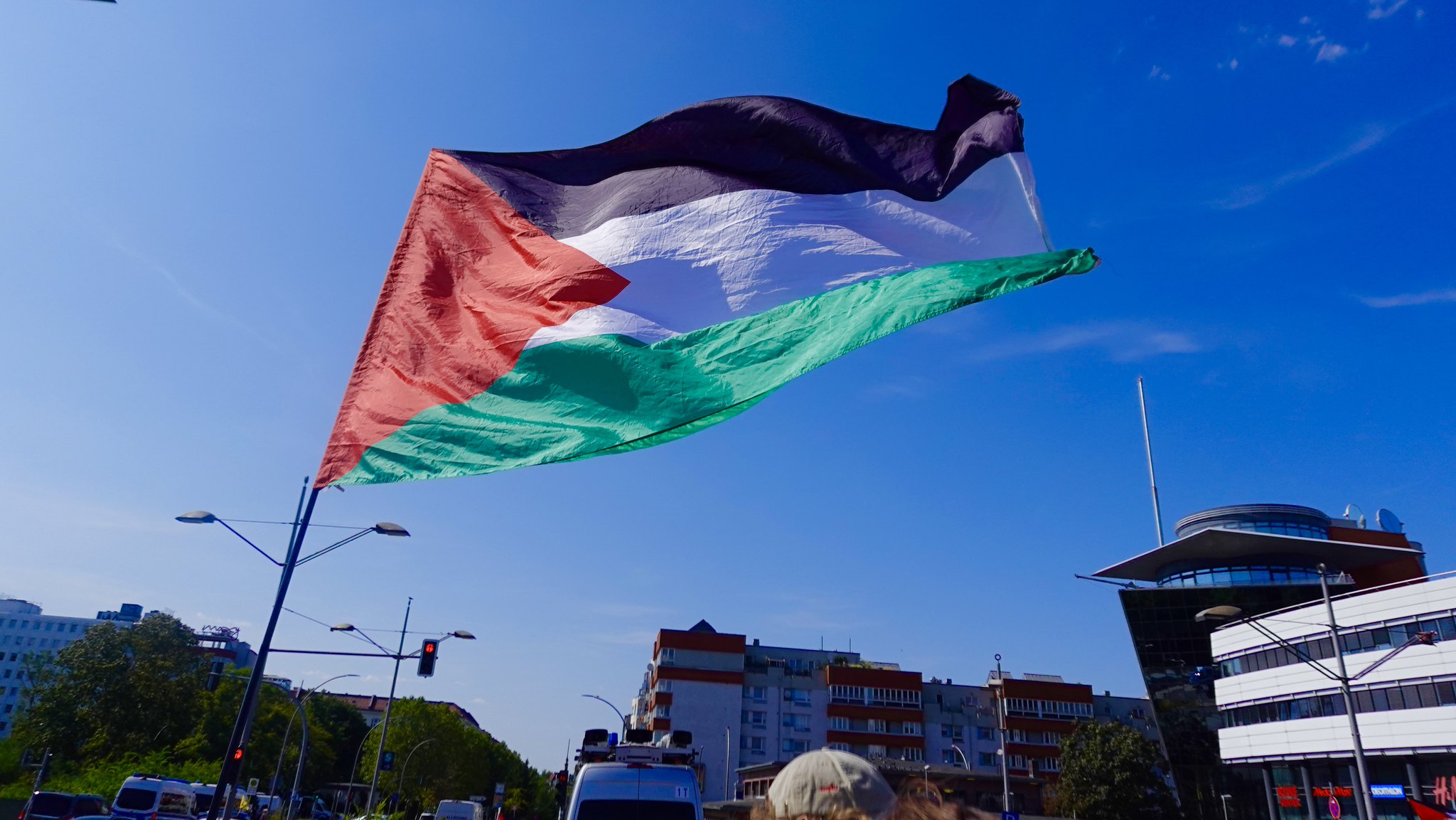
Zaid Abdulnasser, a stateless Palestinian living in Berlin and a former member of Samidoun, has been on the US sanctions list of the US Department of the Treasury (OFAC) since the end of August 2026 and is listed there as a suspected member of the Masar Badil group. At the same time, the Berlin Administrative Court is negotiating the withdrawal of his subsidiary protection status.
At the end of August, the US Treasury Department placed a number of organizations on a sanctions list and accused them of terrorism: the anti-fascist collective from Italy Autistice/Inventati, the group “Palestine Action” and the Palestinian organization “Masar Badil”. Two individuals were alsosanctioned: Rawa Alsagheer from Brazil andZaid Abdulnasser, which the US Department links to Masar Badil.
In practical terms, this means: assets in the USA or under US control are blocked and US persons are generally not allowed to do business with them; Violations may result in civil or criminal penalties. The measures also have an effect beyond the formal scope of US law, for example through banks that risk US business relationships and in that they can make freedom of travel and account management more difficult for those who are sanctioned.
US government puts NoBlogs and Palestine Action on terror list
Zaid Abdulnasser is not the first individual to be sanctioned by a state or an association of states: including the journalistHüseyin DoğruThe EU imposed far-reaching sanctions. However, Doğru is more directly affected by the sanctions because he lives in the EU.
Asylum laws as a weapon of repression
The decision to impose sanctions from the USA coincides with oneProceedings before the Berlin Administrative Courton Zaid Abdulnasser's residency status. At the beginning of September there was a trial date for the first time in a process that has been dragging on for over three years, as Zaid reports. The Berlin deportation authorities have been trying to revoke his protection status since the summer of 2023. In January 2024, the status was revoked by a decision. Since then, Zaid has been taking legal action against the Federal Office for Migration and Refugees (BAMF). According to EU asylum rules, protection status can be revoked even without a criminal conviction.
“Our answer is steadfastness” – Interview with Zaid Abdulnasser
In fact, Zaid Abdulnasser also has no criminal record. However, the authorities have used various means. Initially, the BAMF tried to cast doubt on the fact that Abdulnasser's country of birth, Syria, was also his country of origin, as he grew up predominantly in the United Arab Emirates. However, this quickly proved to be hopeless, also because Abdulnasser had demonstrably provided complete and correct information about his biography in the asylum procedure. The country of origin Syria is the basis for the so-called subsidiary protection status. Even without recognized asylum, people with this status may not be deported to their countries of origin if they cannot stay there safely due to war or political persecution.
A different line of argument is therefore in the foreground. According to EU asylum legislation, specifically the so-called Status Regulation, people's status may be withdrawn if their actions are proven to "contravene the principles and objectives of the UN". In this context, the BAMF accuses Zaid of having “supported Hamas,” which would fulfill this requirement. The court case concerned statements about the attack by the Palestinian resistance on October 7th, which classified it politically.
In an interview with Perspective and before the administrative court, Abdulnasser emphasized that the “Palestinian resistance is legitimate and necessary,” a statement that the court also believes is not criminally relevant. He sees this very position as the reason for the official attacks on his person, which are part of the general repression against the Palestine solidarity movement in Germany. He finds it absurd that the question of the legitimacy of the resistance is even being raised given the situation in Palestine. From his point of view, much more questions should be asked in Germany whether a colonial ethnostate that commits war crimes, expulsion and genocide can still be saved. For Zaid, the resistance against occupation and colonial rule in Palestine follows the same tradition as numerous anti-colonial and anti-fascist struggles throughout history in the world, from Vietnam and Algeria to Buchenwald and Warsaw.
Deportation is currently unclear
Even if he loses his protection status, it is unclear whether and where Abdulnasser can be deported from Syria as a stateless Palestinian. However, one consequence of the delayed procedure is already a legal limbo with an obligation to leave the country and to be tolerated. Abdulnasser states that his freedom of movement and everyday life are severely restricted. He sees precisely this as the politically desired actual purpose of the supposedly purely administrative procedure: the asylum legislation is directly turned into a weapon of repression. This effectively creates a kind of parallel justice system alongside the existing criminal law, which specifically targets refugees if they engage in political activity against the interests of the German state. This political criminalization became particularly clear in Zaid's case when the judge in his administrative trial spoke about the legal basis of "desk offenders" and once directly referred to him as a "perpetrator". This alleged slip of the tongue resulted in a request for bias against the judge, which Abdulnasser's lawyer made directly in the situation.
Zaid Abdulnasser correctly states: “If a German citizen had said the same things, he would have nothing to fear.”
In addition, the US designation exacerbates the situation: Abdulnasser's lawyer Alexander Gorski warns of new uncertainties regarding accounts, employment relationships and general ability to act. The US sanctions are “in no way inferior to the repression of the Federal Republic”.
A verdict in Zaid's trial is expected on September 14. This is likely to have an impact far beyond the individual case. Among other things, it is about the question of what kind of freedom the Palestinian solidarity movement in Germany still has in an extremely hostile climate.
The postPalestinian Zaid Abdulnasser on US sanctions listappeared firstperspective.
Read the full story at the source →
Source: Perspektive Online