
War & Militarism Perspektive Online
New study: Almost three out of four women in the Bundeswehr are sexually harassed
While the Bundeswehr's suspicions of sexual misconduct and violence have been increasing for some time, a new study shows how much the problem has been underestimated so far. Of the
Deutsch (original) ·Auto-translated to English
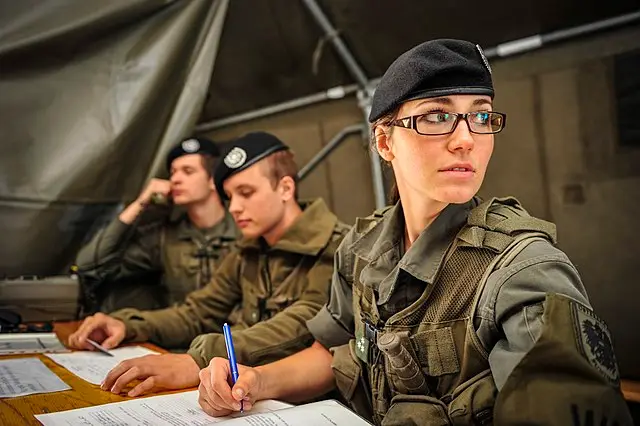
While the Bundeswehr's suspicions of sexual misconduct and violence have been increasing for some time, a new study shows how much the problem has been underestimated so far. Of the female soldiers surveyed, 72 percent said they had been harassed at least once during their service career. The Defense Minister announces consequences.
Reports of sexual assault and sexist behavior in the Bundeswehr are not new:For yearsThere are allegations of harassment, assault and abuse of power in the Bundeswehr. Nevertheless, Defense Minister Boris Pistorius (SPD) is expected to speak in the Bundestag's Defense Committee on Wednesdaypresented dark field studyAttract attention: For the first time, based on surveys, it quantifies how widespread sexualized misconduct is in the force.
Accordingly have39 percentof female soldiers and ten percent of male soldiers experienced physical sexualized misconduct during their time of service. 72 percent of the female soldiers surveyed said they had been verbally sexually harassed at least once during their service, compared to 31 percent of the soldiers.
What the dark field study investigates
The so-called dark field study “Sexualized Misconduct in the Armed Forces” was developed by the Bundeswehr’s Center for Military History and Social Sciences.It is the first comprehensive study of its kind in a public authorityand has, among other things, the aim of obtaining an overview of the frequency and motives of such incidents. The focus is particularly on cases that were not reported as such - known as unreported cases or unreported cases.
Violence in Germany: Study sheds light on the huge dark field
The survey was carried out using an online form. The Bundeswehr's Center for Military History and Social Sciences recruited around 45,000 soldiers for the studywritten to. Around 18 percent responded, and more than 8,100 questionnaires were evaluated.
The study distinguishes between four categories of sexualized misconduct: verbal harassment, visual harassment (such as showing or sending appropriate pictures), physical assault (such as unwanted touching) and sexualized violence, i.e. actions that violate sexual self-determination.
40 percent of female soldiers were affected last year
ThestudyAccording to him, sexualized misconduct is a widespread phenomenon in the Bundeswehr. All groups of people and areas of the armed forces are affected, but especially women, who only make up just under a seventh of the soldiers. Of them, 40 percent said they had been affected by misconduct in the last year; among soldiers the figure was 19 percent. In absolute numbers, men still make up the largest affected group. Both 2 percent of soldiers suffered sexual violence.
According to the study, younger soldiers and non-heterosexual men are also disproportionately affected by sexual misconduct. The study does not provide any information about whether other LGBTI+ people, and in particular trans and non-binary people, are affected. Alsoyoung women in the lower ranksand Navy units are more often victims of sexual misconduct. In units with a higher proportion of women (over 15 percent), female soldiers are less likely to experience sexualized misconduct.
Protest against the Bundeswehr at a queer job fair in Berlin: How LGBTI+ people are exploited
Only every fourth to sixth case is reported
The number is strikingunreported cases: Depending on the type of misconduct, only every fourth to sixth case is ever reported. The soldiers' reasons for this are varied: between 56 and 66 percent of those affected cited not wanting to cause a stir as a motive. Lack of trust in the reporting system and the military environment (36 to 61 percent) as well as fear of retaliation (26 to 46 percent) also played a role. According to the study, direct social pressure from other soldiers or superiors only plays a minor role. Two thirds of the soldiers considered themselves well informed on the topic of sexual misconduct.
Officials interviewed describe the reporting procedure as"Machinery": It follows fixed rules, is difficult to control after the start and is not transparent. Those affected could go from “victim” to “witness” and finally to “applicant”. Because those affected and third parties interviewed hardly knew how the investigation went and ended, rumors about the guilt and innocence of those involved made the rounds in the units.
518 suspicious activity reports this year, allegations in Weißenfels
The study makes it clear how big the problem is, which has been apparent for years: cases of abuse of power, threats and attacks continue to come to light. It was only in October that Spiegel published a report with serious allegations against the 1st Medical RegimentWeissenfels. The statistics also speak for themselves: from January to October 2026518 suspicious activity reportsregistered on sexualized misconduct in the Bundeswehr. While the value was a total of 312 reports in 2021, the number has risen steadily since then.
Again reports of sexualized attacks in the Bundeswehr - statistics show increasing violence
“There is zero tolerance for sexual misconduct in the Bundeswehr,” said Defense Minister BorisPistoriusafter the study was presented to the Defense Committee. At the same time, he announced a 34-point action plan with which the Bundeswehr should respond better to such incidents in the future.
For example, soldiers should be better informed about reporting channels and offers of help in the future. A new oneAdvice centeroutside the army hierarchy called “HELP” has existed as a contact point since the beginning of November. In the future, a specially trained group of investigators will take care of the legal prosecution and punishment of the cases. In addition, the information rights of those affected should be expanded. In addition, there is support through psychosocial support during the procedure. Both voices from the Left and from the CDU are still taking these stepsnot far enough.
The study also has personnel policy implications for the Bundeswehr: the force is set to grow and wants to recruit more women, who currently make up around 14 percent of military personnel. The military commissioner Henning Otte (CDU) had warned before publication that the results could affect the trust of potential applicants.
The postNew study: Almost three out of four women in the Bundeswehr are sexually harassedappeared firstperspective.