
War & Militarism taz
Sexualized violence in the Bundeswehr: A highlight in the dark field
For the first time, the Bundeswehr is shedding light on the extent of sexualized misconduct within its own ranks. Defense Minister Pistorius now wants to act. more...
Deutsch (original) ·Auto-translated to English
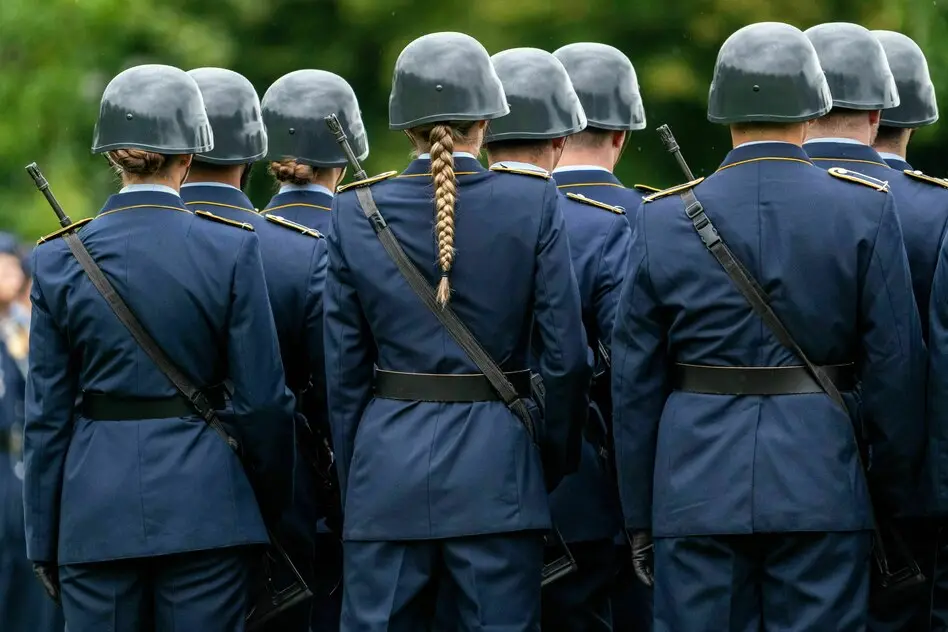
The most recent cases that became public took place in Weißenfels. In the medical regiment in the Saxony-Anhalt barracks, there is said to have been a competition among instructors to see who had sex with more female recruits. At the beginning of November, the public prosecutor's office began investigations against five men. They are said to have used their role as superiors to behave aggressively towards the young women. According to research by Spiegel, one of the women who was pressured into sex was said to have been a minor.
The Bundeswehr leadership seems to have recognized that these blatant cases in the armed forces are no exception, but rather take place within a certain structure. According to a study published on Wednesday by the Bundeswehr's Center for Military History and Social Sciences, 72 percent of female soldiers have experienced sexual harassment during their service - but only very few cases have been reported. Defense Minister Boris Pistorius (SPD) said of the study results that they significantly exceed the number of reports known to date.
The high number of unreported attacks is worrying, said the Defense Minister. “Those affected don’t want to cause a stir, they have no knowledge and no trust in the reporting channels.” According to the study, female soldiers reported incidents of sexual violence in only one out of three cases, and sexual misconduct in the form of sayings in only one out of five cases.
The investigation was based on an initiative by the Bundestag's former military commissioner, Eva Högl (SPD), and was commissioned at the end of 2025. The researchers sent anonymized questionnaires to 45,000 soldiers. The response rate was 18 percent, so 8,100 questionnaires were evaluated and statistically weighted according to rank group and branch of the armed forces. According to the researchers, this resulted in a representative image. In addition, they conducted 60 group and individual interviews.
“It was clear to us from the start that this analysis could reveal unpleasant truths,” said Pistorius after presenting the results to the Bundestag Defense Committee together with Inspector General Carsten Breuer. According to the study, 9 percent of female soldiers and 3 percent of male soldiers surveyed said they had experienced physical assault within the past 12 months.
Young women in low-ranking teams were particularly often affected by sexual violence and border crossings. Non-heterosexual men were also disproportionately in the spotlight.
The security structure must be viewed as equally devastating for all superiors in the Bundeswehr, including the Defense Minister. Only 28 to 45 percent of those surveyed said that the reporting process worked well. “Depending on the category of sexual misconduct, between 56 and 66 percent say that they did not report it because they did not want to cause a stir,” the study says.
“The study results are not surprising,” says Karen Hagemann to the taz. The history professor is co-founder of the Military, War and Gender Research Network. “I am rather surprised that Pistorius and the gentlemen present were so surprised.” For relevant researchers, the topic of sexual violence in the armed forces is nothing new.
As long as there are only 14 percent of women in the Bundeswehr, they fulfill the role of tokens. “They can only survive if they adapt to the majority culture.” Research speaks of a threshold of 25 to 30 percent at which a minority in an institution can influence and change the culture with the prospect of success.
“The military has traditionally been a heterosexual male-dominated institution,” she says. “Historically, one could also speak of a men’s association with a toxic culture of masculinity – and changing a culture is, as we all know, a very difficult task.”
Pistorius has set himself this task. “It was clear to me that this dark field study was the beginning and not the end of this topic.” The Defense Minister presented an action plan with 34 measures, including the Help advice center that was set up at the beginning of November. Pistorius emphasized that it was “outside the military hierarchy,” and those affected could therefore report “confidentially.” In addition, a special investigative group should be created and greater awareness of the issue should be raised in training and further education.