
Anti-fascism Perspektive Online
“Nazis murder, the state joins in” – the racism of the police and the Office for the Protection of the Constitution
While the NSU was murdering through Germany, the police were investigating migrants. The racism of the investigative authorities is still systematic today. – A comment by Mohannad Lamees. The Be
Deutsch (original) ·Auto-translated to English
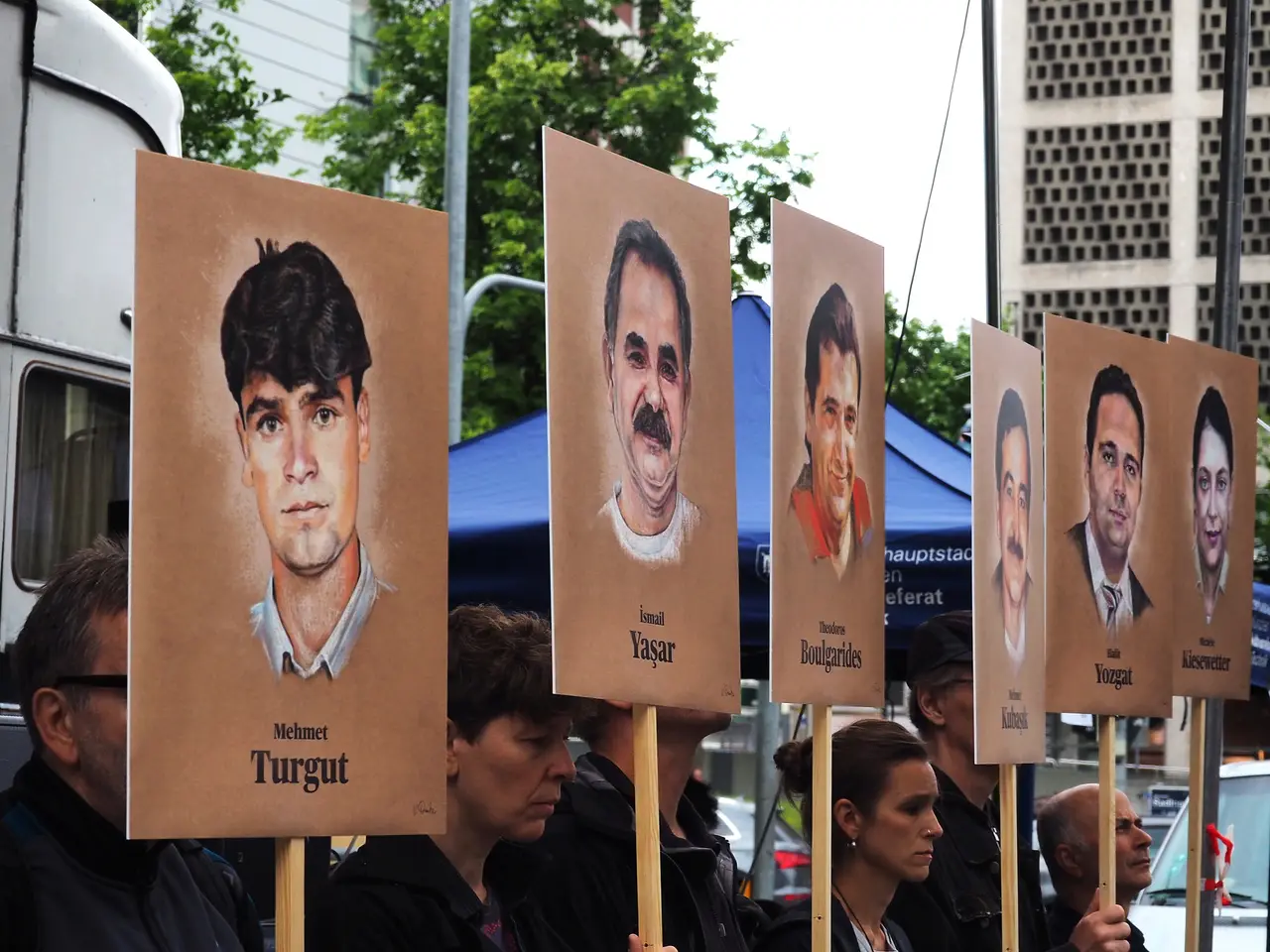
While the NSU was murdering through Germany, the police were investigating migrants. The racism of the investigative authorities is still systematic today. – A comment by Mohannad Lamees.
It sounds like an excerpt from a bad movie: In 2008, at a time when eight Turkish and one Greek man had already become victims of a series of murders with the same murder weapon in several German cities, the Hamburg police decided to take an unusual step. In order to solve the murder of Süleyman Taşköprü, aNecromancerhired from Iran. He stated that he had contacted the murdered man through a medium.
According to the necromancer, the message was that the perpetrator was a “southerner” with brown eyes and black hair. The police recorded the description in their files. While a necromancy was considered a search for clues, the possibility of a racist murder by neo-Nazis remained out of sight for years and was considered ruled out. Evidence of fascist terror was not pursued further.
The actions of the Hamburg authorities were particularly bizarre, but they were the result of a widespread onePattern. For a long time, the possibility that the murders and attacks carried out by the National Socialist Underground (NSU) were fascist acts was ruled out. Instead, relatives were suspected, migrant neighborhoods were investigated and criminal drug networks were fantasized.More than 10,000 peoplewere the focus of surveillance, during which millions of telephone data were collected - almost all of them were migrants.
From the SoKo “Halbmond” to the “Kebab Murders”: Instead of Nazis, the focus was on migrants
After the NSU murder of the flower dealerEnver SimsekIn Nuremberg in September 2000, the police first suspected his widow Adile. She murdered her husband and her brother out of greed. The investigators later suspected that Şimşek had connections to the drug trade, among other things because of his professional trips to the Netherlands. The apartment was searched and the telephone was tapped. Adile Şimşek had to be interrogated repeatedly. Her then 14-year-old daughter Semiya was questioned for hours without adult supervision.
Even when a case analysis by the Bavarian State Criminal Police Office named “hatred of Turks” as a possible motive, the investigators again only asked about business relationships and acquaintances. However, there was never any actual evidence of Enver Şimşek's criminal dealings. Semiya Şimşek later said when the extent of fascist terror finally came to light through the self-exposure of the NSU in 2011: “For eleven years we were not even allowed to be victims with a clear conscience.”
Even after other murders with the same murder weapon became known, investigators stuck to their suspicions. The police searched vehemently for a criminal organization in the migrant milieu. The special commission was “Crescent", later it became the nationwide special organizational organization "Bosphorus". The media called the series of murders “Doner kebab murdersDepending on the profession and origin of the murdered, the police suspected a “flower mafia”, a “doner kebab mafia”, drug dealers or people smugglers behind the crimes. The PKK and Turkish Hizbullah (Kürt Hizbullahı) were also treated as possible groups of perpetrators.
The German police meticulously pursued their search for clues. After the murder of Mehmet Turgut in Rostock in February 2004, German police officers even traveled to his family's Kurdish village of origin in eastern Turkey. They interrogated parents, siblings and distant relatives. The search for an alleged drug or money laundering organization stigmatized the family so much that they ultimately moved away from their home village.
Even after the nail bomb attack on Cologne's Keupstrasse in 2004, in which 22 people were injured, some critically, the police treated those affected like suspects. The hairdresserHasan YildirimFor example, he later reported in court that he and his brother had been questioned and monitored like the accused. An official offered him a new identity if he would testify as a key witness. When Yildirim described the perpetrator with a baseball cap and blonde sideburns, a police officer asked whether the man could have been a little darker. Other affected people were asked about drug and red light districts as well as the PKK.
Racism is not an investigative error...
Racism was very prevalent in the NSU investigationsclearly, does not simply include the personal attitudes of individual police officers. Racism is part of the police institution and is inherent in the standards with which the police recognize danger, arouse suspicion and intensify investigations. Anyone who is considered a migrant is more quickly associated with drugs, organized crime or typical “wild” behavior. Fascist Germans, on the other hand, are not automatically recognized as a threat.
The investigations into the largest fascist murder series in the post-war history of the Federal Republic of Germany have also shown that the so-called “security authorities” partly made this deadly terror possible in the first place and later prevented its investigation. The fact that neo-Nazi forces did not come into the focus of the Office for the Protection of the Constitution and Co. for years is also due to the fact that the authorities ultimately investigated themselves. We can say that with certainty today.
NSU: The entanglements of the security authorities and the prevention of clarification
The police are a racist institution because they are part of a state apparatus that enforces racism as part of the existing order and secures the prevailing conditions. Racism helps maintain these conditions. He divides the workers into supposedly locals and foreigners, into supposedly decent people and criminals. The anger over low wages and poor working conditions, which are actually shared by all workers, is then directed against other employees instead of against the companies that benefit from them. This makes common resistance more difficult and deepens the division within the class.
... but has a system - still today
How racist patterns in police investigations continue to have an impact beyond the NSU became clear after the attack in Hanau on February 19, 2020. The fascist perpetrator murdered nine people. When his father was released from a clinic and was due to return to Hanau, the police discussed how they could protect him from possible attacks. The following sentence was included in an internal briefing: “Victim families would be potential threats to the father.” Contact officers should ask families about their thoughts on father's guilt.
As a result, in March 2020, ten survivors and relatives were confronted with so-called danger speeches, according to the Hessian Interior Minister. The police later said reassuringly that these were informational interviews to prevent chance encounters. However, families were clearly informed that no crime or conflict should occur. The fact that the attacker's father himself threatened and insulted relatives and spread racist conspiracy theories did not play a comparable role in this consideration.
But apart from fascist attacks, we see how the police themselves repeatedly pull the trigger. We remember the police murderLorenz A. in Oldenburgor the targeted execution of 16-year-old Mouhamed Dramé in Dortmund. The shooter was only recently acquitted - although the public prosecutor's office demanded a suspended prison sentence for the head of the operation for negligent homicide.
Police violence in Berlin, Mannheim, Dortmund: When the police and the state show their true colors
One could also talk about all the migrant people who died – or were killed – in police custody. Worth mentioning is the case of15-year-old black youth Nelson, who “suddenly” died in the Ottweiler prison. Or of courseOury Jalloh, who burned alive on a mattress in a Dessau police cell. It was later claimed he set himself on fire with his hands and feet tied to the mattress. As always, the investigation was massively hindered and there were no far-reaching consequences.
But these cases, which usually end in death, are just the tip of the iceberg. It has long been known that migrant people in particular cannot expect any protection from the police. Racist stigmatization and police harassment characterize their everyday lives - the anger that builds up against these injustices needs to be harnessed. TheYouth of the French banlieuesis currently doing it in the wake of the ongoing protests.
But a police force that enforces the class interests of those in power will never break such racist patterns on its own. This requires a common fight from everyone whose trust in the police and the associated state has long been shaken.
The post“Nazis murder, the state joins in” – the racism of the police and the Office for the Protection of the Constitutionappeared firstperspective.