
Germany · Perspektive Online · · 4h
Masked protests, burning tents: racist riots in Dover and Ceuta
Deutsch (original) · Auto-translated to English
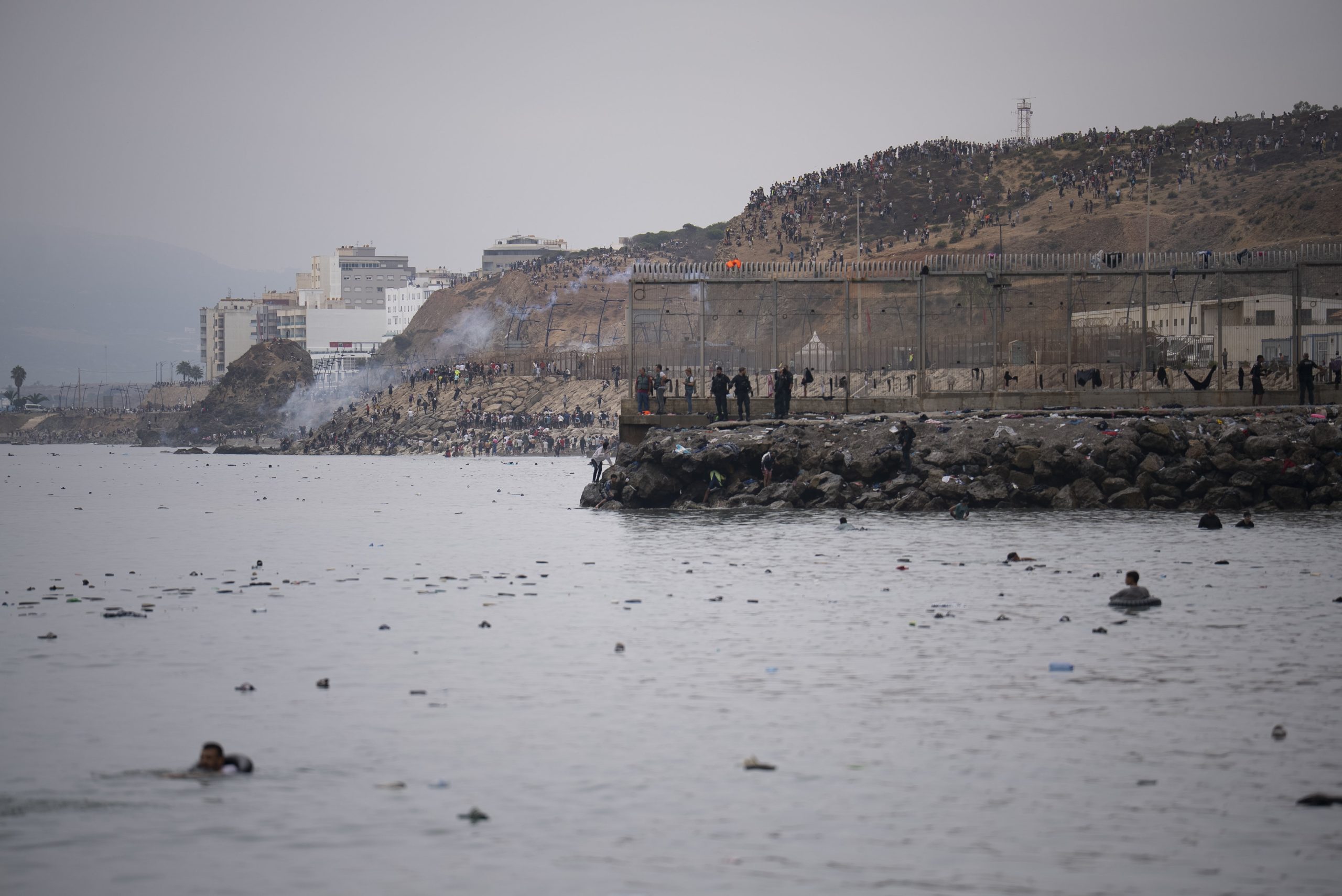
In Dover, hundreds of masked people blocked Britain's most important ferry port at the weekend to protest against the arrival of migrants. The situation also escalated in the Spanish exclave of Ceuta: people set fire to refugees' belongings and demanded their immediate deportation. The events are part of a wave of racist protests in the European Union.
On Saturday morning, September 5th, several hundred men, mostly dressed in black and masked, gathered in front of the harbor in the southern English city of Dover. They blocked access roads and brought ferry traffic to a standstill. They protested, chanting “Stop the boats.”against arrivalof migrants crossing the English Channel. The police spoke of a “spontaneous” demonstration – some media, however, reported a coordinated and well-planned action.
On social media, the Patriot Platform group claimed responsibility for the blockade. The organization is associated with the well-known fascist activist Tommy Robinson, who played a central role as an agitator in the pogroms in Northern Ireland in June this year.
Robinson and his colleagues called for protests then and now and spread racist narratives, which resulted in the burning of migrant families' homes in Belfast. The Dover blockade follows the same pattern: targeted mobilization via social media, escalation by masked militants and the staging of the riots as a supposed popular protest.
Pogroms in Northern Ireland: Organize resistance against right-wing agitation and racist division!
The British government condemned the blockade. Former Prime Minister Keir Starmer warned of a “politics of poison” penetrating society. However, there was also criticism of the police operation that developed during the operation: The local Labor MP Mike Tapp wants to clarify why the authorities allegedly did not know about the operation in advance and initially allowed the gang to run free with minimal police presence.
Ceuta: A month of crisis turns into violence
While the protest in Dover was concentrated in one day, things have been simmering in the Spanish exclave of Ceuta in North Africa for weeks. As of July 30, an estimated 70,000 people had crossed the border from Morocco to Ceuta, swimming or over the fences. More than 80 people were killed. Five weeks later, according to official information, around 5,000 migrants are still waiting in the small town, including 1,200 minors. They sleep on beaches and in commercial areas.
Mass rush to Ceuta: Migration as a means of pressure between Morocco and Spain
The tense situation led to massive protests on September 2nd. Tens of thousands of people took to the streets in the exclave itself and in more than 200 other Spanish cities. Around 50,000 demonstrators gathered in Madrid alone. The protesters chanted slogans such as “Ceuta is not for sale, Ceuta must be defended” and “Invaders – go home!” They accused Prime Minister Pedro Sánchez's government of failure and negligence in dealing with the alleged crisis. The conservative opposition party PP called for the rallies and the right-wing populist Vox also took part.
The city of Ceuta itself is a remnant of Spanish colonial rule over North Africa. At the beginning of the 15th century, Portuguese troops seized control of the city as part of a large-scale military operation, and the area was later ceded to Spain.
The current protests have increasingly developed into violent and racially motivated clashes. Residents burned migrants' belongings on beaches, destroyed tents and threw objects into the sea. They also blocked Red Cross aid deliveries. In the previous nights, vehicles and garbage containers had already been set on fire by the right-wing demonstration, there were also clashes with migrants and stones being thrown at police forces who were accused of not doing enough against the refugees. The Spanish government has allocated 309 million euros to Ceuta to stabilize the situation.
The situation of the refugees themselves is becoming increasingly miserable as the protests continue. Thousands of children and young people are already living on the streets without a home. As a result, reports of sexual assaults, including against underage girls, increased.
Fascist forces support racist mass mobilizations in the EU
The recent protests in Dover and Ceuta are not isolated incidents. Such mass mobilizations supported by fascist forces have already led to racist pogroms in Northern Ireland this year. In June 2026, fascists used a knife attack in Belfast to massively call for racist protests and riots. The demonstrations escalated into attacks on migrant families, including several dozen houses being set on fire. Back then, too, Tommy Robinson played a central role as an agitator.
The events of the last few months show a certain pattern: right-wing networks not only react spontaneously, but also plan their actions in a targeted manner. They use social media for mobilization, present themselves as representatives of the people and try to bring their racist demands into the political mainstream. The blockade in Dover, for example, was not a spontaneous outrage, but an organized action by a group with specific political goals. The protests in Ceuta were not only carried out by local residents, but were also exploited nationwide by conservative and fascist forces. However, members of the neo-Nazi organization Núcleo Nacional were also attacked by residents of Ceuta amid anti-fascist sloganspushed out of the city.
In Northern Ireland, the close relationship between loyalist paramilitaries and right-wing groups that mobilize together against migrants is revealed. As part of the Protestant spectrum, they seek rapprochement with the United Kingdom, in contrast to the Catholic-Republican forces. In recent months, right-wing forces have spread fake statementsalleged “New Irish Republican Army (IRA)”,which would also incite against refugees.
The criminalization of migration and refugees is not just a means of driving out people fleeing war and poverty. Racist riots are also an extreme expression of a division within the working population. For example, while the so-called “cost-of-living crisis” is shaking the whole of Great Britain, refugees are being blamed for the actual problems and their causes. This is also why such fascist mobilizations have been repeatedly met with anti-fascist counter-protest.
Wave of anti-fascist protests against racist pogroms in Northern Ireland
The postMasked protests, burning tents: racist riots in Dover and Ceutaappeared firstperspective.
Read the full story at the source →
Source: Perspektive Online