
World Perspektive Online
Canada and the EU want to expand their alliance – to the annoyance of the USA
At a summit between the EU and Canada, a dispute broke out in Montreal over what name the planned partnership should be called. Both with linguistic tricks and with military ones
Deutsch (original) ·Auto-translated to English
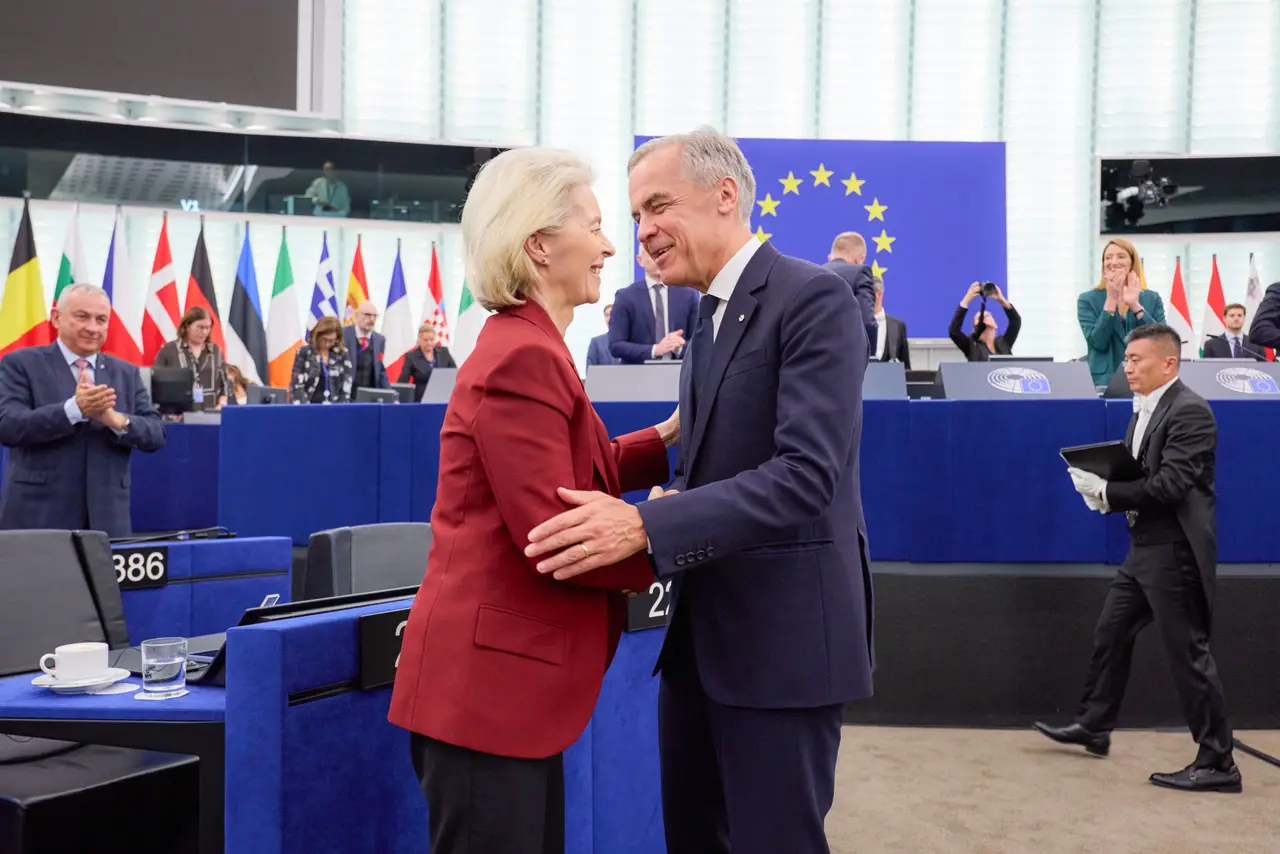
At a summit between the EU and Canada, a dispute broke out in Montreal over what name the planned partnership should be called. Both actors want to improve their position using linguistic tricks as well as military and economic measures. – A comment from Georg Lutz.
This week took placein MontrealA summit meeting between Canadian and EU representatives will take place to further expand the existing alliance. EU Commission President Ursula von der Leyen wanted the North American statethe rank of one“associate membership” in the European Union.
But that caused a dispute between two CDU politicians. Because German Chancellor Friedrich Merz doesn't like that. Associated membership is already reserved for Ukraine, for which it is intended to be an intermediate step towards full membership.German diplomats also commentedthat this status has not been sufficiently thought through, either legally or politically. Merz’s alternative title is: “Alliance for the Future”.
The suggestion ofMerzis also of lesser consequence. According to the proposal, the integration of the Canadian and European financial markets would be less extensive and other economic privileges would be eliminated. At the summit, supporters of the “Alliance” were able to prevail. The requirement for associated membership was removed from the draft final declaration of the summit.
Canadian Prime Minister Mark Carney then stated a banal fact: “The name doesn’t matter.” On a substantive and political level, there is no doubt that Canada and the EU want to deepen their cooperation.
The turn away from Washington and the turn to Brussels
The neighbor USA, on the other hand, is unlikely to like this development at all. US President Donald Trump also knows linguistic tricks to express his desire to keep Canada in his own sphere of power. InExecutive Order 14172In August, Trump renamed Lake Ontario on the border with Canada Lake America.
Also expressedTrump in the past, Canada should become the “51st state” of the USA. Of course, one shouldn't attribute too much real meaning to Trump's crazy ideas. But these vulgar imperialist fantasies combine with their domestic political impact to form a truly powerful force.
Through his aggressive foreign policy course and his expansionist rhetoric, Trump can suggest that he has restored the US's foreign policy prestige. The chauvinistic part of the American electorate would probably like that. However, the main focus when analyzing the foreign policy trade of imperialist states should continue to be on economic and military interests.
That's how about 70 percent of them goCanadian exportsto the USA. For the EU states, however, the value is only 9 percent. Canada is therefore economically heavily dependent on the USA as an importer.
Once again, the EU has a great interest in intensifying trade relations with Canada. The Portuguese António Costa, President of the European Council, expressed this at theSummit meetingthis week: Standards and norms for products from Canada and the EU must be harmonized. The mobility of workers must be intensified.
New arms deliveries: Canada orders German submarines worth billions
Canada must choose a side
They also want to secure supply chains, and to this end military cooperation must be strengthened and the availability of critical raw materials must be ensured. In practice, these projects lead, for example, to CanadaSubmarinesfrom the German shipyard ThyssenKrupp Marine Systems (TKMS).
are interesting for the EU, but the funding is sometimes too expensive and technically immature. For the EU, however, Canada is likely to be just one of several projects to become competitive against the major powers USA and China.
For example, some shouldBalkan stateshow Montenegro, Albania and Serbia are integrated into the sphere of influence of EU imperialism. At the same time, individual EU states are also pursuing their own strategies to secure their own power. The Federal Republic of Germany, for example, drivestheir own coursein the procurement of fossil raw materials by wanting to expand trade relations with the states on the Persian Gulf.
Canada cannot afford this luxury; it must either move closer to the US or the EU - or pursue a strategy of equidistance. If the relationship between the nominal allies US and EU deteriorates further, Canada could be forced to choose a side. And in case of doubt, that would probably be the person with whom you share a national border that is thousands of kilometers long and an economic dependency.
The postCanada and the EU want to expand their alliance – to the annoyance of the USAperspective.