
Germany Perspektive Online
Invest in Germany Summit: Politics and capital meet in the back room
In the past two days, government politicians met with hundreds of entrepreneurs in Berlin. Excluding the public and with exclusive access to the federal government
Deutsch (original) ·Auto-translated to English
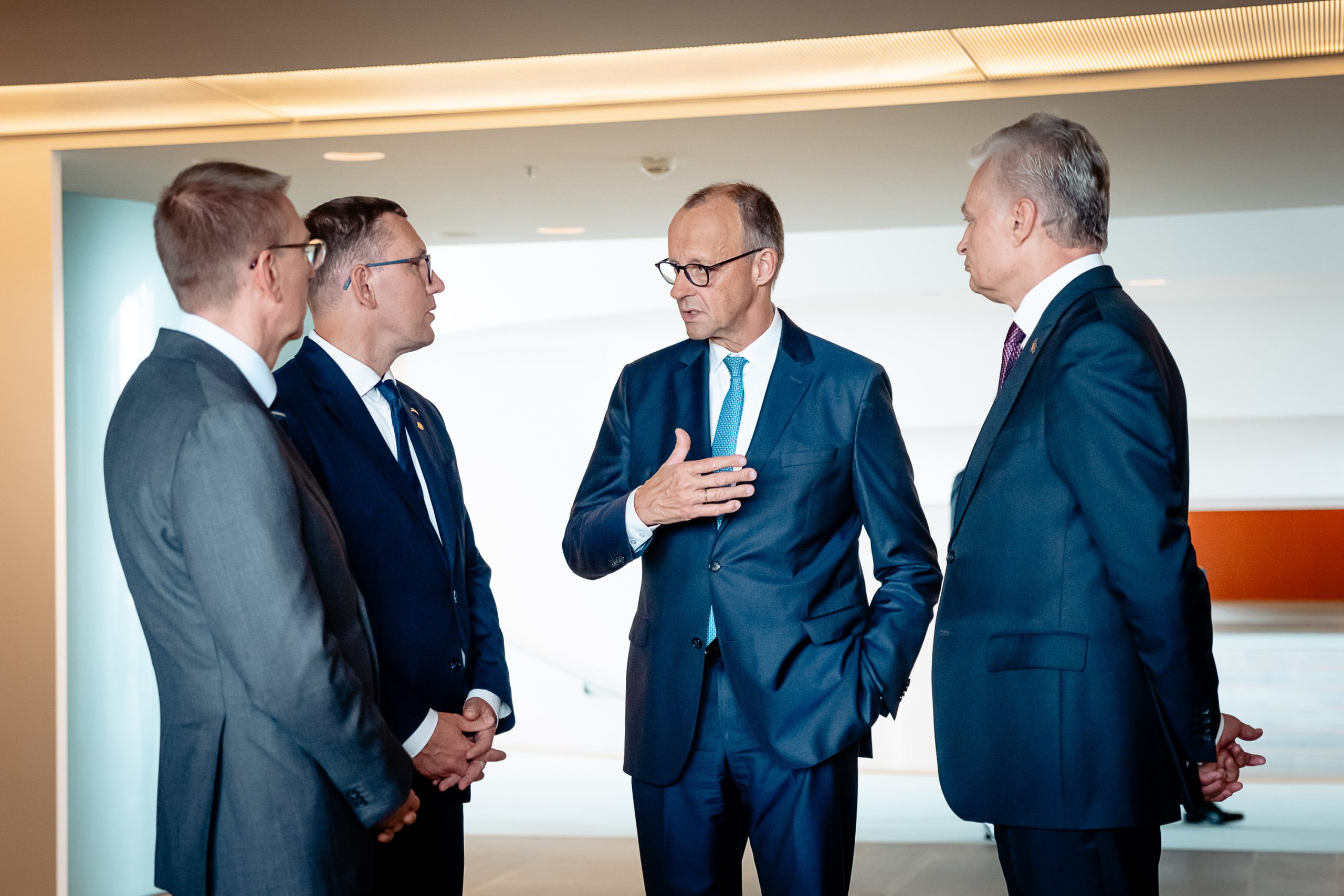
On Monday and Tuesday the “Invest in Germany Summit" took place. Over two days, members of the federal government met with various CEOs of large companies - around 200 German and international business bosses and investors were there. The aim of this summit was to establish a close exchange between members of the government and entrepreneurs in order to convince them to invest in Germany.
In his opening speech, Merz explained that Germany is currently launching the largest modernization initiative in recent history. He referred to public investments in the 500 billion euro special fund and reforms in the social system.
With the help of the summit, the aim is to invite companies to take part in this modernization. According to Merz, Germany is a stable partner and open to business. In order to convince the companies, Merz also formulated the goal of having numerous individual discussions with entrepreneurs over the duration of the summit.
“Not the intention to become the nation’s darling”: Merz wants to push through reforms
Exchange of capital interests behind closed doors
Approximately550 invitationswere sent in advance, but to whom exactly is largely unclear. The presence of some key government politicians - Friedrich Merz (CDU), Katherina Reiche (CDU) and Lars Klingbeil (SPD) - as well as prominent CEOs from Siemens, Blackrock, Commerzbank and Deutsche Bank, for example, was known, but the rest of the list of participants was kept from the public.
Representatives of the press were also only granted limited entry. When asked, the federal government explained: “The event should contain both confidential, non-press-public elements as well as general press-public program items.”
This approach triggered a great deal of criticism in advance. The spokeswoman for the Left Bundestag parliamentary group for financial market and monetary policy, Lizzy Schubert, explained: “The summit is only a good signal for Blackrock and Co.” She also criticized the exclusive access of individual business bosses to the government: "Anyone who ends up on the hand-picked invitation list can hope for 15-minute private conversations with the Chancellor and his ministers. MPs, the press and the concerns of citizens are once again left out."
Schubert's criticism does not seem to have been made out of thin air; on the contrary, the investor summit was designed in advance with exactly these possibilitiesadvertised. The federal government promised “Meet the Government Sessions”, during which ministers enter into direct dialogue with the guests. There is also “an emphasis on confidential, high-level discussions between our political leaders and global investors.” The event promoted the government with exclusive access to the state leadership, where capitalists could express their interests and needs directly.
Another point of criticism of the conference is thiscost point. A query from the Left Party shows that a budget of 5 million euros was earmarked for the conference. In comparison, the Ministry of Economic Affairs' most expensive event in the period 2021-2025 was 1.5 million euros. Providing CEOs and investors with a direct line to the government is expensive for taxpayers.
Semi-public crisis summit: Merz receives capital associations in the Chancellery
Investments are intended to stimulate the German economy
The federal government justifies the summit primarily with the urgent need for private investment in the German economy. The 500 billion euro special fund is not enough to stimulate the economy again. “Here we need a ratio of around one to ten,” explains the Minister of Economic AffairsKatherina Reiche(CDU) in relation to public and private investments.
However, there have been major problems with private investments in recent years. While investments in the EU increased by 6.7 percent between 2019 and 2025 and in the USA by as much as 20.2 percentGermany saw a decline of 6.4 percent. That's still the casewell below the investment levelbefore the corona pandemic.
One of the reasons for this phenomenon was the skyrocketing energy costs in the context of the Ukraine and Iran wars. High tax and levy burdens and excessive bureaucracy are also repeatedly cited as obstacles. To address this problem, further measures should be taken in the future to make investments attractive to large companies.
Measures to reduce bureaucracy and a data center strategy are to be developed. The Germany Fund and the planned stock pension are also intended to bring money into the capital market. The latter takes the population's money directly for retirement provision so that it can then be invested. Labor costs should also be reduced.
“Early start pension”: appeasement and the stock market instead of secure retirement provision
Industrial data as the basis for the AI revolution
A particular focus of the summit was artificial intelligence, in which Germany continues to lag behind. Chancellor Merz gave the opening speech together with theNvidia boss Jensen Huang. The two announced a joint declaration of intent with the aim of advancing the development of AI models for industrial use. As the most important chip producer, Nvidia is currently one of the most relevant companies in the current development of artificial intelligence and thus the entire global economy.
Specificallyit is about “an initiative to develop state-of-the-art AI models for physical AI”. Physical AI refers to AI systems that are responsible for controlling and interacting with machines, mostly in the industrial sector. “The goal is to systematically bring industrial AI into widespread use and establish a state-of-the-art AI ecosystem in Europe.” According to media reports, the federal government has earmarked a three-digit million sum for this - among other things to rent computing capacity from Telekom.
Nvidia CEO Huang sees one in Germanyspecial opportunityfor this branch of the AI industry. The reason for this is the high industrial density in Germany, due to which large amounts of industrial data have been collected here that can be used to train AI systems. These AI systems will then be used to control robots that automate production processes.
The federal government is obviously aiming for a double coup with the cooperation: On the one hand, it hopes to be able to use its own location advantage to catch up in the AI race. On the other hand, this is intended to help German industry out of the crisis. What the plan for extensive automation means for industrial workers remains to be seen - especially in view ofJob cutsand demands forOvertime.
The postInvest in Germany Summit: Politics and capital meet in the back roomappeared firstperspective.