
Migration Perspektive Online
European heads of government are planning self-sufficiency, rearmament and tightening of asylum laws
The European Council met in Brussels last week to set out the EU's future plans. The focus is on Eastern European policy and measures to deal with the economic crisis.
Deutsch (original) ·Auto-translated to English
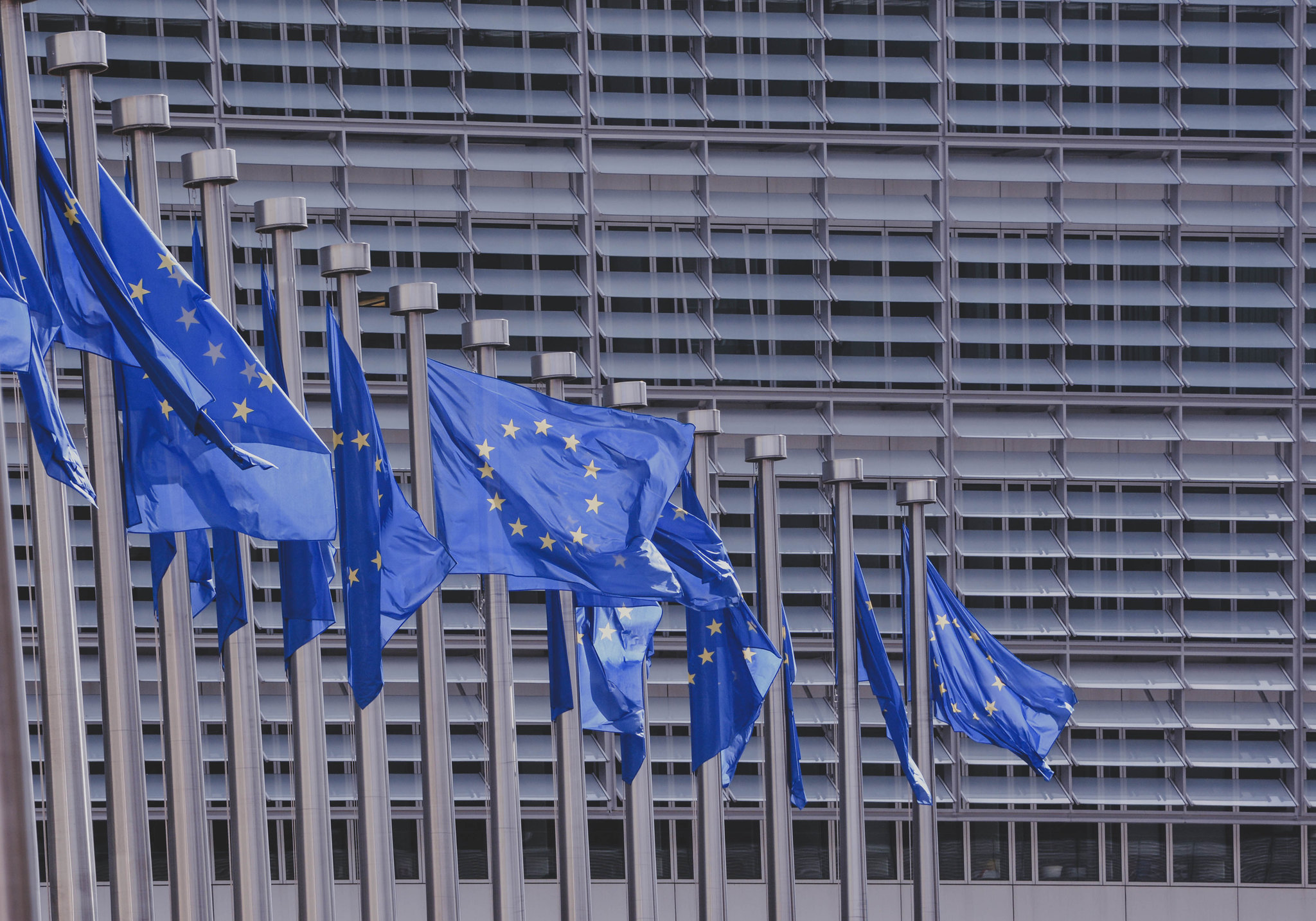
The European Council met in Brussels last week to set out the EU's future plans. The focus is on Eastern European policy and measures to deal with the economic crisis. In addition, in the event of a crisis, the right to asylum should be completely suspended.
The European Council met in the Belgian capital Brussels last Thursday to Friday. This is a meeting of the heads of government of the EU member states. At these meetings, the long-term foreign and economic policies of the EU states are primarily discussed. Subsequently wereConclusionspublished by the Council.
Both German Chancellor Friedrich Merz and Ukrainian President Volodymyr Zelensky were present. One of the central topics was Ukraine and how the heads of state should deal with the war and the messy situation at the front.
Zelensky's goal at the summit was primarily to raise new money to continue financing the war with Russia. The EU has already promised 90 billion euros in aid, but the Ukrainian government says that will not be enough.
The costs forthe next war year 2027are estimated at 155 billion euros. Chancellor Merz joins the Ukrainian demands for higher loans. However, he also left on behalf of the federal governmentan explanationpublish a report calling for savings in the EU budget. According to Merz, the priority must be on defense and securing economic competitiveness. Money should be saved by “reducing bureaucracy”.
However, the fact that this will result in double-digit billion savings is unrealistic. Where exactly this money will come from remains unclear. However, based on Merz's priorities and his government's practice, massive cuts in the social and health sectors would probably be the method of choice.
Sale of Russian oil company: Trump family wants to profit from the Ukraine war
EU wants to be part of peace negotiations
At the diplomatic level, the EU continues to claim to integrate Ukraine into its own sphere of power. are necessary for long-lasting peaceaccording to a press releasemilitary security guarantees. This means that if fighting starts again, the EU states would also have to enter the war.
In addition, a clear claim is made to participate in peace negotiations: “Europe must play a key role in a future peace agreement and will defend its interests.” This formulation is clearly intended to send a signal to Washington. Despite the high financial expenditure by the EU in the Ukraine war, peace negotiations have so far mostly been conducted between the USA and Russia. US President Trump's unilateral actions continue to be a thorn in the side of EU heads of government.
An important development for the functioning of the European Council is the change of government in Hungary.Earlier this yearThe then Hungarian Prime Minister Viktor Orbán caused a stir when he refused to agree to the 90 billion loan for Ukraine. Since then, however, Péter Magyar, a clear supporter of war aid, has been in power.
During the recent EU summit assuredMagyar Zelenskyj personally, that Hungary will show “full solidarity” with Ukraine. Probably in return for this change of course, the Ukrainian parliament passed a decree on MondayLawabout the rights of the Hungarian minority. This means that those Hungarians who live in the Ukrainian part of the Carpathians will be allowed to attend school in the Hungarian language.
France's national debt at a record high: Is the EU heading towards a new euro crisis?
“One Europe, One Market”
Strengthening the European internal market was the second central theme of the summit. This should be under the slogan“One Europe, One Market”happen. To this end, regulations should be relaxed in many areas of the economy.
On the other hand, the availability of important raw materials should be secured. By diversifying trading partners, dependence on Russia should be reduced. TheCatchphrase“Strategic autonomy” here also implies the strengthening of Europe’s position in future wars.
Volatile energy prices are also identified as a problem. As a solution, refinery capacities and electricity prices should be equalized across the entire Union. Again, climate protection is identified as an area where compromises would have to be made in favor of competitiveness. Thetrade introduced by the EUwith emissions certificates must be reformed in such a way that no significant impact on European industry is caused.
Meanwhile, Merz shows himself in hisGovernment statementas a sore loser. With regard to international trade, the Chancellor sees the EU as a victim of “unfair trade practices”: “We will no longer stand idly by while other countries harm our economy through high subsidies, artificially devalued currencies, overcapacity and aggressive pricing.”
In the statement, Merz is probably referring to China. However, the supposed illegitimacy of these fairly ordinary financial and economic policy measures is not justified.
The Green Party represents a similar aggressive foreign policy. In a motion rejected by the Bundestag, the party called for the EU Commission to be equipped with a “kill switch” for unwanted actors on the European market.
The use case mentioned is the termination of the export of rare earths to Europe by those actors. De facto, the Greens want to systematically impose embargoes on actors who do not subordinate themselves to European or German trade interests.
The end of the right to asylum?
No far-reaching decisions were made on migration policy at the summit. AfterSelf-declarationIn this regard, evaluations were primarily carried out and the topic was then postponed.
However, a statement by the European Council on the events in Ceuta and Melilla can be seen as symbolic of the isolation policy. At the end of July, around 60,000 migrants crossed the border fences to both countriesSpanish exclaves in North Africa. At this point the summit expresses solidarity with the Spanish state. The least100 peopleThose who died are not mentioned. At the same time, several EU member states have criticized Spain for granting work and residence permits to more migrants in the country.
Furthermore, at least proposals were discussed at the summit according to which people in the “Crisis case" could legally be turned away at the EU's external borders without even initiating an approval process. This should happen if situations arise at the borders that "endanger national security".
Such cases could occur in the future if a particularly large number of people try to flee to Germany due to wars. The proposal is expected to be passed into law this year. Control of the suspension and a time limit for the measure should then also be set.
38 human rights organizationswarn that the EU would be violating its own Charter of Fundamental Rights, according to which there is a human right to asylum. It is already common practice that...Frontexcarries out illegal “pushbacks”, but these events around the EU summit prove the following: Ideas of mass deportations would not take place against the will, but with the explicit approval of the European Union.
The postEuropean heads of government are planning self-sufficiency, rearmament and tightening of asylum lawsappeared firstperspective.