
Housing Perspektive Online
Europe-wide protests against cuts, high rents and rising prices
Student protests in France turned into a mass movement with 800,000 participants. Resistance to rising living costs is also growing in Spain, Italy and Portugal. In November
Deutsch (original) ·Auto-translated to English
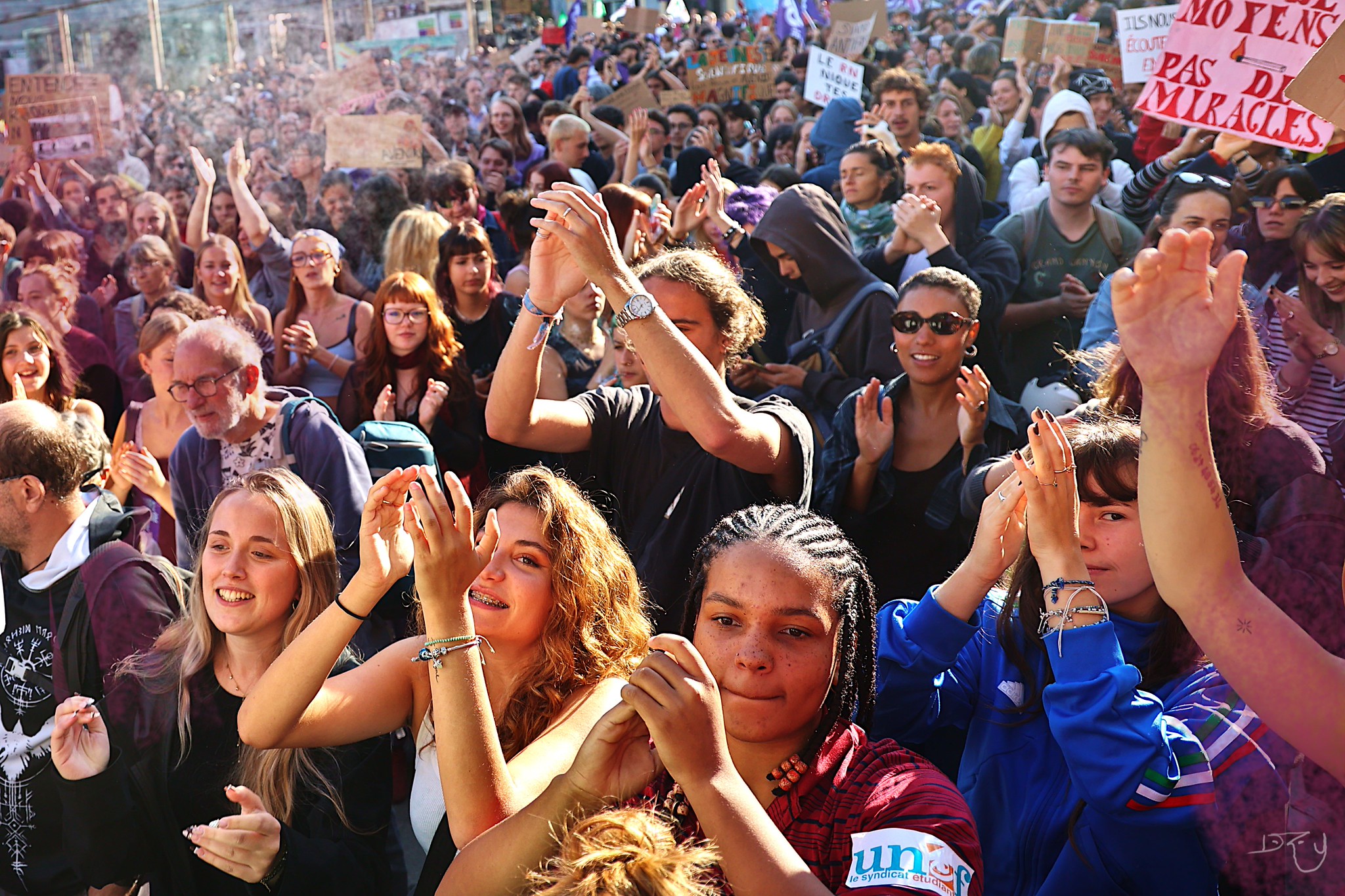
Student protests in France turned into a mass movement with 800,000 participants. Resistance to rising living costs is also growing in Spain, Italy and Portugal. There will be general strikes and an international strike day in November.
Whether Paris, Milan, Lisbon, Madrid or Tirana: people across Europe are protesting against the policy of cuts and rising costs of living. Last weekend there were demonstrations in France, Italy, Portugal, Spain, Belgium and Albania, and students also took to the streets in Berlin. The largest protest was in France, where around 800,000 people took partDay of actioninvolved.
In recent weeks, the initial student protests against the ailing school system have developed into a broad movement, which students, employees, farmers and trade unions have now joined. What is required are measures against rising prices and low wages as well as investments in education.
Day of action in France: 800,000 against the austerity policy
Now President Emmanuel Macron called one on SundayCrisis meetingin the Élysée Palace. In a subsequent oneTV messageHe condemned the protests and announced tougher action against the demonstrators. At the same time, he emphasized that the population's concerns must be taken seriously. However, he did not present any concrete measures to combat the social injustices underlying the protests.
Italy protests against poor living conditions
Also inItalyThere is growing discontent against the government of Giorgia Meloni. Protests against stagnating real wages, a lack of investment and rising costs of living broke out in several cities over the weekend, including Milan, Turin and Bologna. The protests in the north were particularly supported by students and the expensive rents also played a major role in the demonstrations in Bologna and Milan. On Friday, a number of students across the country took to the streets on “No Meloni Day” against the right-wing government’s education policy.
The anger over rising prices is particularly clearsouth: In Sicily, Puglia and Calabria, farmers and truck drivers are protesting against the high pricesFuel prices. The trigger is the sharp increase in the price of diesel after the flat-rate discount on excise duties expired on October 6th. The protests have now spread to Campania and Basilicata. Road blockades led to significant delivery difficulties and empty shelves in supermarkets; According to estimates by the Fegica gas station association, 60 to 70 percent of gas stations in the south are still without supplies. The protesters are demanding relief from excise duties, tax credits and ferry costs, as well as the payment of outstanding aid. A round table with the government was brought forward from October 27th to Tuesday October 20th in Milan. Without written promises, the protesters are threatening to continue the strike.
In addition, a new movement, the “Movimento 17 ottobre”, has formed that calls for further actions against the Meloni government. A general strike in Italy is also planned for November 20th, an international strike day. This was announced by the general secretary Maurizio Landini of the CGIL trade union federation, which organized the demonstrations in Rome on Saturday.
Resistance to the housing crisis also in Portugal
In Lisbon at the weekend, tens of thousands of people protested against rising pricesHousing crisistook to the streets. This means that a protest movement that has primarily affected Spain in recent weeks is also reaching the neighboring country. Rents have risen dramatically in both countries over the last ten years: in Portugal by 124%, which is around twice as much as the average increase in the EU. In Spain they have almost doubled over the same period.
In Spain, anger erupted in September following the forced eviction of 87-year-old Maricarmen Abascal in Madrid. Under the motto “Ni una Maricarmen más” (“No more Maricarmen”), a nationwide movement emerged with large demonstrations and protest camps, including at the Puerta del Sol in Madrid as well as in Barcelona, Seville and Málaga. The protests plunged the government into a crisis: two decrees from Prime Minister Pedro Sánchez, which were intended to better protect tenants, failed to gain a majority in parliament. He then scheduled early elections for November 29th. The unions are also calling for a nationwide general strike for affordable housing on November 11th.
In Portugal, it is also becoming increasingly difficult for many people to find housing, especially for young people leaving home for the first time. Following the example of Spain, they set up protest camps in both Lisbon and Porto and carried out other actions to draw attention to rising prices and the existing housing shortage.
Education protests in Belgium and Albania, first beginnings in Germany
In Albania they were aimedprotestsinitially against poor study conditions, high educational costs and a lack of career prospects. They follow months of demonstrations against a luxury resort on the South Coast backed by Jared Kushner. During the student protests in mid-October, demonstrators demanded the resignation of Prime Minister Edi Rama. The protests first took place in Tirana and then spread to other cities. Among other things, the Ministry of Education caught fire. The police are now firing rubber bullets at demonstrators, while Rama has so far refused to resign.
Protests in Albania are spreading – students set the Ministry of Education on fire
There were also protests in Belgium against rising education costs and cuts in the French-language education system. In Brussels, students and teachers have been demonstrating since June against the planned increase in tuition fees from 835 to 1,194 euros and against changes to student funding. At the beginning of October, it was mainly students who took to the streets in Liège. The police arrested more than a hundred people there within a few days.
In Berlin, around 300 students gathered at Kleistpark on Saturday to protest against dilapidated schools and cuts in education in favor of the wave of rearmament. There have also been isolated school blockades in Germany. However, the movement here is still a long way from the size of the protests in other European countries.
Different countries, but same problems
The reasons for the protests differ from country to country: in France the movement was sparked by the ailing school system, in Spain and Portugal by the skyrocketing rents. In Italy it is stagnating wages and the price of diesel, in Albania and Belgium it is education costs and a lack of prospects. The dimensions are also very different, from around 800,000 participants in France to around 300 students in Berlin.
However, the pattern is the same everywhere: prices are rising, affordable housing is lacking, and education and social services are being cut, while the military receives billions in public tax money. Young people in particular see their future threatened and are supporting the protests in many countries, even if broader sections of the working class have already joined in.
It remains to be seen whether the spontaneous movements will intensify in the next few weeks and mobilize new parts of the class. What is clear, however, is that the coming weeks will be exciting: Spain will hold new elections on November 29th, after the unions had already called for a general strike on November 11th. An international strike day is planned for November 20th, which will take place in Italy in the form of a general strike. On October 31st, students in Germany want to mobilize for the first time in major protests.
The postEurope-wide protests against cuts, high rents and rising pricesappeared firstperspective.