
Politics Perspektive Online
Curfews and bans on demonstrations in France
In the context of the student protests, the French government admits that it has lost control. They now want to reimpose this through, among other things, curfews and bans on demonstrations
Deutsch (original) ·Auto-translated to English
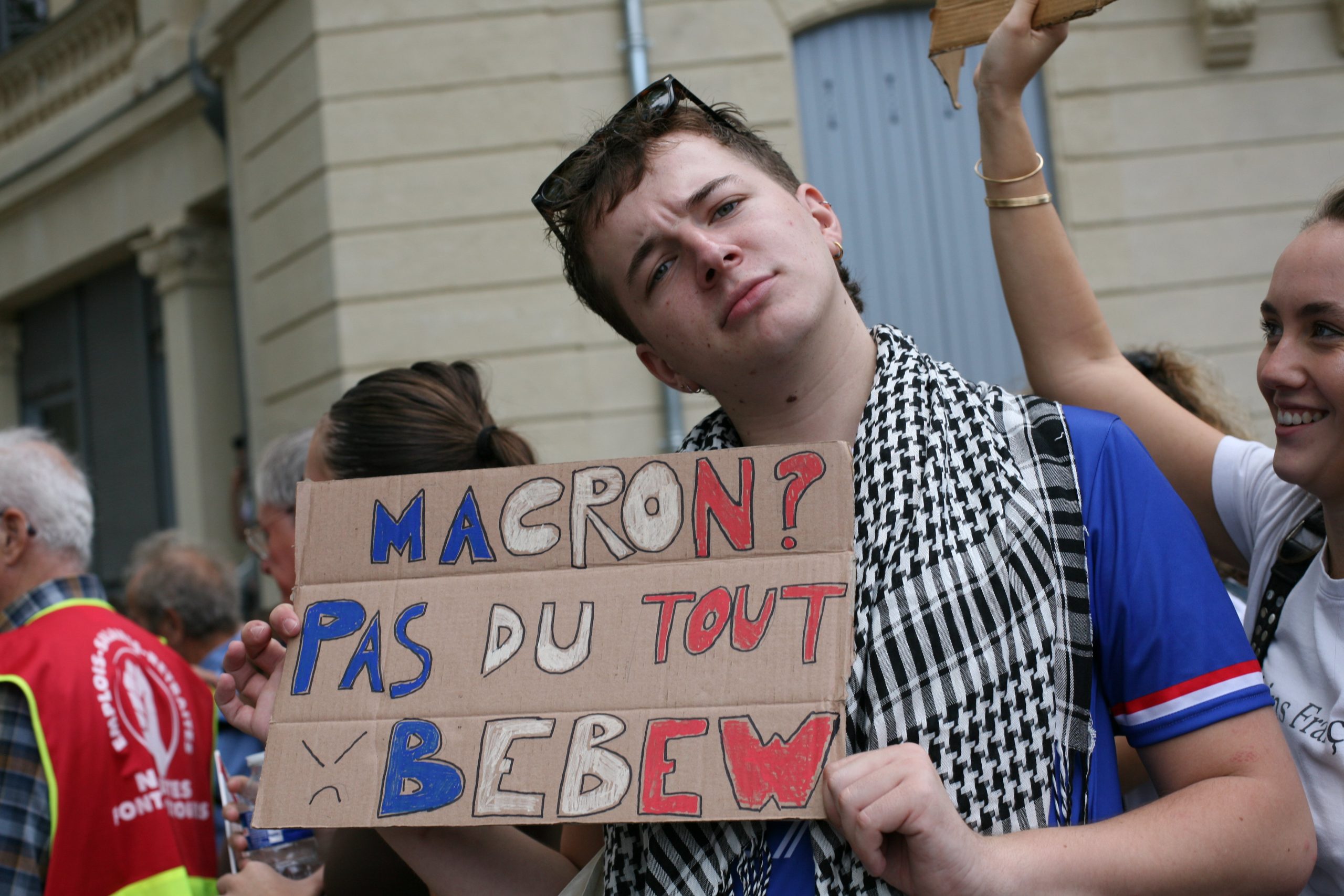
In the context of the student protests, the French government admits that it has lost control. The state wants to regain this with new repressive measures. Meanwhile, the media and government are trying to divide the protests and blame the left-wing LFI.
France has been hit by a wave of protests for almost a month. Pupils, students and workers are taking the streets against the state's austerity policy. Meanwhile, the state is unable to satisfy either the protest and its supporters or its opponents. Likewise, it is not possible to control the protests.
Curfews, bans on gatherings and a state of emergency?
Now the government wants to resort to a new means to restore control. On Monday, some French cities were the firstCurfewsimposed. The locations include Paris's Place de la République, where an unannounced demonstration was violently triggered by the police on Sunday. The same exit restrictions also applied to a shopping district in Paris on the night from Monday to Tuesday. In other districts of Paris, a ban on demonstrations and gatherings applied from Monday at 8 p.m.
Other affected cities include Nice and inNorthern FranceLille, Douai, Wattignies and Denain. There were curfews for minors there. In Lyon there were bans on demonstrations and a nighttime curfew for everyone without a good reason.
The curfew in Lyon is a particular focus of criticism. There was a demonstration there on Monday evening that was originally announced to support shop owners.Video recordingsHowever, they show how the demonstration presented fascist slogans and symbols. Besides, couldLe Mondeidentify a demonstrator as an actor in Lyon's neo-Nazi scene. The demonstration is particularly explosive in that it was able to move through the city unmolested by the police despite the curfew.
These measures represent massive cuts to fundamental rights in France, but they already existfurther plans and initiatives. Authorities in Marseille ordered a ban on gatherings on Monday. Prime Minister Sébastien Lecornu also believes that declaring a state of emergency is possible, but is initially in favor of the restrictions imposed. All of these measures are intended to restore public peace.
Government expands containment strategy
With this approach, the government is no longer just relying on the police to contain the protests through brute force, which has failed in recent weeks. Instead, possible protests should be banned in advance, which will make it easier for police violence to be legitimized.
At the same time, parents were punishedthreatened, if their minor children are part of the protests. They should be able to be prosecuted for damages of up to 10,000 euros, even if their child did not cause the damage but was just standing by. Parents should also be liable if the minor child no longer lives at home. This would be a change to an existing law, which is the subject of great controversy.
These new measures and plans are primarily the result of failed attempts to contain the protests. The governmentadmits her failureafter the weekend now. Burning buildings, looting and street battles with the police characterize the press images after the protests. 60,000 police officers faced up to 800,000 demonstrators across the country. Over 2,000 people were arrested.
Day of action in France: 800,000 against the austerity policy
To curb discontent, Interior Minister Nuñez offered hisresignationto. Macron opposed this, arguing that the chain of command for security forces needed continuity. Instead, the Interior Minister should prevent such events from happening again.
Government wants to divide and defame protests
Politicians and the media blame the looting on “ultra-lefts” and migrant youth from the suburbs. Both groups would thereby harm the peaceful and legitimate protest of the students - according to the representation, which has now also been accepted by the Federal Minister of the InteriorAlexander Dobrindt(CSU) joined.
On the one hand, this is intended to divide the protesters themselves and create a certain mood among the population. The image of the partially burned down town hall in Limoges is printed more often than the images of young people giving looted food to the homeless.
The focus is always on the left-wing party La France Insoumise (LFI), which is accused of orchestrating the protests. A report by the investigative magazine Mediapart also suggests that the government is prepared to create facts. This refers to an anonymous employee of the domestic secret service. He complains that "we are expressly asked to write that LFI is behind the movement, even though the general opinion of the secret service is that this is objectively false. While the Interior Ministry rejects the allegations, LFI politicians have already seized on the report as a state scandal.
France's national debt at a record high: Is the EU heading towards a new euro crisis?
Political instability in France
The protests are particularly damaging for President Macron's minority government in view of the upcoming presidential elections. Macron's policies led to several waves of protests, including the so-called yellow vest protests, as well as the Bloquons Tout and now the Lycée movement. Macron will not run again in the 2027 election.
The government is currently under attack from both the left and the right. Meanwhile, the LFI continues to make statements of solidarity with and calls for the protests. LFI politicians also repeatedly took part in school blockades. This is also due to the fact that the LFI wants to further expand its existing sympathies, especially in view of the upcoming elections.
The right wants even tougher action against protesters and portrays the government as helpless against the movement. Marine Le Pen, presidential candidate of the fascist Rassemblement National (RN), published a statement before Macron's speech on television on Sunday eveningvideo, by sharply criticizing him.
TheSenate electionThis year the RN was able to win. This is considered a mood test for the presidential election. In surveys, Le Pen currently has 30 percent, putting him well ahead of the competition. Nevertheless, there is the possibility of a runoff election between her and LFI candidate Jean-Luc Mélenchon. Édouard Philippe, who is running for a conservative alliance, still has a realistic chance of coming second in the runoff.
However, the current government is not only crumbling on issues of sympathy. With one predicted for 2027National debtof around 120 percent of gross domestic product – almost twice as high as Germany – France’s economic situation will become even more tense. Meanwhile, the billions in social cuts are to be invested in rearmament. Franceexpenditurehere are 2.1 to 2.3 percent of GDP, which urgently needs to be increased.
The postCurfews and bans on demonstrations in Franceappeared firstperspective.