
World · Middle East Eye · · 1h
Majd al-Krum: Is Israeli settler terrorism expanding across the Green Line?
English (original) · Read in Deutsch ⇄
Majd al-Krum: Is Israeli settler terrorism expanding across the Green Line?
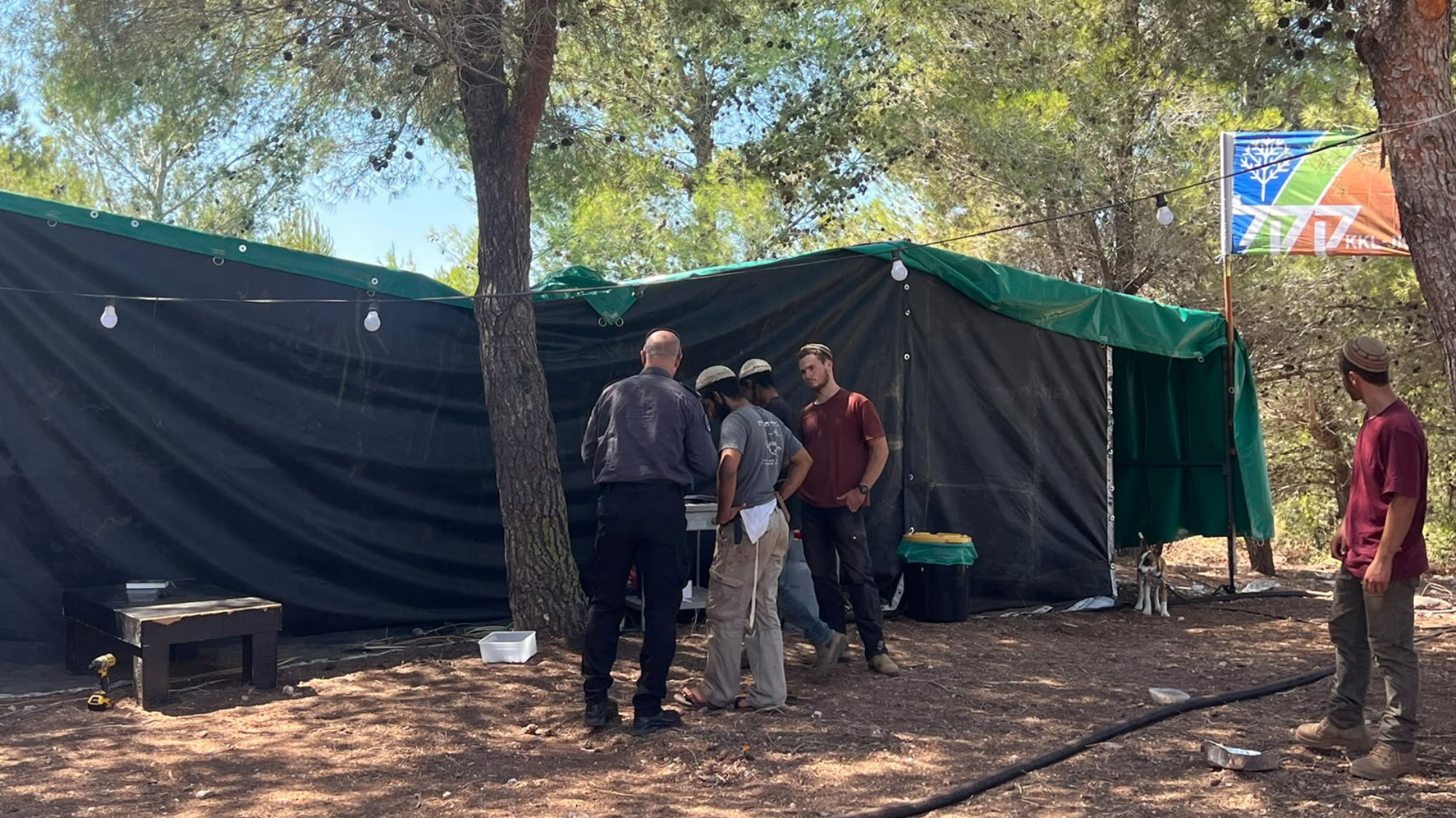
Submitted by Abed Abou Shhadeh on Thu, 09/17/2026 - 13:46 An encampment established in a Palestinian-majority town in the Galilee mirrors the tactics long used in the occupied West Bank Israeli settlers established an outpost in the Palestinian-majority town of Majd al-Krum (Arab48)
Off
Israeli settlers established an outpost in the Palestinian-majority town of Majd al-Krum (Arab48)
Off
Settlers from the occupied West Bank recently established an encampment in Majd al-Krum, a Palestinian-majority town in the Galilee.
As tents were erected, and electricity and water infrastructure appeared, local residents of the town in northern Israel became increasingly concerned that the outpost - initially described as a temporary grazing arrangement - was becoming more permanent.
These developments must be understood in their wider historical context.
In 1949, a year after the Nakba, the Israeli government adopted a policy aimed at increasing Jewish settlement and demographic presence in the Galilee. In those early years of the state, such decisions were closely connected with Israel’s attempts to consolidate control over the land seized from Palestinians, prevent the return of refugees, and establish new Jewish communities, particularly in sensitive border regions.
Over time, this approach became embedded in Israeli planning. Jewish towns and settlements in border areas were not perceived merely as civilian communities; they were also assigned strategic and security significance.
The idea of “Judaising” geographical areas - the Galilee, the Negev and, in different political forms, the occupied West Bank - gradually became a recurring element of Israeli political discourse.
In the Galilee, this policy was implemented through the construction of new Jewish towns, land expropriations, and accelerated development. Cities such as Karmiel, Upper Nazareth (today Nof HaGalil) and Maalot were part of this broader process.
By the late 1970s, the “mitzpim” programme had established dozens of small Jewish communities throughout the Galilee, explicitly intended to disperse Jewish settlement, strengthen control over state land, and alter the region’s demographic balance. The land policies of this era were among the developments that led to Palestinian Land Day protests in March 1976.
Shaping demographic realities
What is important here is that the idea was not historically confined to the Israeli right. During the 1970s, calls to strengthen Jewish settlement in the Galilee were also promoted within the Zionist Labor establishment.
The political vocabulary might have changed over the decades, but the underlying concept - using settlement and land policy as instruments for shaping demographic and territorial realities - remains deeply rooted in Israeli politics.
The settlement project in the occupied West Bank eventually developed this logic far beyond the planning mechanisms used inside Israel. Settlements and unauthorised outposts became not only places of residence, but political instruments for determining facts on the ground, breaking Palestinian territorial continuity and hindering the prospects for a Palestinian state.
It is the normalisation of a political culture in which settlement activism itself becomes an instrument for redrawing demographic and territorial realities
In August, Finance Minister Bezalel Smotrich unveiled a pre-election plan to expand what he calls his settlement “revolution” from the occupied West Bank to the Negev and the Galilee, reportedly using the explicit language of “Judaising” these regions. Prime Minister Benjamin Netanyahu subsequently spoke of expanding Jewish settlement in the Galilee and the Negev.
Then came Majd al-Krum. The Jewish National Fund (JNF), which owns part of the land, said it had leased the area for grazing purposes. Yet footage from the site showed an established camp and, according to media reports, no livestock.
The question of land ownership is also more complicated than reports suggest. The Majd al-Krum local council says that residents privately own a significant share of the surrounding land, and that they fear the settler presence could restrict their access to olive groves and agricultural property.
When residents and activists went to protest, police prevented them from reaching the settler encampment, despite the fact that it was located within the boundaries of their own town.
Following public pressure and intensifying protests, the JNF reportedly held an emergency meeting and ordered the structures removed, stating that the lease was intended for grazing rather than the establishment of an outpost. But Smotrich objected, and subsequently announced the launch of 40 new settlement communities in the Negev and the Galilee, with a goal of increasing the Jewish population by one million.
On Thursday, the JNF said that after Yom Kippur, it planned to reestablish an outpost for grazing purposes in Majd al-Krum.
Shift in settlement policy
But the significance of the Majd al-Krum episode is larger than a dispute over one plot of land. It represents a shift in the organisational culture of Israeli settlement policy.
Historically, Israel���s territorial and demographic policies inside the Green Line were largely implemented from above: government ministries, planning committees, land authorities and development agencies drew maps, approved towns, expropriated land and created new realities through bureaucratic and legal mechanisms.
The model that developed in the occupied West Bank works differently. There, settlers - particularly the so-called Hilltop Youth - frequently establish a presence in strategically selected areas first. Political allies and sympathetic officials may then help to provide infrastructure, protection, funding or eventual legalisation.
Rather than planning mechanisms leading to the production of facts on the ground, facts on the ground have thus increasingly shaped planning and political decisions.
This model has had profound consequences for Palestinian communities in the occupied West Bank. According to the UN Office for the Coordination of Humanitarian Affairs, between January 2023 and late June 2026, more than 6,200 Palestinians were displaced in connection with settler attacks and related access restrictions.
The agency reported that 121 communities experienced full or partial displacement, predominantly Bedouin and herding communities in Area C, and that 46 communities had been completely displaced.
The concern raised by Majd al-Krum is therefore not simply whether one encampment remains standing. It is whether a political method developed in the occupied West Bank is beginning to migrate across the Green Line.
Creating facts on the ground
That question becomes even more significant when viewed through the political project Smotrich himself articulated years ago.
In his 2017 “Decisive Plan”, Smotrich argued that Israel should eliminate the possibility of Palestinian national sovereignty west of the Jordan River, apply Israeli sovereignty to the occupied West Bank, and dramatically expand Jewish settlement. Palestinians, according to the plan, could remain as individuals under Israeli sovereignty, but would have no collective national framework of their own.
 Settler terrorism is the modern incarnation of the Zionist dream
Read More »
Settler terrorism is the modern incarnation of the Zionist dream
Read More »
For years, critics viewed this programme primarily as a blueprint for the gradual transformation and annexation of the occupied West Bank. But recent events in the Galilee raise a different possibility: that it is not only Israeli settlement spreading deeper into the West Bank, but the political culture and operational methods created by the settlement movement beginning to influence how territorial struggles are conducted inside Israel itself.
For Palestinian citizens of Israel, the underlying conflict over land is hardly new. What may be changing are the mechanisms.
The older model was bureaucratic: planning committees, zoning maps, expropriation orders and development plans. It was institutional, calculated and usually presented in the language of planning, security or development.
The emerging model is more direct. Establish a presence. Create facts on the ground. Mobilise political protection. Force the state to respond to the reality already created.
In other words, the difference might not be the objective, but the method. And that is why Majd al-Krum matters.
The dispute is not merely about several tents on a hill in the Galilee. It is about whether a system developed over decades in the occupied West Bank - where territorial control is advanced from below by ideological activists, and then reinforced from above by political power - is beginning to take root inside the Green Line.
If so, the most important development is not the construction of a single outpost. It is the normalisation of a political culture in which settlement activism itself becomes an instrument for redrawing demographic and territorial realities.
The views expressed in this article belong to the author and do not necessarily reflect the editorial policy of Middle East Eye.
Occupation Opinion Post Date Override 0 Update Date Mon, 05/04/2020 - 21:29 Update Date Override 0Read the full story at the source
Source: Middle East Eye