
World · Middle East Eye · · 37m
India's security restrictions after Pahalgam attack throttle tourism income for Kashmiris
English (original) · Read in Deutsch ⇄
India's security restrictions after Pahalgam attack throttle tourism income for Kashmiris
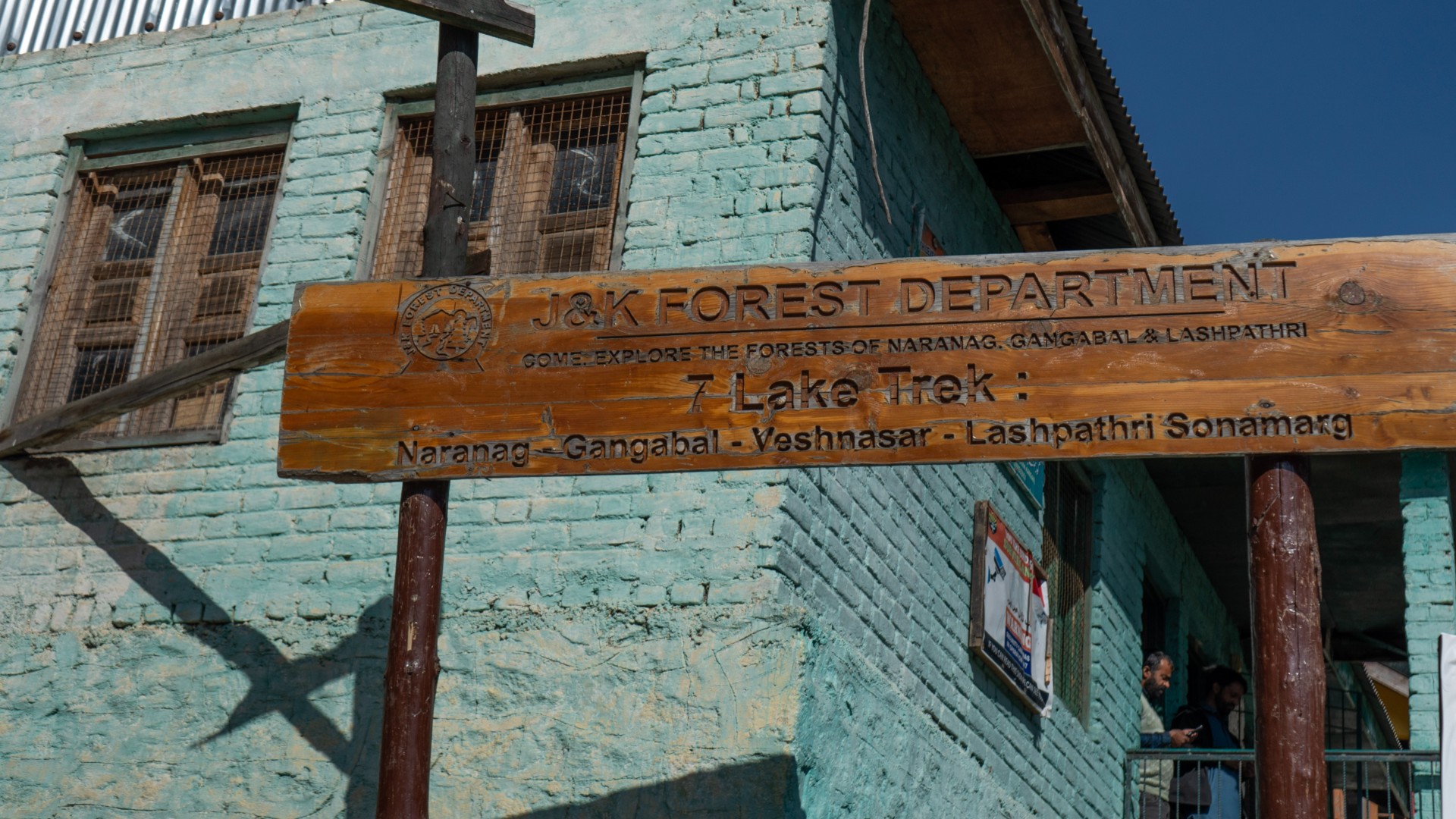
Submitted by Muheet Ul Islam on Tue, 10/06/2026 - 18:23 Prolonged restrictions have meant tourism arrivals have dropped significantly, plunging local livelihoods into uncertainty A sign at Naranag marks the entry point to the seven-lake trek, a high-altitude trail linking Naranag with Gangabal, Vishansar, Gadsar, Laspathri and Sonamarg (Wasim Nabi/MEE)
Off
Ghulam Qadir Jagil, a shopkeeper from Naranag, stares at the empty streets of his scenic mountain village, waiting for customers at his grocery store.
The village, known for its ancient archaeological heritage and as a gateway to some of the region’s popular trekking routes, usually draws visitors during the tourist season, primarily May through August.
Local estimates suggest that Naranag and its adjoining areas are home to approximately 2,000 to 4,000 people, many of them belonging to the semi-nomadic Gujjar and Bakarwal communities.
Jagil, 45, also works as a trekking guide, providing sleeping bags, cooking, and porter services to thrill seekers from around the world who take on a 70- to 75-kilometre high-altitude trail. The trek takes seven to eight days and passes through seven alpine lakes.
But since the attack on Baisaran meadow in the Pahalgam area of Indian-administered Kashmir on 22 April 2025, Jagil says he has suffered losses amounting to thousands of dollars after authorities imposed restrictions on adventure activities.
The attack killed 26 people, including 25 tourists and a local pony handler.
The attack sharply escalated tensions between the two nuclear-armed neighbours, bringing the nuclear armed neighbours to the brink of a full-scale war in May 2025.
Kashmir has been at the centre of a dispute between India and Pakistan since both countries gained independence from British rule in 1947.

“The livelihood of the majority of the population of our village and its adjoining areas depends on adventure tourism, as they offer cooking and pony services to trekkers,” Jagil told Middle East Eye. “Since the ban, I have suffered losses worth Rs 600,000 [$6,300], and similarly, the condition of others is no different.”
“Only a handful of people come here for excursions, which are allowed only until 5pm, and the earnings from selling tea and snacks at small motels and grocery stores are not enough to support our families."
'Deserted'
The Pahalgam attack also dealt a blow to the wider tourism industry in the area, which accounts for nearly seven percent of the region’s gross domestic product, according to the 2025-26 J&K Economic Survey.
The sector supports the livelihoods of around 500,000 people, both directly and indirectly, across hospitality, handicrafts, transportation, tour operations and local commerce.
'The situation today is different. Everything looks deserted with only a handful of visitors'
- Khursheed Ahmad Magray, motel owner
The attack came at the height of the tourist season.
In the first four months of 2025, Pahalgam alone saw more than 460,000 visitors, including over 137,000 in April in the weeks before the attack, according to official data. In the same four-month period in 2026, arrivals fell to around 250,000.
Following the attack, the administration of Lieutenant Governor Manoj Sinha set up security checkpoints across the region, including at key tourist and trekking locations, as part of measures to prevent similar attacks.
While tourist activity has shown signs of recovery at mainstream destinations, many tourism-dependent communities continue to struggle, particularly those that rely on the short summer trekking season.
Khursheed Ahmad Magray, a resident of Ganderbal who runs a small motel, says representatives of shopkeepers, pony service providers and trekking companies met with police, government and civil administration officials to seek an end to the restrictions on adventure tourism.
The meetings, according to Magray, made progress but ultimately brought no relief to people he described as “victims of the actions of others”.
“I purchased goods after the Lieutenant Governor’s administration lifted the curbs from tourist destinations after several months. However, my happiness was short-lived when I came to know that people could stay here for just a few hours. Today, I’m struggling to sell the stock that I bought after hearing the news,” Magray said.

“This place used to be occupied by adventure lovers who would install tents and spend time here in the woods of Naranag. The situation today is different. Everything looks deserted with only a handful of visitors,” he added.
MEE reached out to several officials for comment, but they did not respond by the time of publication.
Jatin Kishore, the district magistrate of the Ganderbal district, told Middle East Eye that areas have been “declared restricted and that no activities are allowed there”.
Wider impact
The impact extends beyond Naranag. Kashmir has around 200 adventure-tour operators, according to industry estimates, many of whom depend on the short summer season for trekking, camping and other outdoor activities.
'Our income through trekking has been reduced to zero, as no location has been left open to carry out the activities we were known for'
- Mohammad Adil Langoo, co-owner of Cliffhangers India
Mohammad Adil Langoo, co-owner of the Kashmir-based trekking company, Cliffhangers India, says his business has been hit hard over the past two years.
Before the restrictions, his company had an annual turnover of nearly Rs 20,000,000 ($207,512). That has now fallen to zero.
“Our income through trekking has been reduced to zero, as no location has been left open to carry out the activities we were known for,” Langoo told MEE.
“Neither are we allowed to take groups through Naranag, nor via Sonmarg in central Kashmir. Similarly, trekking activities in Pahalgam in south Kashmir have also been closed. Not a single place is open, leading to huge financial losses,” he added.
Langoo said some adventure seekers have turned to Ladakh - another northern Union Territory of India that was part of Indian-administered Kashmir until 2019 - to explore high-altitude lakes such as Kala Pari. But he said the number of visitors there is far lower than what Kashmir used to see.
“Trekking in Ladakh is no alternative to trekking in Kashmir. Not even five percent of people visit there. We still get queries for trekking in Kashmir, but when we offer them trekking in Ladakh, they say no to it,” Langoo said.
“Indians as well as foreigners want trekking to resume in Kashmir. They have made up their minds that they want to see the unexplored beauty of Kashmir, so they don’t bother to visit any other place,” he added.
 Kashmiris call India's rule settler-colonialism - and we should listen to them
Read More »
Kashmiris call India's rule settler-colonialism - and we should listen to them
Read More »
Meanwhile, Musadiq Rafiq Wani, a trekker and adventure-tourism professional from Srinagar, believes the restrictions on trekking sites feel like “a choking of freedom” for adventure and nature lovers.
He said that he started trekking in 2017 while studying tourism and eventually left a more conventional career path to work in the mountains as a trek leader, guide and sometimes a cook.
Wani said the need for temporary restrictions was understood, as growing visitor numbers had put pressure on fragile mountain ecosystems.
However, he added that the prolonged restrictions are now affecting both trekkers and the wider local economy. He also questioned why religious pilgrimage tourism continues while many trekking routes remain inaccessible.
“We understand that security has to be taken seriously and we absolutely condemn terrorism and violence. But restrictions should not mean that people permanently lose their connection with the mountains,” Wani told MEE.
“If someone asks us to go trekking now, there is always a fear that we could get into trouble or face restrictions. That fear itself takes away the joy and freedom that trekking once gave us.”
Kashmir News Post Date Override 0 Update Date Mon, 05/04/2020 - 21:19 Update Date Override 0Read the full story at the source
Source: Middle East Eye