
World · Left Voice · · 3h
Tronti Versus Tronti
English (original) · Read in Deutsch ⇄
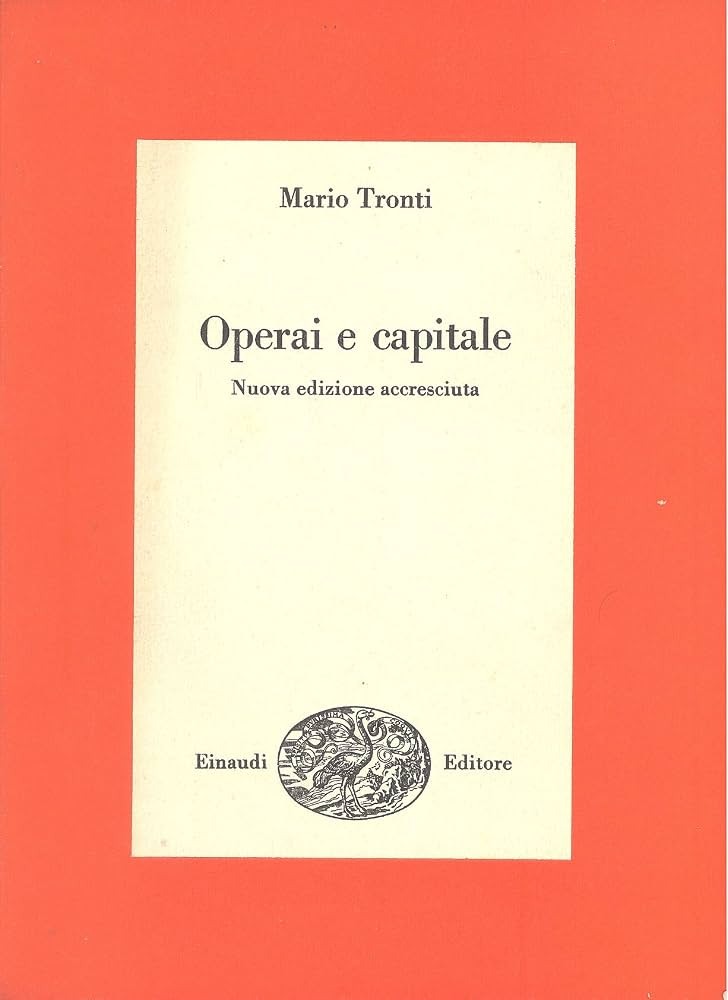
In times of platform economies, artificial intelligence, remote work, and a frenzied race between states and corporations to automate ever more aspects of production, it may seem strange to revisit a book that bears the mark of another form of capitalism on almost every page. Workers and Capital, published by Mario Tronti in 1966, belongs to the era of the large factory, the concentration of workers, and the assembly line. Perhaps more than any other book it serves as a testament to the weight the industrial working class once held within Fordist capitalism. The accusations of anachronism are everywhere. But we must move beyond the superficiality of “presentism,” especially if we want to consider the problems of the working class and socialism today — problems that resurface but do not appear to have any immediate solution.
If anything retains its power in Workers and Capital, it is not the photograph of the FIAT factory in Mirafiori, nor the possibility of mechanically transferring the figure of the mass worker to the present, but the broader understanding of how the working class is composed at each stage of capitalist development, where its points of concentration and strength are located, what relationship exists between its transformations and those of capital, how a social condition can be transformed into a political initiative and, finally, the million-dollar question: what role does a Marxist party play in these issues to define a revolutionary strategy according to the concrete conditions.
Tronti is also interesting because the trajectory of his thought contains a still unresolved tension. The Tronti of the 1960s had placed the workers’ struggle at the center, almost exclusively; the Tronti of the 1970s gradually shifted the focus to the autonomy of the political and the problem of the State; and the Tronti of the 1990s, after the defeat of the workers’ movement and the collapse of so-called communism, even questioned whether the disappearance of the working class as a political subject did not also imply the exhaustion of modern politics as it had existed during the 20th century. Perhaps some of the answers to the pessimistic questions of the later Tronti can be found in the “method” of the earlier one, but only if we are able to translate it to a working class that no longer resembles that of 1966.
The celebrated operaist inversion consisted of refusing to consider workers’ struggles as a mere consequence of capitalist development. The traditional interpretation saw first accumulation, technological innovations, and transformations in production, and then, as a reaction to these, workers’ conflict. Tronti proposed inverting this perspective: asking to what extent capital is also transformed because it has been forced to respond to the insubordination of labor. It was a polemical intervention against a Marxism that had naturalized capitalist development and relegated the working class to the role of an object, rather than agent, of history. Although this approach could be quickly criticized for its subjectivism or one-sidedness, this one-sidedness could be more rhetorical than analytical: an emphasis with political intentions that, at the same time, offered a productive principle of inquiry, as the operaists themselves would demonstrate, as well as works such as Benjamin Coriat’s The Workshop and the Stopwatch. This inversion also had a precise material basis. The Italy that the workerists observed was undergoing rapid modernization, massive internal migrations, and a radical transformation of its working-class composition. The professional worker was losing ground to the mass worker, who was being incorporated in large numbers into an increasingly mechanized production process. Tronti himself would later recall that the so-called “worker centrality” had not been a prior theoretical construct but something discovered in the struggles themselves, in the fact that these workers simultaneously occupied a strategic position in production and possessed a growing capacity to radiate their conflicts to the rest of society.
Therefore, when Workers and Capital asserted that the factory extended into the whole of society, it was attempting to envision an advanced capitalism in which the growth of mechanization and the production of relative surplus value generated an increasingly close link between the factory production process, society, and the state as a whole. The relations of production overflowed the factory walls and organized society. From this arose a direct political consequence. If workers’ unrest within the factory challenged capital’s control over labor, this struggle could not be reduced to a merely economic fight, while “true politics” remained reserved for Parliament, the party, or the state.
In “Class and Party,” one of the essays in Workers and Capital, Tronti argued against precisely this division, which, under the Italian conditions of the 1960s, had taken a particularly reformist form: unions focused on achieving economic improvements and building a party that spoke of politics while increasingly distancing itself from the class struggle. The problem was not that there was too much union struggle or too much politics, but that the two had been separated to such an extent that each lost its antagonistic potential.
The formula “class party and people’s union” sought to address this division. Today it may sound strange, and it certainly cannot be directly applied to our current reality, but it is worth revisiting the problem it attempted to solve. “Class party” meant that workers’ politics had to maintain strategic independence from bourgeois alternatives and not be diluted in parliamentary combinations or multi-class alliances. Its foundation had to be the workers’ own struggle, which, through what Tronti called the “strategy of rejection,” challenged capitalist control of labor and, by extension, any attempt at the political stabilization of capitalism. “People’s union,” in turn, meant that workers’ organizations should not confine themselves to the corporate defense of their members, but rather use the strength of organized sectors to project themselves onto the entire working masses. In that capitalism, which was expanding wage-earning status and incorporating enormous sectors into large-scale industry, Tronti could conceive of hegemony as an expansion of the workers’ own power.
This confidence in the capacity of the workers’ struggle to organize the entire political problem was also one of the limitations of early operaismo. Tronti himself would later admit this. The relationship between capitalist development and workers’ initiative had been imagined in too direct a way. In the middle existed institutions, apparatuses, parties, mechanisms of integration, political cultures, and forms of state capable of processing the conflict and preventing a rupture in the relations of production from automatically becoming a general crisis of power. “Politics came between the workers and capital,” he would write retrospectively. From this discovery emerged the shift toward the autonomy of the political. The question of the state, of institutional mediation, and of the capacity of the dominant classes to politically reorganize capitalist development acquired a weight that early operaismo had underestimated.
The problem is that this correction contained another one-sided aspect. If before everything seemed to stem from workers’ initiative, now politics risked acquiring its own logic, increasingly detached from the social force that should sustain it. The Tronti of the 1970s even envisioned a modernization of the state in which advanced sectors of capital and the labor movement could find common ground. We get a first outline of this conception in the afterword to the 1971 edition of Workers and Capital, with his vindication of the realism of the American labor movement and the alliance of the new labor federation (CIO) with Roosevelt around the New Deal. This perspective would finally take shape in The Autonomy of the Political (1976), a book that compiled two lectures by Tronti from 1972 and 1976. Applied to Italy in the seventies, this reasoning led to Gianni Agnelli, his “producers’ pact,” and the 1975 agreement with the CGIL (Italian trade union confederation) on a sliding scale of wages and productivity.
This perspective significantly altered the spirit of Workers and Capital. Instead of making the workers’ struggle the springboard for destabilizing the order, the possibility emerged of intervening from within the workers’ movement in the political rationalization of capitalism. In Italy, the historical outcome was quite different from what had been expected: the incorporation of the Italian Communist Party (PCI) and the trade union bureaucracy into strategies of consensus-building coexisted with a progressive weakening of workers’ autonomy and paved the way for subsequent defeats. This Trontean shift thus substantially modified the class character that politics had possessed in his earlier work.
It is precisely after these defeats that Tronti’s later thought becomes paradoxically useful. His tone is more melancholic, and often his diagnosis is too definitive, but he poses a question that is difficult to avoid: What happens to politics when an organized social force capable of challenging the reproduction of capital in a relatively permanent way disappears from center stage? For Tronti, the crisis of the working class as a political subject did not simply mean the decline of one among many actors. The history of modern politics, and especially that of the 20th century, had been intimately linked to the entry of organized working masses into the struggle for power. In Back to the Future (1992), he pointed out that one consequence of this crisis was the oscillation of politics between tactics and utopia, leaving aside strategy, whose very appeal to military imagery presupposed a rising class.
There is an intuition there worth separating from his diagnosis of the definitive death of the working-class political subject. Tronti observes that, during the 1980s and 1990s, capitalist transformations advanced against labor while broad sectors of the European institutional left ceased to constitute a force capable of opposing them with a project and gradually moved to administering them. The organizations that originated in the workers’ movement became, in his words, “interpreters and managers” of capitalist modernization processes; “innovation” replaced transformation, and politics lost its oppositional dimension. It is not necessary to accept that all politics has disappeared to recognize the phenomenon he is trying to name: when the forces capable of making another social relationship imaginable weaken, what was once the object of conflict begins to appear as a technical necessity. The discussion ceases to be about what society to build and becomes about who best manages restrictions that everyone accepts as inevitable.
The later Tronti thus posed the problem of politics after the defeat of the labor movement’s experiences in the 20th century. The two solutions attempted in response to this problem can be encompassed by what Daniel Bensaïd termed “political illusion” and “social illusion.” The first consists of imagining the political and state sphere as a separate realm capable of resolving social contradictions on its own. The second emerged forcefully from the second half of the 1990s until the first decade of the 21st century: the expectation that movements, networks, and forms of self-organization could develop emancipatory power by bypassing the question of the state, power, and strategy. Bensaïd rejected both simplifications. Labor or social movements produce politics, and political organizations also intervene in the social sphere; precisely for this reason, the strategic problem lies in articulating dimensions that possess different rhythms and forms, not in declaring the self-sufficiency of any one of them. The great difficulties faced by social movements in surviving the recomposition of state authority or institutional co-optation were followed by forms of institutionalization that culminated in the dissolution of politics into administration, a phenomenon Tronti had warned against. The experiences of Syriza in Greece and Podemos in Spain, as well as the failure of attempts to “radicalize” the “post-neoliberal” governments of Latin America, are evidence of these contradictions.
What these experiences have in common is that the conquest of institutional representation came to compensate for the decline in mobilization; electoral capacity began to appear as equivalent to a balance of power that had not been rebuilt, and the ability to occupy state positions acquired increasing autonomy from the capacity to transform the social relations that conditioned those same institutions. And we can consider that the same dilemma between social illusion and political illusion has been repeating itself in the recent cycle of revolts and subsequent processes of state recomposition, or in the face of the emergence of new “broad” left-wing experiences such as Mamdani’s or the recent victory of Die Linke in Berlin.
When we speak of a “populist moment” or “left-wing populism,” a new version of the “illusion of the political” emerges. This consists of expecting that institutional politics can, through its own mechanisms, generate the social force it needs to alter power relations. Much of contemporary left-wing politics can be understood from this perspective. The fragmentation of the working class, the weakening of trade unions, the defeat of revolutionary movements, the decline of class consciousness, and the expansion of precarious forms of employment are real phenomena. But recognizing a defeat is one thing; transforming it into a permanent premise of politics is quite another. In many debates, an almost imperceptible shift occurs: the absence of the working class as a political subject ceases to be a problem to be solved and becomes a condition of the world to which one must adapt. Some schools of thought explain this absence by historical defeat; others by fragmentation; still others by cultural transformation, the crisis of old identities, or the dispersion of forms of work. The explanations may be correct and yet lead to a conservative conclusion if they imply that the left should organize its strategy assuming that this situation cannot be reversed.
In this sense, perhaps the main contemporary lesson from Tronti’s work in the 1960s is not “worker centrality” understood as a sociological assertion about the number or homogeneity of industrial workers. It is something else entirely: thinking about how to build a strategy based on an open and dynamic understanding of class composition. Reclaiming this spirit also implies going against Tronti’s initial position of turning his back on the future. We need a forward-looking perspective because — and this is something Perry Anderson glimpsed in The Ends of History the same year Tronti published Back to the Future — the bourgeois restoration was a headlong rush forward, which generated new resistance and ultimately entered into crisis, at the same time as perspectives aligned with socialist transformation were rehabilitated, with both limitations and potential.
The contemporary working class is far broader and more heterogeneous than the industrial image that still often accompanies the term. Capitalist production combines enormous industrial concentrations with international logistics chains, platform workers, privatized services, healthcare and education, commerce, call centers, large contingents of precarious workers, and technically skilled sectors also subject to corporate control. Technological transformation can spatially disperse certain tasks while extraordinarily concentrating ownership, information, and control over production processes. Even many forms of work legally presented as self-employment depend on platforms or companies that set prices, paces, and conditions through extremely centralized control mechanisms. The problem, then, is not deciding through an abstract definition whether all these sectors “are” or “are not” the working class, but rather investigating how capital materially connects them and politically and organizationally separates them.
Research into the new composition of the working class and its new sites of concentration, the “strategic positions” or “chokepoints,” with the emergence of logistics as a key sector, has been underway for several decades, with works such as those by Kim Moody and other authors; as has the reflection on the hegemonic potential of institutions connected to the territorial reality of the working masses, such as schools and hospitals, which are also analyzed from the perspective of Social Reproduction Theory. But translating Tronti in the face of this new reality would imply — above all — delving into the strategic question of how to forge the unity of this heterogeneous class structure with its fragmented dynamics.
This also compels us to reformulate the problem of organization. If the contemporary working class is fragmented by companies, contracts, levels of formality, nationalities, and labor regimes, it is not enough to proclaim its unity. That unity must be produced. And producing it implies intervening where capital manufactures material differences among workers. At this point, Tronti’s old formula of “class party and popular union” could have remarkable relevance. “Popular” was conceived by Tronti as a consequence of the relative strength and homogeneity of the working class. At this moment, it would be the result of heterogeneity or of the attempt to transform that heterogeneity into social and political force.
To this we must add a third problem: self-organization from below as a condition for class unity not to depend exclusively on pre-existing structures — a way of bolstering and strengthening that unity beyond the limits of traditional organizations. In a productive structure that legally fragments workers who often participate in the same economic process, organizations that emerge from the struggle itself can play a decisive role in overcoming these divisions. The relationship between parties, unions, and forms of self-organization should not be conceived as a dispute over which one authentically represents the class, but rather as a question of the specific function each can fulfill in building lasting collective capacity.
Our era presents an additional difficulty: the horizon of revolution as a real possibility and of socialism as a desirable system is much more distant than it was in the 1960s or 1970s. But almost 40 years after the fall of the Berlin Wall and so-called “real socialism,” triumphant capitalism also has little to celebrate. That is why leftist ideas, or various forms of “socialist ideas,” are returning — especially among the younger generations — ideas that can serve as a basis for the reconstruction and renewal of Marxism if we know how to wage the necessary battles in the ideological and, in a very broad sense, cultural spheres.
Perhaps the current problem can be formulated this way: we don’t know beforehand what form a new political centrality of labor would take, nor is there any reason for it to reproduce the industrial homogeneity of the 1960s. We also don’t know which conflicts might become focal points for an extremely diverse class. What can be questioned, however, is a strategy that transforms this uncertainty into resignation and organizes its entire practice around the absence of a social force that no longer attempts to rebuild itself.
Sixty years after Workers and Capital, there may be a non-archaeological way to revisit Tronti. Not to search for the vanished mass worker, but to recover the intellectual decision that made his discovery possible: to look at capitalism from the perspective of those who work within it and to ask what political power can emerge from that position. The difference is that now this investigation should begin with a broader, more feminized, more internationalized, more fragmented class, one marked by divisions that cannot be treated as secondary problems.
The issue is not about returning from politics to “the social sphere,” as if some lost authenticity awaited there intact. That would simply be swinging the pendulum in the opposite direction. It is about rebuilding a politics in which representation does not replace the constitution of a social force and in which social mobilization does not renounce the problem of power. It is about ceasing to manage the absence of the class as a political subject and transforming its reconstitution into a conscious task.
If we want to formulate it in terms of the two Trontis, perhaps the paradox is this: the later Tronti clearly saw the void left by the workers’ defeat, but too quickly tended to transform that void into historical destiny; the earlier Tronti, on the other hand, had taught that political subjects cannot be deduced from inherited forms of organization or from the images that one era retains of the previous one. They must be sought in the real transformations of production, in the new concentrations of labor, in the still-partial conflicts that herald broader possibilities, and in the forms of organization that can bring together what capital strives to keep separate.
Perhaps it is productive to sustain the contradiction in order to generate new thought. To heed the warning about what happens when a social and political force capable of challenging the course of events disappears, and the demand not to accept that disappearance as a fait accompli. That would no longer be returning to Workers and Capital. It would be trying to do with our time something similar to what that book sought to do with its own.
Read the full story at the source
Source: Left Voice