
Politics · Left Voice · · 2h
The Far Right Advances in Brazil in an Election with International Impact
English (original) · Read in Deutsch ⇄
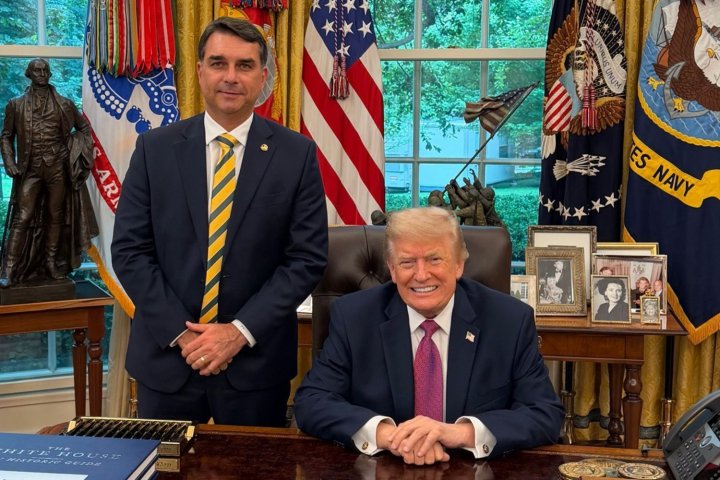
The Far Right made significant gains in Brazil’s elections this Sunday, October 4, in one of the most important electoral contests of the current international moment. Flávio Bolsonaro finished first in the opening round with about 47.03 percent of the valid vote, compared with 45.16 percent for Luiz Inácio Lula da Silva, Bolsonaro outperformed his anticipated results from most polls released in the final days before the vote. Since neither candidate surpassed 50 percent, the election will be decided in a runoff on October 25.
The advance of the Far Right extended well beyond the presidential vote. The Liberal Party (PL), the main party of Jair Bolsonaro’s political camp, quadrupled its representation in the Senate, electing 19 new senators. Among them were Michelle Bolsonaro and Carlos Bolsonaro, two members of the former president’s family, as well as prominent Bolsonaro allies such as Bia Kicis. A younger generation of far-right politicians also made major gains, with figures such as Nikolas Ferreira and Lucas Pavanato winning record vote totals for House of Representatives. The PL also expanded its presence in state governments, rising from two governors elected in 2022 to five in the first round of 2026. Bolsonaro’s coalition won 14 states (13 + federal district), and Lula’s coalition won 13, while other Bolsonaro allies won important positions in key states.
Beyond Lula’s second-place finish in the presidential race, the Workers’ Party and its allies suffered a series of important defeats across the country. In São Paulo, Brazil’s largest state, Fernando Haddad, Lula’s former finance minister and the PT’s 2018 presidential candidate, lost the governor’s race in the first round to Tarcísio de Freitas by a wide margin. Gleisi Hoffmann, a former national president of the PT and a longtime figure in Lula’s political leadership, failed to win a Senate seat in Paraná. In São Paulo, former Lula ministers Marina Silva and Simone Tebet also lost their Senate races to candidates of the Right, while Randolfe Rodrigues, the government’s leader in Congress, failed to win reelection in the state of Amapá. Several historic PT figures also lost their seats or failed to return to Congress. These setbacks were especially significant in the country’s largest political centers and in the battle for the Senate, even as the PT retained important strongholds in the Northeast.
Four years after Jair Bolsonaro’s defeat and his subsequent conviction for the attempted coup, the Far Right has preserved a mass social base and returned as a concrete contender for control of the executive branch. The results point to a deeper reordering of Brazil’s political system. Bolsonarism is increasingly rooted inside the institutions themselves, while large parts of the traditional Right are being reorganized around its political leadership. The PL emerged with 121 seats in the Chamber of Deputies, far ahead of the PT’s 70, and also greatly expanded its weight in the Senate and in state governments. These results amount to a serious setback for the Workers’ Party and suggest that the political cycle opened with the crisis of the old party system a decade ago has entered a new stage.
There were countertendencies on the Left. Erika Hilton of the Socialism and Liberty Party (PSOL) — a party founded in 2004 by dissidents from the Workers’ Party and other left-wing currents and that is now part of the governing coalition — was reelected in São Paulo with nearly 1.6 million votes, becoming the most-voted woman in the history of elections to the Chamber of Deputies. Sâmia Bomfim also won more than 580,000 votes in the state, while Jones Manoel, recently affiliated with the PSOL, had already built a national profile as a voice of Brazil’s radical Left, was elected in Pernambuco with 249,000 votes, becoming the first PSOL federal deputy elected from the Northeast. These results do not, however, change the overall direction of the election, which strengthened the Far Right across the presidency, Congress, and state governments.
Brazil occupies a decisive position in the United States’ efforts to consolidate its dominance over Latin America, contain China’s growing influence, and expand its access to strategic resources. In a continent where right-wing forces have won important victories in recent years, the political future of the region’s largest economy and most populous country has taken on even greater significance.
This political shift is unfolding amid a prolonged crisis of Brazil’s political regime and growing pressure from the United States. Donald Trump avoided formally endorsing Flávio Bolsonaro, but his administration intensified economic and political pressure on Brazil, while Flávio made his proximity to Trump and the international Far Right a central element of his political profile. Two days before the election, the United States shut down its embassy and all consular services in the country, citing “security concerns,” an effort to sow chaos in favor of the Far Right. The Brazilian election has therefore become increasingly tied to the broader struggle over U.S. power in Latin America and the reorganization of the Right across the continent.
The first-round result points to a possible shift in Brazil’s political regime that goes beyond a change of government. If Flávio Bolsonaro wins the presidency, the Far Right would enter office with a stronger position inside the institutions than at any previous moment. The next president will be able to appoint at least four of the eleven justices on the Supreme Federal Court, while the new Senate is more favorable to efforts to remove judges such as Alexandre de Moraes, who became a central figure in the investigations and trials surrounding Bolsonaro’s coup attempt and the January 8 attacks. A Flávio Bolsonaro victory would also immediately reopen the question of Jair Bolsonaro’s legal status. A presidential pardon, an amnesty approved by Congress, or other measures aimed at reversing the effects of his conviction could become an early priority of a new government. Such a move would carry significance far beyond the fate of the former president. It would signal an attempt to overturn one of the main institutional outcomes of the confrontation between Bolsonarism and the Supreme Court since 2022.
Bolsonarism is increasingly gaining the institutional means to reshape the regime from within. Its expanded strength in Congress, control of the executive if Flávio wins, and greater leverage over the Supreme Court could alter the balance among the country’s central institutions. The prospect opened by this election is therefore one of changes in the political regime itself, with the Far Right seeking to transform institutions that it previously confronted from a much weaker position.
This is why the first-round result must be understood as a warning. As Left Voice´s sister organization in Brazil, the MRT (Revolutionary Workers Movement) argued in a recent statement, defeating Flávio Bolsonaro, Trump’s intervention, and the broader Far Right requires mass mobilization and not confidence in the institutions that have failed to contain them. It calls on unions and student organizations to convene assemblies and organize workers and youth from below, linking the fight against the Far Right to demands such as ending the six-day workweek and opposing U.S. imperialist interference.
The purpose of this article is to look beyond the immediate second-round contest and explain the longer crisis that has made this advance possible: the transformation of Brazil’s political regime over the past decade, the incorporation of Bolsonarism into its institutions, and the limits of the strategy pursued by Lula’s Broad Front.
Since the institutional coup that removed Dilma Rousseff from office in 2016, Brazil’s political system has been repeatedly reshaped by a crisis of legitimacy that has never been fully resolved. The Lava Jato offensive culminated in Lula’s imprisonment and exclusion from the 2018 presidential election, a clear attack on universal suffrage that further weakened the party system of Brazil’s New Republic. It was in this context that Jair Bolsonaro, until then a marginal lawmaker deeply embedded in the patronage politics of Congress, was able to present himself as a break with the old political establishment and win the presidency.
On the economic front, Bolsonaro’s government sought to deepen the agenda set in motion after the 2016 coup. Michel Temer’s government had passed a sweeping labor reform and imposed a constitutional cap on public spending. It also launched a broad program of privatization and economic surrender. Under Bolsonaro, this agenda was pushed further by Paulo Guedes, his economy minister and the main architect of the government’s ultraliberal economic program. One of the clearest examples was Eletrobras, the giant state-controlled electricity company that had played a central role in Brazil’s power sector for decades. Temer’s government had already begun the process of privatizing the company, and Bolsonaro completed it in 2022, when the federal government lost its controlling stake through a major share offering. His government also pursued foreign and economic policies that were even more open to international capital. The broader project aimed to reshape relations between capital and labor in favor of employers, expand the role of private capital in strategic sectors, and further reduce the state’s capacity to intervene in the economy.
At the same time, Bolsonarism sought to reshape Brazil’s political and cultural climate through attacks on women’s rights and LGBTQ+ people, while also rehabilitating the legacy of the military dictatorship and authoritarian forms of political rule. The so-called “culture war” became a permanent tool for mobilizing its base and normalizing reactionary ideas that had long remained more marginal in Brazilian public life. Alongside this moral offensive, the Bolsonaro government pushed a broader attack on Indigenous peoples and quilombola communities, treating collective territorial rights as obstacles to agribusiness, mining, and private investment. Bolsonaro repeatedly attacked Indigenous land demarcation, weakened environmental and Indigenous protection agencies, and backed measures aimed at opening protected territories to commercial exploitation.
This strategy was reinforced by international networks of the radical right, particularly in the United States. Eduardo Bolsonaro built direct ties with Trumpist figures such as Steve Bannon, Donald Trump Jr., and Jason Miller. CPAC, the major U.S. conservative conference, began holding events in Brazil with the participation of U.S. conservative leaders. Gettr, the social media platform headed by Miller, even sponsored events connected to Eduardo Bolsonaro’s political circle. Brazilian liberal and conservative organizations also maintained ties with the U.S.-based Atlas Network. Academic research has documented connections between Atlas, Brazilian think tanks, and economic policymakers during Bolsonaro’s presidency, helping spread and institutionalize a radically neoliberal agenda.
To carry this project forward, Bolsonaro entered growing conflict with parts of the political regime that had helped bring him to power. His relationship with the Supreme Federal Court became increasingly hostile. He repeatedly attacked the electoral system, encouraged a deeper political role for the Armed Forces, and eventually took part in efforts to prevent the transfer of power after his defeat in 2022. These moves put basic mechanisms of Brazil’s political regime into question and helped create the conditions for the broad coalition that returned Lula to the presidency.
It was in response to this threat that the Broad Front that returned Lula to the presidency took shape. Its composition reflected a decision by forces well beyond the Left to block a second Bolsonaro presidency and preserve the institutions of the political regime. Geraldo Alckmin, a former governor of São Paulo and longtime leader of Brazil’s traditional right, became Lula’s vice president and embodied this strategy. The coalition brought together the Workers’ Party, traditional organizations of the Left, and longstanding representatives of Brazil’s bourgeois Right to contain the Far Right.
After losing the election to Lula, Bolsonaro and figures in his political and military circle took part in efforts to prevent the transfer of power. On January 8, 2023, just days after Lula’s inauguration, thousands of Bolsonaro supporters stormed and vandalized the National Congress, the Supreme Federal Court, and the presidential palace. The attack was partly inspired by January 6 in the United States and formed part of a broader effort to overturn the election result. Bolsonaro’s 2025 conviction by the Supreme Federal Court went beyond the events of that day. The Court found him guilty of taking part in and leading a plot to remain in power after his defeat, including efforts to discredit the electoral system and coordination with government and military figures. These moves, however, did not eliminate Bolsonarism as a social and political force.
At the same time, the Broad Front left much of the economic legacy built since the 2016 institutional coup intact. The main counter-reforms passed under the Temer and Bolsonaro governments remained in place, including the labor reform, the pension reform, and the broad liberalization of outsourcing. Temer’s constitutional spending cap was replaced by a new fiscal framework that continued to impose strict limits on the expansion of public spending. Agribusiness continued to exert strong pressure on the government, which responded with tax concessions and other measures favorable to the sector. In the name of governability, Lula also built alliances with different sectors of the Right and repeatedly signaled to business leaders that his government would preserve favorable conditions for investment.
This logic was also reflected in the composition of Lula’s cabinet. In 2023, he handed the Ministry of Ports and Airports to Silvio Costa Filho of the Republicanos, a party that had been part of Bolsonaro’s congressional base, while also bringing other parties from the so-called Centrão into the government. In infrastructure policy, the administration preserved and expanded mechanisms that transferred the operation of public services to private capital through concessions and public-private partnerships. The BNDES, Brazil’s state development bank, took on a central role in structuring and financing these projects, including highways, ports, airports, sanitation, and other strategic sectors.
A similar logic also shaped Lula’s foreign policy. Even after Trump’s offensive against Brazil, through tariffs, sanctions, and pressure on the Supreme Court in defense of Bolsonaro, Lula sought to build a positive relationship with the White House. After the escalation in 2025, his government tried to turn confrontation into negotiation. A meeting with Trump in Malaysia was presented by the government itself as a diplomatic victory and, at least for a time, consolidated Lula’s position as a recognized interlocutor for the White House. In May 2026, this approach went further. Lula was received by Trump at the White House, celebrated the “good chemistry” between them, and even spoke of “love at first sight.” The talks included tariffs, security, and U.S. access to Brazil’s strategic minerals. This was an attempt to accommodate Washington’s pressure rather than confront Brazil’s dependence on imperialism.
This policy had some limited “success” in Lula terms. At least, temporarily it reduced the level of direct confrontation with Trump and projected the image that Lula could negotiate directly with Washington, bypassing Bolsonarism altogether. But this accommodation did not end U.S. pressure. Later developments showed that any degree of autonomy preserved by Brazil continued to provoke new pressure from Washington. The Broad Front was therefore able to present itself as an institutional barrier to the Far Right while leaving intact many of the economic and political conditions in which that Right had grown. At the same time, it sought to manage Brazil’s dependent relationship with the United States rather than break with it.
This question has become even more important as institutions presented since 2022 as the last barrier against Bolsonaro face a growing crisis of legitimacy.. The Banco Master scandal struck directly at one of the institutions that had accumulated the greatest political authority over the previous decade. After Lava Jato and the confrontation with Bolsonaro, the judiciary had increasingly presented itself as a guardian against corruption and authoritarian threats. Allegations involving Supreme Court justices and their families therefore carried particular weight, weakening the legitimacy on which that role had come to depend. The bank, controlled by Daniel Vorcaro before his arrest in a multibillion-real fraud investigation, had built an extensive network of relationships reaching politicians and figures of the judiciary. The scandal also reached the Bolsonaro family directly. Flávio Bolsonaro acknowledged seeking financing from Vorcaro for Dark Horse, a biopic portraying Jair Bolsonaro as a fighter against a corrupt establishment; investigators later examined roughly R$60 million connected to the project and possible misuse of public funds.
The political effect was therefore deeply contradictory. The scandal reinforced the perception that the institutions and elites governing Brazil are interconnected through opaque networks of money and influence, while figures from the Far Right were themselves entangled in those same networks. Yet the first-round result suggests that Bolsonarism was more successful than the governing camp in capitalizing on this institutional discredit. That contradiction helps explain how the Far Right could once again present itself as an anti-establishment force while becoming increasingly embedded in the very institutions it denounces.
In 2026, a new factor entered the Brazilian political landscape with far greater force than four years earlier: a Trump administration willing to use U.S. economic and political power to intervene openly in Brazil and strengthen its allies. The reorganization of Bolsonarism around Flávio Bolsonaro now converged with a much more direct imperialist offensive. The convergence of Brazil’s internal political crisis with Washington’s new policy toward Latin America became one of the defining features of this election.
The National Security Strategy released by the Trump administration in late 2025 openly called for a reaffirmation of the Monroe Doctrine and the restoration of “American preeminence” in the Western Hemisphere. It gave formal expression to a broader effort to reassert U.S. primacy in Latin America through economic pressure, sanctions, military power, and support for governments and political forces aligned with Washington.
An early sign of the severity of this regional offensive was the U.S. attack on Venezuela and abduction of Nicolás Maduro at the start of the year. This paved the way for the United States, aided by Venezuela’s regime with acting president Delcy Rodriguez at its head, to quickly turn the country into a U.S. protectorate, welcoming U.S. marines, restoring relations with Israel, and cutting a deal with Washington to hand over strategic oil fields to U.S. companies. The regime change in Venezuela also enabled the United States to escalate its longstanding blockade of Cuba by cutting off the island’s supply of oil. The White House formally described the Cuban government as a threat to U.S. national security, while Marco Rubio began speaking openly about the need for political regime change in Havana.
“Narcoterrorism” also became one of the main ideological and legal tools of the imperialist offensive. The Trump administration designated cartels and other criminal organizations as terrorist groups, authorized attacks on vessels accused of drug trafficking, and increasingly framed the war on drugs as a national security issue that could justify the direct use of U.S. military force in the region. In September, speaking before the United Nations General Assembly, Trump compared these organizations to the “ISIS of the Western Hemisphere” and pledged to use U.S. military power against them. Trump has used this war on “narcoterrorism” to expand U.S. military activity throughout South America, bringing right-wing governments together through the Shield of the Americas alliance, and launching joint military operations with countries including Ecuador and Colombia.
But amidst these advances, Brazil remained the main prize for U.S. imperialism. The country is indispensable for any U.S. strategy in Latin America and enters this confrontation from a weaker regional position than in previous decades. It is the region’s largest economy and most populous country, holds major strategic resources, and maintains deep economic ties with China
Brazil’s ability to set the terms of its relations with the major powers has declined, while both Washington and Beijing have gained greater leverage over strategic decisions involving trade, technology, and critical minerals. While Lula’s government had repeatedly sought accommodation with Trump, it had not fully aligned itself with Washington’s new regional strategy. This made Brazil a central test of how far the United States was prepared to go in reshaping the political terrain of the region’s most important country. The methods already emerging elsewhere in Latin America help clarify the stakes. Recent events in Bolivia offer one particularly revealing example.
After Rodrigo Paz’s government rapidly moved to restore close relations with the United States, Attorney General Roger Mariaca had his U.S. visa revoked amid accusations of corruption and links to drug trafficking. A few days later, Mariaca was arrested along with thirteen others in an operation targeting an alleged network inside the Attorney General’s Office and the judiciary. Mariaca had also been leading investigations involving Fernando Cerimedo, an Argentine political consultant connected to Trump’s networks in Latin America. Cerimedo had worked for Javier Milei and Rodrigo Paz, maintained ties with Bolsonarism, and became known in Brazil for spreading unsubstantiated claims of fraud in the 2022 election. In 2026, he was also honored at Mar-a-Lago during an event connected to Trump’s political orbit. Mariaca argued that the U.S. sanctions were intended to pressure sensitive investigations, while figures connected to the case publicly questioned whether Washington was using the Shield of the Americas to protect the MAGA network around Cerimedo.
The Bolivian government presented the arrests as part of a crackdown on corruption and drug trafficking, thanked U.S. agencies for their cooperation, and received public support from Marco Rubio. The sequence is politically revealing. U.S. sanctions targeted the country’s top authority investigating an operator closely tied to the regional Trumpist Right. Within days, that same official was arrested, and Bolivia’s judicial apparatus began a rapid reorganization.
The episode points to a qualitative escalation in the forms of intervention associated with the politics of the Shield of the Americas. Given the close ties between Bolsonarism and Trumpism, mechanisms of this kind could acquire much greater weight in Brazil if the Far Right returns to government. Flávio Bolsonaro has made his proximity to Trump and a more openly pro-U.S. foreign policy central elements of his candidacy.
This regional offensive is unfolding at a moment when Trumpism is facing growing difficulties inside the United States. As the November midterms approach, Trump enters the final stretch of 2026 with declining popularity and mounting obstacles to advancing his agenda. The expansion of U.S. pressure on Latin America therefore also reflects the effort of a power in relative decline to reassert control over a region it has historically treated as a privileged sphere of domination.
As the campaign approached its final weeks, Washington’s pressure increasingly moved from conflicts between governments into the political terrain of the election itself. Tariffs and trade threats had already been used to pressure Brazil over issues ranging from PIX (Brazil’s public instant-payment system), to access to critical minerals. The Trump administration also repeatedly intervened in defense of Bolsonaro and his allies.
By the final stretch of the campaign, a series of additional episodes raised more direct questions about U.S. interference in the electoral process. Brazilian authorities blocked a planned visit by senior State Department officials who intended to discuss the country’s electronic voting system and “electoral integrity,” an especially sensitive intervention given Bolsonaro’s long campaign to discredit Brazil’s elections. At the same time, investigations and press reports revealed contacts between Flávio Bolsonaro’s campaign and figures connected to the Rockbridge Network, the U.S. conservative organization co-founded by J.D. Vance. Allegations concerning consulting, political coordination, and possible foreign support prompted calls for investigation, although direct illegal campaign financing has not been established. The most striking episode came just before the vote, when the U.S. government suspended operations at its embassy in Brasília and consulates across Brazil, citing security concerns. Brazilian authorities had not publicly identified a concrete threat that would explain a measure of that scale.
Coming after months of economic pressure, political interventions over Bolsonaro, and growing ties between Trumpist networks and the Brazilian Far Right, the closures became another element in the debate over Washington’s role in the election. Taken together, these episodes establish a pattern of U.S. pressure that went well beyond ordinary diplomatic relations and increasingly entered the terrain of Brazil’s electoral dispute. The evidence does not establish a single centrally coordinated operation to determine the result, but it does show an escalating willingness by Washington and Trump-aligned networks to intervene in the political conditions surrounding the election.
If the Broad Front’s goal was to contain Bolsonarism, the 2026 election shows the failure of that strategy. Jair Bolsonaro’s imprisonment had appeared to confirm the defeat suffered by the Far Right after 2022. The new electoral result reveals the limits of that conclusion: Bolsonaro’s defeat and subsequent conviction did not prevent his political camp from regrouping within the same regime that was supposed to neutralize it.
To defeat Bolsonaro, Lula built a coalition that incorporated traditional sectors of the ruling class, including parties that had supported Dilma Rousseff’s impeachment and gone on to participate in the Temer government, and even in Bolsonaro’s. The main structural reforms approved after 2016 remained in place, while the new fiscal framework effectively reproduced the logic of the public spending cap. The attempt to restore “democratic normality” was therefore accompanied by the preservation of the economic legacy of the coup.
At the same time, Brazilian society has not moved only to the Right. In recent years, important currents of discontent have also emerged from the Left, especially in the mass movement to end the 6×1 work schedule (in which workers are on the job six days a week), but also through strikes and mobilizations over wages, public services, and privatization. Much of this energy, however, encounters political and social organizations that are deeply integrated into the logic of the Broad Front. The main trade-union federations, especially the CUT, have leaderships historically tied to the Workers’ Party, while the National Union of Students, or UNE, has for decades been led by political forces that are aligned with the government. Rather than serving as independent poles capable of turning this discontent into its own organization and political force, these structures tend to channel it within the limits of governability and the electoral calendar.
In some cases, this contradiction becomes even more direct when popular demands come into conflict with the government’s own policies. That was the case on the Tapajós River in early 2026, when Indigenous communities organized more than a month of blockades and occupied a Cargill terminal in protest against a Lula decree that placed Amazonian waterways under the National Privatization Program, as well as plans to dredge the river. Indigenous leaders accused the government of abandoning negotiations and demanded the presence of officials with real decision-making power. Guilherme Boulos, once widely seen as a figure to the left of the Workers’ Party and now serving as Secretary-General of the Presidency, entered the conflict as the government representative responsible for negotiating a way out of a policy adopted by the administration itself. Indigenous pressure ultimately won an important victory with the revocation of the decree.
This episode captures the transformation of the PSOL. For many years, the party was seen by important sectors of society as a left-wing opposition to PT governments. Its integration into the Broad Front, together with the entry of figures such as Boulos into the government, has increasingly tied it to the political management of these conflicts. As a result, real currents of discontent and mobilization continue to emerge on the Brazilian Left, but they confront a political, trade-union, and student field that is ever more integrated into the government and increasingly capable of absorbing those pressures and channeling them back within the limits of the governing coalition.
This dynamic helps produce a particular form of social pacification. The demands remain, the material contradictions persist, and new movements can still emerge, but their independent political expression is weakened. The result is a clear asymmetry. Currents of discontent on the Left are often mediated by organizations tied to the government and redirected into the institutional logic of the Broad Front, while the Far Right is able to present itself as a force of opposition. It does so even after Bolsonaro governed the country and despite the fact that his political camp defends economic policies even more favorable to the ruling class and to imperialism.
The result is also difficult to explain as the product of a particularly favorable campaign for Flávio Bolsonaro. His candidacy went through significant crises of its own. Disputes inside the Bolsonaro family repeatedly broke into public view, including a sharp conflict between Flávio and former first lady Michelle Bolsonaro over the political direction of the campaign. The Dark Horse scandal also produced a measurable setback. Revelations that Flávio had sought tens of millions of reais from Banco Master owner Daniel Vorcaro to finance a film about Jair Bolsonaro temporarily pushed down his support in the polls and created difficulties with more moderate voters. By September, much of that damage had been reversed, but the episode had clearly shaken the campaign.
Lula, meanwhile, also benefited from important openings during the campaign. Trump’s tariffs and increasingly open pressure on Brazil gave the government an opportunity to reclaim the language of national sovereignty and portray itself as a barrier to U.S. interference. In the final weeks before the first round, the government launched a series of highly popular measures and tried to bring social demands back to the center of the campaign. On September 16, it announced a 15.04 percent increase in Bolsa Família, Brazil’s main cash-transfer program. On September 25, Lula issued a provisional measure banning online betting platforms, known in Brazil as bets. The move drew enormous attention and had 78 percent popular support. Lula also brought the demand to end the 6×1 work schedule back into his campaign. After being stalled in Congress, the proposal is now set to be taken up by Senate President Davi Alcolumbre on October 6, two days after the first round. The government also launched a new round of debt-relief measures and expanded access to credit. Press estimates suggested that the full package of initiatives announced during the election year could move more than R$200 billion through the economy.
Taken together, these elements make it difficult to explain the Far Right’s result through the immediate dynamics of the campaign. The roots of this result therefore lie deeper than campaign tactics. They are found in the political and social conditions preserved by the Broad Front itself, above all in its attempt to stabilize the regime while leaving intact the economic and institutional pillars built after the 2016 coup.
The class-collaboration politics of the Broad Front also helped preserve political and institutional space for the same right-wing forces that had sustained Bolsonaro. The governing coalition incorporated parties that had belonged to his base, such as Republicanos, and relied continuously on agreements with the Centrão to secure a majority in Congress. This relationship extended beyond parliament. Concessions and public-private projects structured with the participation of the BNDES continued to move large volumes of capital and created points of convergence between the federal government, major private groups, and right-wing state administrations. As a result, sectors that had participated directly in the Bolsonaro experience were able to preserve positions within the state, maintain access to resources, and retain the capacity to present themselves once again as a political alternative. The Broad Front sought to stabilize the regime by incorporating these forces, and in doing so helped preserve the institutional bases from which the Far Right was able to reorganize.
The way these measures were presented also reveals part of the contradiction. Demands that could have become starting points for deeper social mobilization were largely managed from above by the government and state institutions, often gaining momentum only as elections approached. The campaign to end the 6×1 work schedule is perhaps the clearest example. A demand with broad popular support and the potential to mobilize millions of workers remained tied for months to negotiations inside Congress and returned to the center of the institutional agenda only in the final stretch of the election.
The 2026 election therefore exposes the limits of confronting the Far Right primarily through elections and the institutions of the existing regime. Brazil’s polarization is rooted in a deeper social and political crisis that electoral tactics alone cannot resolve.
The Brazilian election also raises questions that concern the Left in the United States. Trump’s second administration coincides with a contradictory political development. The Far Right controls the White House, while new forms of discontent are also finding expression on the Left. The recent growth of the Democratic Socialists of America, Zohran Mamdani’s election in New York, and the victories of DSA-backed candidates point to a significant audience for socialist ideas.
This advance, however, carries a strategic contradiction. A significant part of the energy expressing discontent with the two-party system is still organized through candidates running inside the Democratic Party. The DSA grew precisely amid the crisis of legitimacy of both major parties, yet its dominant electoral orientation continues to rely on the Democratic ballot line. As a result, the search for an alternative can end up helping renew the legitimacy of one of the two central parties of the U.S. political regime and of U.S. imperialism itself. The key question is whether this new radicalization can build an independent political expression or whether it will be drawn back into the Democratic orbit.
Important sectors of the U.S. Left interpret conflicts between the United States and Latin American governments through a division between an imperial bloc and another seen as progressive or sovereign. Articles published in Jacobin, for example, have emphasized the role of Pink Tide governments and their relations with China as forms of resistance to U.S. hegemony. A similar perspective can be found among currents of the Latin American Left, including sectors that took part in the formation of the PSOL. These forces often treat conflict with Washington as grounds for suspending an independent political position toward the governments involved.
The first responsibility of the Left in the United States in relation to the Brazilian election is very concrete: to fight the intervention of its own government. Tariffs used as political pressure, sanctions and threats, support for far-right forces, and any attempt by Washington to determine Brazil’s political course must be opposed inside the United States itself. This position does not require treating Lula’s government as anti-imperialist. An internationalist policy can firmly oppose Washington’s interference while maintaining political independence from the government under pressure.
After the first round, Diana Assunção, a leader of the Movimento Revolucionário de Trabalhadores (MRT), argued that the response to Flávio Bolsonaro and Trump must come through independent mobilization: “We need an alternative path, with the trade unions and student organizations calling assemblies and grassroots spaces where workers and young people can organize to fight.” She connected this perspective to the struggle to end the 6×1 work schedule and to opposition to U.S. interference, arguing that “only an anti-imperialist program based on the power of the working class can confront the interests of the Far Right.”
As eleições mostram que para derrotar a extrema-direita a conciliação e moderação são um desastre: fortaleceram o bolsonarismo. Para derrotá-la de fato, é preciso construir a mobilização dos trabalhadores e juventude contra os Bolsonaros, Milei e o imperialismo na América Latina.
The Brazilian experience also challenges one of the conclusions that many on the U.S. Left drew from Bolsonaro’s defeat after January 8. Brazil was often presented as a positive contrast with the United States: the coup attempt was investigated, Bolsonaro was prosecuted and convicted, and the institutions of the state appeared to have succeeded where the U.S. system had hesitated after January 6. Jacobin, for example, described Bolsonaro’s conviction as a sign of the strength of Brazil’s democratic institutions, while earlier commentary had explicitly presented Lula’s response to January 8 as a lesson for the United States.
The 2026 election complicates the idea that Bolsonaro’s conviction represented a durable defeat for the Far Right. The struggle to punish those responsible for coup attempts remains essential, and those demands themselves have to be won through mobilization with class struggle. But legal punishment alone cannot substitute for changing the balance of forces that allows the Far Right to regenerate. Bolsonarism returned strengthened, and the cost of living became one of Flávio Bolsonaro’s most effective campaign themes. His campaign attacked Lula over food prices, household debt, and purchasing power, even while defending an economic program based on fiscal restraint, privatization, and tax cuts. The contradiction is revealing: the Far Right was punished institutionally, yet it was still able to channel frustrations produced under an economic framework that the Broad Front largely preserved.
A strategy that relies on institutional containment of the Far Right while leaving intact the economic conditions that feed social frustration cannot, by itself, change the balance of social forces underneath them. The Brazilian case therefore suggests that defeating the Far Right requires confronting the material conditions it exploits and building an independent working-class organization capable of contesting those grievances politically.
The strategic problem, then, is how to turn the growing anti-Trump, anti-imperialist, and anti-capitalist sentiment into an independent political force. In this sense, the Argentine experience offers an important counterpoint to the debate in the United States. Trotskyist Congresswoman Myriam Bregman’s growing profile was built over years through a consistent presence in struggles led by women, workers, students, and human rights organizations, and more recently through opposition to Javier Milei’s government. This trajectory allowed her to reach an audience far broader than the Argentine Left’s traditional electoral base. In July 2026, Bregman registered a 42 percent positive image in a national poll. In September, she was one of the main organizers of the Marcha de la Bronca, which brought together hundreds of organizations across dozens of cities and demanded that the CGT and the other union federations call a general strike against Milei. The experience suggests that a socialist figure can greatly expand her audience while maintaining political independence and using that visibility to strengthen social mobilization outside the traditional structures of Peronism.
For the PTS, the challenge posed by this phenomenon goes beyond turning Bregman’s popularity into votes. Its orientation is to transform that sympathy into political organization capable of intervening both politically and in the class struggle. To that end, it has begun promoting the Committees for a Party of the New Working Class, which now extend across roughly 200 cities and localities and bring together thousands of people who were not previously members of the PTS. The wager is that electoral and parliamentary positions can serve as points of support for expanding the independent organization of the working class and strengthening processes of mobilization and coordination in ongoing struggles. The PTS itself describes this perspective as a process of “fusion” between the revolutionary Left and new layers of workers and young people moving toward socialist politics, with the explicit goal of advancing the construction of a party of Argentina’s new working class.
Conditions in the United States are obviously very different from those in Argentina. But the contrast raises a strategic question that cannot be avoided: does the growth of socialist influence necessarily have to pass through integration into the Democratic Party, or can it become the starting point for building an independent political force of the working class?
The Brazilian election makes this question inseparable from the problem of imperialism. A U.S. Left capable of confronting Trump must challenge both his domestic agenda and Washington’s attempt to reassert its domination over Latin America. At the same time, it must do so without giving up the political independence of the working class by supporting governments simply because they come into conflict with the United States. The challenge is to break with both forms of subordination: dependence on the Democratic Party at home, and internationally, a campist logic that treats Washington’s temporary adversaries as representatives of the interests of Latin American peoples.
The force capable of answering the Far Right does not yet exist in finished form. But developments now unfolding in the United States, Argentina, Brazil, and elsewhere show that international polarization does not produce only new right-wing forces. It also creates openings for a Left capable of gaining mass influence. The decisive question is whether this energy will once again be absorbed by existing parties and institutions or whether it can contribute to reorganizing revolutionary forces with the political independence to confront imperialism and intervene on their own terms in the struggles of the working class.
Read the full story at the source
Source: Left Voice