
Politics · labournet.de · · 2h
Recalculation of the standard rates for Hartz IV and social assistance continues to use the “still constitutional” calculation method
Deutsch (original) · Auto-translated to English
dossier
“The LEFT faction. in the Bundestag asked how the federal government plans to proceed with the upcoming recalculation of the standard rates for Hartz IV and social assistance. Result: This refuses to accept politics and wants to continue to determine the subsistence minimum using the existing calculation method. The federal government is ignoring the vehement criticism from experts, associations and unions who urgently warn against “business as usual” with the standard rates. (…) The BVerfG recently made it clear in its sanction ruling: “The Federal Constitutional Court does not have the task of deciding how high a claim to benefits must be in order to secure the subsistence level […] it is rather a matter for politicians to fight for it”…" From theThomé Newsletter 22/2020 from July 3rd, 2020  and here is the debate:
- What people need: Empirical analysis of the level of minimum social security puts the socio-cultural subsistence minimum at 999.70 euros

- What people need: Empirical analysis of the level of minimum social security based on regional statistical data
“In the past few months, politicians from the government parties, primarily the two Union parties CDU and CSU, have launched violent attacks on the citizens' money they rejected and the recipients of it. Against the citizen's benefit, which had already only been improved in marginal aspects compared to the basic social security previously commonly referred to as Hartz IV, they pulled out all the stops to abolish it and replace it with a significantly tighter new basic security. This was successful because several media outlets also supported this defamation campaign with their own articles and broadcast concepts. (…)
The calculation procedure is designed in such a way that, taking into account all the requirements, an amount is determined which, in addition to physically securing one's existence, also enables appropriate participation in socially recognized and customary activities in the middle of society. Using a shopping cart process, both the basic necessities of physical security of existence and a manageably large number of actions that are absolutely common in our society and thus reflect part of our cultural values are listed. For the purposes of this study, the sum of all the points listed represents the socio-cultural subsistence minimum…” From the foreword ofStudy by Lutz Hausstein from September 2026 at Tacheles e.v.  and to the results
 - New study by Lutz Hausstein: “What people need”
“Lutz Hausstein has created an empirical analysis of the level of minimum social security based on regional statistical data. He explains what the constitutionally protected subsistence minimum includes: In addition to existence, basic security must also guarantee a minimum level of socio-cultural participation.
With the study, Lutz Hausstein positions himself for discussion by politicians from the government parties, especially the CDU and CSU, who have repeatedly sharply attacked citizens' money, the level of the standard rate and those receiving benefits. The politicians called for citizens' money to be abolished and the standard benefit to be frozen or even reduced.
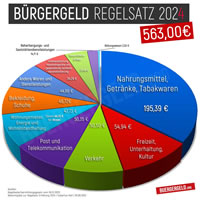
The study puts the socio-cultural subsistence minimum at 999.70 euros. She differentiates between “existentially indispensable costs” of around 659 euros and the costs associated with a “socio-cultural subsistence level”. The standard rate of 563 euros is around 437 euros less than this total amount. According to Hausstein's calculation, those entitled to benefits can only compensate for this gap by foregoing socio-cultural participation and also saving on basic needs such as nutrition.
Lutz Hausstein bases his study on the case law of the Federal Constitutional Court (BVerfG). The court has emphasized in several judgments that basic social security must not only ensure purely physical existence, but also guarantee a minimum level of socio-cultural participation. The BVerfG is thus following the Basic Law, which guarantees a humane minimum subsistence level in Article 1 Paragraph 1 of the Basic Law in conjunction with the welfare state principle of Article 20 Paragraph 1 of the Basic Law.” From theThomé Newsletter 33/2026 from September 27, 2026
- What people need: Empirical analysis of the level of minimum social security based on regional statistical data
- While a new constitutional complaint has been filed against standard basic security rates that are too low, there is a threat of additional cuts due to a new calculation
- Are there a risk of cuts in standard rates? A new calculation of the standard rates is in progress. Opposition and social organizations fear cuts
"... The so-called Standard Requirements Assessment Act could make it possible to reduce the standard rates. The Union had flirted with this again and again. Interior Minister Alexander Dobrindt (CSU) described the standard rates for the former citizens' benefit as too high two weeks ago. The CSU boss also followed this line a little later. "It must be reduced to the absolute constitutional minimum," said Markus Söder in the Bild: "The general standard rates must be reduced." (…) The Greens in the Bundestag call it “shabby” to want to further reduce the standard rates that are “already far too low”: “A 13-year-old child only has 5.02 euros per day for food and drinks at the standard rate,” argues the parliamentary group’s basic security expert, Timon Dzienus. “With basic security, neither a balanced diet nor social participation is possible.” The standard rate for a single person is currently 563 euros per month. According to calculations by the Paritätischer Wohlfahrtsverband, the rate would have to be increased to more than 800 euros per month in order to effectively protect against poverty. “Despite significant price increases, the standard rates have not been increased for three years,” says Managing Director Joachim Rock.“Anyone who reduces the subsistence level increases and deepens poverty – and provokes mass contradictions and complaints.” (…) When asked by tagesschau.de about the schedule and whether a smaller standard rate than previously conceivable could be used to determine standard needs, reference is made to technical and political decisions that would now have to be made: “After the special evaluations of the income and consumption sample have been submitted, the standard needs will now be re-determined and the draft law for the new standard needs determination law will be drawn up with the aim of the newly determined standard needs coming into force in 2027,” writes a spokeswoman. (…) If the recalculated standard rate does not arrive on time, the applicable rates will be updated for the coming year. In this case, there would probably be another zero round, the German Economic Institute in Cologne has calculated. This would mean that it would remain at 563 euros per month for another year.” Report by Jan-Peter Bartels from July 1, 2026 at tagesschau.de - New constitutional lawsuit against standard rates for basic security that are too low
"The sharp increase in the cost of living in 2022 continues to concern the social courts. A lawsuit before the Mannheim Social Court shows how benefit recipients are legally attacking the standard requirements in SGB II at the time. The question is whether citizens' benefit was still sufficient to secure a humane subsistence level in a phase of rapid price increases. The plaintiffs are turning against the Neckar-Odenwald job center and are demanding higher standard benefits for the period from June to November 2022. In their opinion, the amounts at that time were not sufficient because the statutory update of the standard requirements recorded the actual price development too late and too weakly. At the same time, they are requesting that the proceedings be suspended and that open constitutional questions be submitted to the Federal Constitutional Court (…) The lawsuit is not only directed against the specific decision of the job center. It also calls into question the legal method by which standard requirements are adjusted in times of rapid price increases (…) A significant part of the lawsuit deals with a ruling by the Federal Social Court of December 2, 2025. According to the statement in the lawsuit, the court decided that the standard requirements in 2022 were not unconstitutionally too low. The plaintiffs therefore believe that this assessment is incorrect According to the plaintiffs, the Federal Social Court assumed an unsuitable starting point.(…) Another focus of the lawsuit concerns the procedure itself. The plaintiffs claim that courts should have determined the relevant price indices and calculation bases more precisely. They rely on the official obligation to investigate in social court proceedings. They also complain about a violation of the right to be heard. After her presentation, her actual question was not adequately answered: Was the subsistence level actually covered in the specific months? Instead, it was only checked whether a one-off payment could mathematically exceed a certain loss of purchasing power. This distinction is important in this case. The plaintiffs do not just want to achieve an abstract assessment of inflation developments. They demand an examination of whether the benefits granted to them in the respective month met the constitutional requirements..." Contribution by Sebastian Bertram from June 27, 2026 at gegen-hartz.de
- Are there a risk of cuts in standard rates? A new calculation of the standard rates is in progress. Opposition and social organizations fear cuts
- Setting standard benefits at poverty level. The same applies from 2027: The standard rate is based on households that cannot afford sufficient food...
“The federal government does not care about the real costs of school supplies.
The standard rates for basic security (still: citizen's benefit), basic old-age security and social assistance are currently being recalculated, based on a special evaluation of the income and consumption sample (EVS) 2023. The draft law is not yet available, but essential preliminary decisions have been made a long time ago, especially for the order from the Ministry of Social Affairs to the Federal Statistical Office. The Left in the Bundestag asked a few questions about this. Some results:
The federal government does not even answer questions about the “reference households” – i.e. the income groups whose spending the standard rates will be based on. Internal government votes are apparently still underway. This is nonsense because the questions only concern completed preliminary decisions and objective figures available to the federal government…” More on this inThomé Newsletter 20/2026 from June 14, 2026 - Federal Social Court on Hartz IV: Judgment supports government plans. The unemployment benefit II rates were sufficient despite strong inflation in 2022
"It's good when the courts decide in the interests of those in power - at least for the current federal government. Because the Federal Social Court (BSG) has now decided in three appeal proceedings that monthly unemployment benefit II in 2022 of 449 euros was sufficient to cover living expenses. Plaintiffs in Baden-Württemberg, Brandenburg and North Rhine-Westphalia had tried to obtain additional payment for the basic security in force at the time through the courts. (...) The judges of the 7th The Senate at the BSG found the so-called standard requirements for food, clothing, hygiene products and other items of 449 euros to be sufficient. They were not unconstitutionally low, as the plaintiffs had argued. They were not entitled to higher unemployment benefit II because there was no violation of the basic right to a decent subsistence level. That is why the plaintiffs failed in their appeal proceedings rose to an average of twelve percent, while the standard rates of the benefit, colloquially known at the time as “Hartz IV,” had been increased by only 0.76 percent at the beginning of the year. The BSG judges nevertheless claimed that this amount would have been able to finance a decent subsistence level, especially since the plaintiffs were entitled to other benefits in addition to the standard requirements. The particularly strong price increases for gas and oil, which had an impact on heating costs, were due to the Job centers – in addition to the standard benefit – were paid “in the actual amount”.In addition, those receiving unemployment benefit II received a one-off payment of 200 euros in July of that year. And at least the standard requirement was increased by 11.8 percent on January 1, 2023. However, this does not answer how those affected should cope with their everyday lives during the difficult year of 2022. Even well-paid federal judges should realize that a one-time extra payment of 200 euros cannot compensate for a whole year's worth of deficits..." Article by Gudrun Giese in the Junge Welt from December 4, 2025for details inBSG deadline report 37/25 from December 2, 2025 on the BSG decision B 7 AS 20/24 R
- We remind you of the dossier:For whom inflation is a problem – and what it means for (tariff) policy
- Ordinance to update the standard requirement levels for 2026 presented: real loss of purchasing power despite “zero round”
“The BMAS has now presented its draft for the Standard Requirements Level Update Ordinance 2026 - RBSFV 2026. Here is the draft law:https://t1p.de/7qino and statement from the BMAS:https://t1p.de/z20f6
The call from Pari: Prevent a zero round of citizen's money and a detailed background:https://t1p.de/wy3y4…" From theThomé Newsletter 27/2025 from August 31, 2025 - A dignified life for citizens' benefit recipients is not a priority: Heil announces zero round for 2025 - criticism of the calculation of the standard rates must become louder
- Avoid a zero round of standard rates: The current level is already clearly inadequate and an increase is necessary
- Draft for updating the standard requirement levels in 2025
“The BMAS has presented the draft bill for the Standard Needs Level Update Ordinance 2025 (RBSFV 2025). According to this, the euro amounts from 2024 should continue to apply unchanged in 2025.
Here you can download the RBSFV 2025:https://t1p.de/9611l
There is a position paper from social associations and the DGB, which say clearly that the current level is clearly inadequate and are calling for an increase:https://t1p.de/742bd
Also the new general manager of the Paritätische Joachim Rock, who is calling for an increase in citizens' money:https://t1p.de/fvklp" From theThomé Newsletter 31/2024 from September 8th, 2024 - Position paper: Avert the threat of a zero round of standard rates – preserve purchasing power
“The standard rates in basic security, together with other benefits, are intended to guarantee the basic right to a humane minimum subsistence level. In terms of level, the standard rates remain inadequate. They cannot adequately cover important needs. In addition to the fundamental criticism of the investigation process, the update mechanism introduced by the citizens' benefit reform appears to be in need of reform in the short term with a view to the adjustment in 2025. (…) The statutory update mechanism leads to a dampening of the update, even to zero rounds, in times in which price developments decline significantly compared to the previous year. The actual current cost increases are not shown. There is currently a threat of a zero round, i.e. a reduction in purchasing power, which the standard rates make possible. The signatories fear that due to this undesirable development, the constitutionally required preservation of the humane minimum subsistence level cannot be guaranteed. This is why urgent remedial action is required. (…) The law excludes reductions in standard rates. This protective clause is likely to become relevant for the 2025 adjustment. That is to be welcomed. However, there is no analogous grandfathering clause for school supplies. This could lead to a reduction in services for education and participation in the short term. There is therefore also an urgent need for action here. As a first step, a grandfather clause must be implemented immediately, which must precede the above-mentioned, absolutely necessary corrections. (…) The signatories therefore continue to demand a more realistic determination of the standard rates.What is necessary is a move away from the unreflective equation of people recognize the subsistence minimum with the consumption expenditure of the poorest of the poor (including hidden poverty) and a waiver of arbitrary, unsubstantiated deletions of individual expenditure as not relevant to the standard rate…”Position paper from AWO Bundesverband e.V., German Trade Union Confederation DGB, German Paritätischer Wohlfahrtsverband - Gesamtverband e.V., Diakonie Deutschland, Coordination Office for Trade Union Unemployed Groups (KOS), Social Association Germany e.V., Social Association VdK Germany e.V., Zukunftsforum Familie e.V. - see for example: - Study under wraps: Citizens' money too low for healthy children's nutrition
“Labor Minister Hubertus Heil has had a report with explosive results for a year - it has never been published. The Berliner Zeitung knows the content…”Article by Martin Rücker from September 11th, 2024 in the Berliner Zeitung online
- Draft for updating the standard requirement levels in 2025
- Minister Heil announces zero round of citizens' benefits. The SoVD criticizes the calculation of the standard rates
"The standard rate for citizens' benefit will also be 563 euros per month for single people in 2025. Labor Minister Hubertus Heil (SPD) confirmed earlier speculation that the adjustment next year could be small or there would be no increase at all. Representatives of the coalition partners FDP and the Greens welcomed this step in their initial reactions. The reason for this is the reduced inflation. According to the calculation mechanism, the standard rates will remain the same level for next year. The SoVD criticizes the calculation of the standard rates. Although inflation has fallen overall, the prices for food continue to rise and put a strain on people who have to live on a subsistence level (...) SoVD board chairwoman Michaela Engelmeier states: "The fact that after years of crisis and prices for everyday items that remain at a high level there is now a risk of a zero round is due to the current calculation formula for standard requirements. It aims to reduce the level of standard requirements, not to determine the actual requirements." The SoVD is therefore calling for a new procedure for determining standard needs that takes into account the actual needs of those affected and prevents further increases in the country.” Press release from the German Social Association dated September 4, 2024 - There is nothing "right" about the zero round of citizen's benefit - instead of taking refuge behind technical reasons, Hubertus Heil should admit: A dignified life for recipients of citizen's benefit was not a priority
"Hubertus Heil has now confirmed what the FDP has been demanding for a long time: There will be no further increases in the amount of citizens' money in the coming year. And the SPD politician even said: "That's right." When justifying this, the labor minister hides behind a technical argument: Inflation has fallen so much that no further increases are planned under the existing legal process. That's true, but it's a weak argument for a minister who once wanted to work for better social policy. You would have the regulation, as already 2023, can change. The current amount is "the subsistence level, no more but also no less," Heil explained the decision. But that's not true. Since 2021, citizen's money and Hartz IV have been massively devalued because the standard rate has increased significantly more slowly than inflation In 2023, an unemployed single person will receive a total of 1,012 euros less than would have been necessary to secure the subsistence level. Due to the increase in benefits in 2023, the deficit will be reduced this year, but will still be 867 euros per single citizen's benefit recipient simply not his political priority.” Comment by Pauline Jäckels from September 4, 2024 in New Germany online– Above all, no debt brake can be advocated if at the same time the constitutional subsistence minimum according to Article 1 in conjunction with Article 20 of the Basic Law cannot be guaranteed. It is part of the eternal guarantee of the Basic Law. A lawsuit up to the VB is therefore entirely possible. The amount must also always be transparent and understandable – with or without inflation.
- Avoid a zero round of standard rates: The current level is already clearly inadequate and an increase is necessary
- Associations and unions warn of a zero round of citizens' benefit - alliance calls for short-term reform of the citizen's benefit adjustment for 2025
"A coalition of 8 welfare and social associations, trade unions and unemployed groups has appealed to the Federal Minister of Labor and Social Affairs, Hubertus Heil, and the members of the Bundestag, warning of the social consequences of a zero round of citizen's benefit. The alliance is calling for a short-term reform of the citizen's benefit adjustment for 2025. Otherwise, those entitled to citizen's benefit are threatened with a further loss of purchasing power, which would further worsen the poverty of millions of adults and children. Specifically, it is requested that the current price increases be taken into account based on the current standard rate of 563 euros. Contrary to what is often claimed, the authors of the appeal say that on the contrary: Current analyzes show that those entitled to citizen benefit have suffered significant losses in purchasing power for a single person In 2024 there was a turnaround, with the accumulated losses only being compensated to a small extent. Verena Bentele, President, Social Association VdK Germany: "Although the price increases for food, drugstore items and energy are significantly lower than last year, people who have to make do with the subsistence level still feel them every day. The zero round of standard citizen benefit rates means that many people are less able to provide for themselves. Therefore, the standard rates are urgently needed “The current standard rate in no way reflects what would be necessary for a subsistence level.” VdK press release from June 4, 2024to the common 6-pagePosition paper : “Avert the threat of a zero round of standard rates – maintain purchasing power” - Nutrition at the subsistence level: How much health does the Basic Law require?
"Is citizens' money unconstitutional because it does not enable a healthy diet? Nutritional scientific findings that only emerged after the last decision of the Federal Constitutional Court speak for this. The Scientific Advisory Board at the Federal Ministry of Food and Agriculture, among others, demands: "A [...] citizens' money must [...] be sufficient to avoid material and social nutritional poverty. However, the current [...] amounts do not correspond to this requirement" (ibid., I). Contrary to current demands to reduce standard benefits in order to create a wage gap or not to increase them further, there is a strong constitutional case for an increase. After all, according to current figures from the European community statistics on income and living conditions, 6.9 percent of people in Germany are affected by considerable material and social deprivation; 13 percent are unable to afford a meal containing meat, poultry, fish or a vegetarian equivalent every other day. The fundamental right to be granted a humane minimum subsistence level must not perpetuate this situation. Two constitutionally permissible possible solutions are obvious, namely an increase in the size of the reference group or an increase in the nutritional share. (…) For several years, nutritional sciences have been concerned with the question of whether the proportions taken into account when calculating standard nutritional requirements are sufficient for a healthy diet.(…) The studies listed there differ in design, pricing, etc., but are clear in their unity: All but one older and very controversial work (Thießen/Fischer 2008) find that a healthy diet costs more than is taken into account when calculating the standard food requirements. Recent nutritional research therefore deviates from what the BVerfG had to accept as the state of research in 2010. The question of whether the benefits “cannot be recognized as evidently inadequate” (BVerfG 2010, para. 151) or whether the “determination of the total amount for the standard requirement does not indicate that the need to secure a living would obviously not be covered” (BVerfG 2014, para. 87) would therefore have to be answered differently based on current findings. (…) In addition, the legislature is also bound by obligations under international law when determining the minimum subsistence level (BVerfG 2014, para. 74, with reference to BVerfG of July 18, 2012, para. 68). With reference to the low proportion of nutrition in the calculation, a current report comes to the conclusion that the level of the subsistence minimum violates the human right to adequate nutrition under Article 11 of the UN Social Pact, because "a healthy diet would only be possible with the standard citizen benefit rates if other basic needs were foregone. However, this is not sufficient to meet the requirements of international law, so that an increase in the standard rates is ultimately necessary" (p. 23). Because Germany joined the pact’s individual complaints procedure in 2023, this could now also be examined individually.” Contribution by Sarah Lincoln and Ulrike Müller from April 30, 2024 at the Constitution Blog - Urgent appeal: Social associations and ver.di warn against social cuts: “For a humane minimum subsistence level – against cuts in citizens’ benefit!”
“In a joint statement, the Joint Association together with six other organizations expressed their extreme concern about the current debate about cuts in citizens' benefits. The signatory organizations are calling for an immediate end to the heated debate and point out that a potential cut in citizens' benefits would not only hit the poorest hard, but a cut in the subsistence level would also be unconstitutional. False claims about the alleged wage gap requirement and the demand for compulsory work are also clearly rejected. (…) In addition to the General Parity Association, ver.di, the AWO, Diakonie, the VdK, Volkssolidarität and the SoVD have called for “For a humane minimum subsistence level – against cuts in citizens’ benefits!” signed.”Press release from December 8, 2023 from the Joint Joint Associationfor theCall “For a humane minimum subsistence level – against cuts in citizens’ benefits!” - Debate about citizens' money: Paritätischer presents current calculations for a poverty-proof standard rate: Citizens' money would have to be increased to 813 euros - not reduced
“The Paritätische Wohlfahrtsverband sharply criticizes current calls for a cut in so-called citizens' money. The association warns that the planned increase in basic security benefits to 563 euros on January 1, 2024 is completely justified and should not be suspended. According to current calculations by the Paritätische Forschungsstelle, the standard rate would actually have to be increased significantly to at least 813 euros for single adults in order not only to compensate for inflation, but also to effectively protect against poverty."The announced increase is nothing other than a compensation for inflation, which has recently been completely inadequate. Using the currently flattening inflation rate as a justification for cuts in citizens' benefit completely misses the point. (...) The Paritätische warns of a new breach of the constitution if the traffic light government considers cuts in citizens' benefit or suspends the announced increase. According to calculations by the Paritätische Forschungsstelle, the standard rate would actually have to be significantly higher than previously planned. "If all tricks are dispensed with and “If the standard requirements were not artificially reduced by arbitrary deletions, the citizen’s benefit would have to be increased by 60 percent to at least 813 instead of 563 euros in 2024,” summarizes Schneider.”Press release from the Paritätisches from December 4, 2023– see the current background:
- The danger is real: cuts in “citizens’ money”
“Despite the budget crisis, the traffic light coalition wants to stick to the unrestrained upgrade course for the coming years. At the same time, however, the market-radical government camp, together with the right-wing opposition, is rhetorically bringing out the heavy artillery against the poor and is calling for further cuts in social benefits and compulsory work. Anyone who thought that traffic light legislation couldn't get any more anti-social should be warned.FDP and Union politicians are demanding an increase in the “humane minimum subsistence level” –of the so-called citizen's money - to take back 61 euros on January 1, 2024. CDU General Secretary Carsten Linnemann explained on Deutschlandfunk on Tuesday that his party would present a concept in the spring that would “reduce” the subsistence level “especially for younger people” more, i.e. sanctions are planned. Anyone who doesn't learn early on "that work is important in life, for social participation" won't learn it later, says Linnemann. Anyone who can work should have to take a job “after a certain period of time,” “work for a non-profit organization, or their money will be cut.” In discussions with constitutional lawyers, it was signaled to him that the Federal Constitutional Court would accept even deeper cuts than the sanctions of 30 percent of salaries already provided for in the "citizen's money".
In theThe Federal Constitutional Court made the ruling on the abolition of total sanctions under “Hartz IV”.Although it states that it contradicts "the non-relatable commandment of inviolability", a "minimum of existence" would be secured below "what the legislature has already standardized as a minimum". However, reductions in benefits are “proportionate if the burdens on those affected are in proportion to the actual achievement of the legitimate goal of overcoming need,” it says in a paragraph. If those entitled to benefits do not take up “reasonable work offered to them,” “a complete withdrawal of benefits can be justified,” since the situation is “comparable to that in which there is no need.”The danger of further social deforestation is therefore real…”Comment by David Maiwald in the young world from December 6th, 2023 - Federal Employment Agency: “Waiving the citizen’s benefit increase at the turn of the year is no longer technically possible”
“According to the Federal Employment Agency, the waiver of an increase in citizens' allowance at the turn of the year as demanded by the FDP and the Union is no longer possible…”Report from December 6th, 2023 on Deutschlandfunk– the emphasis is on “technical”, otherwise there seem to be no reservations…
- The danger is real: cuts in “citizens’ money”
- Standard rates for 2024 decided: Federal Council agrees
“On October 13th, the Federal Council approved the new standard rates for 2024; More precisely, the – Attention word monster: – Standard Requirements Level Update Ordinance 2024; see BR-Drs. 454/23. See:https://t1p.de/5dwpiand on the BMAS website:https://t1p.de/93yi7
Single adults will receive 563 euros per month from January 2024 – 61 euros more than before. Overview:
Standard requirement level 1 (adults living alone) 563 euros
Standard requirement level 2 (adult partners) 506 euros
Standard requirement level 3 (adults; § 27b SGB XII) 451 euros
Standard requirement level 4 (young people aged 14 to 17) 471 euros
Standard requirement level 5 (children aged 6 to 13) 390 euros
Standard requirement level 6 (children up to 6 years) 357 euros
The amounts for personal school supplies also increase by around twelve percent: in the first half of the school year from 116 euros to 130 euros and in the second half of the school year from 58 euros to 65 euros. School supplies include, for example, writing utensils, calculators or craft materials. (…)The standard benefits are and remain too low, and socio-cultural PARTICIPATION, i.e. a humane life, is not possible. The Paritätische correctly demands that this should be at least EUR 813. First steps in this direction can and must be:
– Exclusion of household energy from the standard rates, classification of household energy in the KdU!
– Due to the blatant underfunding of the standard benefits, basic granting of replacement items above EUR 100 on a subsidy basis, i.e. consistent implementation of Section 21 Paragraph 6 SGB II/Section 30 Paragraph 10 SGB XII.
– Abandonment of the cap on accommodation costs due to the lack of a requirement to move in accordance with Section 22 Paragraph 1 Sentence 6 SGB II.
Of course, these are only partial suggestions, but they could alleviate the hardship in the short term. For the second point, the BMAS only needs to change a service instruction, so Mr. Heil is in demand here!" From theThomé Newsletter 34/2023 from November 1st, 2023 - [DGB] The citizens' benefit is not too high - the wages are too low
“Since the decision for higher citizens' benefits from January 2024, employers and politicians from the CDU and FDP have been worried about the gap between citizens' benefits and wages. They tell the fairy tale of the comfortable social hammock, fantasize about rampant social abuse and waves of dismissals of lazy employees who would rather receive citizen's benefit than work. None of these claims are supported by facts.Anyone who relies on citizen's money has to check every day and with every major purchase and every important purchase whether the money will last until the end of the month. And those who work full-time at the minimum wage always have more money than those who live on community benefit.Those who claim the opposite often ignore social benefits such as housing benefit and child allowance to which people on low incomes are entitled. Our detailed, current ones prove thisComparative calculations. The Economics and Social Sciences Institute of the Hans Böckler Foundation has also done the math and comes up with itto the same result . (…) "The campaign against citizens' money is malicious and irresponsible propaganda. Employed and unemployed people are being played off against each other," criticizes DGB board member Anja Piel. "This theatrical thunder is purely a diversionary tactic. Citizens' allowance rates and wages should remain low so that those on the sunny side don't have to give up any of their wealth. That is the only goal of this shabby discussion," Anja Piel makes clear…”DGB article from November 1st, 2023 - Standard rates remain poverty rates: the standard citizen's benefit rate will be increased to 563 euros from 2024 - the poverty-proof standard rate would have to be at least 813 euros
- The standard citizen's benefit rate will be increased to 563 euros
“From 2024, the basic standard rate of citizens' benefit will increase to 563 euros. Federal Labor Minister Hubertus Heil (SPD) announced this today. The other standard requirement levels will also increase. In this article you will find out how much the adjustments are…”Contribution by Carolin-Jana Klose from August 29, 2023 at gegen-hartz.dewith details - See also the new cake “Citizen’s Money Rule Rates 2024 Overview” in the similarContribution by André Maßmann on August 30, 2023 at HartzIV.org
- Standard rates remain poverty rates: More equal critics criticize the planned increase in standard rates as being far too low. The poverty-proof standard rate should be 813 euros
“The Paritätische Wohlfahrtsverband criticizes the increase in the standard rates for basic security ("citizens' money") to 563 euros as of January 1, 2024, announced today by Federal Social Minister Hubertus Heil (SPD), as far too low. According to the Paritätische Forschungsstelle's own calculations, the standard rate for adults would have to be at least 813 euros in order to effectively protect against poverty.
"These standard rates are and remain poverty rates and ignore the reality of people's lives. The current loss of purchasing power is barely compensated for. There can be no question of an improvement in performance. What remains is arbitrary small calculations and, as a result, benefits that are not enough either way. It is bitter that this federal government continues to deny low-income people real participation and leaves them in poverty," criticizes Ulrich Schneider, general manager of the General Parity Association.
The Paritätische criticizes the government's method of calculating the standard rates as not suitable for securing the socio-cultural subsistence minimum required by the constitution. The Paritätische Forschungsstelle removes the statistical manipulations in the standard rate, which have been controversial for years and have also been criticized by other social associations, and also makes an adjustment to the current price development in accordance with the new update mechanism proposed by the traffic light coalition. As a result, the standard rate for a single adult would have to be at least 813 euros from January 1, 2024…”Press release from August 29, 2023 at the Paritätischen
- The standard citizen's benefit rate will be increased to 563 euros
- Judgments expected: Citizen's benefit standard rates unconstitutionally too low - file an objection!
“The constitutionality of the standard requirements for recipients of citizens' benefit and social assistance has been controversially discussed for some time. Social associations, trade unions and lawyers argue that the standard rates no longer correspond to the requirements of the Federal Constitutional Court and are therefore inadequate. The State Social Court of North Rhine-Westphalia is now examining in two proceedings whether the Hartz IV standard rates at the time were appropriate and whether the standard benefits were calculated correctly today. Benefit recipients are recommended to appeal against the decision from the job center or social welfare office…”Report from Sebastian Bertram from June 25th, 2023 at gegen-hartz.de - Wage gap before livelihood security: Düsseldorf social court rejects lawsuit against the HartzIV standard rate, otherwise “work is no longer worth it”...
- Social court dismisses lawsuit against Hartz IV standard rate
"... The decision to sue against the existing method for updating the standard rates was put into action last year. The Hartz IV adjustment from 2021 to 2022 was so tight at 3.00 euros for adults (from 446 to 449 euros at the time) that not only those affected had their hat string burst. (...) Therefore, model proceedings were sought. One of them is led by Thomas Wasilewski. He is one of those who have theirs Raise your voice for a long time (…) The basis for the lawsuit is a report by Dr. Irene Becker. She has proven that the standard rate adjustment for 2022 and the one-off payments were no longer sufficient: With Hartz IV, the social association VdK and the Social Association of Germany have launched the model proceedings (…) The first decision has been made by the Düsseldorf Social Court (file number: S 40 AS 1622/22 of February 21, 2023) is now a small setback for the plaintiff, his family and everyone who supports him. The lawsuit against the standard rate update was dismissed because there was no evidence that the benefit was unconstitutional (...) The inflation rate had “increased significantly” and the purchasing power had been reduced as a result. However, this does not mean that it is unconstitutional. Because: The standard rate was recently increased by ten percent with the citizens' money, thereby compensating for inflation "at least at the turn of the year". (…) The second reason on which the social court's decision is based has something cliché about it.It reflects exactly the slogans that Bavaria's Prime Minister Markus Söder (CSU) was only too happy to repeat at every opportunity about the introduction of citizens' money and which are still making the rounds. Accordingly, citizens' benefit recipients are doing far too well. Often the work is no longer worth it. The fact that a court would go to this level is frightening. The decision states: The citizen's allowance is so high, especially for families in large cities, "that low earners to normal earners who do not receive appropriate inflation compensation do not have a significantly higher income than those who receive social benefits." The Düsseldorf Social Court therefore sees a risk “that broad sections of the population will have to give up their jobs and live on social benefits.” That endangers the welfare state. (…) Thomas Wasilewski describes this consideration as “irrelevant” in an interview with gegen-hartz.de. (…) Those who support Thomas Wasilewski also expressed similar views. Inge Hannemann, expert at armutverbindet.de, just writes “without words…”. Helena Steinhaus leaves it at “Wow”. Dr. Ulrich Schneider from the Paritätischer Wohlfahrtsverband is less reserved: “Let’s ask it in a very abstract way: How stupid and prejudiced can judges be.” An appeal was lodged against the decision. That means: It goes on to the state social court. In this way, Thomas Wasilewski would like poor people to also take to the streets and show solidarity: “It cannot stay the way it is now.” Contribution by André Maßmann from March 15, 2023 at hartziv.org, see: - theCourt order
- “…It gives the impression that a political decision should be made here by the 40th Chamber of the SG Düsseldorf. The court decision has nothing remotely to do with the specific content of the lawsuit. In addition, a violation of human dignity must be examined and decided in each individual case; general political considerations and incorrect considerations must be ignored.
The court's reasoning continues to ignore the role of the employment tax allowance, which means that employees always have a significantly higher income than those who are not employed. It is also common for non-benefit recipients that, unlike SGB II/SGB
None of this was taken into account in the Düsseldorf court decision; instead, class warfare is waged from above.
Fortunately, the plaintiffs are not giving up and there are other instances. We wish the plaintiffs perseverance and a lot of strength.” Comment inThomé Newsletter 10/2023 from March 19, 2023 - Verdict on social benefits: Cynical judge
“The standard requirement for benefit recipients under Social Security Code II should not increase because otherwise “low earners and normal earners” might consider “giving up their jobs” and wanting to live on social benefits. That endangers the welfare state. At least that's what a judge at the Düsseldorf Social Court believes. In addition, inflation would make everyone poorer, meaning recipients of social benefits would also have to “make do with less.” Rarely is there something as cynical to read as the Düsseldorf court decision. One wonders whether the judge has ever seen the queues in front of the food bank distribution points in Germany. Or whether he has ever spoken to someone who was bullied by the job center and put from one pointless measure to another. (…) A danger to the welfare state are judges who make judgments like this about poor people. It is a rejection of any form of social cohesion.”Comment by Sebastian Weiermann on March 19, 2023 in ND online
- Social court dismisses lawsuit against Hartz IV standard rate
- “Citizens' money” also does not cover electricity costs, basic security does not cover inflation - DGB study proposes changes to the mechanism for adjusting the standard rates
- According to calculations by a comparison portal: Citizens' money does not cover electricity costs any more than Hartz IV does
“Citizens' money has replaced Hartz IV, and the federal government promises “more opportunities and more respect”. But in times of crisis, even citizen's money does not cover electricity costs, according to a comparison portal. (…) Despite the electricity price cap, the average electricity costs for a one-person household with an annual consumption of 1,500 kilowatt hours amounted to 641 euros, the Munich-based company announced on Thursday. “This means that the electricity costs are 25 percent higher than the flat rate.”…”Report from January 5th, 2023 at RND - Despite Hartz IV, below the subsistence level
“Poorer people have drastically lost purchasing power in the past year. According to the DGB, recipients of citizens' benefit are also not protected from high inflation rates.
New figures raise the question of whether the federal government has actually kept its promise not to leave anyone alone in the energy crisis. This applies in particular to the poorest in society, i.e. the recipients of Hartz IV, which was replaced by the new citizens' money on January 1st. According to a study by the German Federation of Trade Unions, which is available to the SZ, they lost considerable purchasing power in the year that has just ended and thus de facto slipped below the subsistence level. (…) Overall, however, according to the DGB calculations, the relief was far from compensating for inflation. An unemployed single parent with a ten-year-old child would lose around 750 euros per year, a single person would lose 470 euros, and a couple with two children aged 14 and 16 would lose around 1,600 euros. For people who increased their pension or wages, the losses were slightly lower because they were also entitled to the federal government's energy allowance of 300 euros. The losses are likely to have hit basic security recipients hard, as many of them have no financial reserves. They have to spend a large part of their money on food, the price of which has risen particularly sharply. The food banks recently reported record numbers because more and more people were no longer able to get by with the Hartz IV rates. “‘You’ll never walk alone’ – that certainly didn’t apply financially to basic security recipients last year,” criticizes DGB board member Anja Piel, alluding to a well-known quote from Chancellor Olaf Scholz (SPD).With the introduction of citizens' money on January 1st, inflation will now be balanced out, the standard rate will rise to 502 euros, i.e. by 11.8 percent. From the DGB's perspective, however, the reform needs to be improved. The trade unionists criticize that the recipients will not be protected from high inflation rates in the future because the mechanism for adjusting the standard rates is inadequate. This adjustment always takes place on January 1st and takes into account wage and inflation levels up to the second quarter of the previous year. (…) Instead, the DGB proposes to include the inflation of the last available month for the adjustment and no longer link it to the wage level. In addition, changes to the rule set should be possible more frequently than just once a year…”Article by Benedikt Peters from January 3, 2023 in the Süddeutsche Zeitung online, see: - New study commissioned by the DGB: Significant losses of purchasing power in basic security
"While employees are currently having to cope with losses in real wages, recipients of basic security are affected by significant losses in purchasing power: a couple with two children would have had to receive around 1,600 euros more in 2022 in order to maintain the purchasing power of basic security. This is a central result of an empirical study by Dr. Irene Becker on behalf of the DGB." DGB statement from January 3, 2022 on 'Standard rates and inflation development' by Dr. Irene Becker (empirical distribution research) from November 2022 - See our dossiers for background information:
- According to calculations by a comparison portal: Citizens' money does not cover electricity costs any more than Hartz IV does
- Hartz IV: When standard requirements are adjusted in 2023, there is again a risk of a real reduction in the subsistence minimum below the inflation rate - Paritätischer calls for a new calculation method
- Hartz IV: There is a real threat of a real reduction in the subsistence minimum when the standard adjustment in 2023 is made
"The upcoming adjustment of the standard rate on January 1st, 2023 threatens once again to result in a de facto reduction in Hartz IV benefits and other subsistence benefits. (...) The data required to determine the legally required update is now available. This means that the update of the benefits can be calculated. The method of updating is initially legally defined in Section 28a SGB XII. The specific calculation is detailed in the justification for the standard requirement update regulation. The update of the standard requirements results from a mixed index, which consists of 70 percent of the price development and 30 percent of the wage development. According to the calculations of the Paritätische Forschungsstelle, this results in a price development of 4.7 percent and a net wage development of 4.3 percent. With the weighting mentioned, this results in an adjustment of the standard requirements as of January 1, 2023 in the amount of 4.6 percent (…). In terms of basic security, this results in a standard requirement of 470 euros. How should an adjustment of the standard requirements of 4.6 percent be assessed? Under other circumstances without inflation, we are currently experiencing extremely high inflation. According to the Federal Statistical Office, the general inflation rate was 7.5 percent compared to the same month in the previous year 2022 compared to the same month last year at 7.1 percent.Inflation not only eats up the nominal increase in benefits, but also ensures that those affected can afford less than before. The bottom line is that the basic security benefits are worth less. To put it more simply: they are actually becoming poorer. Basically, we are in the same situation as a year ago. Even when adjusting standard requirements for 2022, inflation exceeded the adjustment of standard requirements. On behalf of the Joint Association, Prof. Anne Lenze assessed this situation from a constitutional perspective in a short report and came to the conclusion that the federal legislature must intervene if there is a risk of falling below the humane minimum subsistence level. This situation exists again today: the humane subsistence level is no longer guaranteed if the price development reduces the real power of the services..." Technical information from the Joint Joint Association from August 26, 2022 - New Hartz IV standard rate: increase will be well below the inflation rate. This is unacceptable, says managing director Ulrich Schneider – and calls for a new calculation method
"... A new calculation by the research center of the Paritätischer Wohlfahrtsverband has shown that the Hartz IV standard rate will only increase by 4.6 percent on January 1, 2023 and will therefore lag far behind the inflation rate triggered primarily by the Russian attack on Ukraine. The calculation is available to the editorial network Germany (RND). Against this background, the association's general manager, Ulrich Schneider, called for a more significant increase and a new calculation method. (...) Schneider said this RND: "The results of the Joint Research Center prove that the traditional procedure for adjusting the standard rates is no longer effective. An increase of 4.6 percent on January 1, 2023 would be well below the current increase in the cost of living." The demand from Federal Finance Minister Christian Lindner (FDP) that nothing should be changed in the calculation formula for the standard rates “should therefore be clearly rejected”. Because the poor would become poorer and poorer due to the loss of purchasing power using this calculation method. The managing director added: “Against this background, the joint office is calling for the standard rates to be increased by 200 euros per month in the autumn of this year and for the rapid, serious and timely calculation of adequate standard rates for 2023.” (…) Labor Minister Hubertus Heil (SPD) presented his plans in mid-July for the design of the planned citizens' money, which is intended to replace Hartz IV next year. Among other things, Heil plans to increase the standard rates and to handle the requirements less strictly than under Hartz IV. On the occasion, the SPD politician said: “I am determined to change the way we calculate the standard rate.The current mechanism lags too much behind price developments...” Article by Markus Decker from August 26, 2022 at RND
- Hartz IV: There is a real threat of a real reduction in the subsistence minimum when the standard adjustment in 2023 is made
- What is necessary is an immediate monthly increase of EUR 100 and a permanent increase of around EUR 200 as well as an immediate suspension of any cuts - and no announcements from Labor Minister Heil
- Labor Minister Heil and how his announcements should be evaluated
“Labor Minister Heil publicly announces a significant increase in Hartz IV rates. At the same time, he says, “With citizen’s money, we will de-bureaucratize the system and ensure that people are reliably covered in times of need” and “Our welfare state must ensure that people who have no financial reserves can also make ends meet.”One of the many sources:https://t1p.de/0rjmb
Mr. Heil said nothing else at the end of May 2022. At that time it was said that he planned that the standard rates for citizen's benefit per person per month would be around 40 to 50 euros higher than for basic security. This corresponds to an increase of around 10 percent. It should be said: What Hubertus Heil is announcing with regard to the standard benefits is nothing other than the implementation of the standard benefit increases that are due anyway due to the exploding prices and the inflation rate. To describe this as “reliably protecting people in times of need” is wrong and cynical. Mr. Heil has been announcing the draft bill for months, and now the order of the day is to “deliver”. (…) Such a price explosion as at the moment is not compensated for with a one-off surcharge of EUR 200/EUR 16.66 per month. What is necessary in the short term is an immediate monthly increase of EUR 100 and a permanent increase of around EUR 200. And an immediate suspension of any reduction in accommodation and heating costs and offsetting of any loan, reimbursement and compensation claims…" From theThomé Newsletter 27/2022 from July 17, 2022 - On the amount of Hartz IV or “citizen’s money” benefits: Some are accelerating and at the same time slowing down, others are heading to the Federal Constitutional Court
“…Now the average increase in the inflation rate is one thing, but it is an average value - and especially for the product groups that make up an above-average share of expenditure in the lower income groups, we have price increases that are far above the already high average. Specifically, it's about energy and food prices [table] The escalating inflation trend was already an issue last year when it came to the annual dynamization of the standard rates in the basic security system, because as of January 1, 2022, the standard requirements were only increased by 0.76 percent. We're talking about three euros more for adults and two euros for children per month. (…)Now you can read reports like this everywhere: Federal Labor Minister Heil is planning a “significant increase” in the Hartz IV standard rates. As always, you have to take a closer look. The source is an interview by the minister with the editorial network Germany, which was published on July 15, 2022: Can we still afford for the state to compensate for every disadvantage, Mr. Heil? »Future relief packages as a result of inflation and the gas crisis must be used in a targeted manner, says Federal Labor Minister Hubertus Heil in an RND interview. And he announces: The standard rates for Hartz IV recipients will increase significantly next year with the introduction of citizens' money," is how Tobias Peter and Eva Quadbeck summarized their conversation with the Social Democrat. So it's about the possible changes that could come with "citizen's money", depending on the legislative implementation of the project that has long been announced as the "abolition of Hartz IV". What exactly did the minister say? To the question "Hartz IV is set to become citizens' money next year. Will the standard rates then also rise significantly - or will you run out of breath financially?" Hubertus Heil answers: “With citizen’s money we will de-bureaucratize the system and ensure that people are reliably protected in times of need. I will present the bill this summer and there will be a significant increase in standard rates at the start of next year. Our welfare state must ensure that people who have no financial reserves can make ends meet. I am determined to change the way we calculate the rule rate. The previous mechanism
- Labor Minister Heil and how his announcements should be evaluated
Read the full story at the source
Source: labournet.de