
World · labournet.de · · 2h
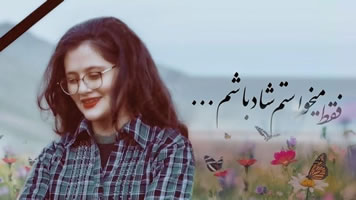
Jina Mahsa Amini, 22-year-old Kurdish woman from Seqiz, dies after being arrested by Iranian “moral police” during protests against her death and against hijab
Deutsch (original) · Auto-translated to English
dossier
“…According to her brother, 22-year-old Jina Mahsa Amini was taken into custody by the morality police in Tehran on Tuesday evening because she did not wear her hijab as required. (…) Less than two hours after her arrival at the station, Amini was driven out of the building in an ambulance, and shortly afterwards doctors at the Kasra Clinic in Tehran diagnosed her as brain dead. (…) Jina Mahsa Amini was beaten in the prisoner transport by officers of the Iranian moral police. According to witnesses, she was further mistreated at the station. (…) Protests after the death of Jina Mahsa Amini in front of the Kasra hospital were violently dispersed by the Iranian police. Arrests were made here too…”ANF report from September 16, 2022  with lots of photos – see also our dossier:For an immediate stop to deportations to Iran and a right to remain for Iranians andthe most important information sources at the bottomand here updates on the status of the #IranRevolutionfrom 2024 and 2025(see also2022and2023):
- On September 16, 2022, Jina Mahsa Amini died in Iranian police custody - the regime is also commemorating the fourth anniversary: with another wave of repression

- The woman whose death shocked Iran's regime
“On September 16, 2022, Jina Mahsa Amini died in Iranian police custody. The death of the young woman, who was accused of violating Iran's headscarf law, triggered an enormous wave of protest and global solidarity under the slogan “Woman, Life, Freedom”. What's left of it four years after Jina's death?
In Saqqez, the northwestern Iranian hometown of Jina Mahsa Amini, additional cameras have been installed and security forces have been posted these days. And the Amini family was warned not to hold memorial services.
Although the regime crushed the 2022 revolt militarily, it was unable to close the social rift it left behind. Despite arrests, lawsuits and business closures, women still appear in public spaces without hijabs. Morality patrols are returning in Isfahan, and controls are being tightened in Rasht and Mashhad. The regime can raise the price of dissent. The public rejection of the state's control over the female body cannot undo it.
Political prisoner Warishe Moradi describes the movement as a break with conditions based on domination, violence and inequality. Jina's father Amjad Amini wrote on the anniversary that his daughter's name had grown beyond the family's "small house" and that people's affection had brought "thousands of children" to the family. These sentences do not describe a political organization. They describe something more persistent: a changing social attitude.
But this is exactly where the unsolved problem lies. What can be combined under a common slogan does not yet result in a common idea of what a political order after the Islamic Republic should look like. The January 2026 protests made this clear again. (…)
Four years after “Woman, Life, Freedom” the sober conclusion is: The Islamic Republic continues to have the monopoly on violence and is expanding its means of deterrence. Your opponents have not built up a comparable political counterpower. The regime can clear the streets, block communication channels, and intimidate families. What it can't do: turn back the clock. It has not restored the state before September 2022. That's little. But it's not nothing.” AComment by Nima Mina from September 15, 2026 in IranJornaland many more examples: - Wave of arrests in Oshnavieh in the run-up to the general strike in Kurdistan
“Iranian government forces conducted raids on homes in Oshnavieh (Shno) in the early hours of Tuesday, September 15, 2026, arresting several young people and using violence. The raids came ahead of the fourth anniversary of the state-sponsored killing of Jina Amini and amid a call by the Alliance of Political Parties of Iranian Kurdistan for a general strike in various cities across Kurdistan.According to information obtained by the human rights organization Hengaw, government forces carried out the raids without warning, entering residents' homes and using force during arrests…” EnglishHengaw notification from September 15, 2026(machine translated) - Ten civil society groups in Iran vow to continue the fight for freedom ahead of the fourth anniversary of the assassination of Mahsa Amini
“As Iran approaches the fourth anniversary of the “Women, Life, Freedom” uprising, a diverse group of unions and civil society organizations have released a joint statement reaffirming the movement's demands for freedom, equality, economic security and an end to repression and executions. What is notable about the statement is that it brings together ten groups representing different sectors of Iranian society, including oil workers, care workers, pensioners, women's rights activists and anti-death penalty activists. Their joint call underscores the ongoing breadth of resistance to state oppression and the persistence of the movement's core demands beyond the mass protests of 2022. (…)
This new statement from voices from Iran comes against a backdrop of escalating repression in the country, including mass arrests, executions, restrictions on civil society and increased pressure on activists and protesters. In such an environment, publicly speaking out against state policies and repression can pose significant risks for signatories of such statements.
The signatories also link the Women, Life, Freedom movement to the January 2026 protests, which were met with a deadly massacre by the state that killed thousands of demonstrators, and argue that the movement has continued to evolve despite repeated attempts at repression by authorities. In their statement, they further reject the use of war and a tightened security environment as justification for increased repression and warn that the ongoing crackdowns have failed to silence the demands of the population…” EnglishReport from September 9, 2026 at the Center for Human Rights in Iran(machine translated) including the Statement by Social and Labor Organizations in Iran: On the Fourth Anniversary of the Continuing “Woman, Life, Freedom” Revolution - PRO ASYL on the fourth anniversary of “Woman, Life, Freedom”
“September 16th marks the fourth anniversary of the death of Jina Mahsa Amini. The “Woman, Life, Freedom” movement in Iran that was triggered by her death has now largely disappeared from public attention. But state repression continues in Iran, particularly against women, political activists, journalists and members of minorities. At the same time, Germany has already deported three people to Iran this year alone.
Helen Rezene, Managing Director of PRO ASYL: "The 'Woman, Life, Freedom' movement is alive. Executions, arbitrary detention and brutal persecution have not silenced it. In Iran, people continue to fight for freedom - at the risk of their lives. Germany must not abandon them. Humanitarian visas for politically persecuted and injured demonstrators must be issued quickly and unbureaucratically. The federal government has effectively reduced the issuance of humanitarian visas to a few exceptional cases. This means that particularly vulnerable opposition members are missing out a safe escape route for injured demonstrators. Many of them are stuck in third countries such as Turkey after their escape and still have to fear deportation to Iran.They urgently need safe reception and protection.”Press release from September 15, 2026– see also our dossier:For an immediate stop to deportations to Iran and a right to remain for Iranians - Women's organizations: "Jin Jiyan Azadî" is a living revolution
“Around four years after the start of the “Jin Jiyan Azadî” revolution, which was sparked by the violent death of the Kurdish woman Jina Mahsa Amini in September 2022, the Women's Organization of East Kurdistan and the Justice Organization of Kurdistan have published a joint statement. In it they describe the revolt led by women as a social process that continues to this day and that has permanently changed the conditions in Iran and Rojhilat..."Post from September 11, 2026 by ANF - Kongra Star: Women's desire for freedom cannot be broken
“On the anniversary of the “Jin, Jiyan, Azadî” revolution, Kongra Star remembers Jina Mahsa Amini and the ongoing women's resistance in Iran and Rojhilat. Repression and death sentences cannot break society's desire for freedom…”Post from September 15, 2026 by ANF - TJK-E: Making women's struggles in Iran and Rojhilat internationally visible: “Jin, Jiyan, Azadî” connects women's struggles
“Four years after the killing of Jina Amini, the TJK-E calls for greater international solidarity with women in Iran and Rojhilat. Their fight against executions, repression and patriarchal violence must be made visible worldwide…”Post from September 15, 2026 by ANF - Remembering Jina Mahsa Amini: You remain one of us
Guest commentary by Sayan Kouhzad from September 16, 2026 in the taz online - For more recent developments in Iran in 2026, see our dossier:Arrests, tear gas and deaths in increasingly widespread protests in Iran at the turn of 2025/26 – and now “liberation” through war?
- The woman whose death shocked Iran's regime
- Suspicious death of Iranian human rights lawyer causes outrage – Nobel Peace Prize winner Narges Mohammadi and other activists arrested
- Iran: Suspicious death of lawyer sparks outrage
"The death of the Iranian lawyer Khosrow Alikordi has triggered a wave of indignation among Iranian human rights activists and lawyers. Official authorities speak of a heart attack - but colleagues and relatives suspect a targeted murder. The 46-year-old from Sabzevar, living in the metropolis of Mashhad, was found dead on December 5th. Alikordi had, among others, political prisoners, including Fatemeh Sepehri, as well as relatives of those killed during protests Demonstrators were represented. The lawyer was himself in prison from February 2023 to February 2024 because he had defended political prisoners and accused and reported on the situation in prisons and human rights violations against political prisoners. In addition, his license to practice law was revoked (…) The lawyer Sina Yousefi, who lives in Germany, wrote, citing close confidants, that there were ���serious discrepancies” and indications of a crime. (…) The exiled lawyer Marzieh Mohabbi stated, citing reliable sources, that Alikordi was killed by a blow to the head. The secret service confiscated all cameras and even the family has no access to information about the case. According to lawyer Babak Paknia, a new case had been opened against Alikordi shortly before his death: “Even after he was released from prison, they did not stop putting pressure on him.” (…) Human rights lawyer Amir Raesian explained that the “direct or indirect violence of the system” ultimately led to Alikordi’s death. Local authorities accuse those raising questions about the case of carrying out “foreign propaganda.”According to reports, the secret service warned several friends of the deceased by phone not to speak publicly about the death. Alikordi's funeral took place on December 7th in his hometown of Sabzevar with great sympathy. Alikordi’s brother, also a lawyer, is currently under house arrest with an electronic ankle bracelet.” Report from December 8, 2025 in the Iran Journal - Critic of the mullahs' regime: Nobel Peace Prize winner Mohammadi arrested in Iran
"In Iran, security forces have reportedly arrested Nobel Peace Prize winner Narges Mohammadi and other activists. In addition to Mohammadi, other well-known dissidents such as political activist Sepideh Gholian were also taken into custody, according to a statement published on the Nobel Peace Prize winner's Mohammadi was awarded the Nobel Peace Prize in 2023. She received it for her fight against the oppression of women and against the death penalty in Iran as well as for her commitment to human rights and freedom. Mohammadi was unable to accept the prize in person because she was in prison in her home country. In her speech, which was read out by her children at the award ceremony in Oslo, she was under the impression of the Iranians Woman, Life, Freedom protests stated: “Western governments should not delay democracy and human rights by pursuing policies aimed at continuing the rule of the Islamic Republic.” Mohammadi had been in custody in Tehran's notorious Evin Prison since November 2021 - not for the first time. Overall, she has spent much of the past decade in prison. She has been repeatedly convicted and imprisoned over the past 25 years because of her work against the compulsory headscarf for women and against the death penalty.The 53-year-old was given leave from prison a good year ago because of health problems.” Report from December 12, 2025 in the taz online
- Iran: Suspicious death of lawyer sparks outrage
- UN Special Rapporteur: "The rights to life and freedom are currently under unprecedented threat in Iran" - Omid Sarlak is also suspected of being targeted for killing by the regime
- Society without justice. UN Special Rapporteur: “The rights to life and freedom are currently under unprecedented threat in Iran”
"When Zahra Shahbaz Tabari was sentenced to death in October, the trial lasted ten minutes. The 67-year-old Iranian was arrested in April 2025 and taken to the Lakan prison in Rasht. There she was interrogated and threatened for weeks in order to force her to confess about alleged connections to an opposition group. She denies all allegations. Her trial took place via video transmission from prison; she only saw her lawyer during the session. Her The case represents a wave of repression that has intensified dramatically in the Islamic Republic of Iran in recent months. The United Nations Independent International Commission of Inquiry recently spoke of executions on an "industrial scale" and a "serious deterioration in the human rights situation" since the war with Israel. After the Israeli attack on June 13 and the subsequent twelve-day war, the chair of the UN Commission of Inquiry, Sara Hossain, warns of the consequences Escalation: After the attacks, the Iranian government responded with a "domestic wave of repression" that further restricted access to constitutional procedures and undermined the right to life. The commission documented the arrest of thousands of people, including journalists, lawyers and human rights defenders - many simply because of their statements on social media. In the course of this, the Iranian parliament expanded the criminal offense of "espionage" and extended the death penalty classified as “false information” and further criminalized.(…) The UN Special Rapporteur on the human rights situation in Iran, Mai Sato, told the General Assembly that the Israeli and US air strikes violated international law; The end of the war brought no relief to the people of Iran. "The external aggression has fueled deeper internal repression," said Sato. "The rights to life and freedom are currently under unprecedented threat in Iran." Article by Daniela Sepehri from November 14, 2025 in New Germany online - Omid Sarlak: Victim of a murderous system. After the death of a young man, many suspect a targeted killing by the Iranian regime
"In the western Iranian city of Aligudarz, the wind blows over the hills of Lorestan, a province in western Iran. Videos on the Internet show hundreds of people crowding a narrow dirt road, many with black scarves and raised fists. "Down with the dictator!" they shout as the simple wooden coffin is carried through the crowd. Music from the Shahname, the Persian national epic, is playing on the loudspeaker. Men are reciting verses about heroism and freedom, young women throw flowers on the coffin. A father shouts into the crowd in a broken voice: "You have killed my champion here!" The dead man's name is Omid Sarlak, a 22-year-old man from Lorestan province. Just a few hours before his death, he posted a video on Instagram in which he set fire to a portrait of the Supreme Leader of the Islamic Republic of Iran, Ali Khamenei. The video was accompanied by the voice of the former Shah Mohammad Reza Pahlavi - an open provocation. Sarlak wrote: "How long should we endure humiliation and poverty? This is the moment to show you, young people. These clerics are just a stream that Iran's youth must cross." A few hours later, his body was found in a car near the Arsalan Gudarzi Stadium. According to the police, his relatives reported that they were not allowed to see the body and were pressured to accept the official version confirm (…) Little can be verified independently so far.But the contradictions in the authorities' portrayal are reminiscent of numerous similar cases: Iranian security forces repeatedly declare dead people to be suicides - whether political prisoners, activists or students. In 2018, for example, Canadian-Iranian environmentalist Kavous Seyed-Emami died under torture in Evin Prison; However, according to state authorities, he is said to have taken his own life because of the alleged evidence against him as a "spy." The regime also framed 16-year-old Nika Schakarami, who was found dead after taking part in protests at the beginning of the “Woman Life Freedom” movement as a suicide. A BBC investigation later confirmed what had long been clear to the freedom movement: security forces had mistreated and killed Shakarami. (…) Sarlak's last post on Instagram: »Show yourself now. Here is the field, prove yourself. Doesn’t every city have four brave young people? I will be the first. This last sentence in particular has been circulating on banners, graffiti and on social networks ever since. (…) Human rights groups are calling for clarification and see parallels to other deaths, such as Sara Tabrizi, a former political prisoner who was found dead under dubious circumstances in 2024 after being interrogated by security forces.” Article by Daniela Sepehri from November 14, 2025 in New Germany online
- Society without justice. UN Special Rapporteur: “The rights to life and freedom are currently under unprecedented threat in Iran”
- The gallows remains the foundation of political control in Iran - but the state has lost hegemony over women's bodies and clothing...
- World Day Against the Death Penalty: In the Name of Morning Prayer
“When the muezzin calls, they are already dead - Negin Behkam on executions and resistance in Iran
The time has come before sunrise – usually on a Wednesday morning. When the muezzin calls for morning prayers, they are already dead. The prison guards come in the dark, put blindfolds on the condemned and lead them to the gallows. The rope gets tighter, life ends. Mothers, fathers, siblings and relatives often wait outside the prison gates - until they collapse with the first call of the morning prayer. Once again, a person in Iran has lost his right to life following a ruling by the Islamic Republic under Iran's Islamic Penal Code.According to Iranian human rights organizations, at least 1,042 people were executed between the beginning of this year and the end of September alone - 171 of them in the month of September. The death penalty has long been a means of intimidation and securing power in Iran.
After China, no other country executes as many people as Iran. The executions follow a clear social and political pattern: Kurds, Baluch, members of religious minorities and people from poor backgrounds are particularly affected. The gallows not only serves political repression - it also disciplines the social margins. This is already evident in the proceedings: arbitrary confessions, torture, lack of access to lawyers, secret trials. But in recent years a new form of resistance has emerged against this state-organized killing machine. Prisoners, families of those executed, mothers of victims and civil society activists have created a movement that defends the value of life across boundaries of faith, ethnicity or political affiliation. (…)
This campaign has shown that public pressure works. In several cases, executions were postponed or verdicts were reviewed. The Iranian diaspora, which regularly organizes vigils and protests in European cities, also plays a central role in making the issue internationally visible. In a system that bases its power on “retribution” and “divine punishment,” the abolition of the death penalty remains a red line. Those voices who hope that the system can become more humane through small legal reforms overlook the fact that the gallows in Iran are not just part of the legal system, but the foundation of political control...” Article by Negin Behkam from October 9th, 2025 in ND online, but see also: - According to Jina Amini: Body, work and the social defeat of the regime
“After Woman, Life, Freedom, the hijab law in Iran has not been changed or repealed; However, in social reality, the state has failed to effectively enforce it. The streets of Tehran and other cities today look less like discipline and more like a daily referendum: women without hijabs or wearing different styles of dress move freely as the government vacillates between harsher enforcement and temporary withdrawal. In 2024, Parliament introduced the “Law on Chastity and Hijab,” but last winter an official said the process of passing it had stopped and enforcement was “not possible for now.” Shortly afterwards, Mohammad-Bagher Ghalibaf said that the Supreme National Security Council had informed parliament that the new law “should not be enacted for the time being”. The result is clear: the text remains, but the order to enforce it is stalled and uncertain at the highest level.
This pause has revealed political divisions. On the one hand, influential conservatives have openly stated that there is no “mandatory hijab law”; on the other hand, the authors of the bill and the hardliners in the media accuse the presidency and the speaker of parliament of “blocking” its passage. This domestic tension is not just a question of jurisprudence, but a struggle for acceptance of the social reality after 2022: the state can legislate, but it can no longer reproduce its previous hegemony over women's bodies and clothing. (…)
Structural violence against women is another link in this chain. A detailed report from theCenter for Human Rights in Iran  (January 2025) points to a rise in femicide and the lack of a comprehensive law against violence, from so-called “honor killings” with light sentences to laws that allow men to kill in certain circumstances. Without support systems and safe havens, domestic violence is systematically reproduced. These are not “isolated cases”, but a phenomenon based on legal and ideological foundations that treat women’s bodies as objects of patriarchal property. (…)
From this perspective, the debate over the headscarf is not just about a headscarf, but about the right to physical self-determination, the right to move freely in the city, the right to a life without violence and the right to work. The state has attempted to create “effortless discipline” through harsher punishments and smart surveillance; society has created an alternative norm through everyday disobedience. For the regime, this is a “social defeat”: the instruments of coercion still work, but they no longer reproduce the desired order. Today—with the law still in effect but no longer enforced, with police both patrolling and withdrawing, and with a generation growing up that no longer believes the official narrative—the state has lost on the hijab issue, and, by extension, on the politics of the body.” EnglishArticle by Siyavash Shahabi from October 10, 2025 at The Fire Next Time(machine translated)
- World Day Against the Death Penalty: In the Name of Morning Prayer
- Three years after the death of Jina Mahsa Amini in Iran, resistance to repression remains alive - while thousands of people are at acute risk of execution
- Iran: Thousands face execution
“The wave of executions in Iran has reached terrible proportions. Thousands of people face execution if they are sentenced to death in unfair trials for, among other things, drug-related offenses or vague and overly broad charges. Many people are currently being prosecuted because they are accused of crimes that can carry the death penalty in Iran. Since the protests under the slogan “Woman, Life, Freedom” at the end of 2022, the Iranian authorities have increasingly used the death penalty as a means of oppression. So far, over 800 people have been executed in 2025 alone. Please call for an end to death sentences and executions in the Islamic Republic of Iran!!…”Action from September 10, 2025 at Amnesty - Iran: Civil disobedience against repression. During the wave of protests in 2022, the Islamic Republic appeared to be reeling
"What has changed in Iran after the violent death of the Kurdish woman Mahsa Jina Amini on September 16, 2022? Is Iran still the same country after the revolt that shook the country and those in power in Tehran? If you asked the world-famous Iranian dissident and filmmaker Jafar Panahi, he would not hesitate to say no. The director, who was sentenced to six years in prison, was released on bail in February 2023. The Mahsa Amini's death in custody in 2022 prompted a generation in Iran to no longer remain silent in the face of the Islamic Republic's oppression. "When they took her life, a veil of lies was lifted and a generation rose up and decided to no longer be silent," Panahi wrote in a post on Instagram, as reported by the London-based foreign broadcaster Iran International (...) In fact, the protests have brought about a change that goes deeper than can be seen on the surface In Iranian cities, many women walk through the streets without a headscarf, the revolt has strengthened the younger part of the population in particular, giving them courage that protest and resistance are not in vain. The civil disobedience that can be observed everywhere shows what is possible. The people in Iran feel that the Iranian regime is weakened, especially after the war with Israel, which has spread fear of impending doom among those in power. "First and foremost, the Women's Life Freedom Movement may have changed the opposition itself." Tareq Sydiq explains to »nd«.He works as a research assistant at the Center for Conflict Research at the University of Marburg and did his doctorate on social protests in Iran. Taking off the headscarf has become a more common practice and dissatisfaction with the system is becoming visible. »Large parts of the population simply no longer cooperate with the authorities in enforcing the hijab requirement. A regime change was also seriously discussed, previously unthinkable in large parts of the opposition, which had preferred change from within," adds Sydiq. The fact that the courage to stand up against unjust conditions has grown can also be seen in the numerous protests over water shortages and mismanagement. Workers at Iran's largest aluminum factory have been on strike for 45 days, various media reports. According to Iran Journal, they protested against poor working conditions and starvation wages. Because the authorities are ignoring their demands, the workers have now gone on hunger strike. According to labor activists, the government has sent Tehran security police to the factory site in the central Iranian city of Arak. (…) The Norway-based organization Iran Human Rights has documented at least 913 executions in Iran since January. Last year, Iran carried out a total of 975 death sentences, second only to China in the world. Since the war with Israel in June, a "wave of repression" has been underway, say Human Rights Watch and Amnesty International: over 20,000 people were arrested during and after the conflict. Tareq Sydiq notes that the Islamic Republic has a certain degree of flexibility, which it has also brought through the decentralized protests since 2022.New forms of repression and surveillance have replaced the old ones. “A lot will depend on how effective these newly established surveillance systems are and how effective the attempt is to restore the legitimacy of the system from the perspective of the population,” he explains to “nd”. The past has shown that protests can break out again at any time for a new reason as long as the discontent remains. "The open question remains how many such episodes the system can survive without initiating a change of course or provoking an upheaval." Article by Cyrus Salimi-Asl from September 15, 2025 in Neues Deutschland online - Frankfurt Conference reaffirms the goals of the “Jin, Jiyan, Azadî” movement. Three years after the death of Jina Mahsa Amini, exile organizations in Frankfurt are taking a stand against repression and for justice
"An international conference calls for remembrance, processing and solidarity with the ongoing resistance in Iran. Three years after the outbreak of the "Jin, Jiyan, Azadî" revolution in Iran and East Kurdistan, activists from different parts of the world reaffirmed the goals of the movement at an international conference in Frankfurt. The focus of the event was the demand for justice for the victims of state violence, the strengthening of transnational solidarity and the recognition of the central role of women in social change. Sunday's conference was organized to mark the approaching third anniversary of protests following the death of Jina Mahsa Amini. The 22-year-old Kurdish woman died in police custody by the Iranian moral police in September 2022. Her death sparked nationwide protests against the authoritarian regime in Tehran, which received worldwide attention under the Kurdish slogan “Jin, Jiyan, Azadî” – woman, life, freedom. (…) The conference was organized by the “No to Execution, Yes to Free Life” campaign in collaboration with the Democratic Platform of Iran (DPI). She was supported, among others, by the Association of Women from Kurdistan in Germany (YJK-E) and the Kurdish Women's Council Amara. (…) Particular attention was paid to the role of women as the driving force of the movement. Among those speaking in the panels were former Afghan senator Belqis Roshan, Bundestag member Janine Wissler (Die Linke), Amina Omar from the Women's Council of North and East Syria and Maryam Fathi, representative of the Community of Free Women in East Kurdistan (KJAR).They emphasized the need to understand gender-specific oppression as a structural problem of authoritarian regimes - and the central importance of feminist perspectives for future transformations. (…) In the final declaration, the organizers called for keeping the movement alive – through regular exchange formats, digital events, international campaigns and the expansion of global networks. “Our being together is in itself a revolutionary act,” says the joint statement. No state pressure can silence the voices of women, young people and all those who demand freedom and dignity.” Report from September 8, 2025 by and at AFN News - TJK-E on the anniversary of “Jin Jiyan Azadî”: The resistance is alive
“Three years after the death of Jina Mahsa Amini, the Kurdish women's movement reiterates its support for the revolt in Iran. With the formula “Jin Jiyan Azadî” it calls for global solidarity and a determined fight against oppression. In a statement released on the anniversary of Jina Mahsa Amini's arrest, the TJK-E paid tribute to the victims of the uprising and emphasized the continued importance of the movement: "For democratic change and a free life, a women's revolution is needed." Amini, who was arrested by the moral police in Tehran on September 13, 2022 for an alleged violation of the Islamic dress code and died three days later as a result of violence suffered in custody, has become a symbol of a social awakening that extends far beyond Iran's borders…”Report from September 15, 2025 at ANF - See also “Three years of “Woman, Life, Freedom” – Solidarity means protection in Germany! PRO ASYL and HÁWAR.help demand protection and a nationwide stop to deportations to Iran” in the dossier:For an immediate stop to deportations to Iran and a right to remain for Iranians
- Iran: Thousands face execution
- The next Iranian massacre is taking place in front of everyone: after Israel's air and missile attacks, repression is rolling out in Iran
- After the war, repression continues in Iran
“In the shadow of oppression and crisis, Iranians are suffering from enormous disruption to the water and electricity infrastructure (…)
Israel's successive air and missile strikes not only targeted military and strategic infrastructure, but also made everyday life difficult for millions of people. From prolonged internet outages and disruptions in banking services to the suspension of parts of public transport and reductions in the capacity of medical centers - almost all aspects of public life were affected.
The trauma that citizens, especially children, experienced in these twelve days will continue to affect them for a long time. Many were reminded of the eight-year war between Iran and Iraq, except this time people saw the immediate impact of destructive technology. Although the armed conflict was to be expected, it came as a great shock to the people. Three years ago they had shouted the slogan “Jin, Jiyan, Azadi” – “Woman, Life, Freedom” – in one of the most progressive social protest movements, but now they found themselves in the middle of a war that was not theirs and over whose beginning or end they had no influence whatsoever. Iranians experienced a rollercoaster of emotions: joy over the deaths of criminals who played a key role in killing citizens during the protests; Grief over the deaths of innocent children and civilians; Anger over the attack on Evin Prison; and fear of an uncertain future in the shadow of war.
Deterrence through fear
Following the ceasefire and the easing of external tensions, the Islamic Republic of Iran is experiencing widespread unrest due to infrastructure problems. The government is reacting to the fragile internal situation with power consolidation and repression: "During the 12-day war and afterwards, around 2,000 people were arrested because of their connections to the enemy," said justice chief Gholam-Hossein Mohseni-Ezhei recently, according to the Iranian state news agency Irna. This number has risen frighteningly quickly since the first hours of the war. (…)
Execution of political prisoners
In addition, Amnesty International recently announced that three prisoners named Ruzbeh Vadi, Shahin Basami and Afshin Ghorbani Mishai are about to be executed on charges of "collaboration or association with Israel." There are also serious concerns about the situation of some prisoners such as Ahmadreza Jalali, a death row dual national and political prisoner. His wife Vida Mehrannia recently stated that she has had no information about his condition or whereabouts for a month. These cases are just a small sample of the cruelty of the Iranian judicial system in dealing with dissidents and critics.
Motahareh Gunei, a former student activist and prisoner, recently published a shocking report detailing her arrest and theIsraeli army airstrikes on Wing 209 of Evin Prisondescribed…”Article by Negar Jokar from July 31, 2025 in ND online - Iran: 20 executions in just one week
“The Iranian regime has executed at least 20 people in just one week, according to the “Tuesdays Against Executions” campaign. According to the “Tuesdays Against Executions” campaign, there were at least 20 executions in just one week in Iran and East Kurdistan. The executions took place in various prisons across the country, the initiative said today. The victims are also said to include political prisoners and members of ethnic and religious minorities.
Almost 1,500 executions since Peseschkian took office
According to the campaign, at least 1,477 people have been executed since President Massoud Peseschkian took office a year ago. This number, which the campaign assumes is actually much higher, not only reflects an increasing practice of repression, but also documents the systematic use of the death penalty as a means of political pressure…”ANF report from July 29, 2025 - Iran's wave of executions – a regime in the fight for survival
“There is a risk that the already poor human rights situation in Iran will worsen, says Negin Behkam (…) UN criticizes “worrying” increase in executions in Iran: In the first half of 2025, more than twice as many people were executed in the country as in the same period last year. The numbers reveal the brutal reality in Iran and at the same time the desperation of a regime that sees its authority waning. However, they largely refer to the period before the war between Israel and Iran. A massive wave of repression followed during the twelve days of the war and afterwards. The Iranian judiciary itself speaks of over 2,000 arrests on suspicion of alleged spying for Tel Aviv - an accusation that can be punished with the death penalty in Iran…”Article by Negin Behkam from July 29, 2025 in ND online - The next Iranian massacre is taking place in front of everyone
“The regime is reviving its darkest tactics - and testing the world's willingness to act.
As a former international prosecutor, I am compelled to speak out against the escalating human rights violations in Iran, which recall the darkest chapters of that country's history and require a sustained international response. This is not just about justice for the victims, but also about the world's credibility in preventing mass atrocities.
The Islamic Republic of Iran has never hesitated to use lethal force against dissent. A stark example of this occurred in 2019, when hundreds of Iranians were shot dead for protesting fuel price increases. Despite the international outcry, this bloodshed was only the beginning, not the climax. (…) In 2023 more than 850 people were executed. In 2024 the number approached 1,000. This year, a UN special rapporteur warned that Iran would surpass that figure again. (…)
The regime's response to its perceived vulnerability in the wake of this conflict has become increasingly aggressive. While his failures can be attributed to incompetence and foreign penetration of his security services, his anger is directed at domestic opponents. Thousands of Iranians are in danger as parliament moves to speed up death sentences in cases involving alleged collaboration with foreign organizations. If current trends continue, the number of executions in Iran by 2025 could exceed the number of all executions in modern history - with the possible exception of the horror of 1988. (…)
Some experts and policymakers have already started sounding the alarm. On July 4, 10 experts at the UN Human Rights Council condemned the crackdown that began with the start of the 12-day war on June 13, noting that state media rhetoric, including calls for "surveillance" and "killings," echoed the regime's previous justifications for the "1988 atrocities." Impunity leads to impunity. It is the duty of global institutions to act now…” EnglishArticle by Stephen J. Rapp from 7/24/25 in the Washington Post online(machine translated) – Stephen J. Rapp was Director of Prosecutions at the International Criminal Tribunal for Rwanda and Prosecutor at the Special Tribunal for Sierra Leone. From 2009 to 2015 he was US ambassador for war crimes issues. - Iran: More political death sentences in brutal crackdown on minorities
“Torture, forced confessions and sham trials fuel the state's deadly campaign against Kurds and Arabs
The Iranian government is increasingly using the death penalty as a political weapon to suppress dissent, terrorize restive ethnic minorities and consolidate its power following the recent conflict with Israel, the Center for Human Rights in Iran (CHRI) said today.
In recent weeks, courts have sentenced scores of political prisoners – many of them Kurds and Arabs, but also participants in the 2022 “Women, Life, Freedom” protests – to death on alleged national security charges. This happened in extremely unfair trials in which “confessions” obtained under torture were substituted for real evidence, according to CHRI research; "These are not trials. They are state-staged performances designed to bring death and instill fear," said Bahar Ghandehari, CHRI director of advocacy…” EnglishReport from July 16, 2025 at the Center for Human Rights in Iran(machine translated)
- After the war, repression continues in Iran
- Iran: At least 150 people arbitrarily arrested in connection with the Iran-Israeli war, including musician Toomaj Salehi again arrested
- “We are deeply concerned for #ToomajSalehi's safety following reports of his arrest and disappearance. We urge the Iranian authorities to disclose his whereabouts and release him immediately. #FreeToomaj“EnglishPost from Index on Censorship 6/19/25 on bsky and also:
- “Rapper and dissident #ToomajSalehi was arrested in #Iran. This was announced by his official X account. One of the loudest voices against the mullahs should be silenced. The war with Israel is being used to crush the opposition. Toomaj's life is in danger!“Post by Düzen Tekkal from June 19, 2025 on bsky with photo by Toomaj Salehi
- “Rapper and dissident #ToomajSalehi was arrested in #Iran. This was announced by his official X account. One of the loudest voices against the mullahs should be silenced. The war with Israel is being used to crush the opposition. Toomaj's life is in danger!“Post by Düzen Tekkal from June 19, 2025 on bsky
- IRAN. At least 150 people arbitrarily detained in connection with the Iran-Israeli war.
FrenchReport from June 19, 2025 at kurdistan-au-feminin.fr, see thatHengaw Report : Widespread arbitrary arrests as the Iran-Israel war continues - At least 150 arrests - The people of Iran are alone
“While bombs are falling, the people of Iran are being betrayed from all sides, comments Negin Behkam (…)
There is currently no reliable official information on the number of victims in Iran. For the Iranian leadership, it seems to be of secondary importance how many civilians are injured or killed in their own country. Apparently more important to her is how much damage she can inflict on Israel. The suffering of one's own population does not play an important role in this logic.
Parts of the Iranian exile opposition are again playing a questionable role in this tragedy. The right-wing opposition in particular - especially the supporters of the Shah's son Reza Pahlavi - support Israel's attacks under the pretext of resistance against the Islamic Republic. They see the fact that civilians are killed and parts of the cities are destroyed as merely “collateral damage.” Just like Western politicians do. This is one thing above all: inhumane.”Comment by Negin Behkam from June 20, 2025 in ND online - Repression in Iran: Oppressed by the regime and threatened from outside
“Iranian civil society, which opposes the mullahs' regime, does not want to be “liberated” by Israeli bombs. (…) “Tehran is home to ten million people,” writes Mohammadi. "There are kindergartens, schools, hospitals, factories, workers, homeless people, women who support their families alone. How are we supposed to carry them all out on our shoulders?" Israel's nightly warning to residents of District 18 to evacuate the area is cynical, many say. In the middle of the night, with limited internet, no sirens, no bunkers, no protection – how are millions of people supposed to flee?
The dissident rapper Toomaj Salehi, who was arrested and sentenced to death during the "Woman, Life, Freedom" movement, also criticizes this: "'Evacuate Tehran' is nothing more than a populist slogan that will later be used to claim: 'We had no intention of killing Iranian civilians. They simply refused to leave the war zone.'" The people are not a party to the war, but hostages - and whoever kills them should at least be as honest as to admit that. Salehi has now been arrested again. His fate is uncertain.
The war between Israel and the Islamic Republic primarily affects those who stand between the fronts: civil society, which opposes the mullahs' regime but also does not want to be “freed” from bombs. “The final victory of the independent, civilian ‘Woman, Life, Freedom’ movement will never be achieved through an invasion by the Israeli army,” writes young activist Hasti Amiri. The photographer and former political prisoner Alieh Motalebzadeh remembers the last few years: “We were all often injured and experienced a lot of suffering during these years on the way to a free Iran. (…)
Fear is growing in prisons. The security staff has been increased. On the Friday after the Israeli attacks, political prisoners in Qezel Hesar Prison were only allowed to make one telephone call, after which the lines were dead. It was only on Monday that there were signs of life again. The prisoners report that the wings are locked at night, as are the prison gates from the outside. The guards are then also locked up. If a bomb hits, no one can get out…”Article by Daniela Sepehri from June 20, 2025 in the taz online - See also the dossierIsraeli attacks on Iran: Bombs do not overthrow a dictatorship
- “We are deeply concerned for #ToomajSalehi's safety following reports of his arrest and disappearance. We urge the Iranian authorities to disclose his whereabouts and release him immediately. #FreeToomaj“EnglishPost from Index on Censorship 6/19/25
- Wave of repression in Iran in the wake of Israeli air strikes: new arrests and executions
"Iran's regime is increasingly taking action against critics in the wake of the new Israeli air strikes. The NGO Iran Human Rights warns of executions.
“They can't even protect their own commanders!" tweeted activist Motahareh Goonei in Iran. She criticized the government for its reactionto the Israeli airstrike on Fridayand instead called for protective measures for the population. She was arrested less than two hours later. Goonei had already been detained during the 2022 “Women, Life, Freedom” protests. Now she is once again in the regime's sights - because she publicly demanded that the state protect its citizens.
Her arrest is part of the escalating repression since the recent Israeli airstrikes - an attack that experts classify as violating international law. Just a few hours after the attack, the Attorney General of the Islamic Republic threatened the population with criminal consequences if they made “false statements” about the war and thereby “endangered public safety.” The unmistakable warning was the start of a wave of arrests that the country is already familiar with.
Retired teacher Masoumeh Shahnavaz was arrested on Friday evening. Then on Saturday Goonei. In Kerman province, the regime arrested two people for alleged “collaboration with Israel.” In Shahrekord, another person was detained on charges of “disrupting the intellectual security of society” – a code often used to criminalize dissident speech. On Sunday, the state news agency Tasnim reported the arrest of 21 people in Semnan province - all for comments made on social networks. (…)
At the same time, the regime is using the current foreign policy escalation to intensify old patterns of repression: On Monday, Esmail Fekri was executed for alleged spying for Israel - an accusation that is usually made to political prisoners without evidence in order to execute them. The human rights organization Iran Human Rights had already warned before the weekend that Fekri's life was in immediate danger…”Article by Daniela Sepehri from June 16, 2025 in the taz online(“Wave of repression in Iran: new arrests and executions”) – see, among other things, ongoing reporting byhttps://hengaw.net/en and also our dossierIsraeli attacks on Iran: Bombs do not overthrow a dictatorship - Majid Kourkour, Woman Life Freedom Protestor Executed
“Majid Kourkour (also known as Mojahed Kourkour), a protester from the city of Izeh, was executed early on Wednesday morning, June 11th. The Iranian judiciary held him responsible for the death of nine-year-old Kian Pirfalak, who was killed during the Women's Lives Freedom protests on November 16, 2022. The execution reportedly took place in Sheiban Prison in Ahvaz. The Mizan Justice Agency described the executed man as one of the “main actors of the unrest” in Izeh. The day before, numerous human rights activists had warned of an impending execution. Kourkour's family has already been invited to the prison for a final visit. The execution took place on the birthday of the murdered child Kian Pirfalak…”Report from June 11, 2025 in the Iran Journal - Iran: Zeynab Jalalian's health is deteriorating - The Kurdish woman Zeynab Jalalian has been imprisoned in Iran for 17 years - and is the only woman with an increased life sentence
"... Kurdish political prisoner Zeynab Jalalian, imprisoned in Iran and serving a life sentence for 17 years, does not receive any medical treatment despite her deteriorating health. This is reported by the human rights organization HRANA, citing information from the prisoners' environment. Jalalian suffers from various health problems as a result of the poor prison conditions and mistreatment in Iranian prisons. In addition to heart disease and limited vision, she is partially paralyzed and struggles with intestinal and kidney diseases and for chronic tooth and jaw infections that severely affect her ability to eat and swallow. According to HRANA, Jalalian received appropriate treatment at an external hospital, but the prison management in Yazd prison refused to transfer her. “This situation increases her family’s concerns about her health.” (…) Zeynab Jalalian (also spelled Celaliyan) was born in 1982 in a village near Makû and campaigned for women's rights in Iran from an early age. In the spring of 2008, she was arrested in Kirmaşan and severely tortured for eight months in an Iranian Ministry of Intelligence facility before being sentenced to death in an unfair sham trial for “enmity against God” on charges of membership in the Party for a Free Life in Kurdistan (PJAK). After international protests, Jalalian's death sentence was commuted to life imprisonment in 2011. She is currently the only female prisoner in Iran to receive this sentence.In recent years, Jalalian has also been repeatedly blackmailed by the regime into signing a preconceived “certificate of remorse.” For this she was given the prospect of medical treatment and even a conditional discharge. The Kurd refused this…” Report from May 17, 2025 in AFN News - The Kurdish women's activist Varisheh Moradi, sentenced to death, is denied medical treatment in Evin prison despite the acute danger to her life
- Varisheh Moradi's life is in danger in Iranian custody
“The health of Kurdish activist Varisheh Moradi, imprisoned in the notorious Evin prison, has deteriorated dramatically. The authorities refused to give her an operation that was urgently recommended by a doctor.
The Kurdish woman Varisheh Moradi, who is imprisoned in Tehran's notorious Evin prison, is in acute danger of her life. Despite an urgent medical recommendation, the Iranian authorities refused to transfer her to a medical facility - a move that, according to the campaign “No to Execution, Yes to Free Life!” amounts to intentional endangerment of their lives. The initiative calls for immediate medical attention and release of Moradi and an end to the “systematic denial of medical assistance,” which is increasingly being used in Iran as a method of state repression against political prisoners. Moradi, an activist with the Community of Free Women of Rojhilat (KJAR), the umbrella organization of the Kurdish women's movement in East Kurdistan and Iran, was sentenced to death by the Iranian judiciary for "armed insurrection." The sentencing was carried out by the Revolutionary Court in Tehran, presided over by Judge Abolqasem Salavati - notorious for his harsh sentences against political prisoners. According to human rights organizations observing, the negotiations were grossly unfair…”ANF report from March 29, 2025, see also: - Evin Prison: Varisheh Moradi denied medical treatment despite critical health condition
“Varisheh Moradi, a Kurdish political prisoner, women's rights activist and member of KJAR (Society of Free Women of East Kurdistan), was sentenced to death by the Iranian judiciary for "armed insurrection." Despite her urgent medical needs, she is denied treatment due to obstacles from government authorities, particularly Evin Prison officials. (…) Sources familiar with the matter report that Moradi suffers from lumbar and cervical discopathy. Despite a specialist's strong recommendation for immediate surgery three months ago, authorities have deliberately blocked her medical care. Hengaw previously reported that Moradi was subjected to severe torture at the Ministry of Intelligence prison in Sanandaj. In one case, she vomited blood and lost consciousness due to the intensity of the torture…”Report from March 30, 2025 at Hengaw
- Varisheh Moradi's life is in danger in Iranian custody
- Anti-hijab protesters held without trial in Evin prison
“Farzaneh Mohammadi Parsa remains in detention more than 90 days after her arrest, with no formal charges filed, according to human rights monitors. Mohammadi Parsa is currently being held in the women's ward of Evin Prison after spending over 40 days in Ward 209, a Ministry of Intelligence detention center, the Human Rights Activists News Agency (HRANA) reported on Wednesday. Authorities have denied her bail and no formal charges have been filed against her since her arrest on December 25, 2024. A source close to the family said her arrest was related to her protest against compulsory hijab in Tehran. The source added that security forces physically attacked her during her arrest at her home in Tehran.” EnglishReport from March 27, 2025 in Iranwire(machine translated) - Report by the UN Committee of Inquiry shows how the Iranian state is using drones and reporting apps specifically to suppress women and protesters
- Findings from UN report Iran monitors “hijab laws” with drones and reporting app
“Iran is increasing its pressure on women in its own country. According to a report by the United Nations, moral watchdogs are now using the latest technology to hunt down deviants. The Iranian regime is taking increasingly perfidious approaches to monitoring women. According to a United Nations report published on Friday, the state is now increasingly relying on technology to enforce "hijab laws" in the country. Accordingly, drones, facial recognition systems and a special citizen reporting app would be used. They are intended to make it easier for the authorities in the future to punish women who defy the prescribed dress code.
App for denouncing
The center of the monitoring system is the “Nazer” app. It is a government-backed tool that allows citizens to report women for alleged violations. Nazer users can upload the license plate number, location and time of a vehicle in which a woman is not wearing a hijab. The app then marks the vehicle online and informs the police. A real-time text message is also sent to the registered vehicle owner informing them that the car may be impounded…”Article by Jonas Breng from March 15, 2025 in Spiegel online - The EnglishReport of the United Nations Special Committee
- UN committee: Iran uses digital suppression technology
“A new report from the UN Committee of Inquiry shows how the Iranian state is using digital technologies to specifically suppress the population. From increased surveillance to repression of women and protesters, the regime is using apps, drones and intimidation tactics to nip any opposition in the bud. The report also documents extrajudicial killings, torture and sexual violence in custody…” more extensiveArticle from March 16, 2025 in IranJournal
- Findings from UN report Iran monitors “hijab laws” with drones and reporting app
- Hengaw report on the systematic violation of women's rights in Iran on the occasion of March 8th
“This documented report, prepared on the occasion of March 8, 2025, addresses the violation of women's rights in Iran in 2024. It covers the execution of women, the arrest of women, the conviction of women and the cases of femicide in Iran last year. According to the Statistics and Documentation Center of the human rights organization Hengaw, in Yes
Read the full story at the source
Source: labournet.de