
Politics · Labour Hub · · 41m
Violence against women and girls: the gigantic bull elephant in the room
English (original) · Read in Deutsch ⇄
According to a recent National Police Chiefs’ Council report, violence against women and girls (VAWG) now adds up to twenty percent of all crime and is seen by police as a national emergency. In response, Labour under Keir Starmer committed to halving the instances of VAWG in the next ten years via changes to policing. In addition there will be support for policies to educate young people about healthy relationships.
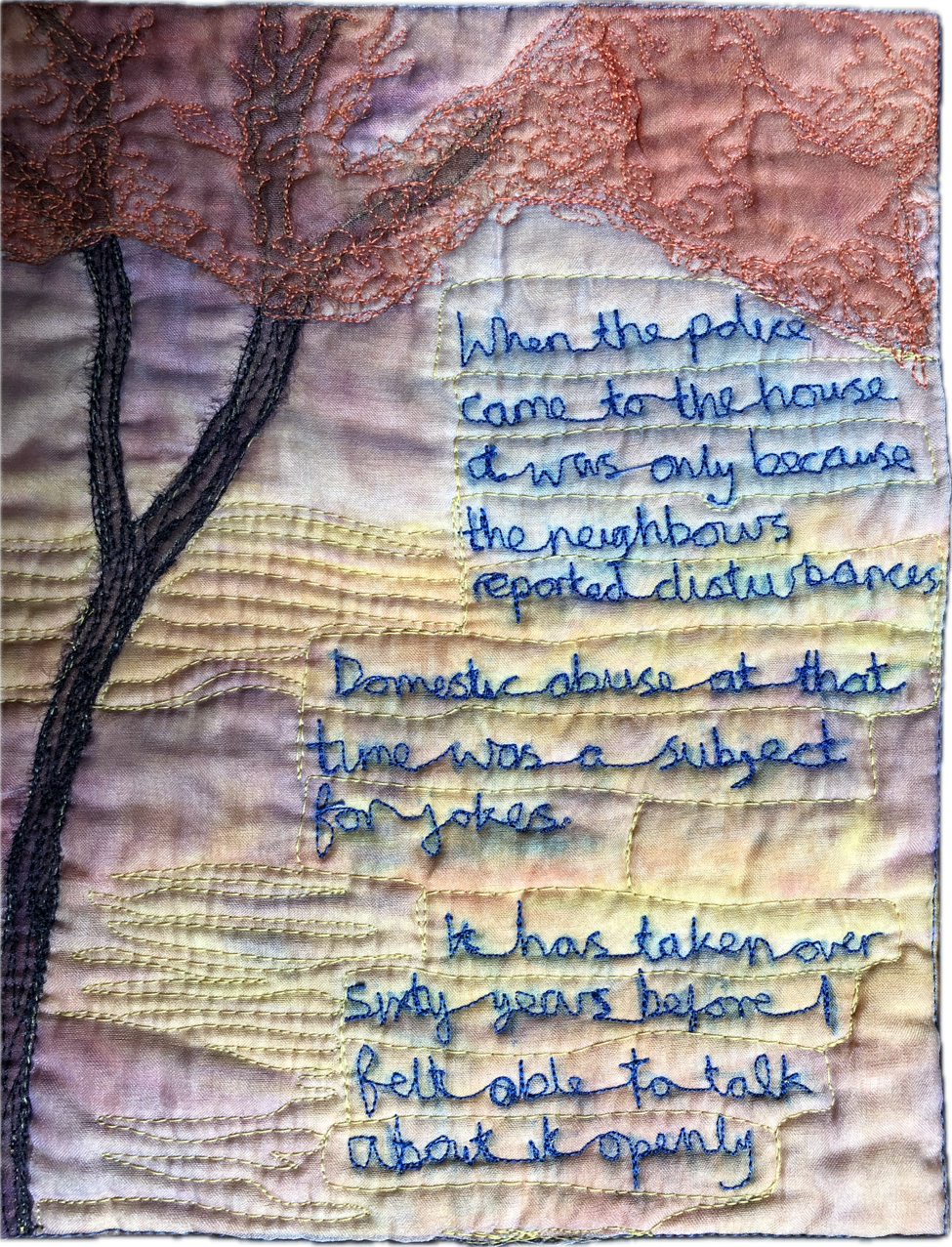
This is an improvement on what happened in the past. My mother was abused by my stepfather: police suggested she might try being nicer to him (in those days they were unlikely to intervene in something regarded as ‘only a domestic’ and it was considered acceptable for husbands to ‘chastise’ their wives for disobedience including physically). Near the end of the last century, those of us involved as trainers in the Leeds Inter Agency Project (VAWG) discovered there was a huge amount to be done in terms of challenging received attitudes and beliefs. And we still hear reports of police involved in attacks on women as well as examples of forces where misogyny is prevalent. Getting the police fully on board has to be a welcome improvement, providing misogyny within the force itself is also tackled.
But policing, no matter how efficient, is not enough to end VAWG, For a start, violence is massively underreported. The legal definition includes not only physical abuse but areas such as emotional, psychological, economic and other forms; this is not widely understood. Many women and girls doubt whether they’ll be taken seriously. There’s reluctance to abandon relationships they’ve committed to, shame that they’ve not been able to improve relationships, fear of repercussions, concern for family members and children, anxiety about being judged inadequate themselves. I found myself unable to be open about violence in my family for over sixty years.
In communities previously subjected to police racism, for example black communities, reporting a partner or family member feels like betrayal. Disabled women don’t risk reporting partners who are their only carers. Migrant women who have no recourse to public funds find it impossible to leave abusive relationships. For Roma women, refusal to leave their own community risks having children taken away. In addition, violence is often occasional rather than constant and even when that’s not the case, women may not wish to abandon a relationship they have committed time and love to.
For many of us the most important concerns about current Labour policies include the fact that there is insufficient attention given to the need to support and empower the women affected; there also seems to be little concern for or understanding of the deep-rooted misogyny in society: it’s the gigantic bull elephant in the room that those in power are determined not to see.
The Fawcett Society’s article Gender Stereotypes in Early Childhood: A Literature Review includes research investigating parental responses to babies; boy babies are expected to be lively and active and need entertaining while girl babies are expected to be quieter and need soothing if they became restless. Forty-five percent of adults interviewed said that as children they experienced gender stereotyping, bringing negative consequences for both women and men: fifty-one per cent of respondents experienced constraints in terms of career choices and forty-nine per cent felt stereotyping had harmed relationships. The report summarised: “Gender stereotypes hold us all back… boys who cannot express their emotions… go on to be part of a culture of toxic masculinity which normalises violence.”
In 2022, Women’s Aid conducted a survey of attitudes to domestic violence, including a significant number of young people. Thirty-four per cent of respondents believed violence was due to ‘bad people’ rather than being enabled by misogyny. They also saw abusers’ perceived wellbeing or repentance as an excuse for abusive behaviour. Two-thirds of those interviewed believed a husband was not wrong to slap his wife if he later apologised. Even worse, young people exposed to social media were five times more likely to find violence acceptable if the perpetrator apologised later and were more likely to believe that there should be a more dominant partner in any relationship. This is extremely worrying given that the largest proportion of abuse occurs in the sixteen to twenty-four age group.
Work to counter misogyny can’t be left to Personal and Social Education classes for teenagers. By that time attitudes have hardened and are less likely to change. Pockets of useful work have been done with younger children by committed teachers, LEAs, schools, organisations supporting women and children and by unions such as the NEU. But pockets don’t add up to a whole garment.
Another problem is that a great deal of policy development is top-down whereas much of the real expertise has been developed at grassroots level. The NEU’s Breaking the Mould and work done with UK Feminista could be a starting point for national guidelines along with work from a growing number of other organisations. Teachers report sexist stereotyping amongst primary school children; many have committed to changing that. Support for children who have witnessed or experienced violence is also vital. Labour policy needs to respect and build on the work already done in order to achieve change.
Another area neglected in current government policy is support for refuge accommodation, vital to enable women to escape violence and rebuild their lives. Refuges providing emotional, psychological and practical support have seen their share of casualties: funding from local government has been affected by cuts to council budgets. Many have had to close, and support for black and disabled women (both disproportionately affected by male violence) has been lost as a result, together with a lack of provision for refugees, asylum seekers and especially trans women, as well as those living in rural areas. Women either continue to be affected by violence or end up homeless as a result.
The language used to talk about women experiencing violence describes them as ‘victims’, weak and unable to overcome the abuse they’ve been subjected to; it also buys into the offensive idea of women being regarded as ‘lesser’. I know from my experience of watching my mother cope that surviving takes a massive amount of strength and determination. They deserve to be called survivors.
Involvement with Leeds Women’s Aid, a local inclusive organisation, makes me aware of the difference that unquestioning practical as well as emotional and psychological support makes for survivors. This also needs to include support to be financially independent, including updating skills to empower women. This should include access to training where needed and wished for to enable women to develop new skills including better waged occupations formerly seen as specifically male.
Interagency work can make a difference. But schemes vary – on occasion involving only senior managers, top down thinking and male dominated. I was fortunate enough to be part of the Leeds Inter Agency Project towards the end of the last century which did things differently. It included a mixture of both those representing statutory bodies like Police, legal experts and Social Services but also a number of community representatives and third party organisations such as Victim Support and Rape Crisis, Leeds Women’s Aid and Sahara which gave specific support to Black Asian and minority ethnic women including for speakers of languages other than English.
It also included – unusually for the time but definitely needed and valued – representation from the LEA and the city council’s housing department. It helped that the leader of Leeds City Council (now a Socialist Campaign Group MP) was supportive. The organising group included a majority of women and decided we would take a specifically feminist approach. We reached out to numerous organisations and developed an intensive two day training programme allowing for participants to examine and evaluate the assumptions they brought to the sessions. Longer term, it has succeeded in going some way to improving matters for local women and girls affected by violence and it’s important that such experience informs national policy.
We need the government to listen to women and focus on meeting our needs. There’s much more needed than policing male violence and educating teenagers. There’s a need for Burnham to go further than Starmer in supporting women!
Sandra Wyman is Leeds NE Disability Officer and an executive member of Labour Women Leading. She is currently standing for election to National Women’s Conference as a member of the Grassroots Alliance slate.
Photograph of detail from artwork created by Sandra Wyman.
Read the full story at the source
Source: Labour Hub