
World · Labour Hub · · 2h
Patricio Guzmán: the Chilean filmmaker who waged war on his country’s amnesia
English (original) · Read in Deutsch ⇄
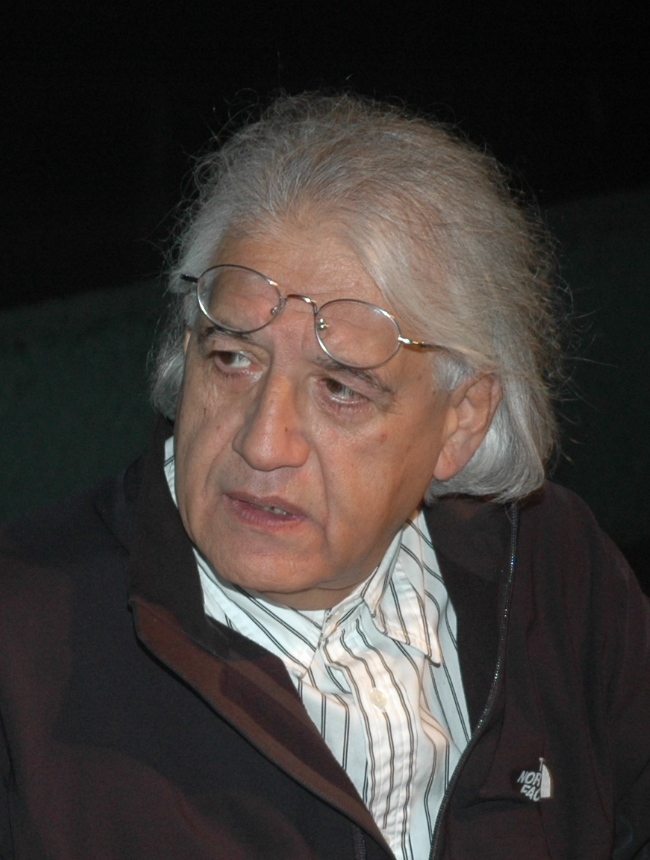
Carole Concha Bell marks the passing earlier this month of a great director and screenwriter.
Patricio Guzmán was born in 1941 to a middle-class family in Santiago, Chile. Because his architect father’s work kept the family constantly on the move, Guzmán’s childhood was scattered across various schools between the capital and the coastal city of Valparaíso. Guzman’s path to becoming Chile’s greatest documentary historian, however, was far from linear. In 1960, he enrolled at the University of Chile for a multidisciplinary arts course covering theatre, acting, and production. He pivoted to history in his second year, and later transitioned to philosophy, before a severe lack of funds forced him to cut his university education short in 1962.
Driven into the workforce to make a living, Guzmán took a job at an advertising agency, and it was here, almost by accident, that he discovered his true calling. He began shooting short documentaries as a hobby, catching the eye of renowned director Rafael Sánchez. Impressed by the raw talent on display, Sánchez invited him to study at the Film Institute he had founded at the Universidad Católica.
This spark ultimately led Guzmán to Spain in 1966, where he spent four years refining his craft at the School of Cinematography in Madrid. By the time he graduated with a diploma in film direction and production in 1970, he was armed with a vision that would soon redefine political cinema.
Guzmán returned to Chile in 1971, just as Salvador Allende’s Popular Unity coalition was surging in popularity. Though he had initially planned to focus on narrative fiction, the electric atmosphere of the country redirected his lens. Swept up by the optimism of the socialist movement and increasingly alarmed by the fierce right-wing backlash against Allende’s project, the young filmmaker felt compelled to document this turbulent, historic era.
His first major feature-length documentary, The First Year, was released in 1972. Among its early audiences was Chris Marker, a legendary French filmmaker, writer, and artist. A veteran of the French Resistance, Marker was a central figure in the Left Bank cinema movement and widely considered the father of the film essay, a genre blending documentary footage with deeply personal, poetic voiceover.
Like many European intellectuals, Marker had travelled to Chile to witness the country’s political boom firsthand. He had arrived intending to direct his own chronicle of the revolution, but upon seeing The First Year, he realized the definitive film had already been made by the young Guzmán.
Marker promptly tracked down the filmmaker and offered his full support, a gesture that effectively launched Guzmán onto the international stage. He bought the foreign rights and personally funded the French dubbing of the film, opening it up to an enthusiastic European audience. More importantly, Marker’s support became a lifeline during the crushing 1973 economic blockade as when Chile was completely stripped of raw film stock, Marker shipped crates of Kodak film reels directly to Santiago. It was this vital intervention that allowed Guzmán’s magnum opus, The Battle of Chile, to come into fruition.
When the coup hit in 1973, Patricio Guzmán was immediately targeted. He was dragged to the National Stadium, where he was detained for two weeks and subjected to the psychological torture and horrific conditions in the makeshift concentration camp. Knowing the military would inevitably hunt for the film, his team moved quickly, hiding 86 boxes of film canisters containing 20 hours of raw, black-and-white footage, in the home of Guzmán’s uncle.
What followed next is one of the era’s most fantastic rescue stories, aided by the legendary Swedish diplomat Harald Edelstam. Upon his release from detention, Guzmán rushed to the Cuban embassy for assistance in shipping the reels out of Chile. But with diplomatic relations between Cuba and the new military regime rapidly disintegrating, the ambassador gave him a crucial piece of advice: speak to the Swedish ambassador, Edelstam.
At the Swedish embassy, a brave team of supporters worked under the radar to smuggle the boxes inside, securing them for transport via diplomatic channels. The film was packed onto a Swedish cargo vessel named the Rio de Janeiro. However, because of the concurrent 1973 global oil crisis, the vessel was forced to sail at half-speed to conserve fuel. A journey that normally took less than three weeks turned into three agonizing months at sea. Once the ship finally docked in Stockholm, the reels were flown straight to Havana, Cuba, where Guzmán was waiting to begin his lifelong exile, ready to turn those rescued reels into history along with his editor Pedro Chaskal.
Sadly, the whole crew did not survive the dictatorship. The Battle of Chile cameraman Jorge Muller Silva was detained along with his partner Carmen Bueno in 1974 and taken to the notorious extermination camp, Villa Grimaldi, where they were both disappeared. Guzman would go on to dedicate The Battle of Chile trilogy to Muller.
Once the trilogy was complete, Guzmán left Cuba for Europe, where he lived in Madrid, Spain, before settling permanently in France. In these countries, Guzmán was able to secure international funding from European television networks and cultural funds for his next set of documentaries. This foreign backing was an absolute necessity: in Chile, Guzmán like all political refugees, was blacklisted by the Pinochet dictatorship. His films were banned, his name erased from the state media landscape, and owning or screening The Battle of Chile in Chile was banned.
In Europe he began to build a formidable body of work that would mark the post-dictatorship period, refusing to let the regime bury its crimes. His portfolio includes In the Name of God (1987), which exposed the Catholic Church’s stand against Pinochet’s human rights violations, and The Southern Cross (1992), exploring the broader spiritual and political identity of Latin America. As Chile began its transition to democracy in the early ‘90s, Guzmán’s work focused on the aftermath of political terror. He documented the arrest of General Pinochet (1998) in The Pinochet Case (2001), and delivered an intensely intimate, poetic portrait of the overthrown president in Salvador Allende (2004).
Guzman’s vast portfolio culminated in an internationally acclaimed landscape trilogy that stands as his greatest assault on Chile’s enforced amnesia. As the country moved toward democracy in the 1990s, this new political reality came with an unspoken clause, the silence of Pinochet’s victims and national oblivion. Guzman fiercely resisted the void that this silence created via his powerful documentary Nostalgia for the Light (2010), using the haunting vastness of the Atacama Desert to draw a parallel between astronomers searching the skies for ancient stars and mothers digging in the desert for the remains of their disappeared.
In 2015 he released The Pearl Button utilizing the ocean as a metaphor for the dark continuity of violence from the indigenous genocide to the bodies thrown into the sea by the regime, followed by The Cordillera of Dreams (2019) where the imposing Andes mountains are silent witnesses to Chile’s political turmoil, where he relates the social outburst of 2019.
Predictably Guzman’s death in exile has caused consternation in Chile. The Kast administration is facing a fierce backlash for refusing to declare a National Day of Mourning, ignoring Guzmans fame and international acclaim. This silence is hardly a shock: Kast is an unrepentant Pinochet supporter whose own family legacy is deeply entangled with the atrocities of 1973, and he operates with a clear political agenda. By denying Guzman state honours, Kast and his allies seek to exclude and silence the director in death, in the same way Pinochet’s victims have been pushed to the margins of Chilean society.
Carole Concha Bell is a Doctoral Researcher at King’s College London, co-founder of the Chile Solidarity Network and a writer.
Image: https://commons.wikimedia.org/wiki/File:Taller_Patricio_Guzm%C3%A1n,_Cine_Arte_(5198310892)_(cropped).jpg. Source: Taller Patricio Guzmán, Cine Arte. Author: FIC VIÑA, licensed under the Creative Commons Attribution-Share Alike 2.0 Generic license.
Read the full story at the source
Source: Labour Hub