World · Labour Hub · 2h
Megacities make progress with free public transport schemes
English (original) · Read in Deutsch ⇄
Experiments with free public transport, introduced in some of the world’s biggest cities to tackle the fuel price crisis, are proving successful.
In Ho Chi Minh city, Vietnam and Tehran, Iran – which both have around 10 million people, more than London – people are shifting, in numbers, from private vehicles to buses and the metro.
In Australia, pilot zero-fares schemes have been extended, due to their popularity. In India, eight states now provide free public transport for tens of millions of women. Jakarta, Indonesia, the world’s most populous city, has introduced a partial but generous free transport scheme.
“There are many smaller cities around the world where public transport has been free for years, but now it is being tried out in megacities,” Coral Jones, chair of Doctors in Unite and organising group member of Fare Free London, said.
“All cities are different, but this shows that it can be done. Given the endless increases in fuel prices, and the climate crisis, our call on the Mayor of London to consider the potential seems very reasonable.”
Fare Free London has a public event on “How to Make Public Transport Free”, on Tuesday 29th September in London. Details, and free registration, here.
The US-Israel war on Iran that started in February, and the resulting fuel price increases, were the trigger for the largest zero-fares schemes.
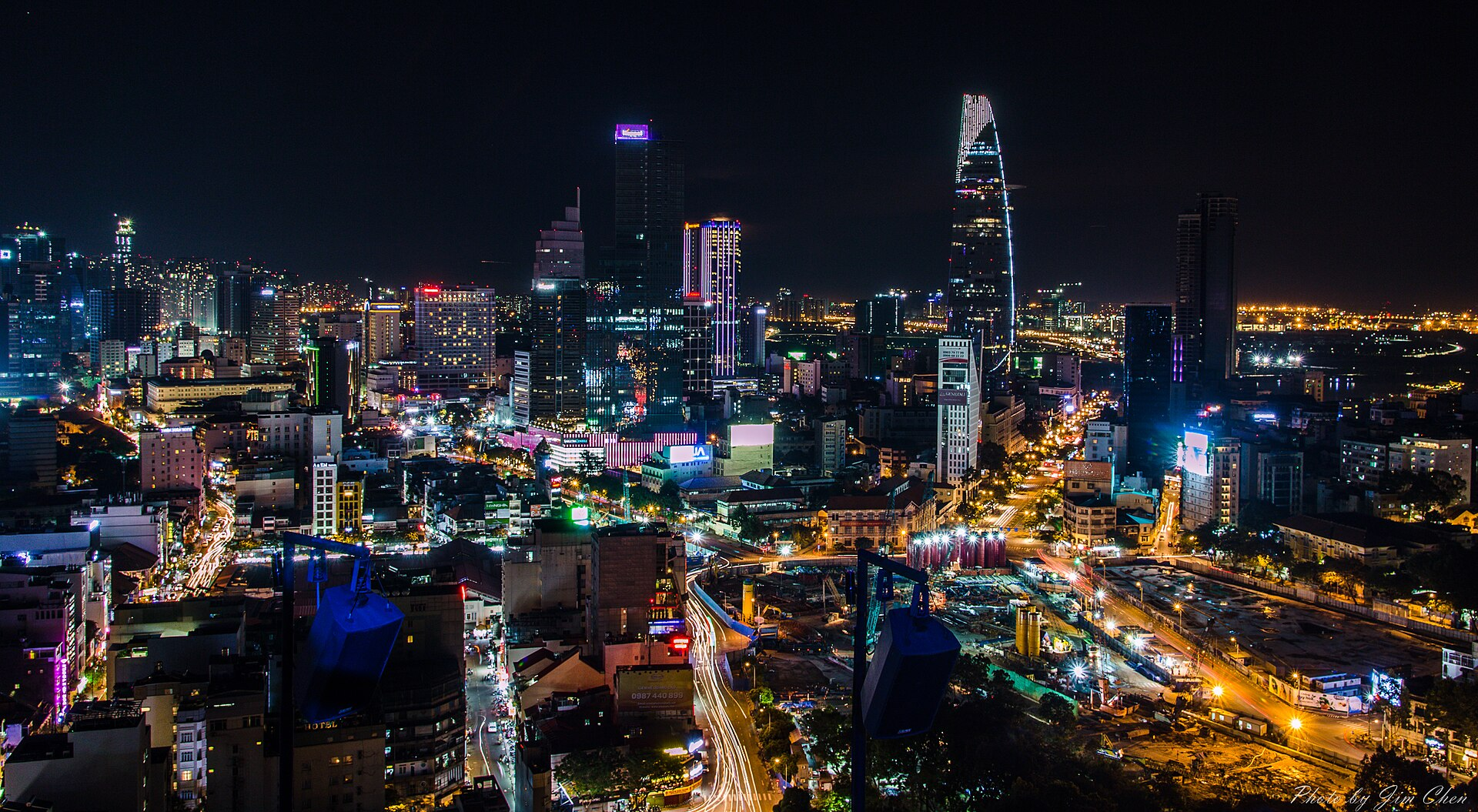
Ho Chi Minh city (population 10.5 million) introduced free bus travel on 1st July. In July, there were 8.5 million bus trips, 39% more than in the same month of 2025.
Le Hoan of the city’s Public Transport Management Centre said that passenger numbers rose steadily through the month, and that the fare-free policy “also generated positive spillover effects for the metro,” where fares are still charged, but passenger numbers rose by 15% anyway.
Transport operators said that “challenges remain” – too few bus shelters, pavements blocked by illegal parking and street vendors, overcrowding in the rush hour and older passengers struggling with the digital payment system. In response, the city authorities are accelerating the use of technology and looking at introducing bus lanes.
Duong Duc Minh, deputy director of the city’s Institute for Economic and Tourism Development research, said that expanding services, and making them fare-free, would help ease traffic congestion, reduce emissions and “provide practical support for low-income residents by lowering living costs and improving access to employment opportunities.”
Ho Chi Minh city, in contrast to London and other cities in the global north, is battling to encourage people not out of cars, but off motorbikes. For every 1,000 residents, there are about 100 cars and 800 motorbikes, the city’s Institute for Development Studies estimates.
Nhan Dan newspaper quoted a resident who said: “People will not easily give up their motorbikes simply because bus travel is free. They will only switch when buses offer roughly the same journey time and similar convenience.”
Bringing the metro into the scheme would help, and the transport authority abolished fares there too – for one day only – on 2nd September, National Day.
Hanoi (population 8.8 million), Vietnam’s second city, has also made bus travel free, for one year from 1st July, inside the ring road around the city centre.
In mid-March, when the US-Israeli bombing began, Iran’s capital, Tehran (population 9.9 million), made public transport – including both the metro and buses – free, as part of a package of emergency wartime measures. In July the city authorities announced the scheme would continue “until the end of the current conflict.”
Murad Qureshi, a former Labour member of the London Assembly, said free transit is seen as a tool for civilian defence. He reported: “Officials are exploring land value capture (taxing the increased value of property near transit hubs) and direct military-emergency funding to bridge the budget gap left by the removal of ticket revenue.”
Fuel prices are a sharply contested political issue in Iran. Petrol price rises were one of the causes of anti-government protests in November 2019, which led to a violent state crackdown. This month a fuel shortage and long queues at petrol stations have been reported.
The world’s largest city by population, Jakarta (population 41.9 million) in Indonesia, in May last year made public transport free for 15 groups of residents, including over-60s; civil servants, education and provincial government workers; workers earning the minimum wage and residents of low-cost flats; war veterans and people with disabilities; and students.
Fares were abolished for everybody else, too, for one day on 24th April (National Transportation Day) and for three days in June (for the city’s 499th birthday).
Not all the zero-fare schemes are so successful. In April, the government of Punjab province (population 127.7 million) in Pakistan made all public transport services free – but this did not apply to the privately-run minibuses, taxis and rickshaws that provide most transport services.
The zero-fares scheme was used by about 800,000 passengers per day, and ended in mid June. The provincial government also subsidised farmers and registered motorbike owners in response to the fuel price shock.
Schemes in Australia – with a smaller, and on average richer, population – fared better. Victoria state (population 7.1 million) abolished public transport fares in April, extended the scheme to the end of May, and then set fares at half-price until the end of the year.
In Tasmania (population 580,000), the introduction of zero-fares in April boosted metro ridership by 37% and bus use by 46%. In May the government announced that fares would remain at zero until July 2027.
In India, eight states with a joint population of more than 400 million provide free public transport to women and transgender people. The states are: Andhra Pradesh, Delhi, Karnataka, Kerala, Punjab, Tamil Nadu, Telangana and 36West Bengal.
When Tamil Nadu last month extended its scheme to deluxe and express services, the state chief minister C. Joseph Vijay said the scheme “will enable students to travel to colleges located far from their homes, help women commute to workplaces and allow them to access medical care.”
The scheme in Karnataka has been running since June 2023. More than 3.1 billion free rides have been taken by the state’s women.
A report published last year by the Sustainable Mobility Network showed that women in zero-fares cities saved between one third and one half of their transportation expenses – money “redirected towards strategic household investments, such as children’s education, emergency funds and health care.” The schemes also faces problems including overcrowding, compromised safety and negative staff attitudes.
□ Fare Free London, Fare Free Greater Manchester and Fare Free Yorkshire are working to establish a national campaign for free public transport, provided as a public good by publicly-owned companies.
□ Fare Free London’s event, “How to Make Public Transport Free”, is on 29th September at 7.00pm, at the Golden Lane Community Centre, Fann Street, London EC1Y 0SA, and on zoom. Agenda: Q&A with Julie Frêche, vice-president for transport, Montpellier metropolitan area, France – which made public transport free in 2023 / Panel discussion with trade union and community groups / Fare Free London annual meeting. Register to attend (free) here on eventbrite.
Simon Pirani is honorary professor at the University of Durham and writes a blog at https://peopleandnature.wordpress.com/
Image: Ho Chi Minh City Skyline https://commons.wikimedia.org/wiki/File:Ho_Chi_Minh_City_Skyline_(night).jpg Source: Saigon Night. Author:Jim 陳 licensed under the Creative Commons Attribution-Share Alike 2.0 Generic license.
Read the full story at the source →
Source: Labour Hub