
World Labour Hub
Guyana’s Opposition Leader imprisoned – media must investigate
Democracy, due process and political accountability in Guyana are questions British journalists need to look into, argues WIN UK. We Invest in Guyana UK is calling on British news organisations, inves
English (original) ·Read in Deutsch ⇄
Democracy, due process and political accountability in Guyana are questions British journalists need to look into, argues WIN UK.
We Invest in Guyana UK is calling on British news organisations, investigative journalists and international affairs correspondents to urgently investigate the imprisonment of Guyana’s Opposition Leader, Azruddin Mohamed, and Police Constable Ryan Greene.
On 30th October 2026, both men were denied bail and remanded to prison until 24th November after being charged under Section 9(2)(b) of Guyana’s Cybercrime Act in connection with the alleged unauthorised access to and transfer of government surveillance footage.
The prosecution alleges that the footage was obtained from the Guyana Police Force’s Command Centre and transferred in connection with an alleged payment of GYD $800,000. The defence has challenged the legal basis of the charges and the decision to refuse bail.
These developments raise serious questions about due process, police accountability, the handling of government surveillance material, freedom of expression and the relationship between criminal proceedings and Guyana’s political environment.
WIN UK believes that the imprisonment of a prominent opposition leader warrants independent international scrutiny. We are calling on British journalists to investigate the facts, examine the evidence and seek answers from the relevant authorities.
Azruddin Mohamed leads We Invest in Nationhood (WIN), which secured 16 seats in Guyana’s National Assembly in the September 2025 general election. The imprisonment of a sitting opposition leader is therefore a matter of considerable public and international interest.
This case also involves a serving police officer, Ryan Greene, and allegations surrounding the access and disclosure of surveillance footage relating to a shooting incident outside the residence of Senior Superintendent Prem Narine on 12th October 2026.
Mohamed subsequently alleged that he had been the target of an assassination attempt. The authorities have brought separate criminal proceedings arising from the October incident, alongside the new Cybercrime Act charges.
WIN UK stresses that these are separate legal matters and must not be conflated. The public deserves to understand what happened, what evidence exists, how the authorities have acted and whether every individual involved has received the protections afforded by law.
In June 2024, the United States Department of the Treasury announced sanctions against Azruddin Mohamed, his father Nazar Mohamed and associated entities over alleged financial, tax and gold-export offences. The Mohameds dispute the allegations.
In September 2025’s general election, Azruddin Mohamed’s We Invest in Nationhood party secured 16 of the 65 seats in Guyana’s National Assembly, becoming a significant parliamentary opposition force. A month later, the US’s ‘ extradition request involving Azruddin Mohamed and his father, Nazar Mohamed, entered Guyana’s judicial system.
Both men have contested the extradition proceedings. In January 2026 , proceedings concerning the US extradition request began in Guyana’s courts. On 29th July 2026, the Caribbean Court of Justice dismissed the Mohameds’ appeal concerning the validity of the authorisation allowing the US extradition request to proceed. This decision allowed the extradition process to continue. It did not determine guilt on the underlying US criminal allegations.
On 12th October 2026, a shooting incident occurred outside the residence of Senior Superintendent Prem Narine in Georgetown. Mohamed subsequently alleged that he had been the target of an assassination attempt.
Mohamed, his driver and a staff member were subsequently charged in connection with separate firearm and obstruction-related allegations. They pleaded not guilty and were granted bail, according to published reporting.
Mohamed publicly presented surveillance footage said to relate to the 12th October incident. Authorities subsequently investigated how the footage had been accessed and disclosed.
On 29th October, the High Court upheld the lawfulness of Greene’s arrest in connection with the alleged removal and disclosure of surveillance footage. The following day, Azruddin Mohamed and Ryan Greene were remanded and charged under Section 9(2)(b) of the Cybercrime Act in connection with the alleged unauthorised access to and transfer of electronic data. The prosecution alleged that a GYD $800,000 payment was connected to the transfer of the surveillance footage. Both men were refused bail and remanded until 24th November 2026.
Their lawyers challenged the basis of the charges and the refusal of bail. Published reports also stated that journalists were prevented from entering the courtroom during the proceedings.
Mohamed and Greene are scheduled to return to court in the Cybercrime Act proceedings on 24th November. WIN UK will continue monitoring developments and calls for independent scrutiny of the evidence, judicial decisions and treatment of those involved.
WIN UK is asking British media organisations to examine what evidence has been presented to support the charges against Mohamed and Greene, what reasons the court gave for refusing bail, whether the defendants have been afforded all their legal protections, what avenues of appeal and judicial review are available?
They also need to look st the issue of the surveillance footage, what it shows, the public interest significance of its footage and the legal restrictions governing access to and disclosure of the material? In addition, there needs to be scrutiny of the competing accounts of the shooting incident of 12th October and of the independent mechanisms to investigate allegations involving police officers and senior officials.
Above all, we need to explore the safeguards that exist to protect criminal proceedings involving opposition politicians from political interference and what implications these proceedings could have for Guyana’s democratic opposition. In particular, why were journalists reportedly prevented from entering the courtroom on 30th October, what rules govern media access to these proceedings and what protections exist for journalists investigating matters involving senior government and law-enforcement officials?
WIN UK believes that democratic accountability, judicial independence, freedom of expression and fair legal proceedings are fundamental to every functioning democracy. We are concerned about the implications of criminal proceedings involving a sitting opposition leader and a serving police officer, the reported restrictions on journalists attending court and the wider questions surrounding government surveillance material.
We believe that the Guyanese public, including the millions of people with connections to Guyana across the international diaspora, deserve a clear and independent account of what is happening.
We do not ask journalists to take WIN UK’s word for it. We ask them to investigate.
1. Due process: Full respect for the legal and constitutional rights of Azruddin Mohamed and Ryan Greene throughout the proceedings.
2. Transparent judicial proceedings: Clear public explanations of judicial decisions, including the grounds for refusing bail, subject to the applicable rules of the courts.
3. Independent scrutiny: Appropriate independent examination of the police investigation and the handling of the surveillance footage.
4. Media freedom: Respect for journalists’ lawful access to public court proceedings and their ability to report without intimidation or improper interference.
5. Political accountability: Safeguards against political interference in law-enforcement and judicial processes.
6. Evidence-based investigation: Full examination of the 12th October shooting incident, the surveillance footage and all competing accounts.
7. International attention: Greater scrutiny from international human-rights organisations, democratic institutions and independent media.
8. Equal application of the law: No political figure, public official, police officer or private citizen should be above the law, and no individual should be denied justice because of their political position.
We Invest in Guyana UK is on Facebook here.
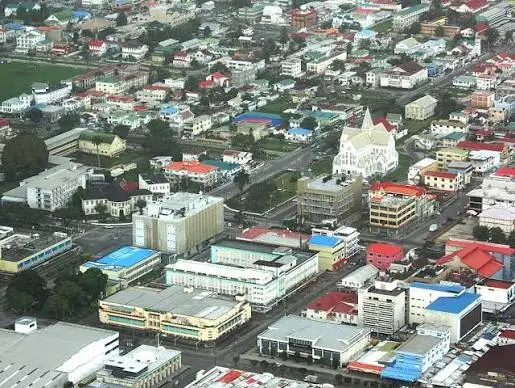
Image: Georgetown. by D-Stanley https://www.flickr.com/photos/davidstanleytravel/albums/72157643243900803/ Licence: CC BY 2.0