
Labour · Labour Hub · · 3h
Fast brain, hard worker, hopeless judgment
English (original) · Read in Deutsch ⇄
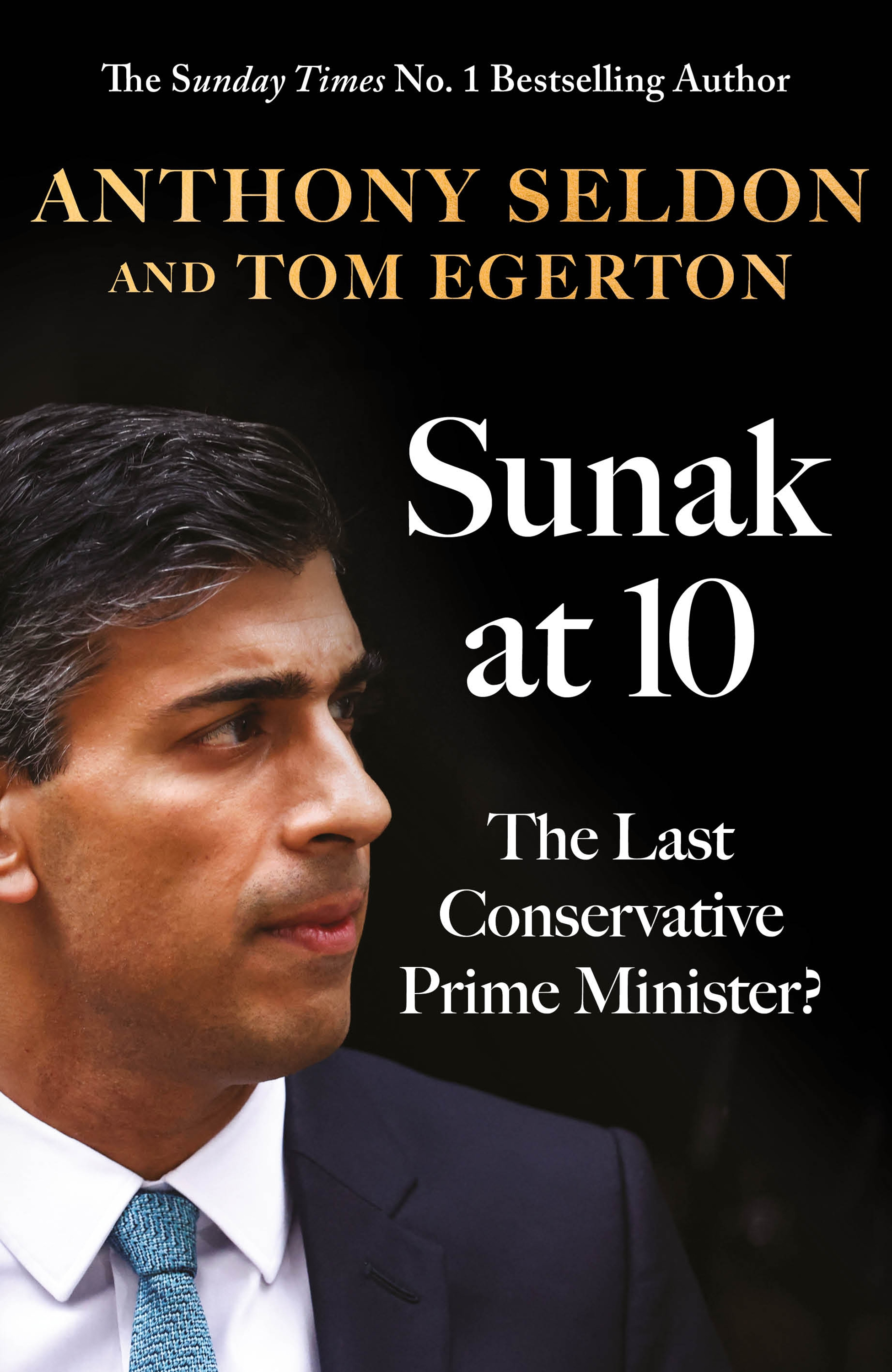
Mike Phipps reviews Sunak at 10: The Last Conservative Prime Minister? by Anthony Seldon and Tom Egerton, published by Atlantic.
Theresa May’s government was a catastrophic failure. She called an unnecessary election and lost; her party came fifth in the EU elections of 2019 with 9% of the vote, the worst Conservative result since 1830; and her government failed on the very terms it set itself – to exit the EU.
Boris Johnson was an unprincipled scoundrel, whose entire platform in the 2019 general election – the ‘oven-ready Brexit’ – was a lie and whose complete unsuitability for the job was exposed by the Covid crisis.
Liz Truss was probably the worst Prime Minister ever – quite an achievement in fewer than fifty days, when you consider the contenders over the 300 years the office has existed. With these hopeless predecessors, and the Tories decisively trounced at the 2024 general election, it does not seem hyperbolic to wonder if Rishi Sunak might be the last Conservative Prime Minister?
That election defeat was the worst in the Conservatives’ history and their electoral performance has continued to flatline since then, not least due to the rise of right wing rival Reform UK, to which many leading Tories have defected. But there are deeper reasons for the party’s perhaps terminal decline: it is no longer a broad church and has lost, in the view of the authors of this gripping book, “its ravenous hunger for office and ruthless adaptability.” The present party’s internal culture remains factional and toxic and it will take a figure of some stature to change that – of whom there is no sign.
Rishi Sunak is the subject of this latest slice of ‘instant history’ from Anthony Seldon and colleagues. Widely regarded as the author of Boris Johnson’s downfall, but then having lost the vote among the membership to Liz Truss, Sunak took on the leadership apparently with some reluctance, but out of a sense of duty, after her calamitous few weeks in the job. What emerges is a seemingly contradictory figure: phenomenally hard-working and smart, but privileged, vision-less, scheming and indecisive.
More than any other recent Prime Minister, what Sunak actually did in his 600 days in office was to have virtually no effect on mitigating the inevitable electoral defeat of 2024. Yet, tantalisingly, the early decisions of his premiership – for example, whether to distance himself more from the ruinous activities of Johnson and Truss, or exert more control over his disloyal Home Secretary Suella Braverman – might have perhaps made a difference.
Such boldness was not suited to Sunak’s cautious temperament. He preferred stability as the basis for political recovery, but failed on that front too. Days into his term, Sunak had to fire his Minister Without Portfolio Gavin Williamson for abusive text messages to colleagues. Deputy Prime Minister Dominic Raab was also placed under investigation – and later resigned – for his alleged bullying of officials. Then Tory Chair Nadhim Zahawi was forced to resign for breaking the ministerial code, having failed to declare he was being investigated over his tax affairs – a hugely damaging loss given the Party machine was already “on its knees”. A charitable assessment might say that a decent Prime Minister was being let down by bad people; a more realistic assessment would see something intrinsically rotten at the heart of the Conservative leadership.
Yet these unwelcome distractions were nothing compared to the unremitting hostility mounted against Sunak by the acolytes of his two predecessors. Their antics ensured that any efforts to achieve a policy success, such as the Windsor Framework on Northern Ireland – or even a degree of stability – would be relentlessly sabotaged.
Unsurprisingly, the party paid the price at the polls: it May 2023’s local elections, it lost over 1,000 councillors and 48 councils. These results only intensified internal Tory divisions, highlighted by an increasingly public spat over the acceptability of Boris Johnson’s resignation honours list, just as the ex-PM was given an unprecedented 90-day suspension from Parliament by the Privileges Committee for deliberately misleading the House.
The grandstanding and open flouting of Cabinet collective responsibility by Home Secretary Suella Braverman was another headache for Sunak. Yet what strikes one about all this is that while the daily dramas of the Sunak government make compelling reading, they obscure a far bigger reason for its ultimate downfall: the rapidly declining state of the country. By 2023, half of Britain’s NHS trusts were providing food banks for their staff, an indicator of a huge surge in in-work poverty. The fast-growing cost of living crisis led to a significant increase in industrial action, while Sunak’s own priorities, driven by traditional Tory fiscal conservatism, only worsened the situation.
As drift and decline continued, panic set in. Sunak aides set up a meeting between the Prime Minister and the disgraced Dominic Cummings ahead of his possible comeback, a symptom of the desperation in Number 10. When it led nowhere, a Cabinet reshuffle was enacted, but the palpable lack of talent in the Tories’ senior ranks hobbled its effectiveness. To shore up his support with his backbenchers, Sunak further diluted the government’s already thin environmental commitments.
The October 2023 Hamas attack in Israel and the ensuing Israeli bombardment of Gaza generated Palestinian solidarity protests around the world. In Britain, Home Secretary Braverman demanded the police take more action against what she called “hate marches”. She then widened her provocations to include public criticism of the new government policy to decriminalise rough sleeping. When she accused the Metropolitan Commissioner of “two-tier” policing in a Times article, Sunak finally sacked a Home Secretary he should never have appointed in the first place.
Sunak’s appeasement of the Tory right had got him nowhere: Tory Immigration Minister Robert Jenrick – like Braverman, later to defect to Reform UK – was next to resign, to join an organised right wing plot against the Prime Minister. It was a plot to which serving Cabinet Minster Kemi Badenoch also lent her support – as the media were quick to highlight immediately following the book’s publication. “Badenoch’s resignation at this moment could have destroyed Sunak’s premiership,” suggest the authors. That said, it’s doubtful the plotters ever had the numbers to oust him.
Yet Sunak continued to cling to the morally bankrupt and ludicrously unworkable plan to deport refugees to Rwanda, an example of his repeatedly poor judgment. In the end, “no flights ever left Britain, judged to be too legally difficult.”
May 2024’s local elections resulted in more Tory losses. Hoping, wrongly, to catch Labour on the hop, Sunak decided on an early general election. When the Cabinet was told, members went visibly pale. One called the decision “mad”, but it was too late. It remained only for Sunak to make the public announcement – in a rainstorm. In a final act of greed and corruption, it emerged mid-campaign that close aides had broken the law by placing bets on the date of the election. Last week, the Conservatives’ former director of campaigning and his wife pleaded guilty to this offence.
The result – the Tories lost 251 seats and were reduced to 121 – was a “monumental rout.” Of course, much of the long-term damage was done before Sunak took over, from ‘Partygate’ to Truss. The years 2019 to 2024 also saw a significant drop in real living standards, while legal migration rose post-Brexit.
Yet Sunak cannot be exonerated from responsibility, even if the narrative of this book is one of a ‘decent guy’ let down by others. Throughout his term, Sunak exhibited flawed judgment, placed party considerations over country, refusing to make a clean break with Johnson and Truss, and never really took note of the growing cost of living crisis and rampant poverty that fourteen years of Tory government had engendered.
Two years later, the Tories continue to perform poorly. It’s a bitter irony that so many of those responsible not just for their political failures but the moral degeneration of the party have reinvented themselves on the questionably funded Farage payroll as ‘anti-establishment’. Sunak, meanwhile, has kept a dignified silence since his post-premiership moment of self-awareness about his meteoric rise and fall: “Before you know it, you have a bright future behind you and you’re left wondering whether you can credibly be an elder statesman at the age of 44.”
Mike Phipps’ book Don’t Stop Thinking About Tomorrow: The Labour Party after Jeremy Corbyn (OR Books, 2022) can be ordered here.
Read the full story at the source
Source: Labour Hub