
World · Labour Hub · · 4h
Careless People US Tech and Education
English (original) · Read in Deutsch ⇄
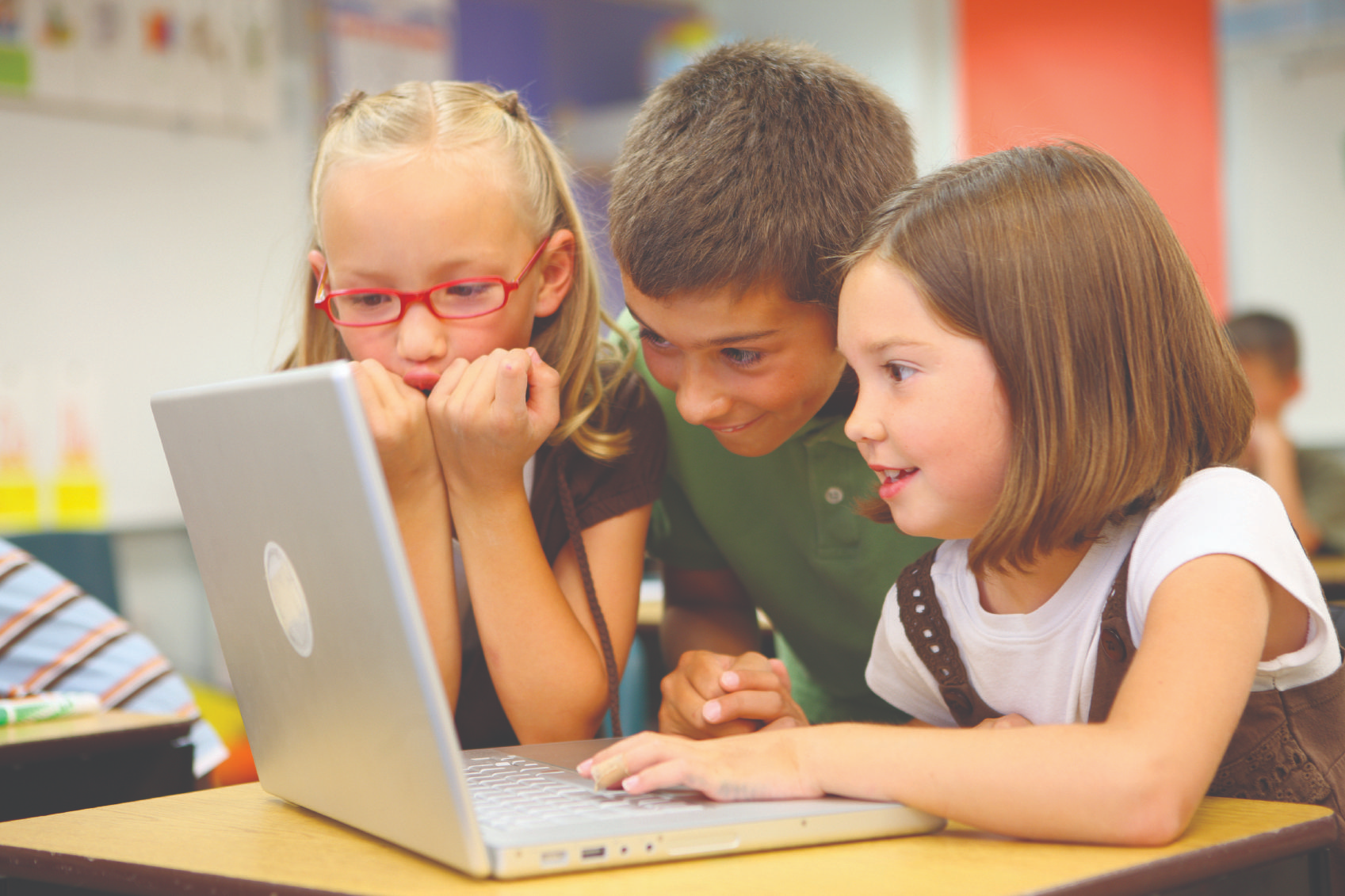
In the second of a series of articles, Carl Rowlands looks at the impact of the introduction of technology into learning environments.Education is the ‘canary in the coalmine’. If careful regulation of technology cannot be successfully implemented in schools and colleges, given the obvious potential harms to the youngest and most vulnerable, then arguably it cannot be applied to anywhere. Education sits at the centre of the controversy surrounding AI and tech in general.This is a sector that already sits squarely within what could be easily described as ‘vendor capture,’ with one multinational company – Microsoft – squatting over millions and millions of pounds of public investment. This one company is responsible for hosting and powering almost everything in UK schools, regardless of devolution or academisation. Homework lives in the Microsoft cloud. Both Microsoft and Google are ever-present in the ‘digitised classrooms’ that have been encouraged by successive government policies. Both of them are increasingly bundling AI functionalities by default into schools, even affecting relatively young children.The Labour government’s record on this is close to the AI boosterism of the Trump administration. A “memorandum of understanding” signed in July 2025 by the now-defunct Department of Science, Innovation and Technology (DSIT) and OpenAI, the provider of ChatGPT allowed unregulated AI the way into the classroom. This followed similar agreements with Anthropic and Google, with promises that OpenAI will work with DSIT to find areas where “advanced AI models” can be deployed. A large pilot programme is being rolled out to over 1,000 schools in England. Lacking from all of the discussion about mobile telephones in schools is the extent to which that vendors are already adding screen time to school time – and the accompanying absence of face-to-face socialisation. There has not been a serious discussion about how the introduction of technology into learning environments has affected learning.
In their submission to Parliament’s Education Committee inquiry into the use of AI and EdTech, the EDDS Institute wrote: “The central finding is that the current approach to governing AI and edtech in education does not provide reliable assurance that systems are safe, lawful or appropriate for use with children… The underlying issue is that current assurance models rely on vendor self-reporting, documentation, and alignment with high-level principles. These approaches do not test whether systems operate safely in real-world conditions… The audit findings show that most systems do not provide clear information about how outputs are generated, what data is used, or how decisions are made… Wider research indicates that digital platforms can shape learning in ways that are not always visible. This includes the use of data to model behaviour, the standardisation of interaction and the prioritisation of measurable outputs (Bulathwela et al., 2024). These dynamics may influence how learning is structured, how progress is defined and how students engage with content.”AI companies are essentially adding a ‘black box’ to classrooms that are prone to suffering from various inaccuracies, biases and hallucinations. But additionally, students are being offered potentially inaccurate ‘AI Summaries’ which are a substitute for critical thinking and textual analysis. There is evidence, still fairly tentative, but growing, that use of this technology is affecting students cognitive capabilities. There is yet more evidence that early exposure to technology is affecting the personal and social development of children.Schools Beyond Screens, an emergent campaign group in the US, among other demands, is calling for student access to any generative AI tools, apps, websites, and software on all school-issued devices to be disabled, “until this technology has been proven safe, legal, and effective, and until age-appropriate guidelines are established.” Schools Beyond Screens also has a Student Tech Bill of Rights which clearly articulates a set of concerns around privacy, learning development, physical and mental health, and teaching methodology. In fact, some European countries are already beginning to dismantle, or limit, their usage of education technology, on the basis of the lack of evidence supporting it, versus the growing body of negative implications.It is not difficult to move away from where the UK government currently stands on this question. But it would require standing up to some of the largest US tech multinationals, who consider themselves to be forces for human progress.It might not be possible to stop students using generative AI at home. But tech-free areas should be earmarked in schools, colleges and universities for the manual completion of tasks, including coursework, while a standard curriculum could increasingly include verbal defence of essays and dissertations.There should be a full enquiry into the actual impact of providing devices and technology to schools and schoolchildren. Only what is absolutely needed should be offered. The potential for improving and insourcing provision of hardware and software should be explored. I would argue that software in all educational environments should be non-proprietary, in the interests of efficiency, the ability to control features and to reduce e-waste. Some of the savings gained could fund open source projects with educational value, tying into an alternative economic strategy.This is potentially a scandal that is waiting to explode. It requires urgency. Failure to address these questions will potentially affect society for many years to come. There’s a fascinating book about Facebook and Mark Zuckerberg, the title of which is “Careless People.” It is left to the commons and our depleted public realm to -take care.’
Carl Rowlands works as a learning resource creator, teacher and writer. He is based in central Europe and the UK.
Image: https://commons.wikimedia.org/wiki/File:Children_at_school_(8720604364).jpg Source: Children at school. Author: Lucélia Ribeiro, licensed under the Creative Commons Attribution-Share Alike 2.0 Generic license.
Read the full story at the source
Source: Labour Hub