
Germany · Lower Class Magazine · 1970-01-01
Trump's Iran dilemma - Why the Strait of Hormuz will be closed and fuel will remain expensive
Deutsch (original) · Auto-translated to English
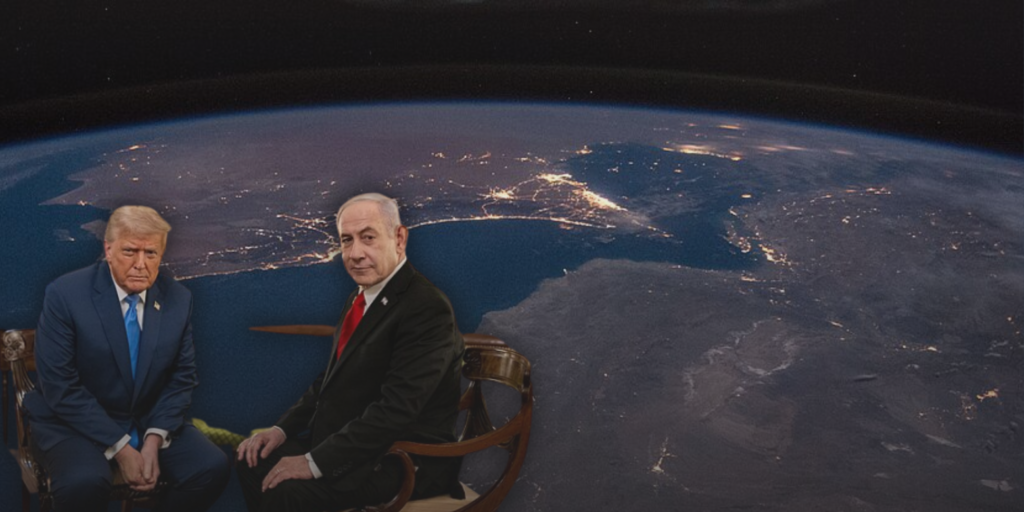
Vicious circle “Iran blocks Strait of Hormuz”, “New US attacks on Iran”, “Trump announces Iran wants to negotiate”, “Deal reached”, “New US attacks on Iran”, “Iran blocks Strait of Hormuz”.
These headlines have been alternating for almost half a year and apart from the fact that the prices at the gas stations fall or rise by ten to twenty cents, hardly anyone seems to be really interested in what exactly is going on or what happens next with the war between the USA and Iran.
The problem is, even the leading minds of the US empire don't seem to have any answers to these questions.
The fact that the headlines keep repeating themselves like a dilemma and that there seems to be no way out of the vicious circle of this war is an expression of an almost insoluble dilemma into which Trump's attack on January 28th.
February maneuvered his own government.
Trump's apparent hope that an attack on Iran would be as quick and successful as his kidnapping operation in Venezuela quickly evaporated; instead, the decapitation strike against Iran only ensured that the Iranian military attacked the US and its allies in the region in a decentralized manner like never before and used their most powerful weapon for the first time: the blockade of the Strait of Hormuz.
Iran's geographical location on the strait and its proximity to the Gulf states allow the Iranian military to build enormous pressure on the entire global economy and thus, above all, to question the USA and its dominance over this global economy.
Despite all attempts by the USA to end the blockade, to build pressure in Iran through massive destruction of military and civilian infrastructure and to set up a blockade of the Strait of Hormuz itself, the “memorandum of understanding” brokered by Pakistan at the end of June showed the only way to de-escalate the situation.
With this, the USA and Iran agreed to find a way towards a diplomatic solution and to stop mutual attacks on each other and on the entire global economy.
For a moment it seemed as if an actual peace could be in sight, even though the USA would have essentially admitted defeat and Iran could have improved its geopolitical position compared to before the war.
But it was already clear at the time of this “agreement” that further negotiations would primarily depend on how the third decisive player in this conflict would behave: Israel.
American vs.
Israeli interests The official war goals of the USA (initially a guarantee that Iran does not acquire nuclear weapons, later the opening of the Strait of Hormuz and restarting world trade) were realistically achievable within the framework of the negotiations despite the military defeat.
After all, contrary to American propaganda, Iran had previously adhered to diplomatic solutions to the nuclear issue and an Iranian fee for opening the Strait of Hormuz would be a defeat for the USA, but a small and acceptable one compared to the further blockade and thus the impending collapse of the global economy.
But for Israel, this conflict with Iran represents an existential struggle for the Zionist future in the Middle East.
Israeli society and politics are in a deep crisis (see: Israel on the brink of the abyss - does the crisis of Zionism mean its end? ), which is being offset primarily by the fight against “external” enemies and the desire to expand both into the Palestinian territories and into neighboring states such as Syria and Lebanon.
But Israel's future depends above all on how the relationship with the USA will develop.
Israel depends on the unconditional support of the largest world power in order to maintain and further expand its own supremacy in the Middle East.
Overall, Israel's goal is to destroy Iran, the only remaining regional competitor, as sustainably as possible.
This means that any further escalation of the situation is in Israel's interest.
It is not for nothing that Israeli politicians have been trying for decades to drag the USA into a war with Iran.
Lebanon as a sticking point The crucial point in all negotiations between the USA and Iran so far has been that Iran demands that any ceasefire must apply to the entire “Axis of Resistance”.
This applies above all to the Israeli aggression against Hamas in Gaza and especially against Hezbollah in southern Lebanon.
The fact that the USA is unable to limit Israel's aggression, despite repeated assurances that it will do so, shows the world power how powerful Israeli influence is on American politics.
The fact that the Israeli army seems to use every rapprochement between Iran and the USA as an incentive to intensify its genocidal campaign against the Lebanese population has been the reason for the failure of every negotiation and ceasefire so far.
However, it is out of the question for Israel to submit to the negotiations, as that would mean that Iran could close the Strait of Hormuz at almost any time if Israel tried to attack its neighbors again or destroy the Palestinian population.
At the same time, this would also force the Gulf states to normalize their ties with Iran, so that the progress of the last decades, in which Israel has become virtually the undisputed regional power as it increasingly draws closer to the Gulf states, would be required.
All of this in a phase in which competition between Israel and Turkey is steadily increasing over the question of who can be the unsinkable aircraft carrier for Western interests in the region.
While Turkey may have recently scored points with the “gift” of a pro-Western Syria, Israel has been steadily losing support, at least in the eyes of the population, since the beginning of the Iran War and will therefore become an uncomfortable hurdle for pro-Israel politicians in the election campaign for the foreseeable future.
For Israel, a defeat threatens to limit the unconditional support of the USA and this war can only go in one direction: more escalation, just no concessions to Iran.
Trump's dilemma Trump is now faced with the unsolvable dilemma of which regional power he will now bow to.
On the one hand, there is an acceptance of Iranian demands.
But that would actually mean restricting Israel.
There are probably reasons why this hasn't happened so far.
On the one hand, there is speculation about what leverage Israel might have up its sleeve against the American government.
Since the American-Israeli attack, there has been speculation about what role the Israeli secret service played in the Epstein affair and what personal leverage against Trump could be in Israeli hands.
On the other hand, there may also be very tangible geopolitical interests for the USA against abandoning Israel in this way.
The image of an inviolable world power that guarantees its allies military and economic security has already suffered. If the USA were not even able to provide such guarantees to its most important ally, this would massively damage the overall influence of US imperialism.
Trump also has little interest in going down in history as the US president who put the nail in the coffin of the Zionist project.
So there are good reasons (from an imperialist perspective) as to why the USA has so far taken steps towards Iran, if only for the sake of short-term relief in the global economy.
On the other hand, there is the option of submitting to Israel and further escalating the war.
That could mean intensifying airstrikes on Iran's critical infrastructure, a ground invasion that was much called for, especially at the start of the conflict, or, in the worst case scenario, a nuclear escalation.
Unfortunately, none of these options promise a real solution.
Almost all experts consider a ground invasion to be a suicide mission; the geographical nature of Iran's “natural fortress” makes it too difficult to maintain reliable supply lines.
The military humiliation this could mean would far dwarf the losses suffered by the US military so far.
Fortunately, a nuclear option does not seem to be being seriously discussed yet, as it would shake the entire geopolitical world situation and, for example, raise the question of what should actually stop Russia from taking nuclear steps in Ukraine.
That leaves the option of escalating conventional air strikes, which at least currently seems the most realistic.
The problem, however, is that Iran has not yet exhausted all the escalation steps available to it.
While the currently re-established blockade will sooner or later lead to an unprecedented collapse of the world's oil reserves and thus the entire global economy, Iran can theoretically accelerate this process significantly.
The previous attacks on the Gulf states have shown how little the American world power is able to protect its Arab allies.
If the escalation spiral continues to worsen, Iran could make the Gulf states uninhabitable, which would virtually rule out a recovery in the oil market.
In addition, the Iranian “Axis of Resistance” still has access to another lifeline of global capitalism.
If the Houthis in Yemen also begin blocking the Bab al-Mandab Strait, it would only further accelerate the inevitable global collapse.
This explains the current vicious circle from which there seems to be no way out.
The USA seems to be playing for time and wants to increase the pressure on Iran without forcing a real further escalation.
The problem, however, is that time is running against Trump and the collapse that is threatened by the blocked Strait of Hormuz can be delayed by the current back and forth, but certainly cannot be prevented.
Sooner or later there will be no choice but to make a decision that will change the future of the Middle East and the US empire as a whole.
Photo: https://commons.wikimedia.org ; https://commons.wikimedia.org The post Trump's Iran Dilemma - Why the Strait of Hormuz will be closed and fuel will remain expensive appeared first on Lower Class Magazine.
Read the full story at the source →
Source: Lower Class Magazine