
World Lower Class Magazine
Holy Dirty Work – German-Israeli Military Relations and Reasons of State
The present text is an abridged version of the article of the same name from the anthology "Rubbish on rubble. On the criticism of the German [ ] The article Holy Dirty Work - The German-Israeli
Deutsch (original) ·Auto-translated to English
The present text is an abridged version of the article of the same name from the anthology "Rubbish on rubble. On the criticism of German reasons of state", published by Buchmacherei. The collective of authors deals in detail with the historical genesis of the military relationship between the Federal Republic and the Zionist state project as well as the history of Israel's right to exist as a German reason of state. In addition to this article, the anthology contains numerous other texts that deal with the topic of “reason of state”, its significance for a new German nationalism, the phenomenon of “anti-Germans”, colonial and anti-communist continuities and the current significance in relation to the genocide in Gaza from a historical, legal and political perspective. by AK Beau Sejour
If you take a comparative look at the figures for German arms sales in 2024, you will notice that Israel is only in sixth place with 161 million euros. In 2024, Ukraine came first with 8.1 billion euros, followed by Singapore (1.21 billion euros), Algeria (558.7 million euros), the USA (319.9 million euros) and Turkey (230.8 million euros). It is rightly pointed out again and again that Mr. Rheinmetall and Thyssenkrupp are not concerned with the specific killing of Palestinian children, but with the general business of death. It is undoubtedly true that the military relations between Germany and Israel must also be viewed as normal German trade relations between commercial rogue states. But this mundane global business with death needs, especially in Germany, a more robust superstructure than the business with cars or cosmetics. According to Marx, the "hypocritical and hypocritical ideology of the bourgeoisie expresses its distinctive interests as general interests."1 And with regard to the reality and ideology of the bourgeois family, he further writes that "[its] dirty existence [...] corresponds to the sacred term in official speech and in general hypocrisy."2 The dirty real existence of German foreign and trade policy must be similarly sacralized and sold to the Germans as their general and moral interest, especially because after 1945 any German ambition to become a major power was prohibited. This is precisely where Israel plays a central role.The comprehensive and unconditional support of Israel is transformed into an act of the highest sacrality - a sacralized relationship, behind which, as will be shown, lie the distinctive interests of the German bourgeoisie.
This sacralization of state violence is expressed in numerous speeches by German politicians. Angela Merkel announced in her famous Reasons of State speech in 2008: "Germany and Israel are and will remain - forever - connected in a special way through the memory of the Shoah." The former German Foreign Minister Annalena Baerbock derived the legitimacy of violence from this memory on the first anniversary of October 7th in the German Bundestag: "The security of Israel is German raison d'être, regardless of who governs, regardless of who makes foreign policy [...] Israel's right to self-defense is also our responsibility. We stand by this not only with words, but also with deeds, every day." According to Baerbock, according to German reasons of state, "international humanitarian law and Israel's right to exist are closely linked," but self-defense obviously also means the complete destruction of the enemy and "when Hamas terrorists hide behind people, behind schools, then we get into very difficult areas. But we don't shy away from it. That's why I made it clear to the United Nations: Civilian places could then also lose their protected status; because terrorists abuse them.That's what Germany stands for, that means Israel's security for us." The mobile German artillery from Rheinmetall, the Sa'ar 6 corvettes from Thyssenkrupp, the engines in the Merkava tanks from Lake Constance and the 120mm tank ammunition from Lower Saxony are, if you take Baerbock at his word, the material expression of the "promise 'Never again!' that we made in the past," because "'Never again!' means doing the right thing every day and not the comfortable thing."3 This sacred duty of the Germans to bow to the uncomfortable every day and not only to help kill the Palestinians in Gaza, but also to fight for Israel's security with the utmost inconvenience on the home front, applies across all parties in Germany. It is, after all, reason of state.
This strange simultaneity of sacrality and profanity, of humanity and cruelty, has always been in the germ of German-Israeli relations. At the latest in the years after the so-called reunification, when Germany regained some of its former greatness and harbored new great power ambitions, the genocide of European Jews finally became the central reference of a new German national narrative. What emerged, in the words of Enzo Traverso, was a "civil religion," an "everyday religion" that had memorial work at its center.4 Around this new shrine, a cult of remembrance was built, as befits shrines, monuments were erected that would "make other countries green with envy," as it was once said about the Holocaust memorial in Berlin, a landscape of well-maintained memorials was created, and a supposedly generously financed one democracy-conscious and anti-Semitism-sensitive civil society and organized cultural cooperation with Israel. But in the act of this canonization, the object of commemoration was deprived of any real living content and can since then be used indiscriminately by those in power to legitimize their questionable and aggressive policies. For the Germans, the Holocaust and Israel as the supposed representative of its survivors are both a sanctuary and an instrument; as a national shrine, they have become an ideological instrument of imperialist interests, which are thereby elevated to the realm of the inviolable.This legitimation strategy becomes all the more important the more imperialist Germany becomes, the more low-level economic and military ambitions Germany has to hide and the more it has to sell its aggressive actions to its citizens as a moral reconciliation with its warlike past. With the so-called turning point and the massive militarization and its new progressive ideology5, this dynamic recently reached its peak. Since then, however, it has lost credibility and integrative power as it is used more and more shamelessly to justify violence and German-Israeli relations are entering a new phase with the turn of the times. We want to show this below.
German-Israeli relations began as a barter transaction. Germany was pressured by the USA to conclude the so-called Luxembourg Agreement with Israel in 1952. For the Germans, the agreement was a prerequisite for being accepted back into the circle of Western nations and being allowed to rearm themselves. This did not require any real denazification of its leadership; reparations payments to the young developing country of Israel were sufficient, which was thereby recognized as the official representative of the victims of the Holocaust.
The dual character of German reasons of state – naked economic interest and reconciliation theater – has its historical origins here. From the very beginning, German-Israeli military relations played a central role in this economy of coming to terms with the past, which are still closely linked to the so-called German raison d'état today.6
The first phase of German-Israeli military cooperation was characterized by the escalating bloc confrontation, in which Israel occupied a strategically important place. According to Konrad Adenauer in 1960, Israel is a "country with a Western mindset", therefore it is "in the general interest of the free world that Israel develops".17 This western Israel was at the same time surrounded by Arab countries in which, according to the Marxist orientalist Maxime Rodinson, an "enthusiasm for Marxism" prevailed in the 1950s and 1960s, while Zionism Historian Walter Laqueur lamented that they were a “breeding ground for communism”7. In a historical dynamic of rebellion against Western imperialism, which had previously had a firm grip on the Middle East, pan-Arabism, an eclectic mixture of nationalism, anti-imperialism and socialism, developed in numerous Arab countries in the region. The fact that Israel had been at war with these Arab countries8 since 1948 was now an advantage for Germany: militarily as well as ideologically.
Immediately after the conclusion of the Luxembourg Agreement, Germany delivered v. a. so-called dual-use goods to Israel, which could be used in both the military and civilian sectors. From 1962 onwards, arms cooperation was expanded and Germany no longer only delivered primarily decommissioned war equipment, but also new goods such as submarines, howitzers, helicopters, transport aircraft, tanks and anti-aircraft guns.9 As the then Director General of the Israeli Ministry of Defense, Simon Peres, noted, their "quality was excellent and the scope was considerable."10 A delivery that played a central role in German reparations, as we will see below.
In return, Germany not only received ammunition, uniforms and the Uzi from Israel, but above all, insight into the functioning of Soviet weapon systems that Israel captured from its Arab opponents. After the attacks on Egypt in 1956, the country provided the Germans with numerous Soviet weapons for military-technical research purposes - information that was of outstanding value. Later, among other things, The findings from the Soviet T-62 tank and BMP-1 infantry fighting vehicle, which Israel captured in the Yom Kippur War, were incorporated into the development of the German Leopard 2 main battle tank and Marder infantry fighting vehicle. The situation was similar with the defense against terrorism: here, too, Israel, thanks to its many years of experience with the Palestinian resistance, was able to provide the German security forces with important know-how and helped, among other things. in the establishment of the German special unit GSG9.11
The permanent state of war in which Israel, as a settler-colonial project, finds itself with its neighbors was definitely favorable for its German ally - and is still so today. Helmut Willmann, a former Bundeswehr inspector who was the first foreign soldier ever to receive an honorary award from the IDF, wrote appreciatively about the Israeli army in 2002:
»This is an operational army, an army that is constantly in action. This is a country that was actually constantly fighting for its physical existence. So that means: We, who were currently in transition, the German army in the 1990s from a peacetime to an operational army, naturally sought contact with armies that already had more experience than we did. And of course I was very professionally impressed by the Israeli army. And it was clear to me that working with the Israeli army would of course also bring us professional advantages.«12
The driving politician behind the beginnings of German-Israeli arms relations in the 1950s and 1960s was the then Defense Minister Franz-Joseph Strauss. It was he who concluded the first major German-Israeli arms deal mentioned above with Simon Peres in his private residence in Rott am Inn in 1957, in the strictest secrecy. His stated goal was to arm Germany with nuclear weapons as a bulwark against communism. In this struggle, Strauss, who had served in the Wehrmacht and been part of the National Socialist Motor Corps, recognized Israel as an ally.
However, anti-communism was not limited to the political and military elite; it must be understood as the central ideology of the early Federal Republic. The number of sentences passed against communists between 1951 and 1968 was almost seven times as high as those against Nazi perpetrators. Anti-communism was so central because it allowed the old Nazis to find their place in the alliance of Western states that had been pursuing a clearly anti-Soviet agenda since the beginning of the Cold War. At the same time, the majority of the National Socialists were able to cling to old enemy images.
There were a variety of reasons why the German anti-communists were able to come to terms with Zionism and Israel or ultimately form an alliance. On the one hand, it was probably because Zionism was also an essentially counter-revolutionary movement. It was an attempt by bourgeois and social democratic Jews to absorb the dynamics of mass diasporic Jewish radicalism and at the same time to direct it into an orderly direction.13 On the other hand, Federal Republican Prozionism was essentially a consequence of Israeli militarism and its anti-communist function. Thanks to generous German economic and military development aid, the Zionist state became a regional power in the 1960s and was able to win the Six-Day War in 1967. Pan-Arabism was crushed and Nasser died shortly afterwards. The extent of the connection between German philo-Semitism and Israeli militarization became apparent in the Israeli victory against the Arab armies. German media and politicians celebrated the quick Israeli victory over the Arabs suspected of communism: the BILD headlined “WIN! Dajan – The Rommel of Israel” and the Spiegel founder Rudolf Augstein wrote under the headline “Kill, Kill” that Israeli soldiers would “roll like Rommel.” Zionism, which claimed to replace the discriminated diasporic Jew with the figure of the militarized muscle Jew, reconciled the old Nazis with Judaism in the war against the red Arabs.
The successful rearmament of Israel against the Arab states not only ensured a reconciliation of the German anti-Semitic elites with Judaism, it was also sold by the ultra-reactionary German elites as an act of peace policy conscious of the past. Franz-Joseph Strauss claimed in an interview in 1967:
»Many threats have been made against this state and its inhabitants, threats from a hostile environment to one day conquer this state and destroy its inhabitants. So if the Federal Republic of Germany makes a modest contribution to ensuring that peace is maintained in the Middle East, which was also a crucial point for us, then that is a piece of reparation in the original area in which a particular sin was committed in the German name."14
Since Germany, with its military-industrial power and precision, had carried out the Holocaust a few years earlier, it was now obliged to use this very apparatus, the "original territory", again, but now against the "hostile environment", the Arab countries, which supposedly wanted to carry out a second Holocaust. To this day, reparation means supporting those German industries that “sinned” the most. Because military and force are necessary against the revenants of the German past and to maintain peace. A claim that is also at the heart of today's rearmament.
But the modest German contribution to peace was not free. Strauss drew a direct connection between Germany's arming of Israel and the rehabilitation of Germany: "If the Federal Republic is committed to securing Israel," it should not be held "morally, politically, and journalistically liable." Germany only provided important financial aid for Israel after the verdict against Eichmann had been announced. And the comprehensive arms delivery from 1962 listed above was only carried out after the end of the trial. Germany feared that the Eichmann trial could cause serious damage to the image of the newly rehabilitated country. And so Ben-Gurion himself made significant changes to the opening speech of chief prosecutor Gideon Hausner, "all of which were aimed at protecting the reputation of West Germany and reducing the guilt of the German people."15
This first major phase of German-Israeli military relations ultimately ended with the collapse of real socialism. The German-Israeli friendship, which today serves as an index of German reparation, was in its early phase not a break with the past, but rather an instrument of German continuity and its simultaneous whitewashing. As a Jewish state, Israel gave the Federal Republic the illusion of a break with the past and gave Germany the absolution to reassert itself and arm itself as a Western state. As a chauvinistic Western colony and anti-Soviet frontline state, Israel made continuity possible, i.e. the anti-communist alliance of the reactionary German elites with the Zionist project, which as a state in a permanent state of war - to this day - is of the utmost importance for German militarism. The dual character of German reasons of state has its origins here. Anyone who addresses the chauvinistic, settler-colonial character of Israel is hitting the Federal Republic at the root - this is the basis of the stubborn and repressive German refusal to name Israel's crimes as such.
With the fall of the Berlin Wall and the annexation of the GDR in 1989/90, a new chapter in German-Israeli relations began - according to Daniel Marwecki, the beginning of the actual phase of the so-called raison d'état. Israel as a Jewish state and the reference it conveys to the German past and present became increasingly important from the 1990s onwards. On the one hand, from the 1990s onwards, the leadership in the German state slowly changed - the generation that had experienced the war and stood for National Socialist continuity and anti-communism slowly left and was replaced by a generation of young modernizers who marched through the institutions in the most power-oriented and ruthless manner and had now arrived in the German ruling apparatus. On the other hand, at exactly this moment, after the collapse of real socialism and the so-called "reunification", Germany also grew into a major European power and became the most powerful country in Europe again. In 1993, former Foreign Minister Klaus Kinkel defined the goal of returning German greatness as follows: “Outwardly, we have to achieve something that we have failed at twice.”
In this constellation, the strange ideology of progressive militarism soon emerged, a militarism that no one wants to be - or is allowed to be. In order to legitimize the new German wars, which actually aren't wars at all, a new system of justification was needed. Since Germany must never again become an aggressive great power, in fact it should actually be demilitarized, and its new leadership once fought for exactly that, it is now supposedly using its military exclusively for higher purposes, because dirty economic or geopolitical interests must never be pursued militarily again. The first Green Defense Minister Joschka Fischer said this in 1999, before the attack on Serbia, which violated international law: war had to be waged again in order to prevent an impending genocide, a second Auschwitz. For this reason, in this second phase - the phase of reasons of state - Israel becomes increasingly important for Germany on an ideological level.
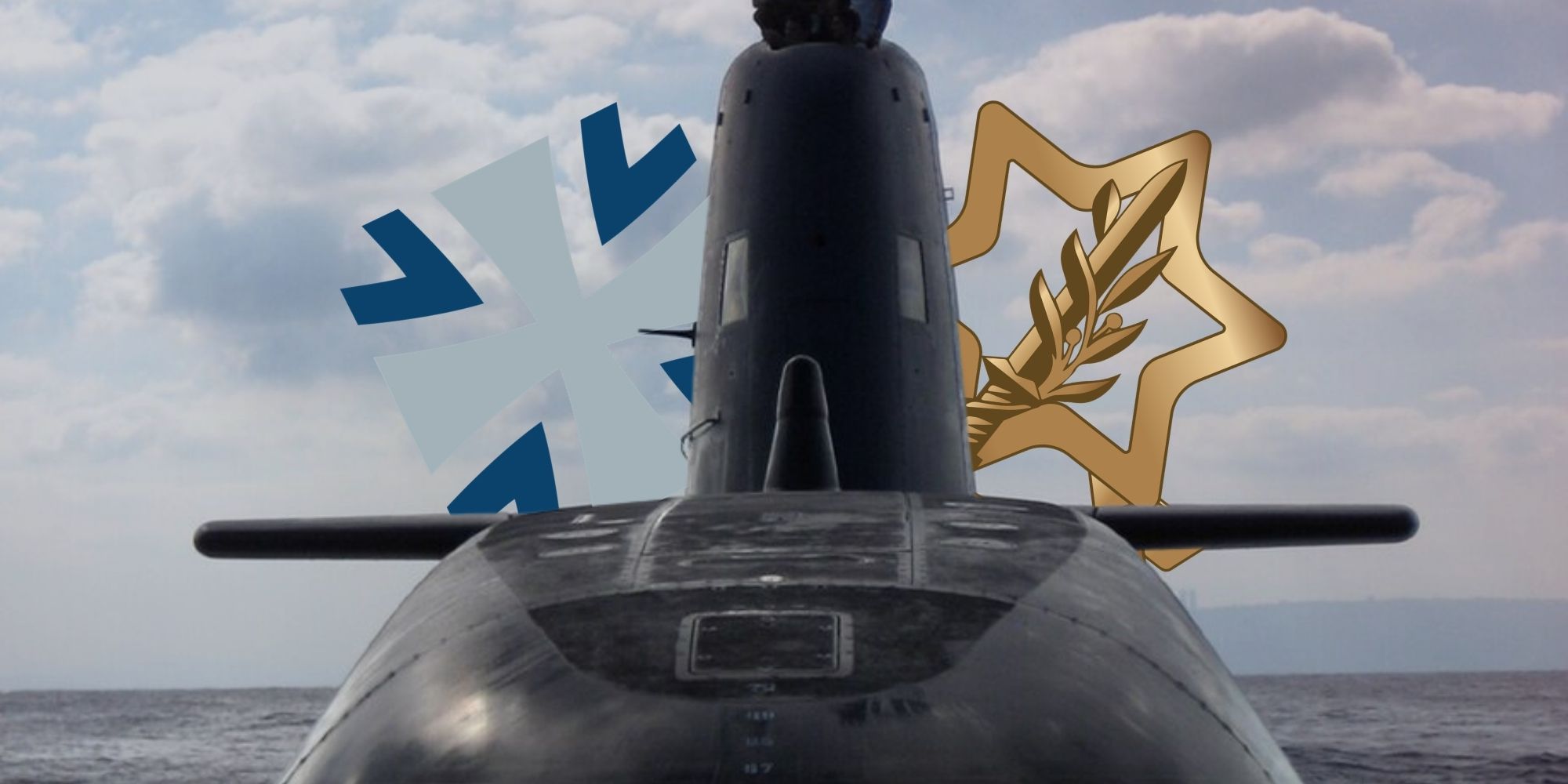
The concept of reason of state appeared explicitly for the first time in speeches by German politicians in the early 2000s and is directly related to the changing German-Israeli military relations. One area in particular is inextricably linked to the concept of reason of state: the maritime area, more precisely the German delivery of submarines to Israel.
How did these deliveries come about? The birth of the younger reason of state can be dated almost exactly to January 1991. The Iraqi military fired approximately 42 Scud missiles at Israel during the Second Gulf War. The Iraqi attacks caused considerable unrest in Germany. Hussein threatened to attack Israel with chemical weapons. And thanks to German companies such as Daimler, Degussa and Siemens, the country has had the necessary technology since the early 1980s. It also became known that German companies were also involved in increasing the range of Iraqi missiles. For the Federal Republic of Germany under Helmut Kohl, these involvements in the Iraqi war apparatus were extremely embarrassing and threatened to damage the country's reputation in the West at the sensitive moment of reunification. To appease Israel, but v. a. To demonstrate to the world the good intentions of German policy, Germany promised Israel funding for Dolphin-class submarines as part of a compensatory aid package that Israel had been seeking for several years. For the first three of the six submarines delivered, the Federal Republic of Germany covered more than 85 percent of the costs, approximately 1.1 billion DM. These were Germany's largest arms exports to Israel since 1966, which represented a beneficial subsidy for the ailing German shipyard industry and allowed Germany to expand its competitive advantage in the maritime sector. Israel's security once again proved to be a useful instrument for Germany: the perceived moral failure of German defense capital was responded to with a massive state subsidy for German defense capital.
The connection between the German maritime arms industry and the raison d'état as Israel's security is also mentioned by bourgeois scientists. Marwecki describes the submarines as "the material expression of the talk of raison d'état"16 and the British historian Adam Tooze writes about German exports: "They are what German politicians, at least those in the know, allude to when they say that Israel's security is German raison d'état. If Germany has a 'deep state', then it is this one - a covert cooperation in the development and construction of Israel's nuclear deterrent power."17 Israel's security therefore means for Germany state contracts worth billions for its own arms industry, which are sold to the German taxpayer as an inevitable service to his reparation. The state money to companies such as Thyssenkrupp Marine Systems or Rheinmetall, for which Israel's security means considerable advantages on the world market, is declared the sacred duty of all Germans; after all, the impression must not arise that Germany is pursuing its own interests or even great power ambitions with its military and its arms industry. The modernized German state must always be guided by higher interests and must never pursue lower economic or geopolitical goals.18 The German reason of state as the security of another country is the embodiment of this paradoxical ideology.
With the so-called “turning point” and the massive rearmament that resulted from the Russian invasion of Ukraine, German-Israeli military relations are also entering a new phase. The changed geopolitical conditions mean that Germany is currently increasingly dependent on Israeli weapons systems and experience - Israel as a chauvinistic-militaristic project is now coming to the fore. Two areas are worth highlighting here: missile defense and military drone systems. Due to its war experience, Israel has know-how in both areas that Germany can now access. This new trend is reflected in a historic arms deal from October 2023. Germany acquired the Arrow 3 missile defense system from Israel worth approximately 4 billion euros, which was paid for from Germany's 100 billion special fund. The Israeli system is an important part of the European Sky Shield Initiative, which was signed by 18 countries in August 2023 and obliges them to acquire military deterrent systems. The Arrow 3 missile defense system, which has been in use in Israel since 2000 and is constantly being further developed, consists of radar devices that can detect incoming flying objects even at several thousand kilometers, as well as launchers and defense missiles. Israel's second increasingly important arms export to Germany are the Heron TP drones. In September 2025, the purchase of three additional Israeli combat drones was agreed, expanding the German Heron TP fleet from the current five to eight systems. The total package for the new drones will be around 930 million euros.
The manufacturers of Israeli drones often advertise their products by saying that they are “battle-tested” through use in the West Bank and Gaza. Journalist and author Anthony Loewenstein writes about the role of Palestinians as guinea pigs for the Israeli military-industrial complex:
"Palestine serves as Israel's workshop: an occupied nation on its doorstep that provides millions of subjugated people as a laboratory for the most precise and successful methods of rule."19
The German Interior Minister Alexander Dobrindt traveled to this workshop in January 2025 to sign a “cyber and security pact” with the war criminal Benjamin Netanyahu, which, among other things, aims to set up a joint “AI and cyber innovation center”, drone defense, civil and civil protection, law enforcement as well as “counter-terrorism” and “networking on the topic of cyber domes”. Die Zeit wrote about this meeting: “Germany wants to use Israel’s experiences for its own benefit.”20 A little later, in February 2026, an “agreement between the Israeli and German armies” was agreed upon. According to a Bundeswehr representative, the aim of this agreement is to “further develop the army” through an exchange of experiences. This should be given to the Bundeswehr, among other things. help integrate women into the military and mobilize reservists.2122 Israel also has valuable experience in this area.
But it is also the Israeli model of a society in a permanent state of war that will potentially be increasingly groundbreaking for Western countries in times of isolation from the outside and militarization at home. Israel's highly armed ethnocracy has become an increasingly central positive reference for many authoritarian right-wingers and liberals in recent years. Former Brazilian President Jair Bolsonaro sees Israel as an ally and a model, Netanyahu calls Hungarian Prime Minister Victor Orban a "true friend of Israel", the well-known US ultra-right Richard Spencer admires Israel's 2018 nation-state law and describes himself as a "white Zionist" and the Dutch right-wing Geert Wilders, who worked in a settlement in the West Bank for a year, emphasizes that one can learn from Israel how to deal with opponents. A list that could go on and on. “Israel’s role is to serve as a role model,” summarizes Elliott Abrams, a neoconservative and one of the architects of the “War on Terror.”23
This new role for Israel can be justified by the central narrative of the Israeli state: the existential threat from external enemies, which can only be overcome through military strength, deterrence and high-tech control - not through the creation of conditions for human coexistence. In the age of escalating inter-imperialist conflicts and racism and nationalism fueled by the ruling class everywhere in Western countries, Israel is becoming increasingly important not only as a supplier and developer of weapons and surveillance technologies, but also as a social model of authoritarian liberalism or liberal fascism in a permanent state of war.
With the genocide in Gaza, which left irreversible damage to the Western model of civilization after Auschwitz, the German state culture of remembrance was also shattered. No intelligent being can seriously claim today that the ruins of Gaza would be a contribution to German reparation, that German arms exports would not only be an expression of naked German interest, but of a historically conscious “Never again!” With the fascistation in Israel and the continued unconditional German support, German imperialism has shed its moral shell over the last two years and now stands exposed before us. There is no question that open racism and nationalism will play an increasingly central role and the ideology of reparations and coming to terms with the past will gradually fade into the background. Internationalist antimilitarism is therefore currently faced with multiple tasks. On the one hand, he must attack and expose the already greatly weakened ideology of a progressive Germany and its militarism; at the same time, he will subsequently be confronted with the raison d'état in the original sense, i.e. h. with a state that no longer wants to integrate its opponents, but instead wants to destroy them. Dangerous breaches will open up here for us, but also for our opponents.
1 Karl Marx and Friedrich Engels, The Holy Family [1845], MEW, Vol. 3, Berlin 1990, p. 163.
3 »Speech by Foreign Minister Annalena Baerbock at the agreed debate ›7. October: One year after the terrorist attack on Israel in the Bundestag, foreign office. de/de/newsroom/2679468-2679468.
4 Enzo Traverso, Instructions for the Past. History, memory, politics, Münster 2007, p. 71ff.
5 See AK Beau Séjour, Dying and Letting Die. The Ukraine War as a Class Conflict, Berlin 2024.
6 The historical outline of German-Israeli relations is essentially based on the work of Daniel Marwecki, who wrote Absolution? Israel and the German Reason of State (Göttingen 2024) recently published a helpful book on the subject. However, since we have placed our focus primarily on military relations, we are taking a different periodization of German-Israeli relations. We divide the relations into a first anti-communist phase (1952-1990), a second phase of the reason of state (1990-2022) and a third phase of the turnaround (from 2022), while Marwecki makes the following classification: 1. Rehabilitation (1948-1965), 2. Normalization (1965-1990), 3. Reason of state (from 1990).
7 See Gilbert Achcar, Foreword, in: Maxime Rodinson, Marxism and the Muslim World [1972], London 2015.
8 Until the early 1970s, the Soviet Union invested approximately $3.5 billion in weapons for Egypt, along with approximately $2.5 billion in investments in Egypt's infrastructure and economy.
9 See Marcel Serr, “On the history of German-Israeli arms cooperation,” in: APuZ 65(6), February 2015; Yeshayahu A. Jelinek, Between Morals and Realpolitik, Gerlingen 1997, p. 69f.
10 Simon Peres, David’s Sling, New York 1970, p. 72.
11 Cf. Serr, “On the History of German-Israeli Armaments Cooperation,” op. cit.
12 Quoted from Marwecki, Absolution?, op. cit., p. 155.
13 See Stephen Halbrock, “The Class Origins of Zionist Ideology,” in: Journal of Palestine Studies, 2(2), Fall 1972; Donny Gluckstein and Janey Stone, The Radical Jewish Tradition, Berlin 2025.
14 Quoted from Marwecki, Absolution?, op. cit., p. 65.
15 Segev, The Seventh Million, op. cit., p. 346.
16 Marwecki, Absolution?, op. cit., p. 159.
17 Adam Tooze, “Reasons of State. Memory politics, U-Boats, Iran & the German-Israeli relationship", Chartbook 271, adamtooze.substack.com/p/chartbook-271-reasons-ofstate-memory.
18 In 2010, German President Horst Köhler had to resign from his post because he said in an interview that a country with a strong external orientation should know that military action would be necessary in an emergency to secure trade routes. In doing so, he broke a prevailing taboo in post-war German political culture.
19 Anthony Loewenstein, The Palestine Laboratory, London & New York, 2023, p. 15.
20 See Philip Tassev, “The “natural” partner”, in: Young World, January 13, 2025.
21 "Bundeswehr and IDF want to work more closely together", in: Jewish General,
23 See Ben Lorber, “How the Israeli flag became a symbol for white nationalists,” in:
+972 Magazine, January 22, 2021, 972mag.com/israeli-flag-white-nationalism-symbol.
Lower Class Magazine, founded in November 2013, is an independent media collective. We stand for journalism from below – without ties to corporations or parties. We are only obliged to all those who fight: against exploitation, oppression and humiliation.