
Germany · Lower Class Magazine · 1970-01-01
Erich Fromm: The authoritarian character - step down, buck up
Deutsch (original) · Auto-translated to English
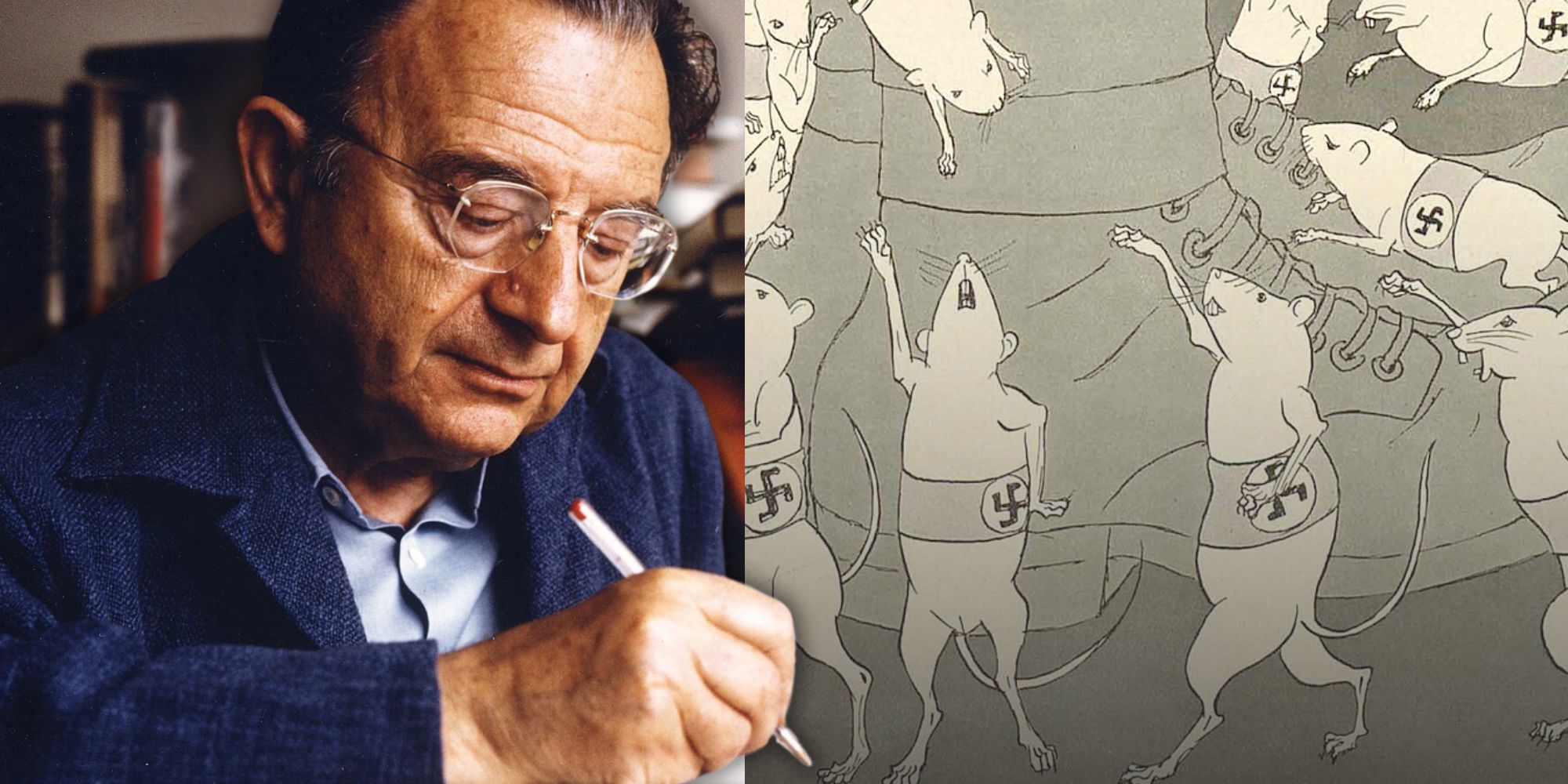
The times are dark. According to current forecasts from the Sunday Question, the AfD is increasingly emerging as the strongest force from the other parties and there is currently no valid argument that speaks against the fact that the AfD will soon form the government in the federal government. At the same time, the strategy of the ethnic wing around Götz Kubitschek seems to have worked, with Björn Höcke taking on the leading role in the AfD in the long term, even if Weidel and Chrupalla will continue to play the useful idiots for a while. And so a podcaster like Ben Berndt can now expect a few million clicks from an interview with Höcke and a lot of support for the great conversation atmosphere if he is unable to formulate a critical thought towards Höcke for more than four and a half hours.
Meanwhile, the class struggle from above continues to intensify. The times are pointing to war and every euro must be saved. Solidarity was yesterday, today we need toughness and willingness to sacrifice. The reform package passed this week, hailed by the bourgeois press as an important step, is a further attack on the working class. Therefore, scapegoats are needed who can be held responsible for the misery. The current discourses about the neglect of wealth are preparing the “cold bath” that Götz Kubitschek announces for the education of the effeminate Germans after the takeover of power. And the AfD can advertise with the promise of finally consistently implementing Olaf Scholz's plan to deport people on a large scale. The fascistation of the 21st century is not an overnight revolution, but a process that is taking place before our eyes and will be accelerated by the AfD. It proves once again that civil society, which constantly reproduces the authoritarian character, also produces the political force that best meets its needs in crises. Erich Fromm's social psychological concept of the authoritarian character remains of great importance today in understanding the fascistation processes of our time.
In circles that have some form of positive regard for critical theory, Erich Fromm's reputation is extremely bad. An example of this is the episode of the podcast “Prosperity for All” last year, in which the “destruction of Erich Fromm” was proclaimed. For this purpose, a single book by Fromm is selected, interpreted in a completely unsystematic and largely arbitrary manner and, based on this, a simply incorrect picture of Erich Fromm's entire work is drawn, which now has to be “destroyed”. This may be clever as clickbait, but it is certainly not a meaningful criticism of Fromm's late work, which is undoubtedly necessary. On the other hand, the fact that reactionaries like Nicholas Potter refer positively to Fromm and thus pee on his grave once again doesn't make things any better. The origin of the division between Fromm's work and critical theory lies in the falling out between Fromm and the Institute for Social Research at the end of the 1930s. The famous letter from Adorno to Horkheimer also dates from this time, in which he accuses Fromm of making the concept of authority too easy and urgently advises him to read Lenin. Apart from the fact that everyone is strongly advised to read Lenin, Adorno's criticism of Fromm is certainly justified. In places where Fromm criticizes the development of the Soviet Union, it often gives the impression that communism failed primarily because the Bolsheviks did not remain humane enough. A tendency towards psychologism cannot be denied in many writings. And Fromm's later rejection of the drive theory is not really convincing either.Nevertheless, Adorno's criticism oversteps the mark when it lumps Fromm with other neo-Freudians and accuses him of turning Freudian theory into another means of "integrating mental impulses into the social status quo" (Adorno) - even if this judgment may apply to many who still refer to him today.
In his early writings, Erich Fromm clearly defined the methodological place of psychoanalysis within social theory. “The use of psychoanalysis within historical materialism results in a refinement of the method, an expansion of the knowledge of the forces at work in the social process, an even greater certainty both in the understanding of historical processes and in the prognosis of future social events, and especially the complete understanding of the production of ideologies” (Fromm). Psychoanalysis is intended to expand historical materialism at a certain point, not replace it. And although some passages certainly leave room for diverse interpretations, Fromm never deviated from the fundamental insight that the origin of neurotic suffering lies in material conditions. He emphasized this again and again in his debate with Herbert Marcuse about the relationship between Marxism and psychoanalysis in the 1950s. However, the subject of his analysis remained human psychology and his writings arise primarily from the perspective of the therapist, not that of the theoretician of society. Fromm's work is primarily dedicated to psychoanalysis, and not, as in the case of Marcuse and Adorno, to the “philosophy of psychoanalysis” (Marcuse). His theoretical writings draw on the empiricism of his therapeutic work and it is worth studying them not only to better cope with your life. Contrary to what Wolfgang M. Schmitt and Ole Nymoen suggest, nobody becomes stupider when they pick up a book by Erich Fromm.And any materialist criticism of fascism loses substance if it ignores the insights of Fromm's early writings.
In his writings, such as the social psychological part of the Institute for Social Research's 'Studies on Authority and Family', Erich Fromm gives his theoretical work a programmatic orientation. Like Wilhelm Reich, he also sees psychoanalysis essentially as a materialistic science whose findings are rooted in people's social living conditions. “It has demonstrated drive impulses and needs as the motor of human behavior, which are fed by physiologically anchored ‘drives’ that are not directly observable.” (Pious)
In his individual psychology, Freud always started from the socialized being that is subject to the influences of the environment. However, he fails to recognize that the social conditions themselves are not determined by nature, but - as demonstrated by historical materialism - by the production conditions of an epoch. Freud's “absolutization of bourgeois-capitalist society” (Fromm) must be overcome in order to understand the historically specific influence of the socio-economic conditions of an era on the individual. Marxist social psychology has the task of reconstructing the “path from the economic condition through the human head and heart to the ideological result” (Fromm). The family plays an essential role in this journey.
Like Engels in “The Origin of the Family,” Fromm sees Johann Jakob Bachofen's investigations into mother-law societies as further evidence of the historical changeability of society and its institutions. Accordingly, the patriarchal family is not a natural order, but, like private property, the product of a specific historical epoch in the history of humanity, which differs fundamentally from the structures of matriarchal societies and creates a specific character structure. Sexual repression plays a crucial role in this era. Freud's insights into intra-family conflicts would therefore have to be contextualized according to the insights of historical materialism. As a “psychological agency of society” (Fromm), the family fulfills the function of creating the socially desired psychological structure of the bourgeois-capitalist order. "The authority of the father of the family himself [...] is ultimately based on the authority structure of society as a whole. Although the father of the family is the first mediator of social authority towards the child (in terms of time), he is (in terms of content) not their role model, but rather their image" (Fromm). According to Fromm, early childhood conflicts are rooted less in nature than in the social conditions that are mediated through the family and the children's instinctual life.
According to Freud, the ego is formed by coping with the drives that come from the id and the demands of the outside world. According to Freud, the original authority of important upbringers, especially the father in the patriarchal family, is internalized by the superego as an instance of conscience. The cop in your head opens his watch and from now on punishes non-conformist behavior with feelings of guilt. Driven impulses and needs that contradict the commandments of the superego must therefore be repressed. The “superego or fear of authority” (Fromm) has such a strong effect that taboo impulses are eliminated through repression before they even become conscious. In his work, Freud repeatedly encountered the repressed sexual desires, especially of his female patients, which were subject to the social taboo of the time. In order to maintain this repression, energy must be permanently bound. The ego “pays for the alliance between authority and superego, so to speak, by giving up its independence and renouncing its sovereignty” (Fromm). The strength of the ego, which, in addition to “reason and prudence” (Freud), also contains the “ability to actively plan and change the environment” (Fromm), is determined by the environment.
The more the child is accompanied by fears in his ego development, the more he is inhibited in his development and in an active relationship with the environment. "If an active and rational life practice represents the positive condition for ego development, the absence of fear is the negative one. As long as the ego is still weak, it needs a certain degree of freedom from fear in order to be able to develop." (Pious)
If the child learns not to experience the external environment with fear, but rather to shape it in a planned and sensible manner, he or she will later be able to guide his or her own drives and needs through a strengthened ego instead of repressing them. If, on the other hand, it is forced to permanently suppress its own instinctual needs by authorities, the ego remains weak and passive in order not to come into conflict with the environment. “The more the weak ego is threatened by fear, the more inhibited it is in its development.” (Fromm) This is the psychodynamic origin of the neurosis and the authoritarian character.
By “character” Fromm means less the typical manifest behavior, but rather “the structure of those impulses, fears and attitudes that, to a large extent unconsciously, determine the manifest behavior typical of humans.” It develops in the sense of a permanent adaptation of the drive structure to certain social conditions. The authoritarian character only has a weak ego. He has learned to satisfy his instinctual needs through obedience and begins to experience submission to authority with corresponding pleasure. “Where this character senses power, he must almost automatically revere and love it.” (Pious)
The degree of awareness of this desire for submission can vary greatly even among individual people in different situations. Kubitschek and Höcke repeatedly emphasize that they were forced into politics against their will in order to protect the Germans from national death. In his unscripted chat with Ben, Höcke becomes unintentionally honest: “As a child, I already had the feeling that I wanted to serve something bigger.” Kubitschek would have preferred to remain a soldier.
From a “fear of freedom” (Fromm), the authoritarian character develops a desire for masochistic submission, which offers him protection from his own fears through the fulfillment of duty. Renunciation and obedience become the maxims of one's own actions. The “love for Germany”, whatever that is supposed to be, then serves as a rationalization of one’s own actions. Even before Fromm's time, this character type found its literary expression in Heinrich Mann's “The Subject”.
The actual characteristics of the potential authority holder to whom the authoritarian character submits are not necessarily decisive for his or her leadership role. As Charlie Chaplin's film "The Great Dictator" shows, outside Germany Hitler was also perceived as quite a clown - much like Donald Trump is today. For the followers, however, it is a matter of endowing their leader with the largely unconscious characteristics of their superego. For supporters of the MAGA movement, Trump is not a senile criminal with a severe personality disorder, but rather the strong father who cleans up at home and restores the country to its former greatness. In addition to masochistic submission, what is central is a “narcissistic substitute satisfaction” (Fromm), which is achieved through devotion to a higher power such as one's own nation. “The higher the individual values the power and splendor of the violence in which he participates, the greater his satisfaction.” (Pious)
The failures that people have to suffer in an economic system that is based on naked competition and makes them increasingly superfluous through the development of productive forces creates, especially in crises, the breeding ground for the desire to be able to compensate for the humiliations suffered by participating in the splendor of the nation. Even more than America, one's own life should finally be made great.
According to Fromm, masochistic submission to a higher power is always accompanied by a sadistic attitude towards those weaker. Just as the authoritarian character bucks upward, he simultaneously steps downward. “Just as power automatically awakens fear and, albeit ambivalent, love in him, so does helplessness awaken in him contempt and hatred.” (Fromm) The humiliation that the individual has to endure in order not to come into conflict with the authorities is made bearable by aggression against weaker people. “The sadistic Circenses always had to play a greater role the more scarce bread was and the more the real helplessness of people led to a strengthening of the sado-masochistic character structure.” (Pious)
Therefore, the economic crisis is the psychosocial breeding ground of fascism. Today, politics against the working class is still accompanied by tirades about illegal refugees and social parasites, which would be the real reason for the decline of society. If people are to buck up, they must be given the opportunity to buck down. And so a chancellor who now introduces sick leave on day 1 must also provide the enemy image of foreigners, because of whom Germans can no longer get doctor's appointments. The strategy seems to be working once again today. In Germany, the possibility of reducing the social welfare rate below the subsistence level is being discussed again, and boomers are waging a war in the comment columns of the Internet to deny queer people their identity or wish refugees death in the Mediterranean. The same psychological dynamic was observed in many psychoanalytic case studies in which children began torturing animals to compensate for the violence suffered by their parents.
The essential characteristic of the “authoritarian character” is to passively endure the demands of the environment and to seek happiness in submission to a higher power. Fascist forces are currently on the rise across Europe and are promoting themselves with such promises of happiness. The times are dark. While Clara Zetkin was able to appeal to the workers' movement at the opening of the Reichstag as senior president in August 1932 in the hope that it could still avert fascism, such a hope currently seems illusory. Zetkin's warning against opportunism reads today like the bitter story of the last century: "The politics of the "lesser evil" strengthened the consciousness of power of the reactionary powers and should and still does produce the greatest evil of all: accustoming the masses to passivity." The success of accustoming the masses to passivity is clear in current discourses. Economic reality appears as a force of nature to which “we” have to adapt. “We” can no longer afford our lifestyle. And anyone who does not follow the path of the “lesser evil” – supporting rearmament and social cuts – is to blame for the success of the AfD.
Here the parallel between society's authority structure and children's experience of authority becomes clear. The commandments of the more powerful do not have to be based on reasonable reasons, but are presented as constraints to which the individual must adapt, otherwise they would be punished. Reason comes into the service of rationalization. Sick leave from day 1 is a political decision that the SPD and CDU had to make because the number of days absent among Germans was too high and this is the only way “we” can remain competitive. The connection between growing poverty on the one hand and militarization, wealth of bigwigs and tax giveaways for corporations on the other hand should be pushed out of public consciousness as best as possible. As Clara Zetkin predicted, the politics of the “lesser evil” does not prevent a potentially fascist movement, but - currently very obviously - actively contributes to its emergence. If this trend is to be stopped, the masses must overcome their passivity. What the strengthening of the ego is for the child, the class struggle is for the proletariat. The “we” of the workers is their class, not the national collective. This “we” must be strengthened and the bourgeois “superego” weakened. Neither education nor the organization of society are subject to the laws of nature, but rather to those of the ruling class. The fight against the authoritarian character has a chance of success first and foremost if we become aware that our lives, including at the social level, can be organized in a planned and sensible manner. In the words of Erich Fromm: “To submit to fate is the heroism of the masochist; to change fate is that of the revolutionary.”
Image: https://commons.wikimedia.org/wiki/File:Erich_Fromm_1974.jpg
Wilhelm Reich: Psychology and Class Consciousness - Class conflict sits in every crack in everyday life
Wilhelm Reich: The material violence of ideology - Why socialism is so difficult to achieve
Female hysteria, colonized thing, homo economicus - Marxism and psychoanalysis as a criticism of human pseudo-nature
Lower Class Magazine, founded in November 2013, is an independent media collective. We stand for journalism from below – without ties to corporations or parties. We are only obliged to all those who fight: against exploitation, oppression and humiliation.
Read the full story at the source →
Source: Lower Class Magazine