
Politics · Lower Class Magazine · · 2h
“The law legally regulates disarmament; however, it does not completely solve the Kurdish question itself” – Veysi Aktaş on the status of the peace process
Deutsch (original) · Auto-translated to English
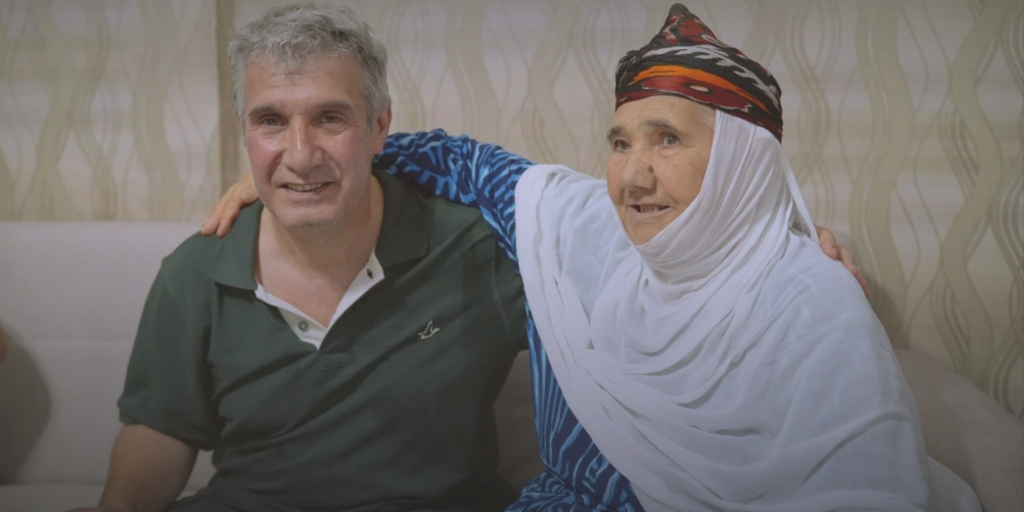
Below we publish the full interview with Veysi Aktaş about the new “Framework Law to Strengthen National Solidarity and Social Integration” in Turkey, which was published in an abbreviated form on September 12, 2026young worldhas appeared.
Veysi Aktaş was imprisoned as an activist in the Kurdish freedom movement in Türkiye in 1994 and sentenced to life imprisonment. As part of a peace process at the time, he was transferred to the prison island of Imrali in 2015. He has been working in the context of the current peace process in Abdullah Öcalan's secretariat since 2025 and is therefore involved in a leading position in its negotiations and developments.
The current peace process in Turkey, which was accompanied by the laying down of arms and dissolution of the Kurdistan Workers' Party (PKK) in 2025, is partly opaque and contradictory for the public. The interpretations of the process vary according to the different speaker positions and interests. It should also be mentioned at this pointinterviewby Nûçe TV, which was conducted in the southern Kurdish mountains / northern Iraq with Cemil Bayik (PKK Executive Committee, co-chairman of KCK and PKK founding member) and published last week. The sometimes contradictory statements from the political leadership in Northern Kurdistan, the guerrilla forces in Southern Kurdistan and the political-military organizations in Rojava make it difficult to forecast the ongoing integration process.
The publication of this interview with Veysi Aktaş is intended to help clarify the perspective of the leadership of the Kurdish freedom movement around Abdullah Öcalan in Turkey and Northern Kurdistan.
Interview: Tim Krueger
After tough negotiations, the Turkish parliament passed the long-awaited framework law on the evening of August 10th, which is intended to regulate the laying down of arms of the guerrillas of the Kurdistan Workers' Party (PKK), which was formally dissolved last year, and the integration of its members into society. How do you view the law and can you elaborate on its content?
The historical significance of the law lies in the fact that an issue that has been dealt with essentially through security policy and military means for over forty years is now linked to a legal and political transition mechanism for the first time. However, the true meaning of the law will be determined less by its wording than by future steps towards democratization. If I have to answer the question “What is the essential character of the law?”, I can say the following: I am not a lawyer, but I know that this law is not a “general amnesty law” in the classic sense. Rather, it is a “transitional and limited integration law” that regulates the legal situation of certain people after abandoning the strategy of armed struggle against the Turkish state and dissolving the organization. The law legally regulates disarmament; However, it does not completely resolve the Kurdish question itself. The transition of an organization from a strategy of armed struggle against a state to a strategy of democratic politics is not the same as solving the historical, political, cultural and democratic problems of a country. Therefore, the law must be followed by a second phase, namely the phase of democratic change. If disarmament is complemented by reforms in the areas of democratic politics, local democracy, freedom of expression, freedom of association, recognition of identity and freedom, and the rule of law, then one can truly speak of a historic change.
What does the law regulate?
The law regulates in particular the questions of the suspension of ongoing investigations and criminal prosecution measures, the establishment of committees that will monitor the process from the parliamentary side, as well as a committee that will deal with the implementation, as well as the application and application process of the law. The law thus primarily regulates disarmament in legal terms, but it is far from solving the Kurdish question itself. These are two separate matters. An organization's transition from a strategy of armed struggle against a state to a strategy of democratic politics is not the same as solving the historical, political, cultural and democratic problems of a country. Therefore, we can say that the law provides a legal framework for ending the armed conflict, but is not a law for the democratic solution of the Kurdish question. Making this distinction is extremely important. Because lasting peace is not possible through the elimination of weapons alone, but can only truly become a reality if people can be sure of equal civil rights, democratic representation, local democracy, the rule of law and political freedoms.
So in your opinion the law is just a first step and more must follow?
Correct. The law must be followed by a second phase. A phase of democratic change. The end of a 40-year conflict can offer an opportunity to dismantle the state's security-oriented reflexes. However, I don't think this will happen spontaneously or automatically. The end of the conflict does not automatically lead to democratization. In other words, disarmament is a negative prerequisite for peace; Democratization, on the other hand, is a positive prerequisite for peace. But disarmament can create a space for the relationship between the state and the political and social actors of the Kurds to shift from a security aspect to a political aspect. This could help build mutual trust. However, in order for this to happen, the state must not unilaterally pursue the “arms have been laid down and the matter is over” approach. The crucial question is under what democratic conditions will the Kurdish actors be able to conduct politics after laying down their arms. If the answer is that everything should continue as before, the political causes of the problem itself remain unresolved, even after the conflict has ended.
The Kurdish negotiator Abdullah Öcalan welcomed the law as a “first step”. Nevertheless, the law excludes many of the Kurdish side's previous core demands. There is also no formal status for Abdullah Öcalan, and the leadership of the dissolved PKK is also excluded. Why is the law still viewed as a positive step?
Abdullah Öcalan describes the law as “the first step on a thousand-kilometer journey.” The law provides for the establishment of a committee chaired by the Vice President, now established, as well as the creation of various subcommittees. Even if Öcalan's name is not mentioned in the law, it is obvious that he will be effectively involved in the process through these mechanisms. During the disarmament and politicization phase of the process, he will assume the position of an official or semi-official coordinator. Abdullah Öcalan's status is not explicitly contained in the law in writing, but it is a de facto agreement based on a “gentlemen's agreement”. He is relying on a “step-by-step negotiation strategy” that is intended to prevent the process from getting bogged down. The “all or nothing” requirement could lead to the complete failure of the process; Keeping the process alive with the “first step” creates the opportunity to achieve further profits in the following steps. Following Abdullah Öcalan's call for 2025, the PKK's subsequent steps to disband or change its methods of armed struggle and the proceedings in the parliamentary committee, the law creates a legal framework for the "Process for Peace and a Democratic Society" for the first time. It is not a comprehensive peace and democratization law, but even if it does not meet all of the Kurdish side's demands, it can be seen as a first positive step as it legally ends the era of violence and thus paves the way for further reform steps.It marks the transition from a security problem to a legal-political process, i.e. from the negative phase, the end of violence, to the positive development, democratization and integration. It is assumed that the existing gaps can be closed through later legal regulations, democratization steps and also as part of the process for a new constitution. Hence the name for the law as “one step on a thousand-kilometer journey.”
But are there any immediate positive steps that will follow from the law?
The law paves the way for thousands of political prisoners, except those held for intentional homicide, to be released, as well as for many members of the organization to return from the mountains or exile in Europe. It primarily serves to socialize peace and marks the first step towards integrating the Kurds into the legality of the republic. Of course, as I said, the law is not a comprehensive peace and democratization law that meets all the basic political and legal demands of the Kurdish side. Nevertheless, the law can be seen as a positive first step because it legally ends the era of violence, specifies the political will for the way forward and creates the basis for further negotiation and reform steps. This is the very first time that the transition from armed conflict to a political and legal basis is defined by the state through a law. This is qualitatively different from the previous situation. Therefore, the law can be seen as a “transitional law” rather than a finished result.
Nevertheless, the law that is supposed to pave the way to peace still speaks of the "terrorist organization PKK" and the Kurdish question as the cause of the conflict is not mentioned at all. The general rhetoric of the governing parties also seems far from recognizing the Kurdish side as a legitimate negotiating partner. How do you assess the behavior of the Turkish government?
The constant emphasis on the term “terrorist organization” and the refusal to recognize the Kurdish side as a legitimate negotiating partner make it difficult to build trust. In historic peace processes such as those in Northern Ireland and Colombia, recognition of the political dimension of armed groups and moderation of language have accelerated change. Restricting the conflict, which has been going on for decades, to the pure security dimension ignores structural questions such as language, identity, local democracy, equal citizenship and the provisions of the Anti-Terrorism Act. For lasting peace, we first need a change in discourse. The language change is not a symbolic but a political necessity. Instead of emphasizing the term “terror” in the official language, it is important to clearly recognize the political-ethnic dimension of the problem, i.e. the Kurdish question. The aim is not to legitimize violence, but rather to understand the causes of the conflict and create social consensus. Therefore, the discourse should be expanded from “a Türkiye without terror” towards “a Türkiye in which people live together democratically, equally and peacefully”. Kurdish political actors must be included on an equal, more transparent and multilateral dialogue basis. Giving up weapons alone does not solve the problem. Without political vision and democratic freedoms, the risk of renewed armament or radicalization remains. The government must clearly recognize the political nature of the problem, moderate its tone and make reforms concrete, timely and inclusive.What is needed is a comprehensive legal and political reform package that goes beyond the framework law. A revision of the anti-terrorism law, concrete steps in the areas of the right to mother tongue and cultural rights, the strengthening of local administrations, the release of political prisoners and the guarantee of freedom of expression should not be seen as “concessions” in a negotiation process, but as raising democratic standards. Otherwise, doubts and the perception of not being recognized as a legitimate partner will continue to make the process fragile. Therefore, in my opinion, it is necessary for the government to move from its logic of “security-oriented liquidation” to a logic of “political solution and democratic change”. The Kurdish question is not a question of security bureaucracy, but a question of the democratization of Türkiye. True peace does not just mean eliminating weapons. Peace must also take concrete form in areas such as political freedom, freedom of opinion and expression, freedom of association, local democracy, native language and cultural rights, fair trials, ending political imprisonment, expanding the democratic political space and coming to terms with the past. Otherwise, the ceasefire may be achieved, but the political causes of the conflict remain.
The leadership of the Kurdish freedom movement has stated that for them the successful implementation of the law depends on the extent to which Abdullah Öcalan himself can coordinate the further steps and is granted free working conditions. Do you expect there to be a change in Öcalan's situation on Imralı Prison Island in the coming period?
The law does not contain any provisions regarding the status of Abdullah Öcalan and, according to official statements, no such change is expected in the near future. However, in the practical implementation of the process, steps are being taken to improve the prison conditions in İmralı and to strengthen the coordinating role of Mr. Öcalan, the leader of the Kurdish people. On August 24, 2026, the Committee held its first meeting under the chairmanship of Vice President Cevdet Yılmaz and decided to establish four subcommittees. One of them is the Subcommittee on Disarmament and Strategic Coordination. Mr. Öcalan will have the status of “obligee” in this subcommittee and will coordinate the return and disarmament process. Since the law gives the committee the power to form subcommittees and invite those it deems necessary, there is no legal impediment.
Why is expanding Abdullah Öcalan's role so important?
Because giving up weapons is not just a technical process. Organizational decisions must be made, the cadres must be convinced, the actors in various areas must be brought onto a common line, the returnees must be organized and the political significance of the process must be explained. The person who made the fundamental decision to move from the armed to the political-democratic phase must also be able to manage the consequences of this change. If the state really wants a permanent conclusion to the trial, it could be forced to make political and legal regulations regarding Öcalan's prison conditions. The first signs of this can already be seen. In the coming period, it is likely that Mr Öcalan's ability to communicate, run a secretariat and talk to delegations will evolve into a de facto working office. Abdullah Öcalan needs the opportunity to directly coordinate organizational change, communicate with the public and meet with various political actors. Otherwise, a successful completion of the process is unthinkable.
But the process is also based on the very delicate military and geopolitical balances in the region. If one examines the statements of the government side but also of the movement more closely, it becomes clear that the Turkish government started the negotiations primarily because it felt threatened by the changing economic situation in the Middle East and the world, in particular Israel's new leading role. The statements of the chairman of the Nationalist Movement Party MHP Devlet Bahçeli, according to which the “internal front” must be secured, point in this direction. It seems as if Abdullah Öcalan and the movement are also trying to use this window. But now a lot of time has passed and the balances are constantly changing. For example, how do you view the outcome of the recent NATO summit? Can it be said that the Erdoğan government has found a new agreement with the Western bloc? And what impact does this have on the balance of power at the negotiating table?
The NATO summit held in Ankara in July 2026 was an opportunity for Turkey to strengthen its prestige and position and reaffirmed signals of a transition to a more Europe-oriented structure, referred to by the alliance as “NATO 3.0”. The commitment to Article 5 of the Washington Treaty was reaffirmed, Russia was defined as a long-term threat and terrorism as a permanent threat. Defense spending by European allies and Canada has already been recorded to increase by more than $139 billion in 2025. A new procurement and contract package worth over $50 billion has now been announced in Ankara. The focus was on multinational projects in the areas of drones, deep strike weapon systems, integrated air and missile defense, and surveillance systems. Ukraine has been promised military equipment, aid and training worth 70 billion euros for 2026. It was reiterated that Iran must not acquire nuclear weapons and freedom of navigation in the Strait of Hormuz must be respected. For Turkey, positive signals were sent on the sidelines of the summit regarding the lifting of sanctions in connection with the Russian S-400 anti-aircraft systems and stated that a return to the F-35 program was “being examined”. The Turkish defense industry is expected to be involved in some multinational projects, which further strengthens Ankara's position. Turkey has its position as a “swing player” within the alliance. It appears increasingly indispensable both in NATO and in the Middle East region.The Turkish government's efforts to stabilize and strengthen relations with the Western bloc, especially with the USA and NATO, are clearly visible, and this has an indirect but noticeable impact on the balance of power in the domestic political process for peace and a democratic society. The government initially framed the changes in the Middle East, particularly with regard to Israel's role, as a "matter of existence" for Turkey. The signal that relations with the West are improving gives the government room for maneuver. For this reason, the pace and scope of democratization steps can progress in a more controlled manner. Conversely, the process could be slower or limited if Western pressure or conditional support weakens. The balance of power is still in flux; the process will continue to be guided by both external and internal developments. In my opinion, the summit in Ankara shows, above all, that Turkey is re-strengthening its relations with the Western alliance and at the same time trying to maintain its regional room for maneuver. The new security and defense partnership signed with Britain during the summit is a step that needs to be followed closely. This agreement provides for more institutionalized cooperation in the areas of defense industry, military cooperation, cybersecurity, counterterrorism and defense policy. Strengthening Turkey's relations with the West could automatically lead to a stronger state position on the Kurdish issue.Ankara can present itself to the West less as a “country with security problems that needs support” and more as a regional security guarantor and important NATO player. In this case, the government's argument at the negotiating table could be strengthened along the following lines: "We are already an important player in the regional security architecture; therefore the domestic political arrangements must be made within the framework of our security priorities."
And how does the ongoing negotiation process relate to Türkiye’s regional ambitions? What interest would Turkey have in resolving the Kurdish question through negotiations?
Developments in Turkey may not remain just an internal matter for the country. Because the Kurdish question also has dimensions in Iraq, Syria and Iran. Should Turkey actually succeed in shifting from a course of conflict to a course of democratic resolution, this could have a significant impact on relations with the Kurdistan Region in Iraq, with northern and eastern Syria, with the Kurds in Iran and with other peoples in the region.
Particularly with regard to Syria, Turkey's greater focus on “seeking a political and diplomatic solution” instead of its security-focused approach could ease regional tensions. However, the opposite is also possible. If Turkey sees the process as merely disarming the PKK and maintains its security-oriented approach towards the Kurdish political groups in the region, a serious contradiction will arise between peace within Turkey and its regional policy.
The economic dimension is often not sufficiently discussed. An end to the conflict could particularly reduce investment risks in the Kurdish region of Türkiye. It may become possible to redirect public resources more from security spending to education, health, infrastructure, agriculture, industry and employment. Additionally, Türkiye's ability to function as a regional trade hub could improve as trade routes with Iraq, Syria and Iran become more stable. But for this to happen, improving the security situation alone is not enough. Measures such as legal certainty, a predictable economy and strengthening local governments are also required. This means that economic peace and political peace cannot be separated.
As part of the negotiations, Öcalan also presented a new manifesto. If you follow his statements, then neither he nor the Kurdish movement have any intention of retiring, but they now want to continue their own fight using peaceful means. How do you view the future and the transformation process of the Kurdish freedom movement?
Abdullah Öcalan's new manifesto "Peace and a Democratic Society" aims to replace the PKK's 50-year-old programmatic text "The Path of the Kurdish Revolution." The central thesis today is: The struggle for the existence and dignity of the Kurdish people is largely over; Now the main thing is for the Kurds and other peoples to organize themselves as a democratic society and to fit into the existing state structures through democratic integration. Demands for a separate state, a federation or classic autonomy are criticized as an “extreme nationalist derailment”. Instead, the concepts of “democratic nation”, “democratic confederalism” and “democratic republic” come to the fore. This is not an abandonment of the matter, but a change of means and forms. The PKK's decision to disband in 2025 is the organizational expression of this strategic change. During the process, the DEM party in Turkey (legal pro-Kurdish left party) will transform into a structure similar to a movement for a democratic society and republic. The fight is not given up; but the means, the language and the definition of the goal are radically redesigned. This can be defined as a transition from a politics of violence and division to a politics of democracy and integration. The end of the phase of armed struggle means the further development of the social-democratic struggle. Historically, similar transformation processes remained unfinished, for example in 1999–2000.Success today also depends on whether the construction of a democratic society actually spreads to the grassroots and whether Turkey's political system creates the space for it. This is a crucial threshold for both the Kurdish movement and Turkish democracy. In my opinion, the central question here is not so much “Is the Kurdish freedom movement coming to an end?” but rather “From which form of struggle, one moves on to which form of struggle”. We can also define this as a transition from a politics of violence and division to a politics of democracy and integration. It would be wrong to interpret the laying down of arms as the end of the fight.
Where will the fight develop?
I see some key changes here. One of them is the transition from an organization-centered struggle to a society-centered struggle. In the past, the movement's focus has been on the armed organization and the political structures around it. According to the logic of the new paradigm, however, it is not the organization that is the real subject, but the democratic society. This means that success will no longer be measured solely by how many cadres you have and how strong your own organization is, but the real question is whether the people are able to solve their own problems, whether or not democratic mechanisms are really being created at the level of districts, villages, cities and regions, whether women have actual decision-making power and whether the youth will be an active actor in politics, whether the Kurds can take part in democratic politics with their own identity and whether there is democratic coexistence with Turks, Arabs, Syrians, Armenians, Yazidis and other communities will or will not. The future of the movement will therefore lie less in growing as an organization and more in creating a better organized society. The second change concerns the transition from the national struggle to the struggle for a democratic society.In the classic understanding of national liberation, the fundamental question was: “How will the Kurds establish their own state?” In the new approach, the question is phrased differently: “How can the Kurds institutionalize their freedom within a democratic society and a democratic republic?” The solution to the Kurdish question is therefore seen not only as a matter between Kurds and Turks, but as a question of the democratization of Türkiye. In Mr Öcalan's line, the question of socialism is not just a question of the seizure of power, but a question of society's ability to self-govern. The classic revolutionary understanding focuses on the question of who will take power, the paradigm of the democratic society formulates the question of how society itself will be able to decide and determine its life. Therefore, the future success of democratic socialism cannot be measured solely by the electoral success of a party. A new culture of struggle is needed: organizing, persuading, negotiating, building democratic institutions, strengthening social solidarity, creating economic alternatives and anchoring democratic culture in everyday life. Parliament, local authorities, local councils, trade unions, women's organisations, youth organisations, professional associations and sectors of civil society will become important parts of the struggle. Democratic politics is a whole of participation, organization, negotiation, control and social decision-making. At the level of districts, villages, districts and cities, structures can be developed in which people work together
discuss their economic, social and cultural problems. In this way, democracy is anchored not only in the parliament in Ankara, but also in everyday life.
The fight for women's freedom has long been a central theme for the Kurdish liberation movement. What role does this play in the new manifesto?
Women's freedom continues to be a characteristic aspect of Öcalan's paradigm. It is not seen as a "side issue" of the socialist struggle, but as one of the fundamental standards of social freedom. Therefore, the quality of a democratic society can also be measured by the actual power of women in the decision-making mechanisms. Likewise, the ecological struggle becomes an inseparable part of the economic and social struggle. When it comes to capitalism, Öcalan not only addresses the question of labor exploitation, but also criticizes the commodification of nature. In my opinion, this is the most radical aspect of the manifesto. With the dissolution of the armed form of organization, it is to be expected that the focus of the struggle will shift: away from weapons, towards politics, away from organization, towards society, away from state building, towards democratization, away from centralism, towards local democracy, away from the seizure of power, towards strengthening society, away from the single identity, towards pluralism, away from economic growth, towards the solidarity economy, away from patriarchy, towards the freedom of women, away from Anthropocentrism, towards an ecological society.
What should be the next steps and stages so that the democratization of Türkiye can be successful?
This law alone is not sufficient for comprehensive democratization; Although the silence of the weapons creates a situation of freedom from conflict, a lasting solution requires a transition to democratic politics, the rule of law and equal citizenship. The next legal steps include strengthening local governments, repealing or restricting regulations that justify the appointment of receivers instead of elected mayors, and strengthening local structures, particularly in the areas of local democracy, culture and art, economy and ecology. Political and constitutional reforms will ultimately crown this process. As far as the tasks of the democratic forces are concerned, the following can be said: to keep the demands for democratization on the agenda; not to reduce the process to a narrowly defined “Kurdish question” but to understand it as a comprehensive democratization of Türkiye; to contribute to building social consensus and trust; to use language that reduces polarization and to seek common ground with civil society and the opposition.
Where do you see the role of the opposition forces in Turkey?
In my opinion, the task of the democratic forces should not be limited to asking the government to enforce the law. The real task is to transform the peace process into a social democratization movement. To achieve this, social participation must be strengthened. Peace must not degenerate into a mere agreement between the state and a movement and cannot be achieved through laws in Ankara alone. A democratic culture must develop in neighborhoods, in communities, in schools, in unions, in factories, in universities, in women's organizations and in local communities. Democracy consists not only of the rights that the state grants to society, but is the ability of society to organize itself.
Photo:https://anf-news.com

The post“The law legally regulates disarmament; however, it does not completely solve the Kurdish question itself” – Veysi Aktaş on the status of the peace processappeared firstLower Class Magazines.
Read the full story at the source
Source: Lower Class Magazine